

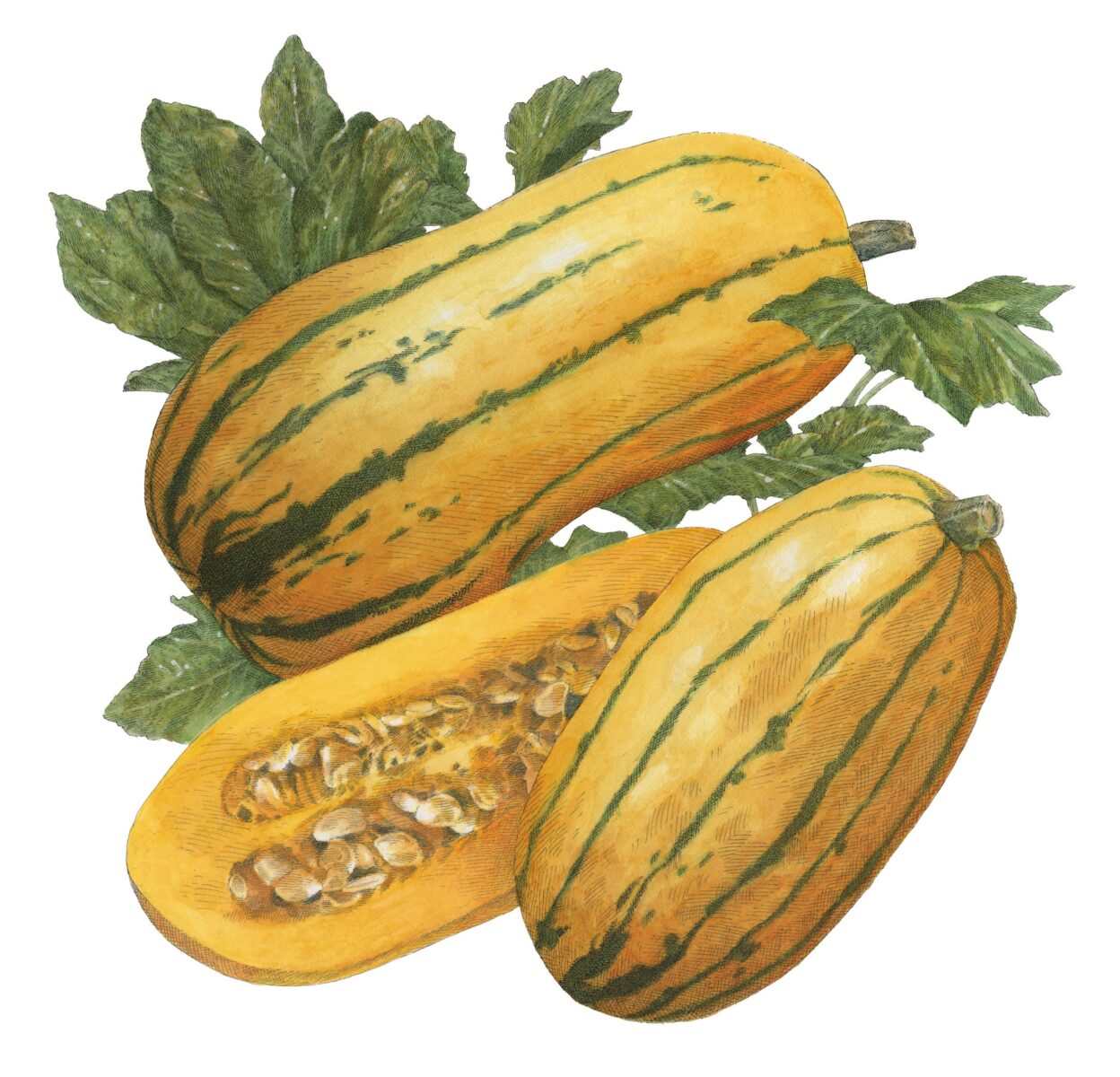
While it’s hard to beat the sweet flavor of fall squashes, it requires some patience and brawn to peel and slice a tough-skinned acorn or butternut. As summer’s humidity gives way to cooler, drier air, Elliot Hunt especially leans toward the easygoing, edible-skinned delicata. “Early in my career, I was more interested in ingredients that felt rare or technically challenging,” says the executive chef and owner of Atlas the Restaurant, in Fayetteville, Arkansas. “Delicata is humble, and I realized that’s exactly what makes it special. The first time I roasted it long enough to develop deep caramelization while leaving the skin on, it clicked. It already had everything I was looking for in a fall vegetable.”
The petite, cylindrical delicata is naturally sweet but not as rich as a butternut or as starchy as an acorn squash. “The flesh becomes creamy while still holding its shape,” Hunt says, “and the skin adds another layer of texture instead of something you have to peel away.” At the market, look for squash that feels heavy for its size with firm skin and no soft spots or bruises. Delicata works well grilled, stuffed with rice or another grain and sausage, folded into a grain salad, or added to pasta and served alongside roasted chicken or pork. But the pecans that arrive on a heritage tree at the restaurant just as the squash is peaking inspired the chef’s favorite preparation (see recipe). Hunt simply slices the pin-striped beauties into half-moons and roasts them until caramelized. To maximize fall flavors, he tops them with a brown butter sorghum glaze, toasted pecans, and the squashes’ candied seeds.
“A few years ago, my friend chef Erick Williams came down to Fayetteville for Thanksgiving,” Hunt says. “We cooked for our families and a group of close friends and put together a very similar dish. It wasn’t overly complicated, but it felt special because of the people around the table and the ingredients we had on hand. That really reinforced for me how dishes like this can be both simple and meaningful.”