
“The coastal communities of Florida live a lifestyle and have a culture that centers around fisheries and seafood,” says Nick Wiley, the executive director of the Fish & Wildlife Foundation of Florida. It wasn’t a hard sell, then, to create a plan to boost Florida’s fishing industry, especially at a time when populations of sporting fish like grouper and snapper are in decline. Thus the Florida Coastal Corridor was born—an ambitious plan to connect coastal habitats statewide that will unfold over the next decades and whose implementation has just begun.
Last year, state legislators approved the corridor’s framework, dedicating $15 million in funding to Wiley’s organization, which along with the Florida Fish and Wildlife Conservation Commission will oversee the vision. “We want to follow the path that was set by the Florida Wildlife Corridor and grow a movement,” Wiley says. The first order of business is ramping up artificial reef deployments.
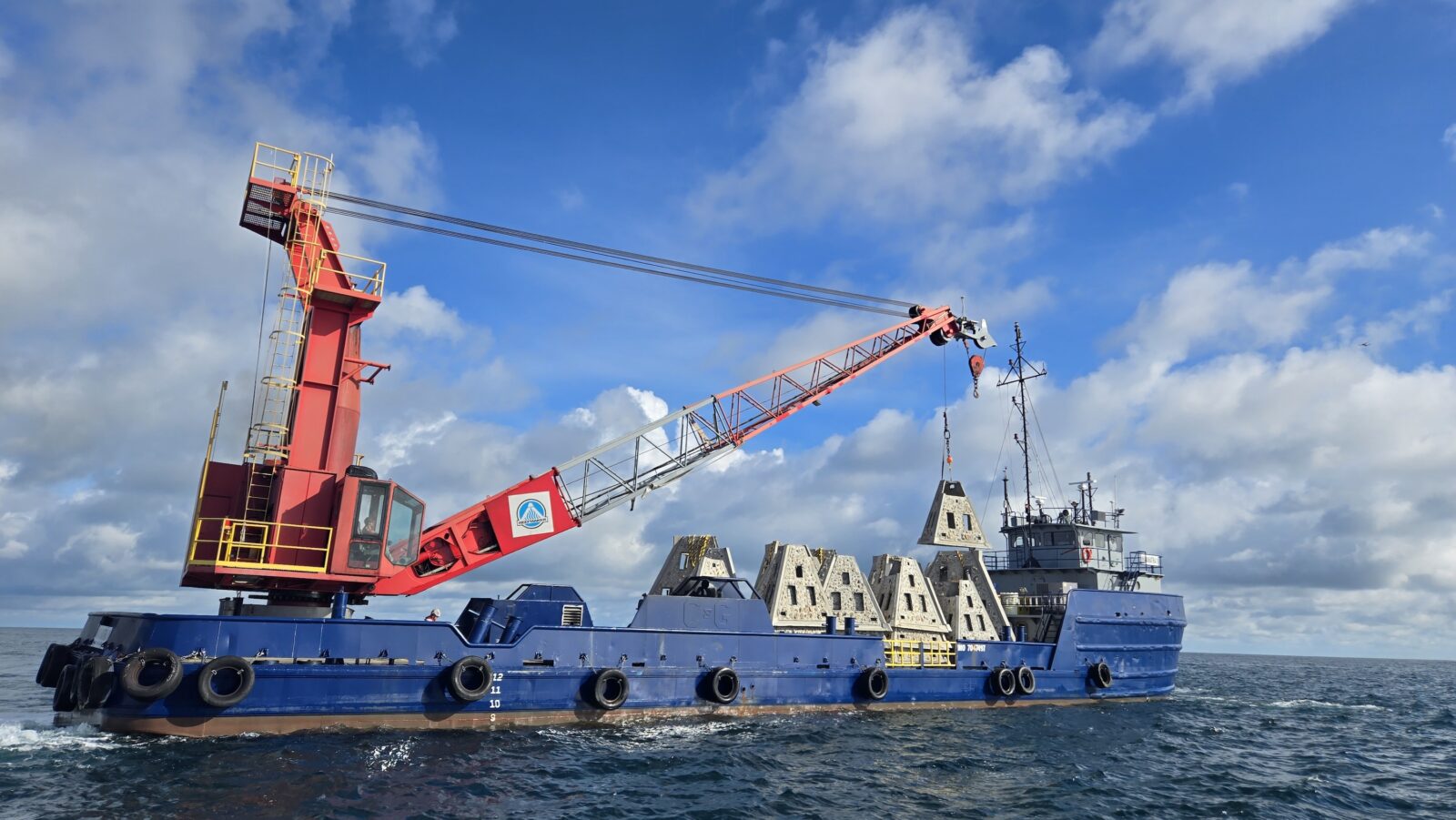
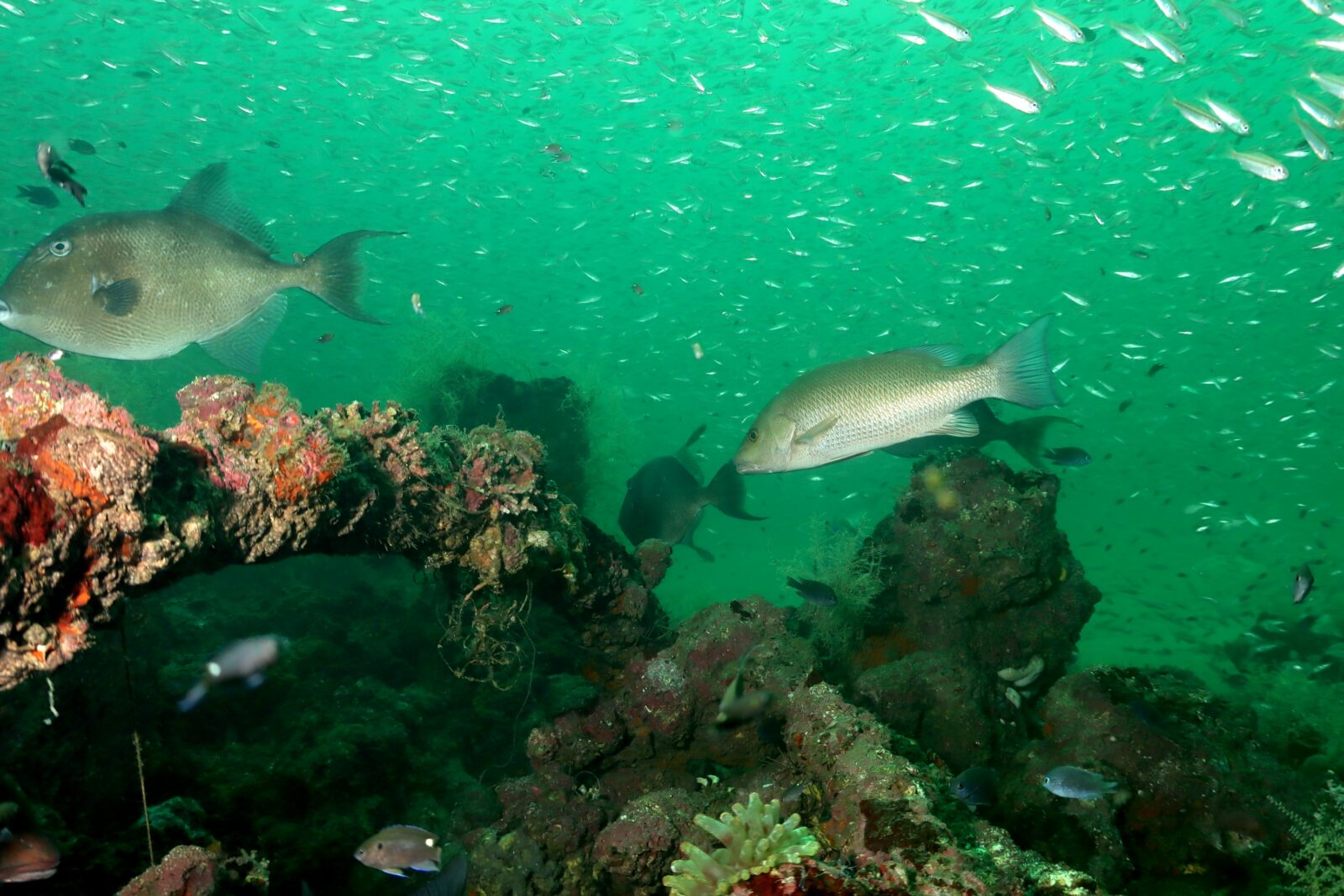
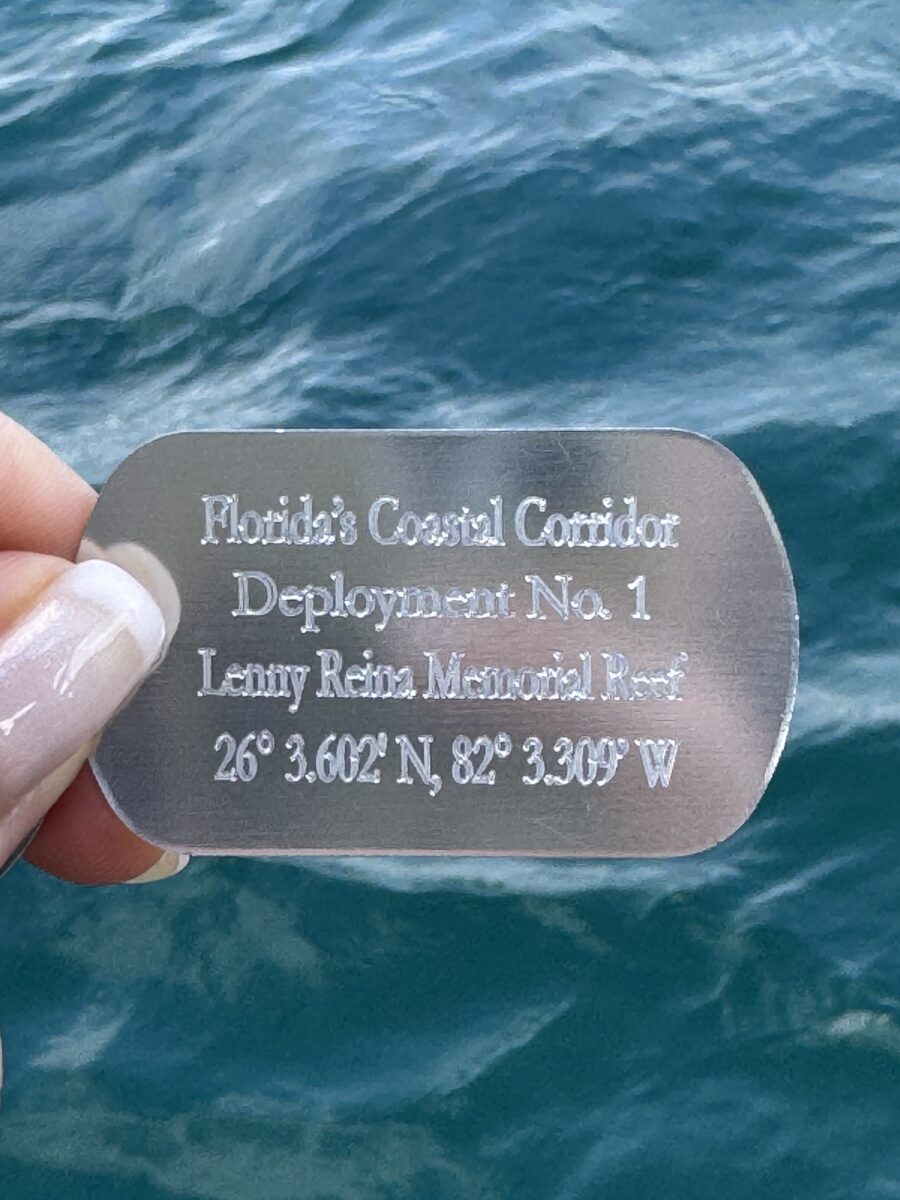
Earlier this month, the first artificial reef—made of concrete modules and dedicated to a private donor—was deployed off the coast of Naples, creating 1.7 acres of habitat. Another deployment followed just a few days later off Okaloosa County in the Panhandle. “Artificial reefs are a great tool to both create habitat where habitat doesn’t exist, and also to remove pressure on some of those natural habitats that are struggling, such as the coral reefs in South Florida,” says Mike Norberg, the Coastal Corridor project director. Hundreds of fish species and other marine life rely on reefs at different points of their development. Lack of reef habitat can create a bottleneck in populations of fish like grouper, snapper, and amberjack at earlier stages of their lives, before they become the large fish anglers want to pursue.
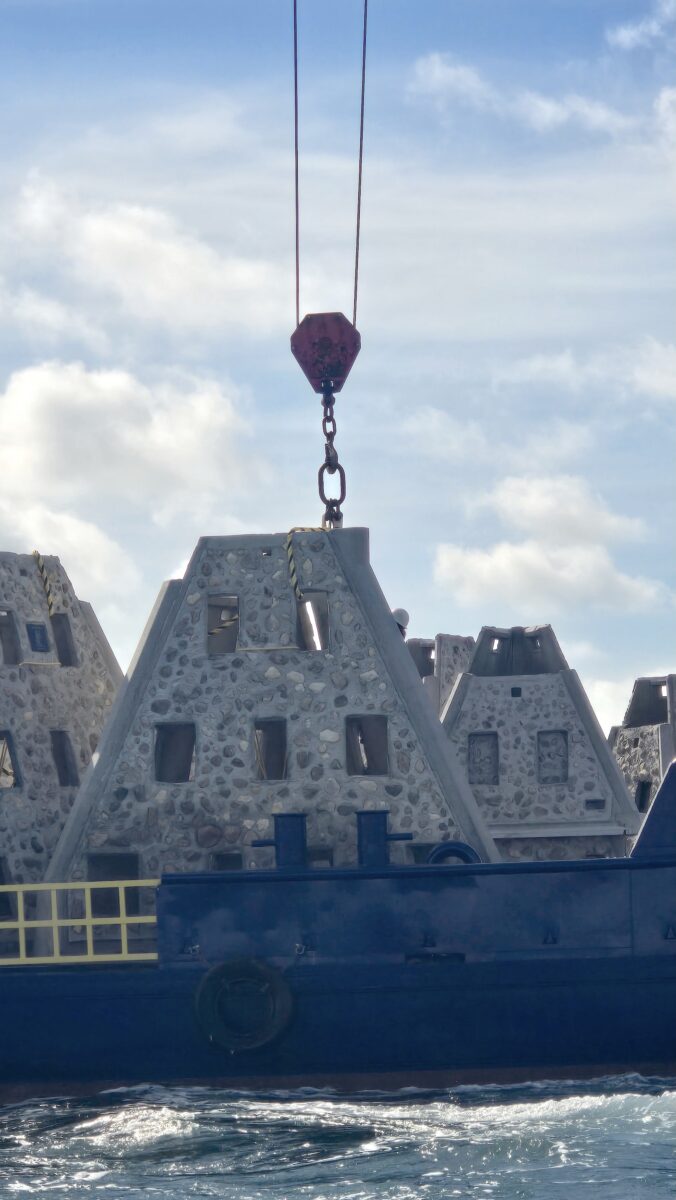
The reef material can come from old bridges or culverts or steel vessels, which are carefully cleaned and then sunk over what is essentially barren seafloor. Underwater, the structures transform. Within a few days, baitfish arrive, followed by the larger fish that feed on them. Slowly, within a year or so, encrusting organisms like algae and soft corals begin to colonize, and in areas with existing hard corals, those can begin attaching to the new habitat as well. Eventually, Norburg says, “the structure usually turns into something that is unrecognizable from its original form.”
These initial reefs are just the beginning—Norburg is working with a range of counties that lack local funding to deploy reefs to strategically fill gaps in habitat. But the long-term game of the Florida Coastal Corridor is even bigger.
The two organizations plan to work with all sorts of partners—including researchers and other nonprofits such as the Coastal Conservation Association and Bonefish & Tarpon Trust—on much more than just artificial reefs. They’ll also join efforts to restore seagrass meadows, which support the likes of manatees, snook, and red drum, and mangrove forests, which serve as nurseries of their own. The corridor will include investment in living shorelines—planting native vegetation and restoring oyster reefs that filter water—all of which makes coastlines more resilient to storms and inviting to wildlife. Myriad individual projects will add up to a large, connected network of habitat that threads the coast of the whole state together.
Ultimately, all manner of species will benefit—from hard-hit coral, which could potentially be attached on the new reefs, to lobster and shrimp, sea turtles and manatees, and of course, sport fish. People stand to gain, too; beyond the obvious benefits to angling, artificial reefs offer a big draw for divers, and all of it will boost tourism and local economies. “If we don’t take care of our natural resources, they’re not going to take care of us,” Wiley says. “The bottom line is that this is about preserving Florida culture and the things we all love about this state.”
Lindsey Liles joined Garden & Gun in 2020 after completing a master’s in literature in Scotland and a Fulbright grant in Brazil. The Arkansas native is G&G’s digital reporter, covering all aspects of the South, and she especially enjoys putting her biology background to use by writing about wildlife and conservation. She lives on Johns Island, South Carolina.