

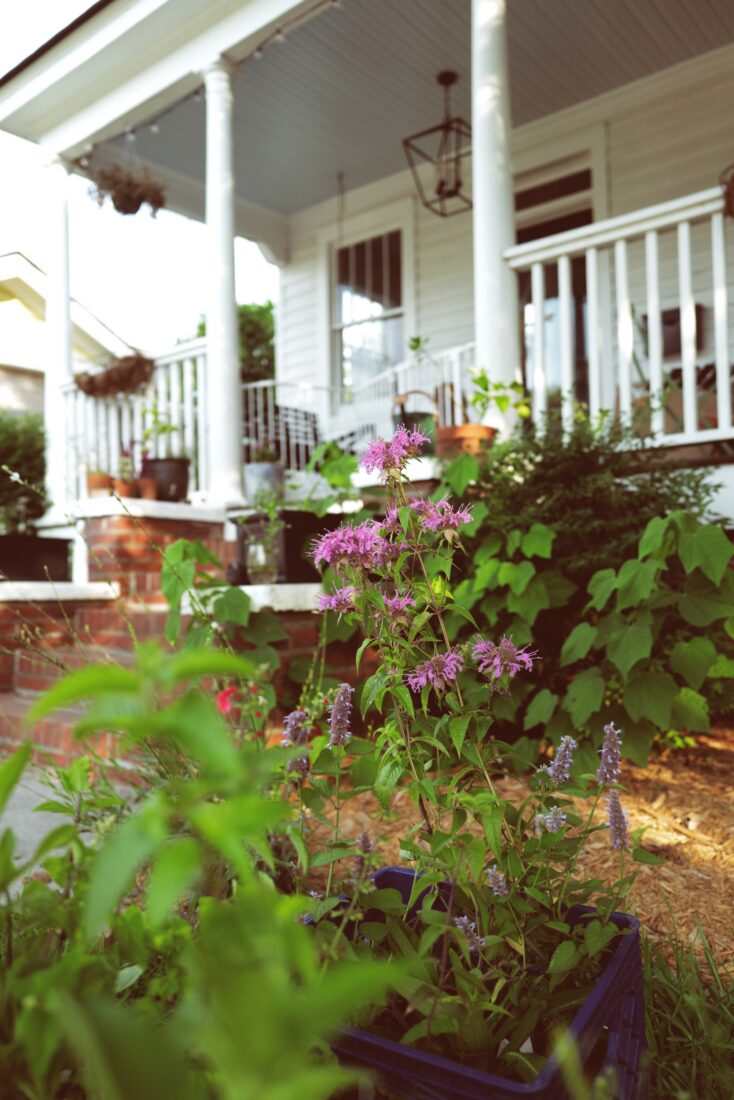
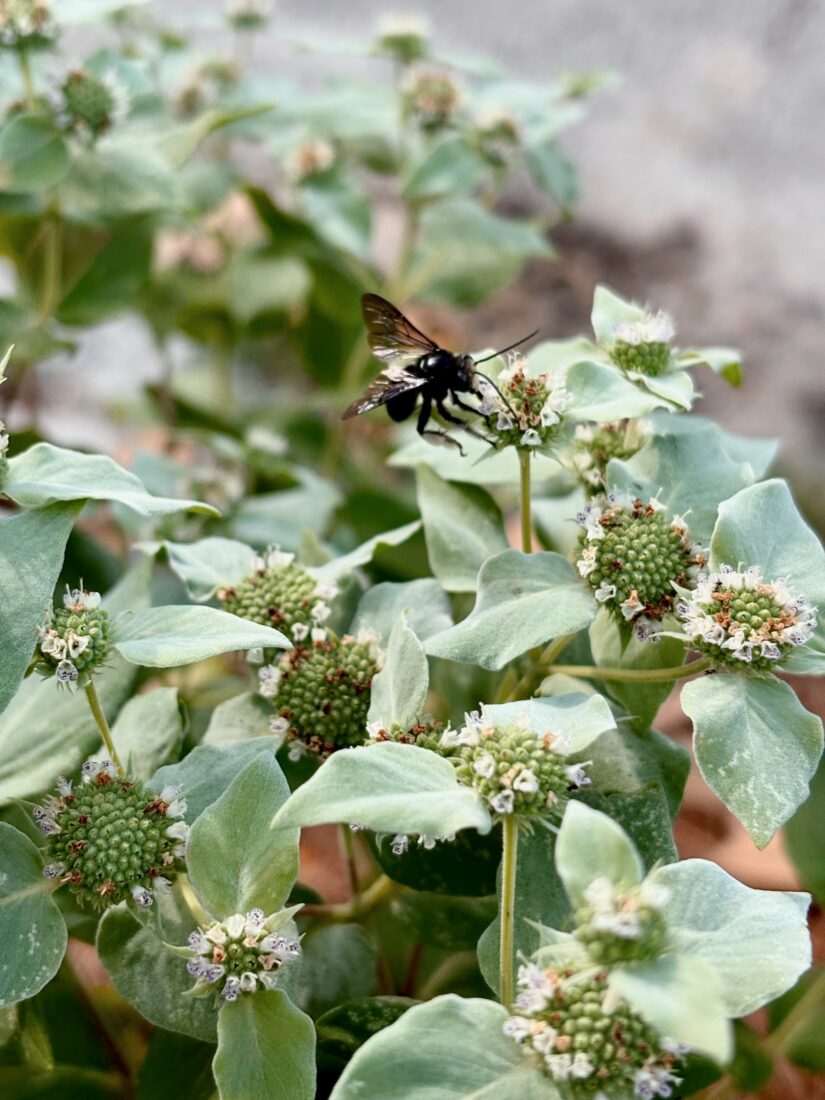
I fling open my front door with new glee, spending my mornings learning about my garden visitors. Great blue skimmers. Long-horned bees. Sweat bees. Potter wasps. Native bumblebees. They dizzily buzz around the silvery towers of mountain mint as if they’re navigating the morning rush at a diner, dipping into pockets of freckled purple petals before they’re onto the red tubes of salvia or whirligig mauve heads of Claire Grace Monarda. My garden has never been more full of this lively morning ritual.
These two beds, together measuring 180 square feet, used to be plain ol’ patches of ugly turfgrass—a “hell strip,” the ambiguous space between sidewalk and street curb. While it varies by municipality, where I live in Charleston, South Carolina, the city owns this tiny piece of land (a “public right-of-way”), but homeowners are left to maintain it. Since moving into my North Central neighborhood nearly two years ago, I’ve marveled at how some of my neighbors transformed their hell strips into an extension of their gardens, full of flowers, texture, and color.
My friends at the M.A.R.S.H. Project, a grassroots environmental group spreading the good word about native flora and fauna, rewilding, and ecological stewardship, manage a handful of “demonstration gardens” in my neighborhood, including a few hell strips designed by Sharleen Johnson, a habitat gardening educator and native plant nursery owner. Volunteer gardeners ripped out the monocultures of turfgrass and installed hundreds of native plants in their place along residential tracts and tidal creek headwaters: fluffy Stokes’ asters, golden coreopsis, delicate lyre-leaf sages, milkweeds coneflowers, and rose-hued saltmarsh mallows that invite monarchs, squirrel tree frogs, ibises, and gulf fritillaries into their midst. “If you plant it,” I remember Johnson telling a room of guests at a habitat gardening discussion, “they will come.”
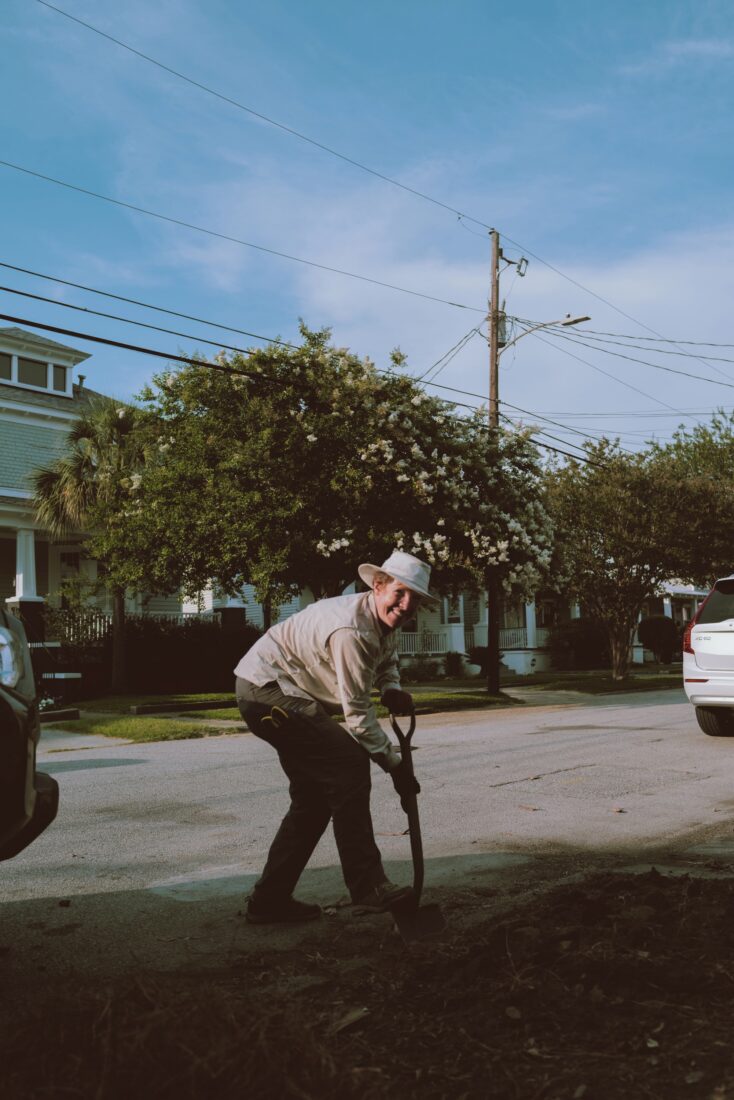
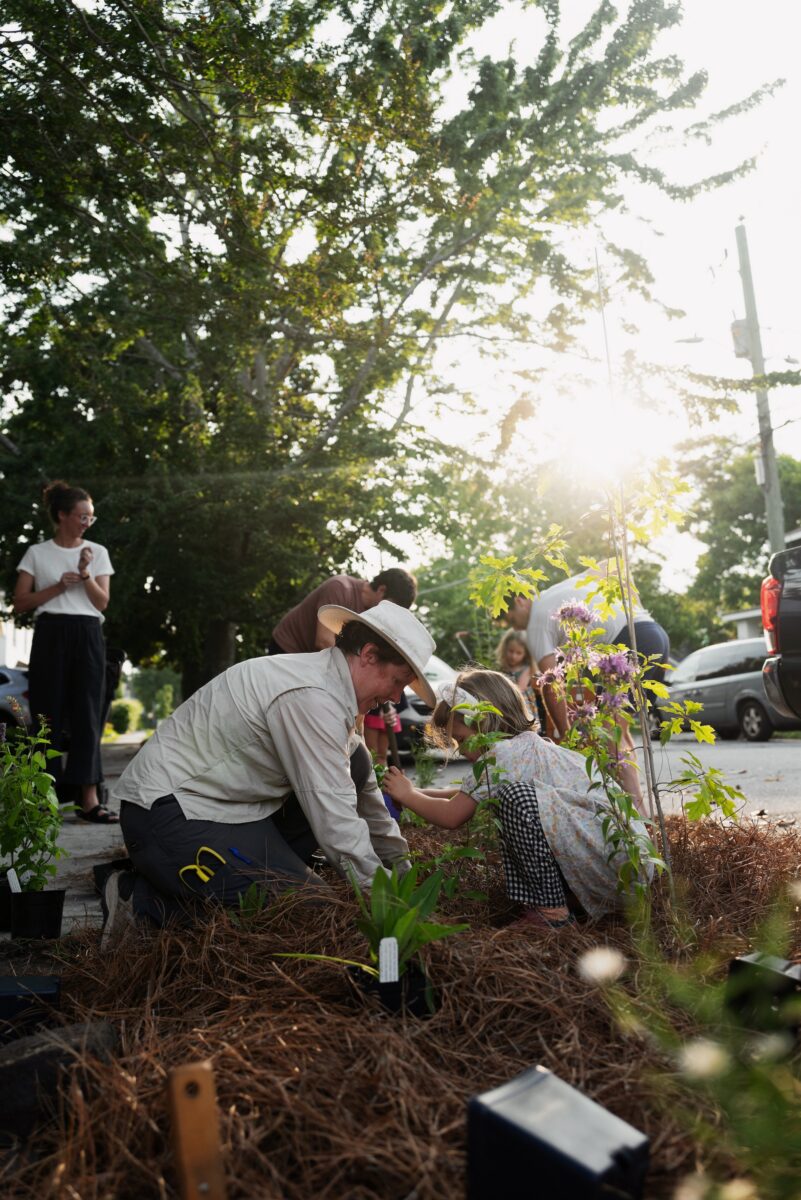
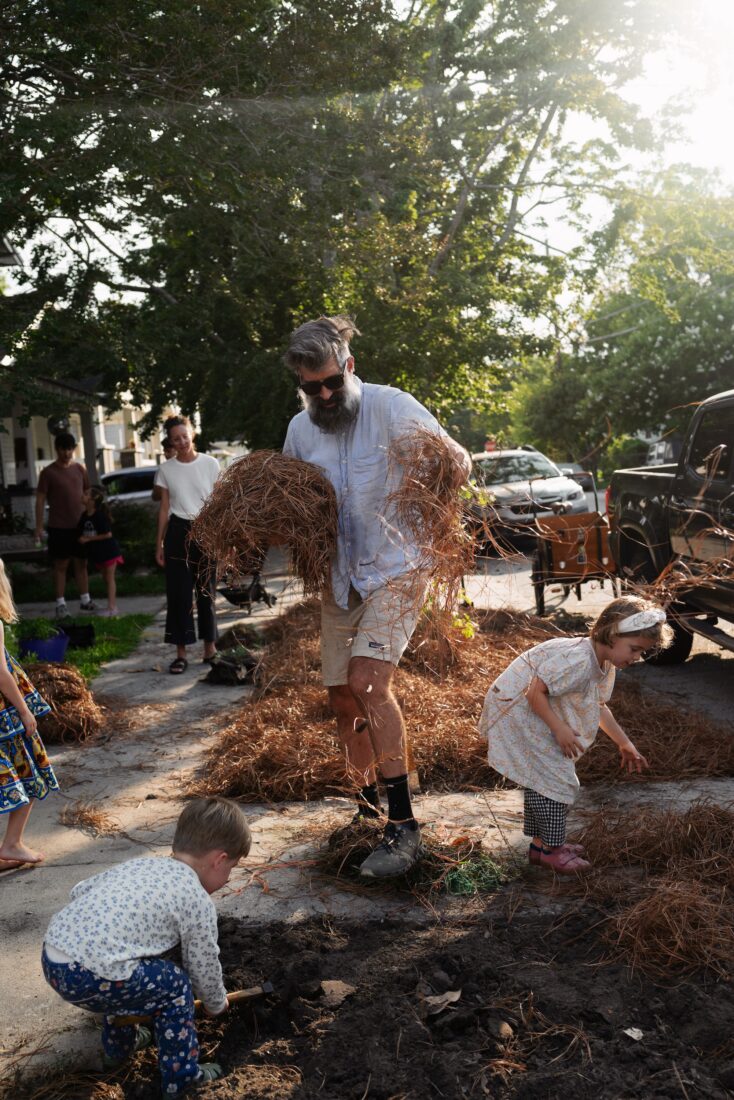
Early this summer, with the help of the M.A.R.S.H. Project, Johnson, and neighborhood volunteers, we converted my hell strip into a colorful oasis. As we tore out my turfgrass and planted flowers, neighbors and their kids flocked to lend a hand, making it all the more special, a green space built by community. As my garden grows, the compliments roll in daily on residents’ morning walks. “Hell strips are such an underutilized space,” Johnson says. “No one is tossing a ball—it’s a strip of weedy grass, and we can turn it into a community center and wildlife habitat with natural beauty and joy.”
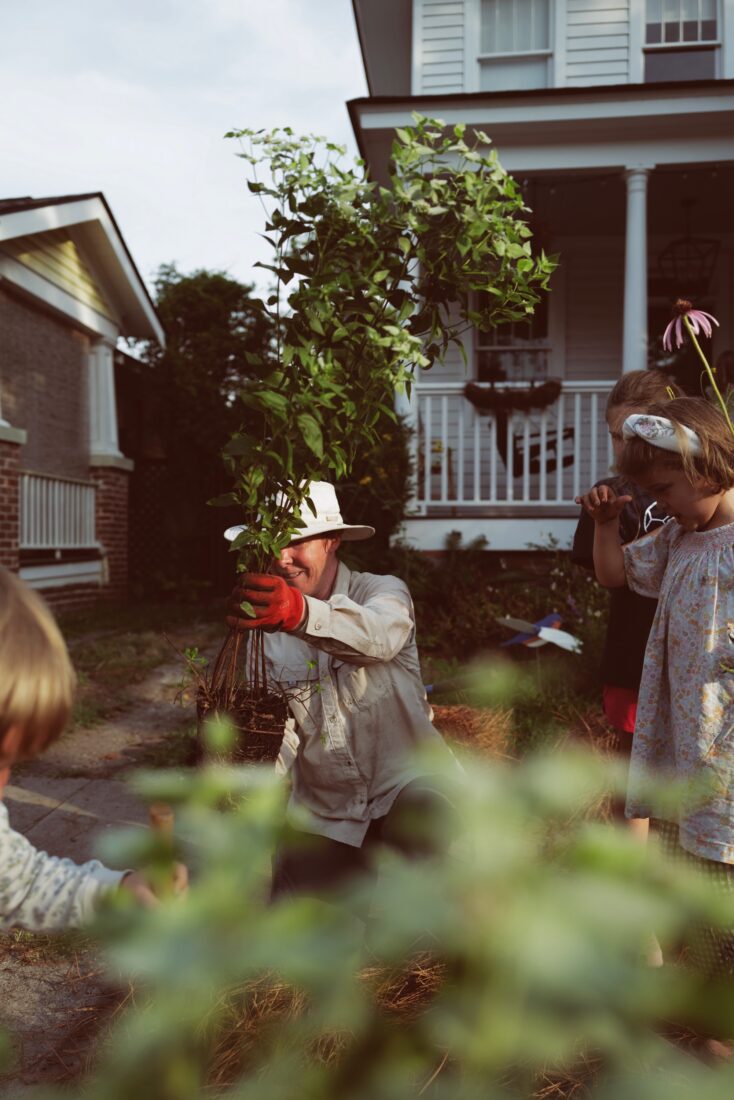
With Johnson’s help, here’s how I converted my hell strip into a happy pollinator paradise full of native blooms. “I would love to see less wasted space on weedy grass,” Johnson says, “and more sources of joy and wildlife habitat, inventiveness, and creativity. It gives a sense of local place.”
First, Check Your Local Government’s Encroachment Permits
Remember to check your city’s local regulations and rules regarding altering the hell strip before planting. Most of the time, homeowners are free to plant but need to keep access to waterlines clear, and can’t place hard, permanent structures.
Be familiar with the locations of underground infrastructure (such as cable/internet and gas lines) before starting to dig, especially in a hell strip. In South Carolina, gardeners can call 811 at least a week in advance of breaking ground.
Match Your Plants to Your Growing Conditions
“Assess what the soil moisture conditions are like,” Johnson advises. Check out how the ground holds water. Ask yourself: Is it sandy, silty, loamy, or full of clay? How quickly does water pass through the ground? Does it puddle, or remain very dry? “Most plants like one or the other,” Johnson says.
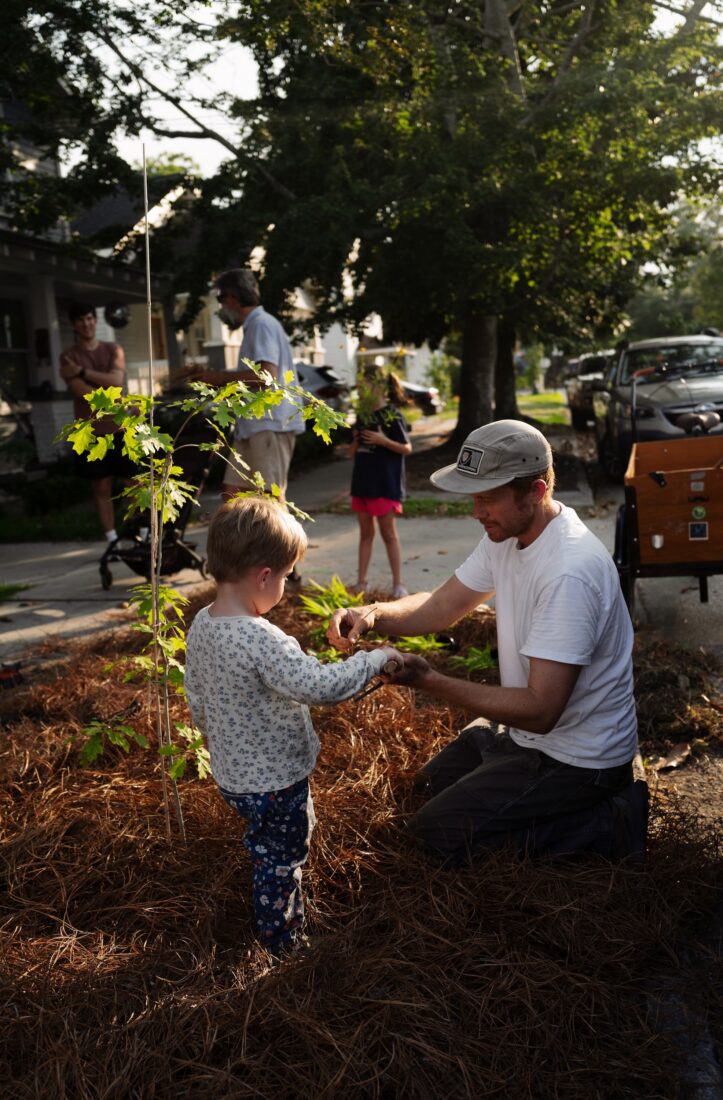
For mulching, opt for organic matter like longleaf pine needles, which smother and prevent weeds and provide habitat for bugs and lizards. But if your street floods, avoid mulching all together, as it’ll wash into storm drains.
Plant Native
When you pick out your plants, natives are key—they offer multiple benefits, including attracting pollinators, hosting insects, and feeding birds, but they’re also best suited for your local conditions, meaning they’re way lower maintenance. “Head to your local native plant nursery,” Johnson suggests, “and talk to the people there—they love to educate.” Show photos of your hell strip and soil, and they can point you in the right direction. Homegrown National Park also has a lot of online resources for finding native plant nurseries and databases for researching species that will thrive in your area.
Observe the amount of light your hell strip gets throughout the day, and take photos of how shadows and sunlight fall in the morning, afternoon, and evening. Choose native plants accordingly.
Consider the Urban Traffic
Planting for hell strips also means planting for foot traffic, clear lines of sight, and high visibility. “Allow room for swinging car doors on the roadside, and plant with enough room from the curb,” Johnson says. “Be aware of the mature size of the plant.” Plants fresh from the nursery are typically young and can grow dramatically each year. Avoid species over three feet, which can flop and obstruct pathways. Shorter, compact plants (think less than two-and-a-half-feet wide) are well-suited for the small spaces along sidewalks and the road. Make sure to prune about twice a month to keep the right-of-way clear.
For taller plants like false sunflowers or seaside goldenrods, gardeners can restrict the height of these plants without sacrificing blooms by using the “Chelsea chop” method of pruning by cuttinng the plant in half (vertically) about a month and half before its bloom season begins. This makes the plants more compact, less top-heavy (and floppy), and often more flowery.
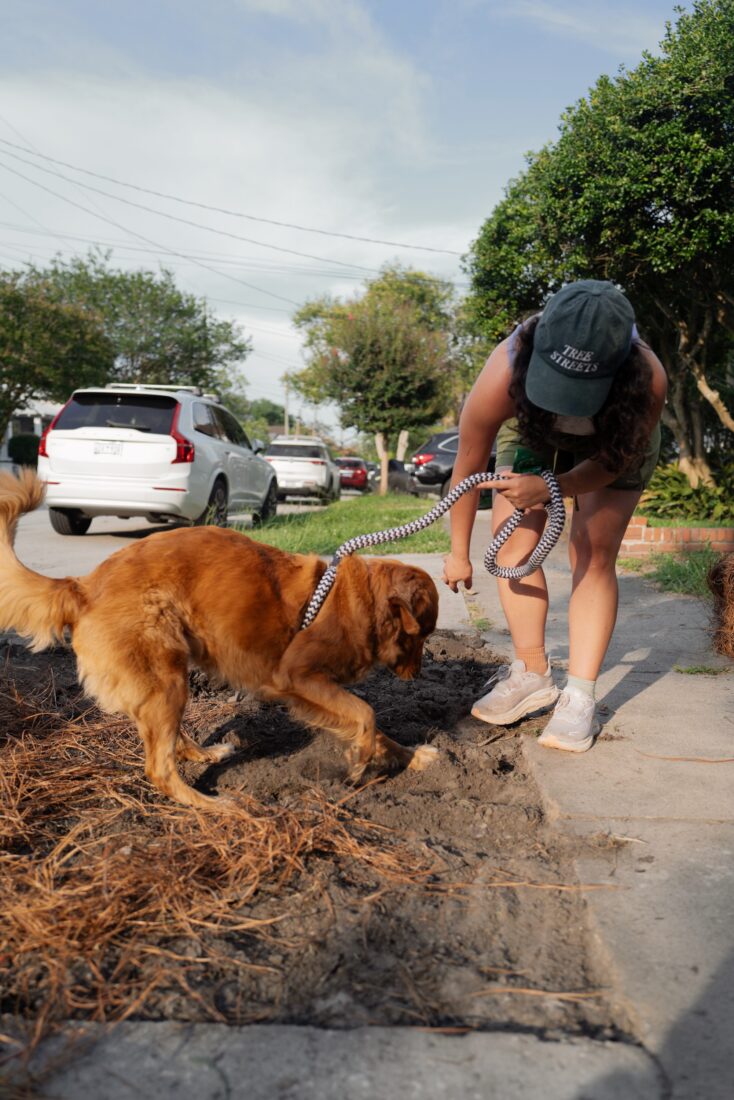
In a very public-facing garden, evergreen plants are key, adding interest and color in the wintertime. In my plots, foxglove beardtongues, heath asters, Stokes’ asters, large-flowered coreopsis, orange coneflowers, and starry rosinweeds have basal rosettes that add a dollop of green in an otherwise gray, cold season.
Fill in the Gaps With Self-Sowers and Plugs
“A hell strip is a stressful environment,” Johnson says. Urban landscapes create a heat island effect, where pavements and rooftops absorb and reemit heat, making them much higher in temperature compared with rural and suburban environments. Give your plot the greatest chance of flourishing by filling in gaps between larger plants with smaller plugs and self-sowing plants. “If a plant dies, opportunistic self-sowers like large-flowered coreopsis and lyre-leaf sage can pop up.” These plants have high germination rates and will step in if other species may struggle to adjust.
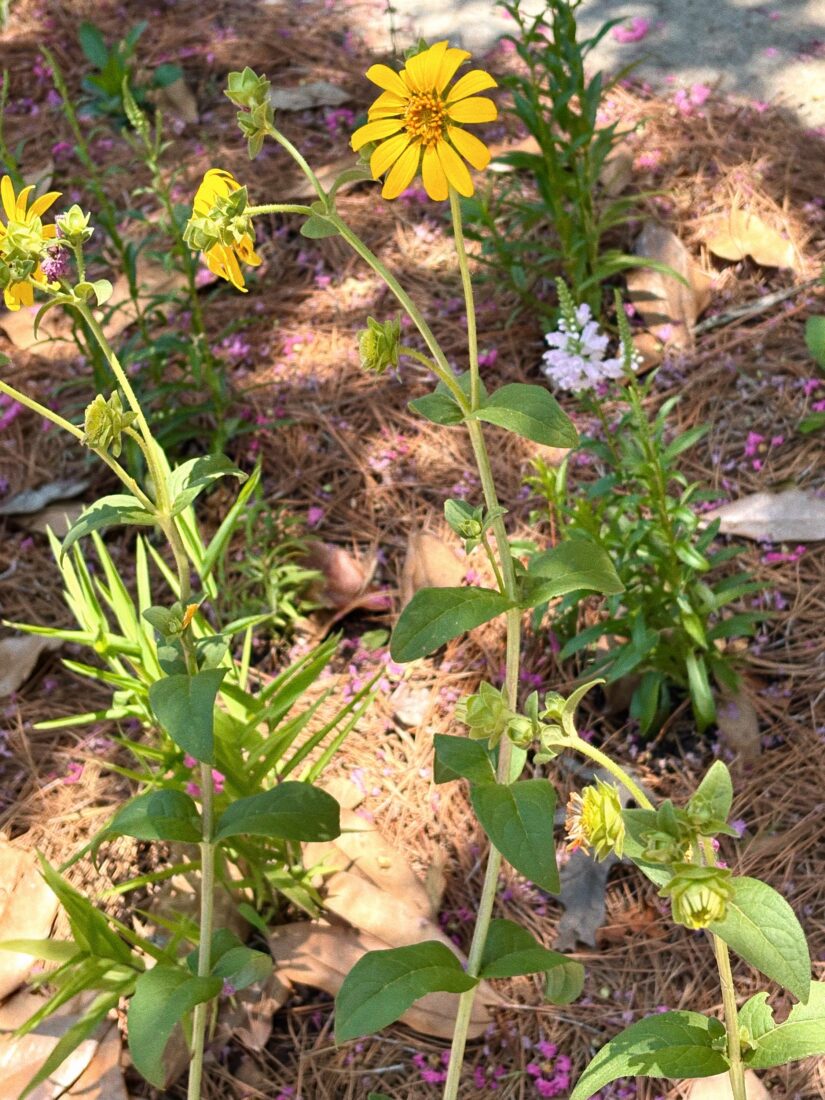
Planting plugs is cost-effective and gives each plant a headstart: Smaller, younger plants experience far less transplant shock compared to larger counterparts, and their active root systems establish more quickly. Another extra benefit of plugs: they’re easier to squeeze in around tree roots, which can be abundant and near the surface in some hell strips. Plus, gardening in the early spring and fall minimizes the stressful conditions and gives them time to thrive. “Try a lot of different plants,” Johnson suggests. Experimentation is part of the game and lets you see which species may thrive if others fail.
Grow Flowers for All Seasons
In my two plots, Johnson curated a diverse mix of groundcovers and beautiful upright, spreading flowers with a collective bloom season in mind, selecting some of my favorites like sunshine-colored goldenrod, delicate pale-purple coneflowers, cottage-garden-esque pink obedient plants, and cheery starry rosinweeds. In the sunny bed, purple sprigs of anise hyssop, scarlet sage, and frogfruit encircle towers of clustered mountain mint. “Flowers make people happy,” Johnson says. “They let people buy in and feel encouraged to transform their own yards.”
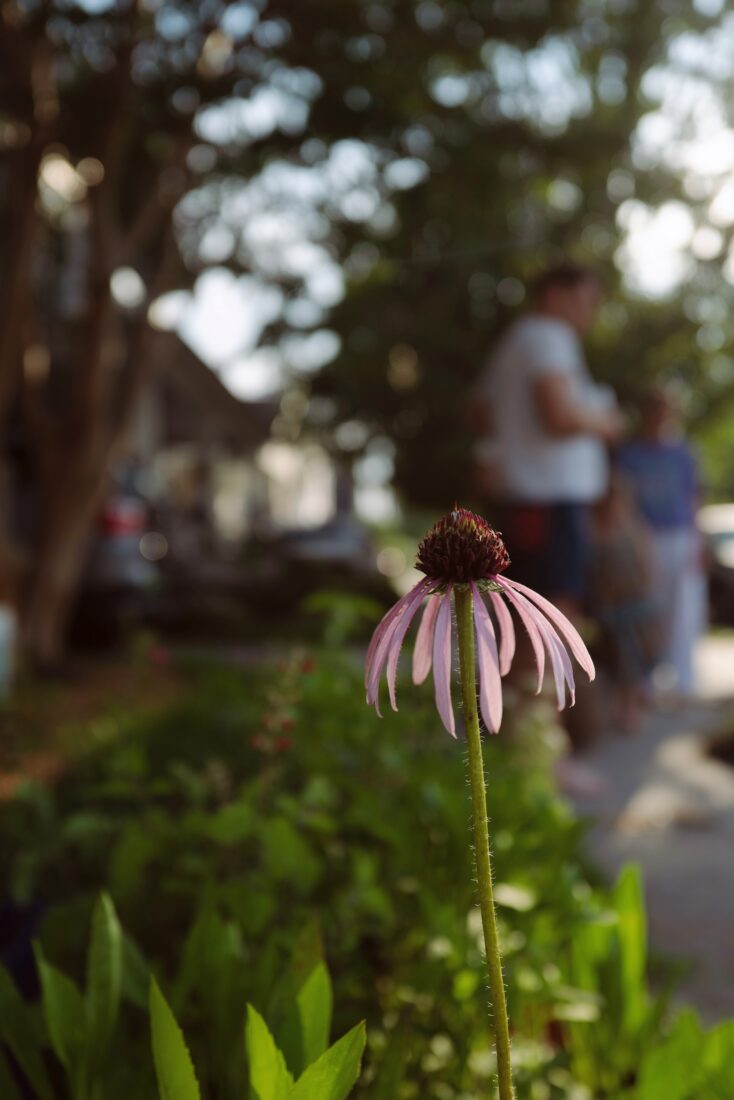
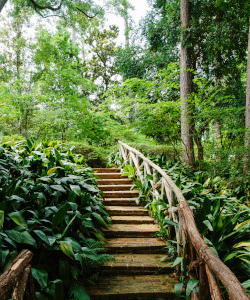
Johnson’s longtime favorite summer blooms include clustered mountain mint, foxglove beardtongue, and large-flowered coreopsis, which is especially “amazing, cheerful, colorful, and low to the ground.” But even if your space is shady, you can provide visual interest and habitat with ferns, spring ephemerals, and sedges. Under trees, Johnson will often plant sedges, which host many species of skipper butterflies and grow happily in the shadows. She loves leavenworth sedge, a species well-suited to the Southeast, which has an elegant fountain-like shape, fine texture, and a spray of starry flowers from their delicate stems in the spring.
Gabriela Gomez-Misserian, Garden & Gun’s digital producer, joined the magazine in 2021 after studying English and studio art in Virginia’s Shenandoah Valley. She is an oil painter and gardener, often uniting her interests to write about creatives—whether artists, naturalists, designers, or curators—across the South. Gabriela paints and lives in downtown Charleston with her golden retriever rescue, Clementine.