

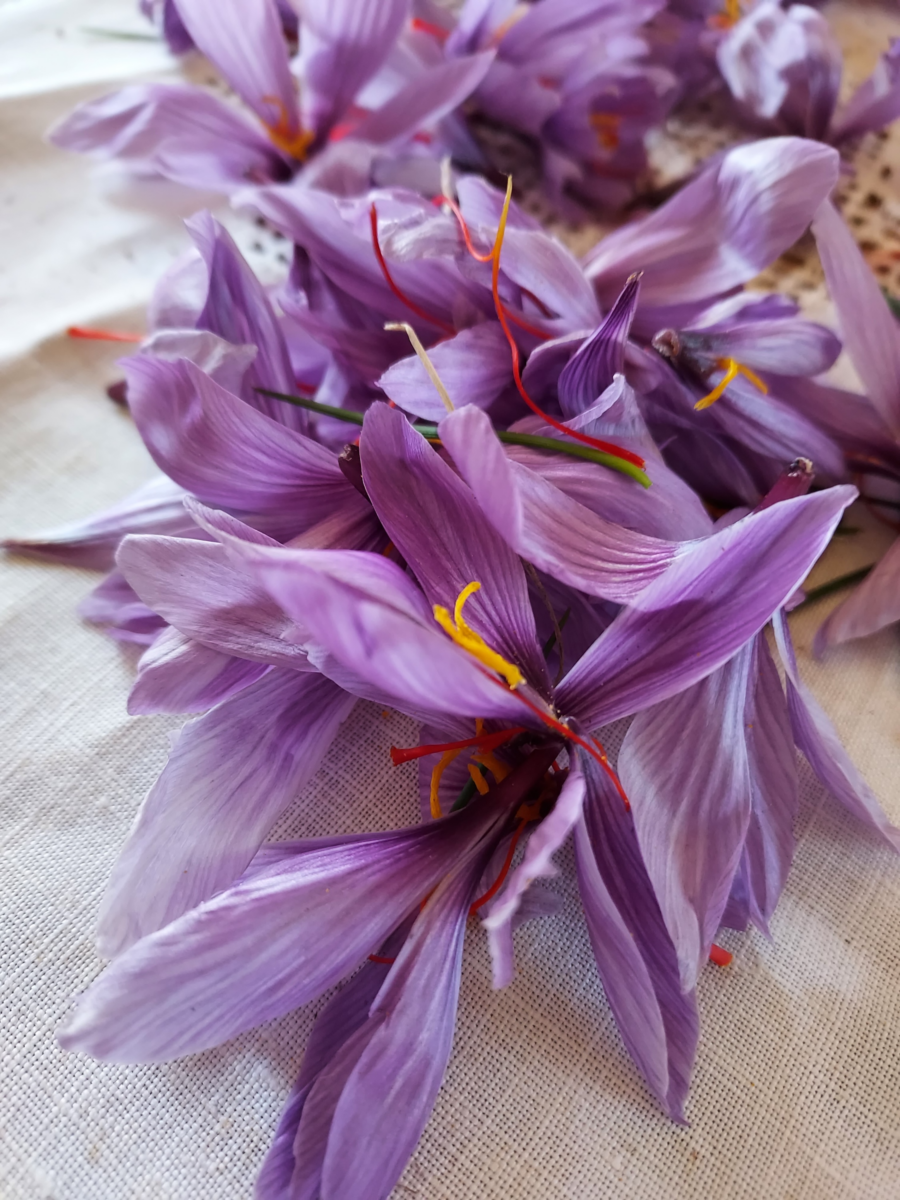
Rita Carroll’s farm in Orange, Virginia, is full of gold—not the precious metal, but a profusion of crocuses that contain sunny-hued saffron, the world’s most expensive spice. “It’s a beautiful purple crocus,” she says. “When you pick saffron fresh, it smells like honey. It’s lovely.”
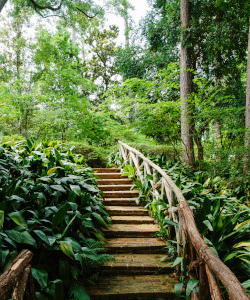
Carroll has been growing saffron at her historic estate, the Farm in Orange, since 2021, and she is part of the growing trend of American farmers tending the specialty crocuses. Saffron, native to the Mediterranean and Middle East, has become a popular niche crop on farms in Pennsylvania, California, Vermont, and increasingly, the Southeast, thanks to its drought tolerance and laissez-faire requirements: Plant and wait.
Earthy, floral-scented saffron finds its way into savory and sweet dishes including rice tahdig, tea, and sponge cake. Carroll’s love of cooking first drew her to the plant. Two decades ago, she was making chicken tagine with a recipe that called for a half teaspoon of saffron. She was shocked to find that a few tiny threads cost close to $100 at the grocery store.
Carroll’s sister later surprised her with forty saffron crocus corms (similar to bulbs) for her birthday. “I planted them in the ground and didn’t pay attention to anything,” Carroll says. A year later, in 2008, the little plants popped up. “Halloween, when I was coming home, they all were up and blooming. So that was the end of buying saffron.” It was a moment that ignited a new passion.
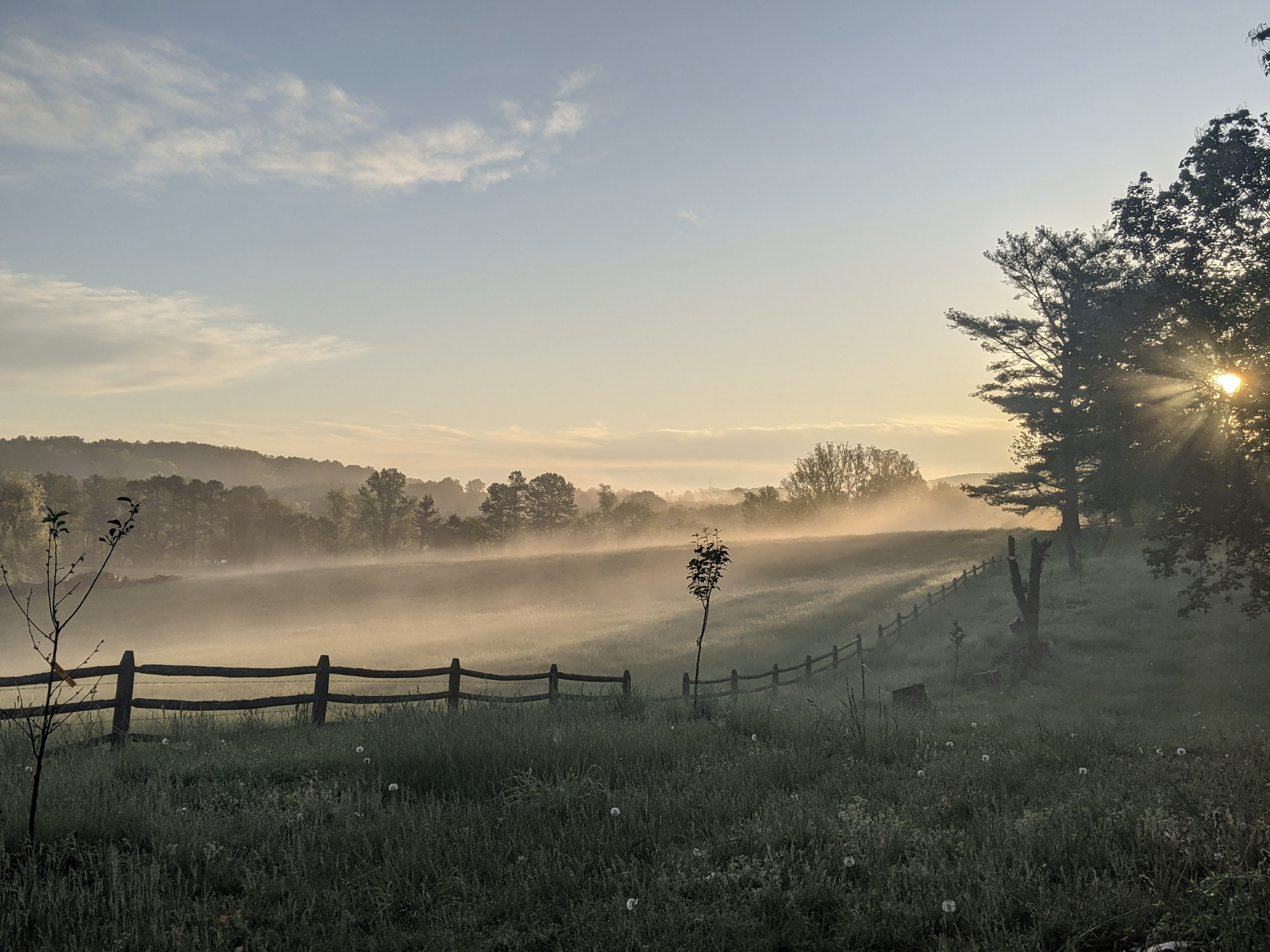
Seven years ago, Carroll bought the current property to fulfill her dream of owning a small, organic farm. She plowed two acres in late summer 2021 and planted 15,000 bulbs with the help of generous neighbors. That year, she harvested about one pound of the spice. But then the perennial plant’s nemesis arrived: “The deer ate it all,” Carroll says. “I had two blossoms left in that field.” Groundhogs, too, have been a challenge at the farm—the animals dig up the bulbs and feast on them in the winter. In 2024, Carroll replanted the field in a new spot and protected it with an eight-foot-tall fence, plus chicken wire that she buried about eighteen inches deep as a groundhog barrier.
These days, the flower’s reddish-orange stigmas, which contain the spice itself, emerge around late October. But the work starts well before then. This July, Carroll and her partner will spend a few days planting approximately one thousand corms across a one-acre field. They will bury the corms about six inches deep into Davidson clay loam soil, the mixture of light clay packed with nutritious decomposed vegetation that’s spread across the Piedmont region and supports the crocuses’ needs. “The clay holds water well,” Carroll says, “but the loam actually provides good drainage.”
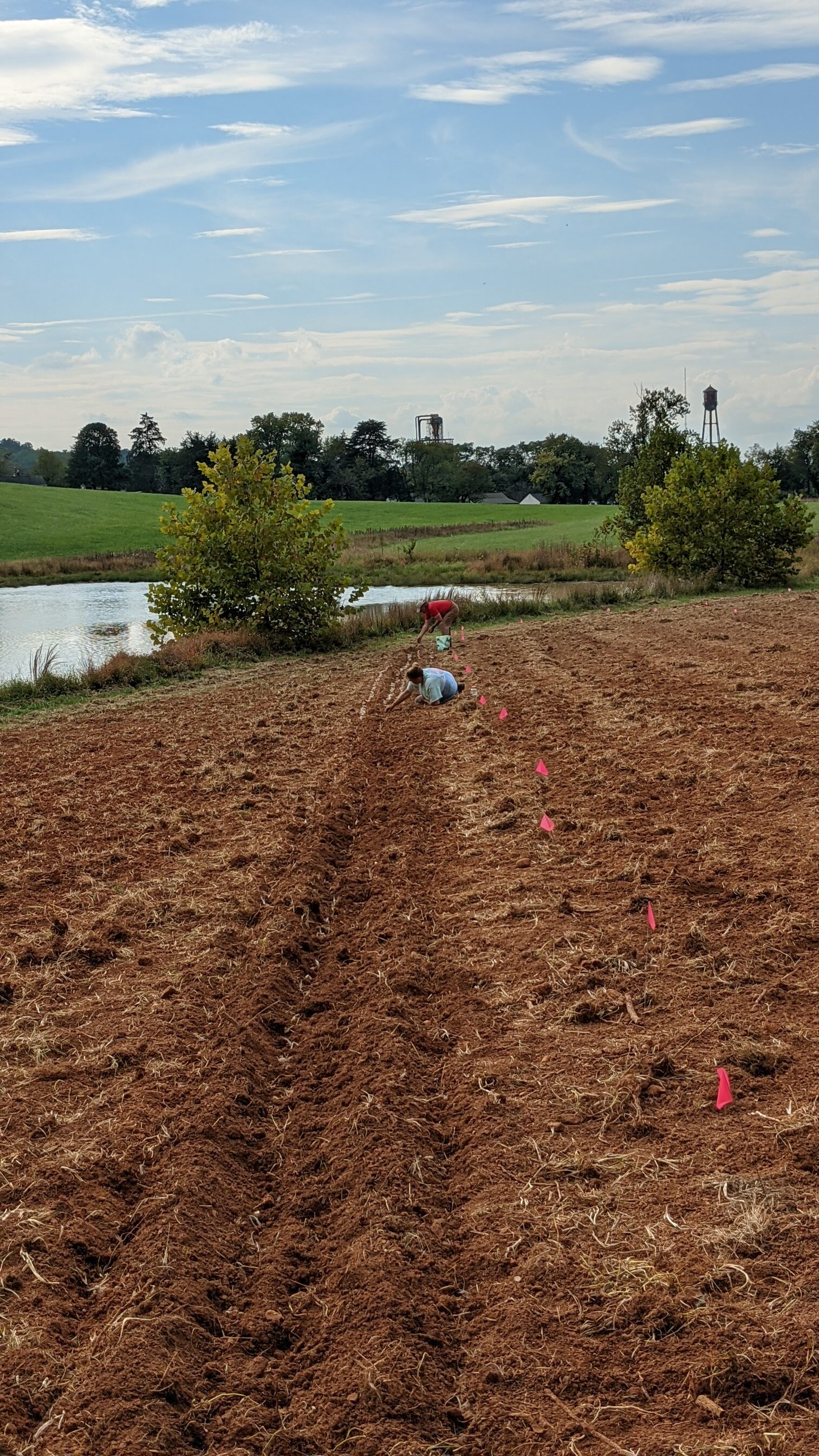
After the small crew covers up the crocus bulbs, it’s basically a waiting game until early fall. Eventually, grassy spikes sprout from the soil, and then a bud emerges that bursts into a vibrant lilac-tinted flower. Within this blossom are the three precious stigmas that Carroll gently plucks out, either by hand or with tweezers. It’s laborious work, which is one reason saffron is so prized—it takes about 150 flowers to produce just one gram of saffron.
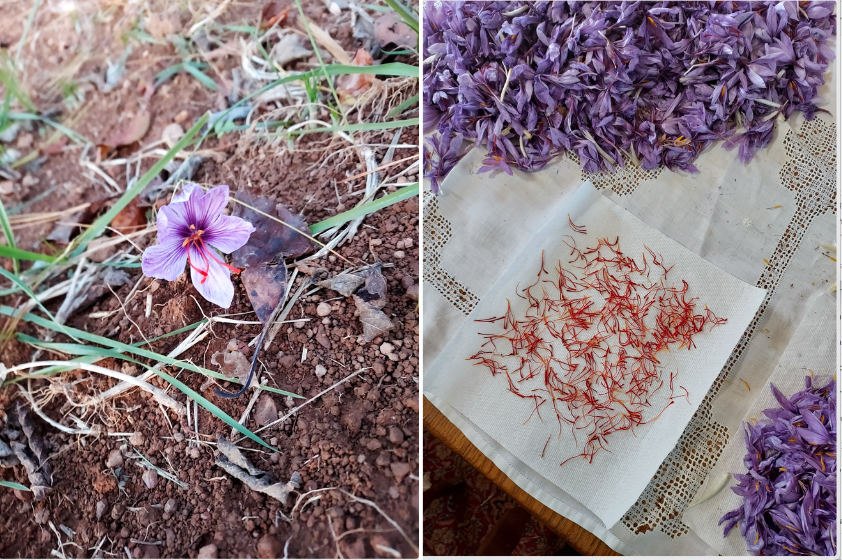
The spice is also known for its complex flavor, antioxidant boost, and, according to some, mood-enhancing qualities. Carroll has found a niche for herself, selling directly to local chefs and neighbors. “It has been a great market for me,” she says. And if all goes well, and if she can keep the deer and groundhogs at bay, the new corms she plants this year will multiply underground, further expanding Carroll’s saffron paradise.
While the farm is not regularly open to the public, Carroll does offer bulbs and saffron from her harvests on her website for purchase.