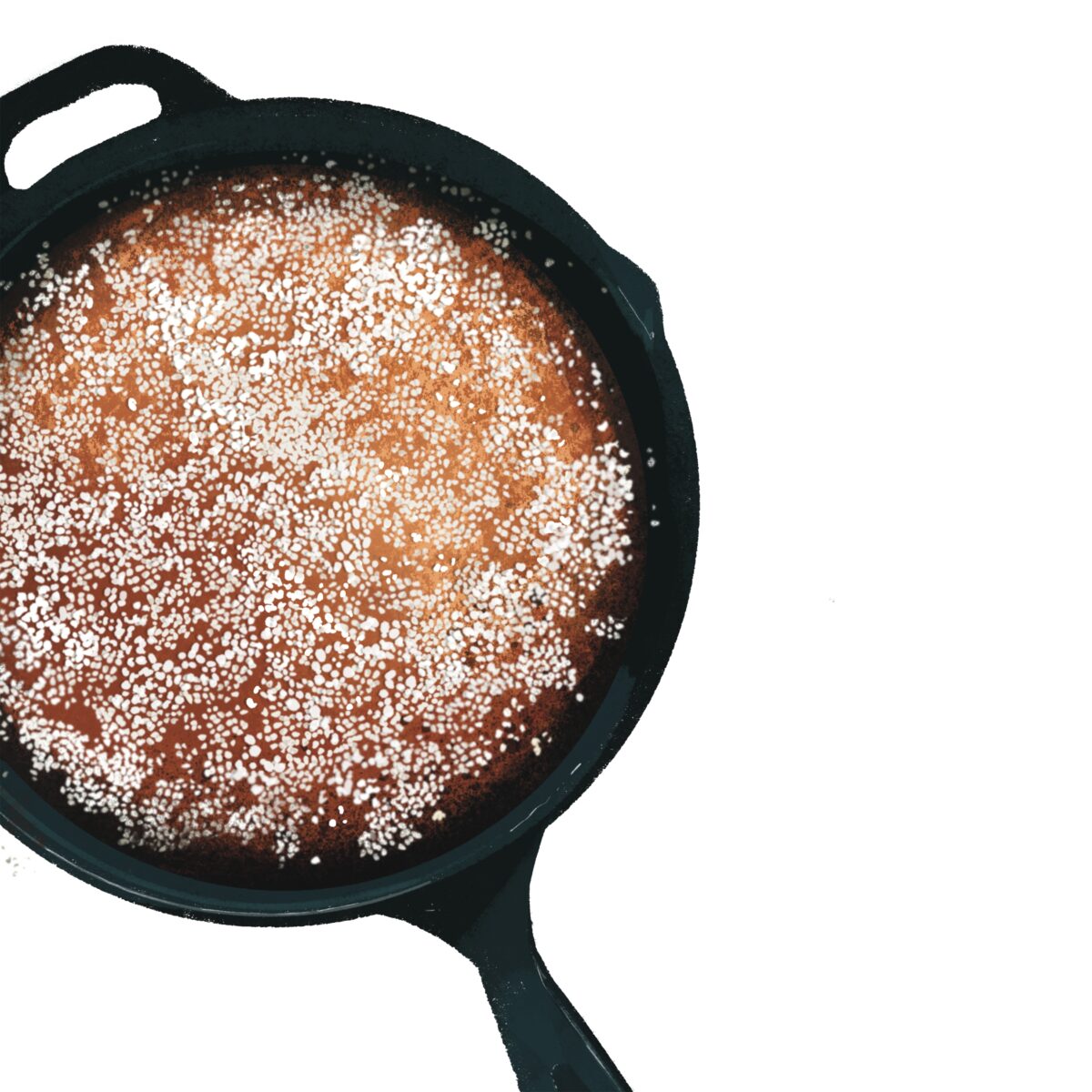
Center a rack in the oven and preheat it to 350°F. Coat a 10-inch cast-iron skillet with baker’s or cooking spray. If you don’t have a skillet, use a 9-inch springform pan.
Whisk the all-purpose flour, whole wheat flour, ginger, cinnamon, baking soda, and salt.
Working in the bowl of a stand mixer fitted with the paddle attachment, or in a large bowl with a hand mixer, beat the granulated and brown sugars together with the butter at medium speed for about 3 minutes—you’ll have a pasty mixture.
Pour in the oil and beat for another 2 minutes—the batter will thin out and become creamy. (Don’t wash the measuring cup—use it for the molasses. The oily slick that’s left in the cup will help the molasses slide out easily.) Scrape the bowl and beater(s) now and again—this is sticky business. Add the egg and beat for a minute. With the mixer on low, beat in the molasses, followed by the apple butter and another scraping. Add half the flour mixture and mix until it just disappears into the batter. Blend in the buttermilk, followed by the remainder of the dry ingredients. When they’re almost incorporated, mix in the ginger. You’ll have a thick, fragrant batter—take a beat to enjoy the aroma. Scrape it into the pan, nudging it into the corners and smoothing the top.
Sprinkle over the sanding or turbinado sugar and then top with the pearl sugar, if you’re using these (and I hope you do).
Bake for 43 to 48 minutes (if you’ve used a springform, start checking after 40 minutes), or until the top of the gingerbread is uniformly puffed all the way to the middle, the cake pulls away from the sides of the pan with a gentle tug and, most important, a tester inserted into the center of the cake comes out clean. Transfer the skillet to a rack and let the cake cool until it’s just warm or has reached room temperature before cutting.
A word on the pan: While I love how this cake looks made in a cast-iron skillet, it will bake nicely in a 9-inch springform pan. Watch the baking time; it will need between 40 and 45 minutes in the oven—start testing at the 40-minute mark.
A word on the crystallized sugar: Like all dried fruit, crystallized ginger can harden, and hard fruit is unpleasant. To soften the ginger if it’s tough, soak it in very hot water for a minute, then drain and pat dry.
A word on the topping: I’m crazy about the crunch you get when you double sugar under Swedish or pearl sugar. It’s a wonderful touch, but an extra one—the cake is fine left plain or dusted with confectioners’ sugar just before serving.