

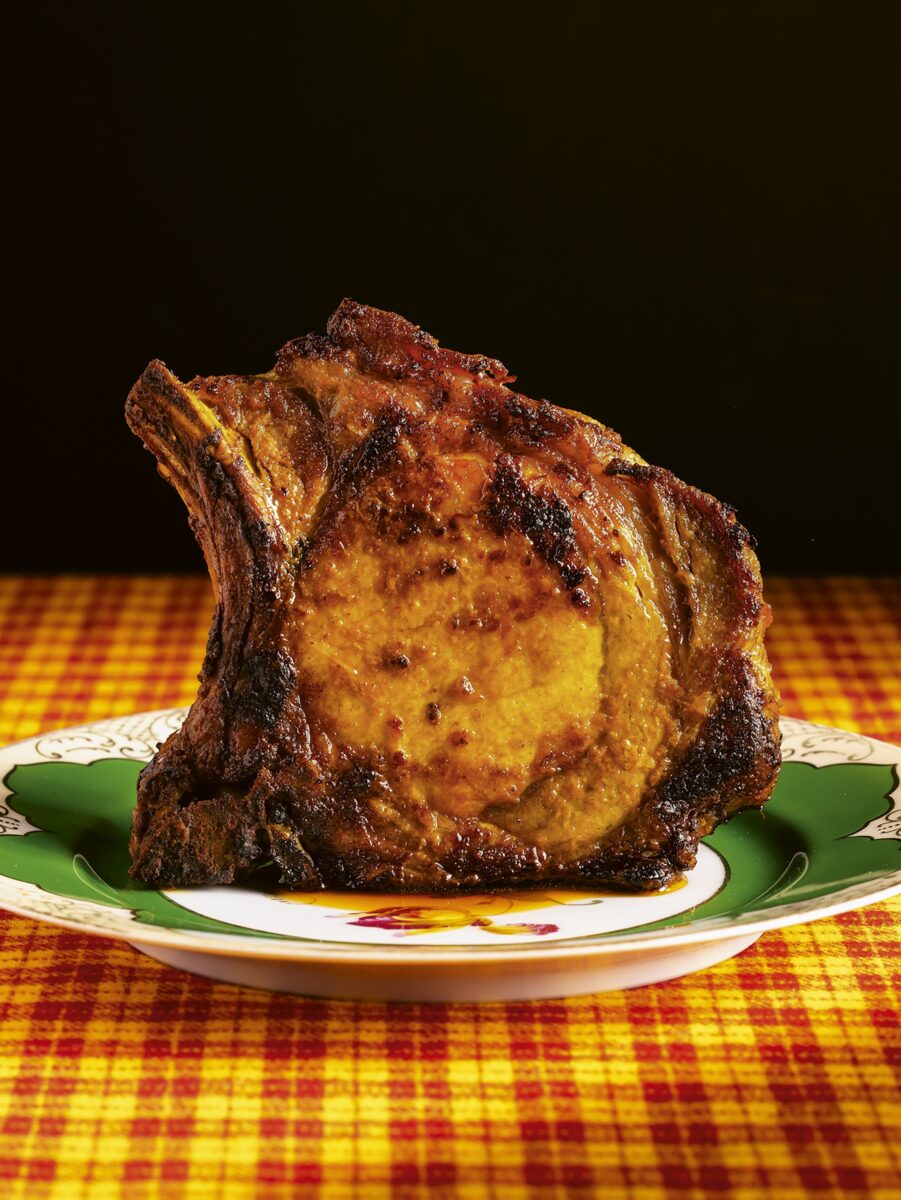
What are pork chops doing in an Indian cookbook, you ask? The answer is simple: nostalgia. As Parsis we are carnivores, unfettered by the various religion-based dietary restraints Hindus, Jews, Muslims, and others navigate. Not only can we eat meat with abandon, we can eat ALL the meats—chicken, goat, lamb, beef, pork, fish, shellfish. If it flies, walks, or swims, it’s (literally) fair game.
Back in India, the butcher shops in my part of town stood alone in a small dusty field, away from all other businesses, and were given a wide berth by Hindu vegetarians. The building was divided into four rooms, each with its own entrance. One room sold pork and was run by a Christian family. (When Portuguese missionaries arrived in Goa in the 1600s and started converting Hindus to Christianity, they introduced pork into the local diet, sealing the conversion of the local population and ensuring they couldn’t subsequently be converted to Judaism or Islam, or even back to Hinduism.) The Muslims sold beef in a different room, and non-vegetarian Hindus sold goat meat in the third room. The last room sold chicken and eggs.
The cook at my grandparents’ bed-and-breakfast made the best pork chops I can remember, using a simple rub of turmeric, ground red chilli, salt, and ginger-garlic paste. I ate so many pork chops in one sitting that I actually broke out in meat sweats. I’ve cheffed up his recipe a bit, but the extra effort is entirely worth it.
I like to cook these thick pork chops low and slow, a time-tested method for juicy, tender meat, as any BBQ pitmaster will tell you. (Cooking at high heat causes the muscle fibers in meat to quickly shrink and tighten, squeezing out moisture and drying out the meat; don’t do this.) I also like to roast these chops (and most other cuts of meat or fish) on a wire rack that fits perfectly into a sheet pan; the rack elevates the meat and allows heat to circulate all around it. That way, you don’t end up with a piece of meat that’s beautifully brown on top but soggy on the bottom because it’s been resting directly on the pan. —Meherwan Irani, from No. 1 Best Indian Cookbook in the World
Read our interview with Irani about his new cookbook, and get the recipes for his famous Desi salad and a comforting dal makhani.
 Excerpted from