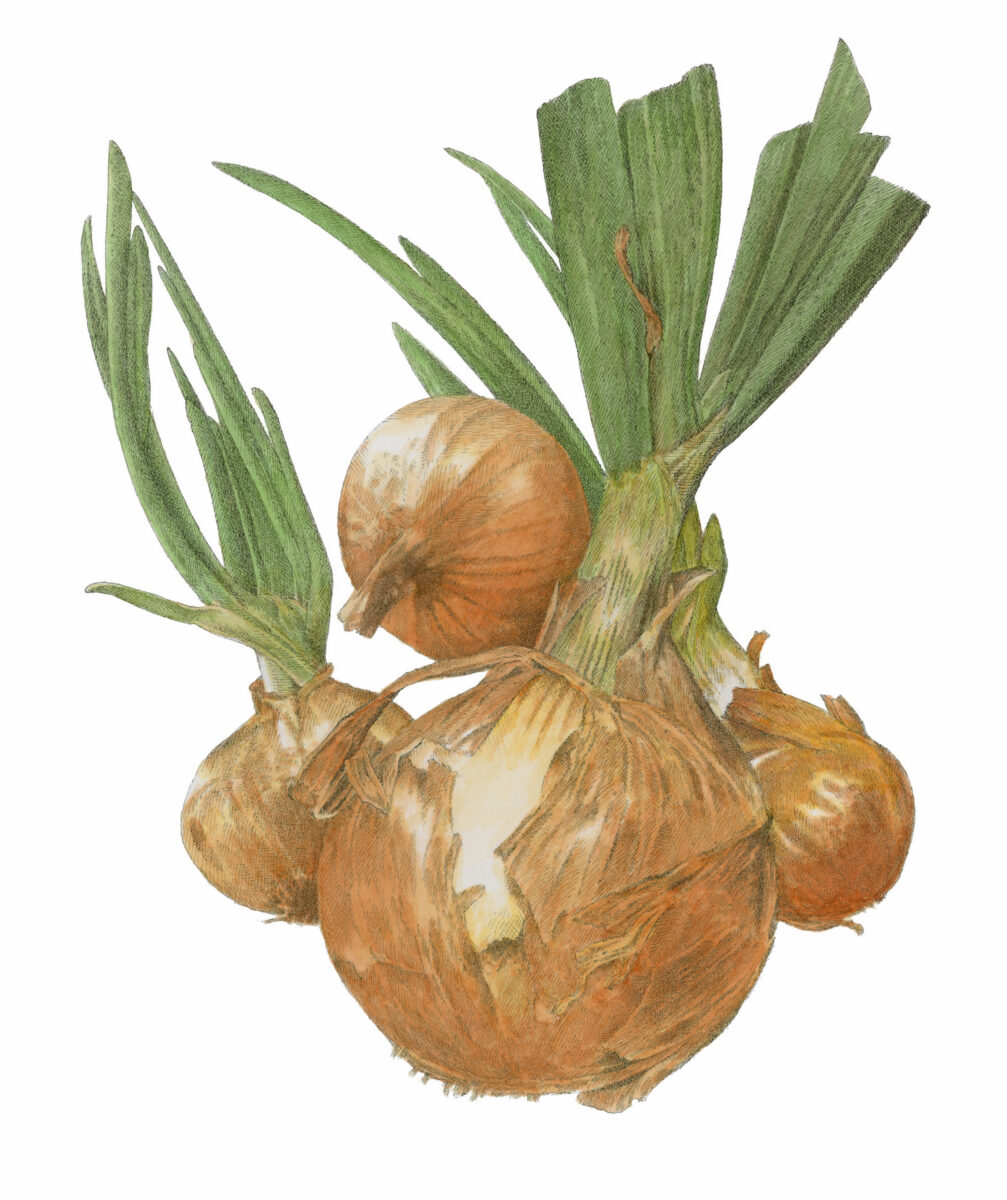
Crispy fried onion rings are a fixture in Bryan Caswell’s family. Growing up a couple of hours from his grandparents’ farm ten miles outside of San Augustine, Texas, he helped plant rows and rows of onions alongside beans and tomatoes. “My grandfather and my dad loved onion rings, truly loved them,” says Caswell, the co-owner and executive chef of the recently opened Latuli in Houston. “Onions weren’t just something we grew; they were part of our table and our time together.” For the Caswells, one particular onion reigned supreme: the Texas Early Grano, which was developed at Texas A&M University in the 1930s using sweet onion seeds brought over from Spain. Now widely considered the mother of all sweet onions, the early spring-season bulb strikes a perfect balance. “They have a natural sweetness while still keeping that classic onion bite,” Caswell says. “When I was a kid, this was actually the only onion I would eat. For me, the Early Grano was a gateway onion.”

If you’re buying your onions at the store or farmers’ market, make sure they feel firm all the way around, an indication that they’re holding plenty of moisture. In addition to rings, the Granos work beautifully in a French onion soup or a classic soubise (a French sauce made from butter, onions, and cream). To give his onion rings even more crunch, Caswell uses a tempura batter (see recipe). The batter needs a brief rest before you fry, and he recommends sticking tight to the recipe for best results. “It’s basically a science experiment,” he says. “The batter is chemically balanced, and the crispness you get is remarkable.”
In the last five years of his father’s life, as he battled dementia, onion rings were, once again, at the center of the family’s table. “Every night I’d ask what he wanted for dinner, and almost without fail, he’d say onion rings,” Caswell recalls. “Some weeks, I made onion rings three or four times. That’s how much they meant to him. Every time I make them now, I think of him, and I think of my grandparents, too. Food has a way of carrying memories like that.”