

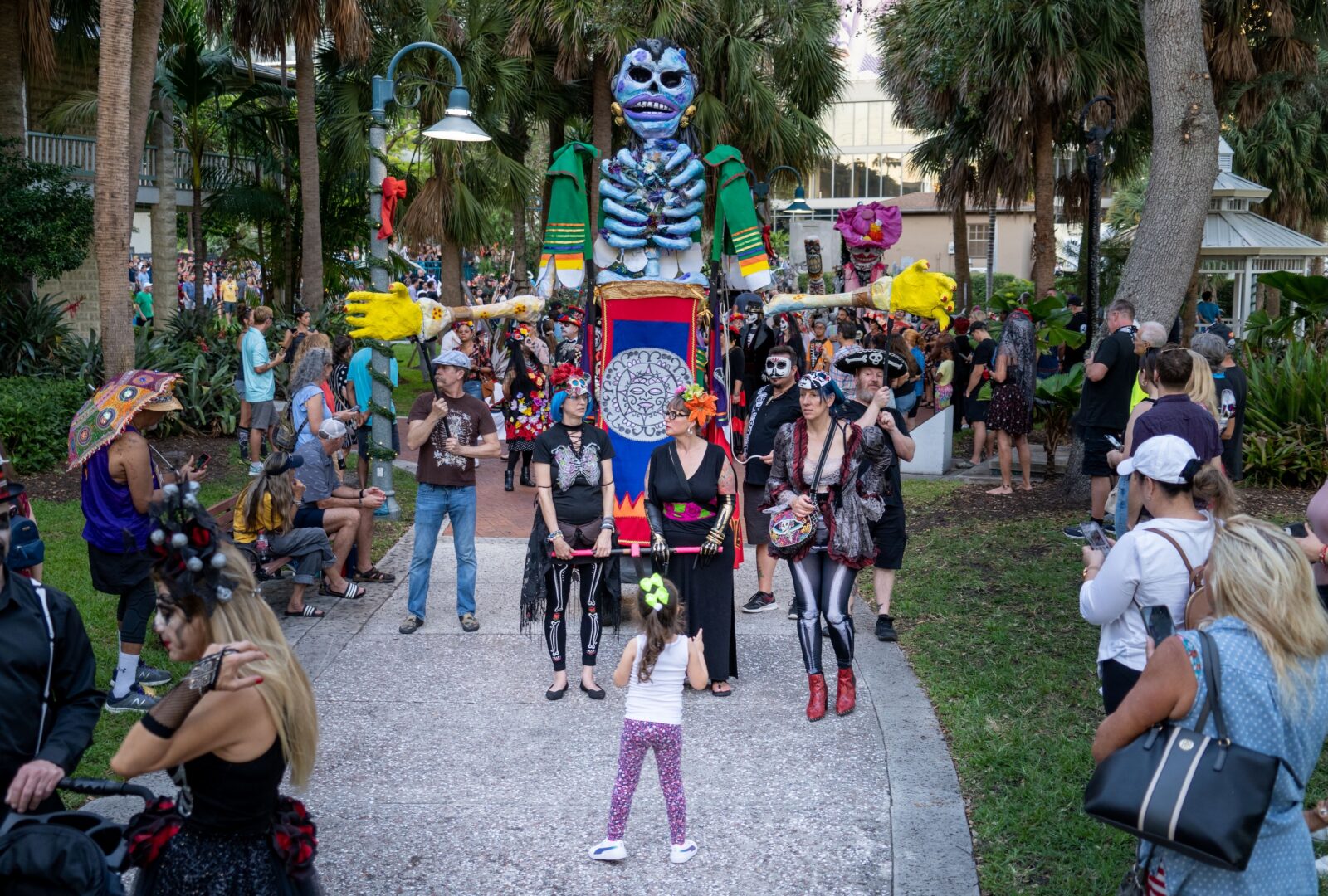
It is said that “the veil is thin” during the hours between All Saints’ Day on November 1 and All Souls’ Day on November 2—that the boundary between the living and the dead is permeable, allowing departed souls to cross back over. In Mexico, this “day of the dead”—Día de los Muertos —is a time for joyful remembrance. Families build ofrendas decorated with photos, candles, and the favorite foods of lost loved ones. Marigolds line the path home, their color and scent believed to guide the dead. Nights are spent at the cemetery, cleaning and decorating graves, sharing stories and meals.
Across the American South and Southwest, Día de los Muertos lands alongside other traditions that honor the departed. Here are seven Southern cities marking the holiday in their own distinct ways.
San Antonio, Texas
In San Antonio, a city with deep Hispanic roots, Día de los Muertos festivities last nearly a month. Chef Johnny Hernandez, San Antonio’s reigning ambassador of Mexican cuisine, has spent two decades working with city and community leaders to build the celebration into what it is today.
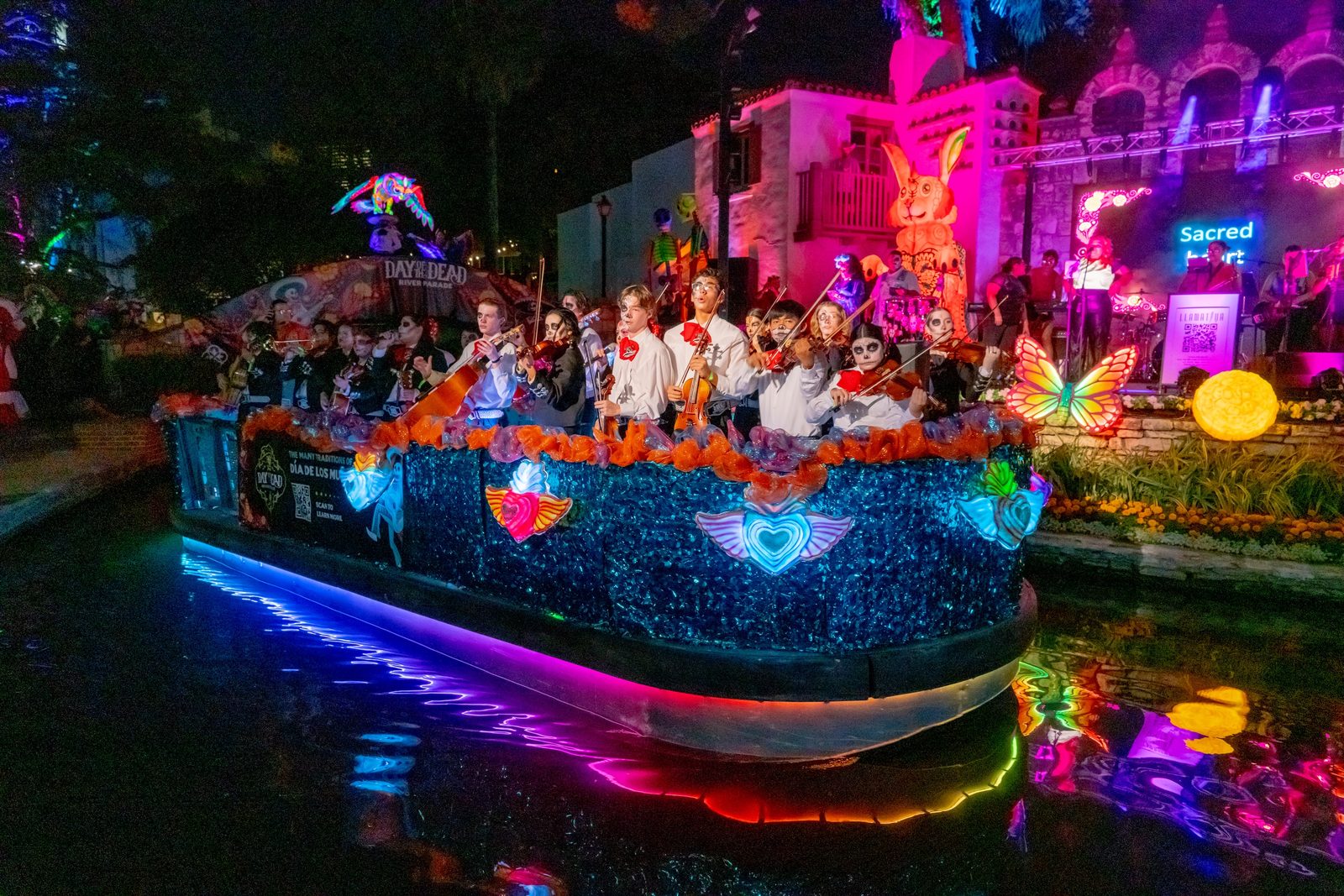
The Tradition Trail is a month-long, self-guided art tour along the River Walk that’s lined with ofrendas, alebrijes (those brightly colored, chimerical sculptures believed to guide and protect the dead), and hand-painted calaveras (skulls). In the La Villita historic arts district, visitors can explore a collection of giant calaveras and hand-hammer a custom milagro, a traditional Mexican prayer charm, with metalsmith Alejandro Sifuentes. Elaborately decorated barges cruise by on October 24 for the annual Day of the Dead San Antonio River Parade, and at Hemisfair, the three-day Muertos Fest fills the park with live music, art, processions, and more than eighty community-made altars–what organizer Jim Mendiola calls “a yearbook of what happened in the Latino community that year.” The Pearl campus hosts its own weeklong celebration that includes live music and ofrendas curated by local artists; Hotel Emma’s altar will welcome back the property’s formidable namesake, Emma Koehler.
For art lovers, the Esperanza Peace and Justice Center offers hands-on workshops in sugar skull decorating and paper-mache calavera making throughout the month. The Center opens its annual MujerArtes Clay Cooperative exhibit and sale on October 26, then celebrates Día de los Muertos on November 1. A full schedule of events is available on the Visit San Antonio website.
New Orleans, Louisiana
New Orleans folds Día de los Muertos into its own deep traditions of honoring the dead. Voodoo practitioners mark the same window of November 1 and 2 with Fèt Gede, the Haitian festival honoring the family of spirits who preside over death. La Source Ancienne Ounfo, a local Haitian voodoo society, holds a public ceremony at the New Orleans Healing Center led by high priestess Sallie Ann Glassman. A Viking ship made of driftwood, built during the recovery period after Hurricane Katrina, carries the souls of the dead along the procession. “We walk to the cemetery with our barque full of offerings,” Glassman explains. “We say prayers from different traditions, bless the offerings, say the names of our beloved dead, and put them on the ship. It’s just absolutely beautiful.”
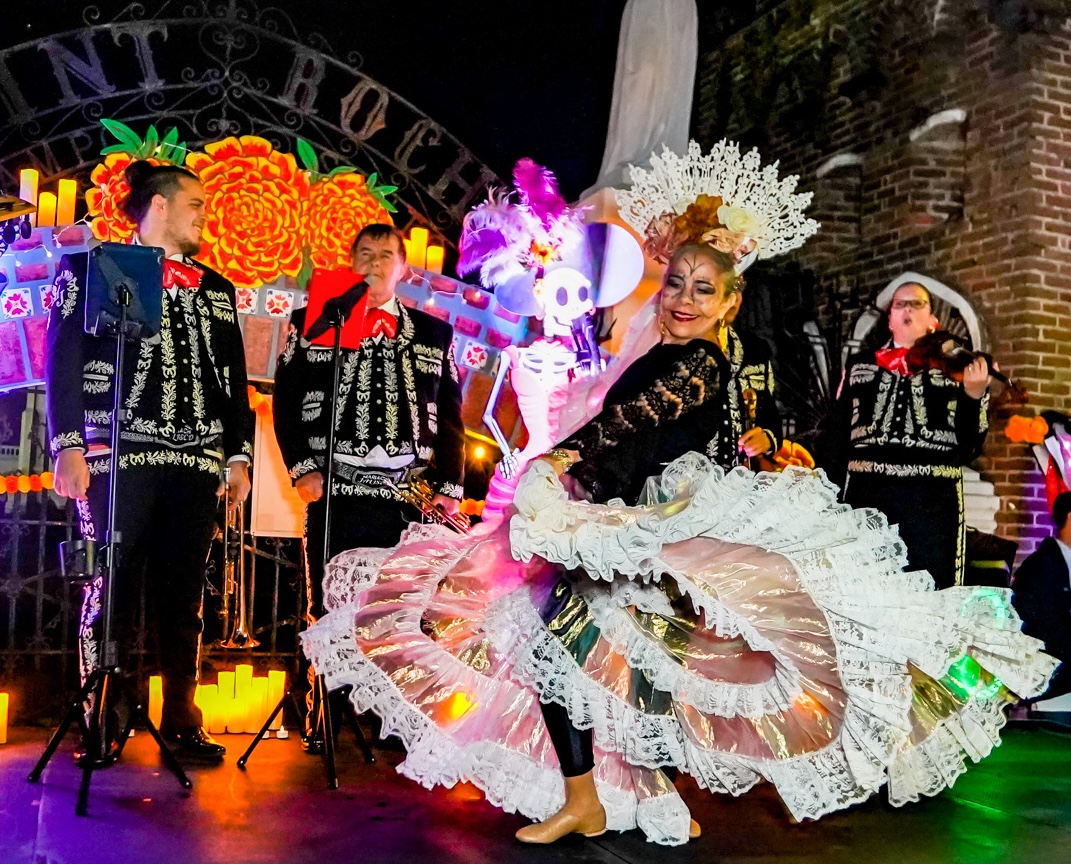
Krewe Mayahuel channels Día de los Muertos through one of New Orleans’ oldest customs: the krewe. Named for the Aztec goddess of agave and patroness of fertility, the group formed in 2017—drawn together, in part, by the comparatively small size of New Orleans’ Mexican community next to cities like San Antonio or Los Angeles. What began as an informal gathering now draws an estimated six thousand people for a fiesta and procession on November 2. At its center is a rolling altar that attendees load with photos and mementos of deceased loved ones. At the St. Roch Cemetery gates, the procession turns solemn for a half hour of quiet remembrance before mariachis arrive and the mood shifts to celebration, New Orleans–style.
Birmingham, Alabama
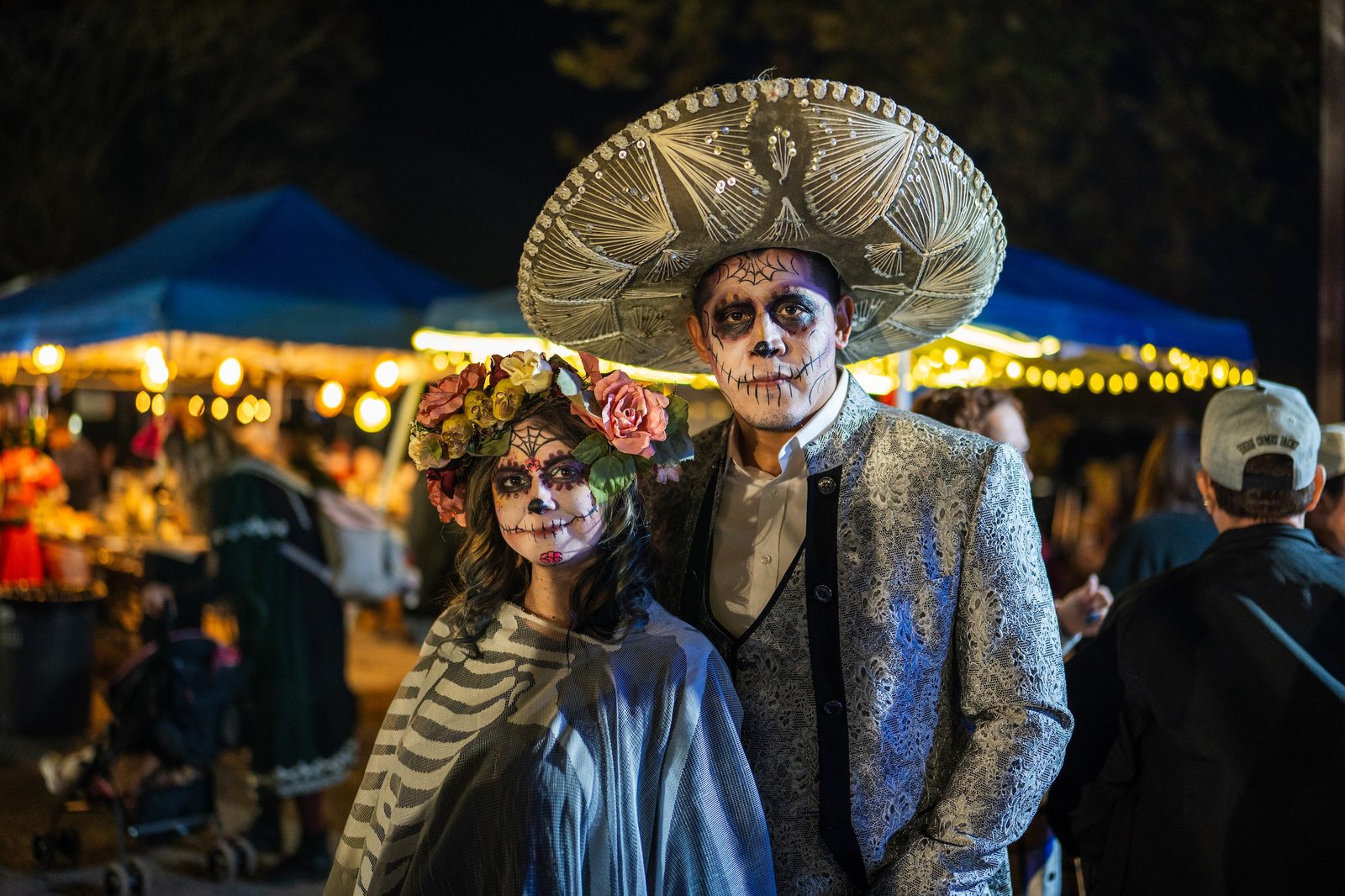
Birmingham’s Día de los Muertos celebration started small: Artist Jessica Helfrecht hosted a gallery installation that her friend Tracy Martin—daughter of civil-rights photojournalist Spider Martin—built as a memorial to her late father. The installation outgrew the gallery, then the alley behind it, then the streets of Pepper Place, before landing at Sloss Furnaces, the nineteenth-century ironworks and National Historic Landmark synonymous with the city’s industrial history. Now run by the nonprofit Bare Hands, Inc., the festival draws around eight thousand people on November 2 for handcrafted altars, a brass-band second line, and performances by Ballet Folklórico and Danza Azteca.
“The celebration of death, the positive and fearless embrace of it, and the belief in an afterlife that promises a yearly reunion between the departed and their living loved ones…spoke to me far more than the mournful, somber funerals and memorials I’d grown up with in the South,” says Tracy, who first learned about Día de los Muertos on a trip to the Yucatán with her father. They planned to hold a small observance at Bare Hands Gallery, but her father died before they could make it happen, so she carried on with an event that had gained newfound meaning. “The altar for my dad was packed with photographs and objects connected to him, his personal belongings and cameras, his favorite foods, his Corona beer, tons of candles, Christmas lights, and marigolds,” she recalls of the first celebration in 2003. “The rest, as they say, is history.”
Terlingua, Texas
Terlingua once produced 40 percent of the country’s mercury, or quicksilver, before its mines went bust, leaving it a ghost town between Big Bend National Park and the Mexican border. Each year at sunset on November 2, residents of Terlingua and the surrounding Far West Texas counties walk to the town’s 115-year-old cemetery, where a communal ofrenda greets visitors at the gate and candles burn on every grave. The thirty-year tradition happens to coincide with the raucous Terlingua International Championship Chili Cookoff, which draws more than seven thousand visitors to the same speck of a town—meaning for one weekend, a ghost town fills with both mourners and chili heads.
Santa Fe, New Mexico
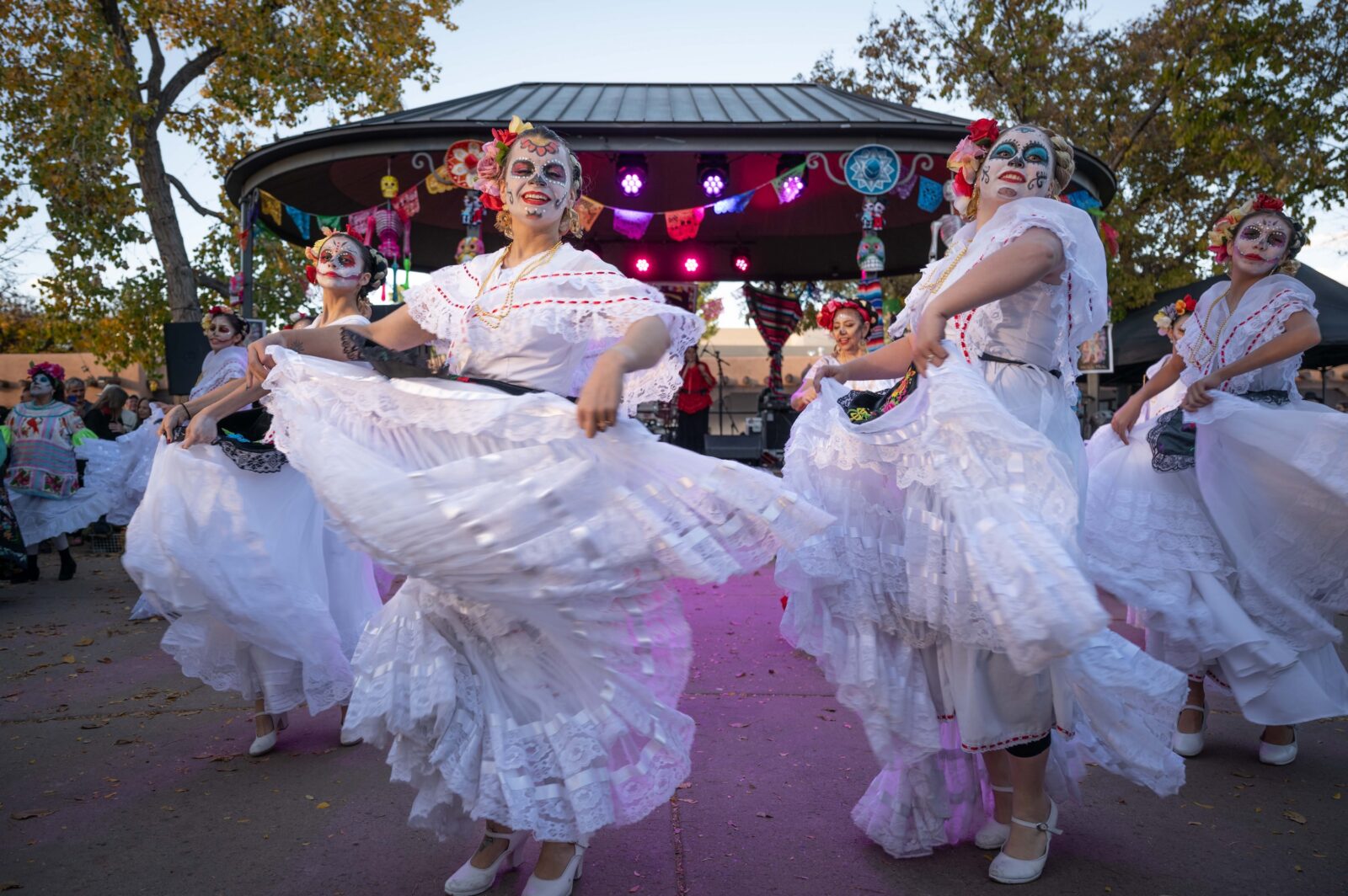
New Mexico was part of Mexico from 1821 to 1846, but Día de los Muertos didn’t take a firm hold there until the twentieth century, when the tradition moved into the mainstream as part of a broader wave of Mexican and Chicano cultural visibility. The city’s largest public celebration, launched in 2022, now fills the historic Santa Fe Plaza on October 30 and 31 with community ofrendas, strolling mariachi musicians, face painting, and a candlelight parade led by Ballet Folklórico Xochitl. This year’s celebration also marks Route 66’s centennial, with vintage cars parked among the marigolds and calaveras. A quieter, longer-running counterpart unfolds at the Museum of International Folk Art, where visitors can enjoy sugar skull decorating, face painting, and traditional dance performances by Los Niños de Santa Fe.
Atlanta, Georgia
Atlanta’s Día de los Muertos scene has grown alongside the city’s expanding immigrant community and now spans several distinct celebrations. The marquee event on November 1, hosted by the Consulate General of Mexico and the Institute of Mexican Culture, marks its twenty-sixth year at Historic Oakland Cemetery with live music, traditional food, ofrendas, and a costume contest honoring La Catrina, the holiday’s iconic fancy-hatted skeleton lady. The same day, the Plaza Las Americas shopping center hosts its own festival, and the Atlanta Symphony Orchestra stages a free celebration at Symphony Hall with live music, stilt walkers, and ofrendas.
Fort Lauderdale, Florida
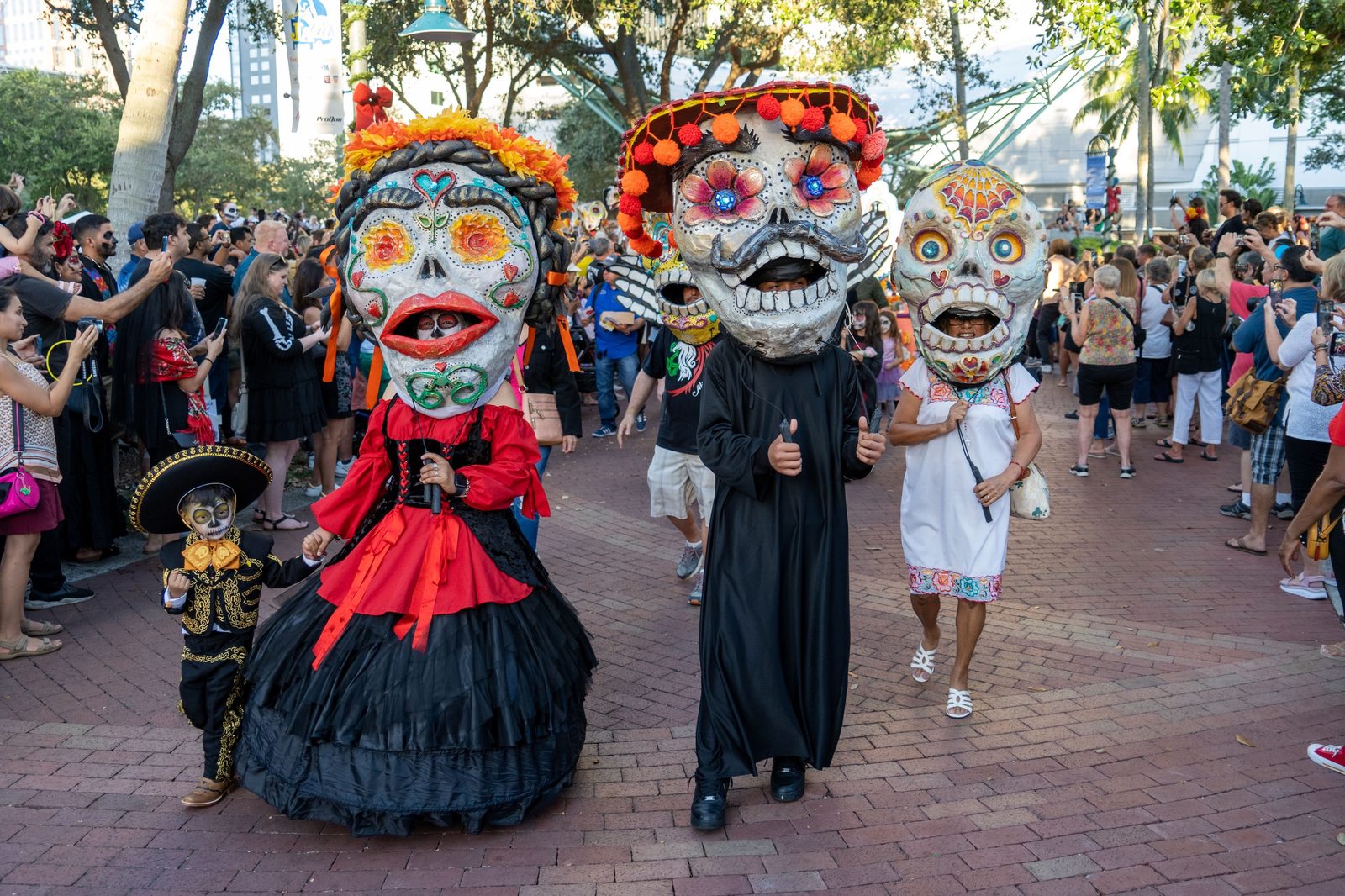
Fort Lauderdale’s festivities draw less from Mexican tradition than from the full sweep of Latin American culture shaping South Florida. What began as puppeteer Jim Hammond’s Florida Day of the Dead Celebration—a fifteen-year run that drew more than thirty thousand people at its peak—evolved into the Downtown Day of the Dead Celebration, now hosted by Riverwalk Fort Lauderdale. The event fills Esplanade Park on November 7 and sends a costumed procession through downtown, including representatives from the Mexican consulate.