

As we bump along a sandy road in a field truck, the sun lifts over the Texas Gulf Coastal Plain, illuminating a strange forest. Nearly everything is low-slung and dense and, save the feathery green of mesquite, designed to poke, grab, stab, or snag. The understory of this Tamaulipan thornscrub is the domain of a most unexpected and elusive creature: the American ocelot. Measuring no more than thirty pounds and eighteen inches tall, the spotted cat looks like a miniaturized jaguar, impossibly beautiful and vanishingly rare. But there may be, at long last, hope for the endangered feline to make a comeback in the United States.

From January through April nearly every day for the last five years here on El Sauz Ranch, two technicians have set some fifty traps baited with live pigeons and risen before dawn to check each one. Today I’ve joined them on the off chance it might be the day we catch an ocelot, and to see the work of East Foundation, a nonprofit focused on agricultural research, education, and land stewardship that manages more than 217,000 acres of working Texas ranchlands.
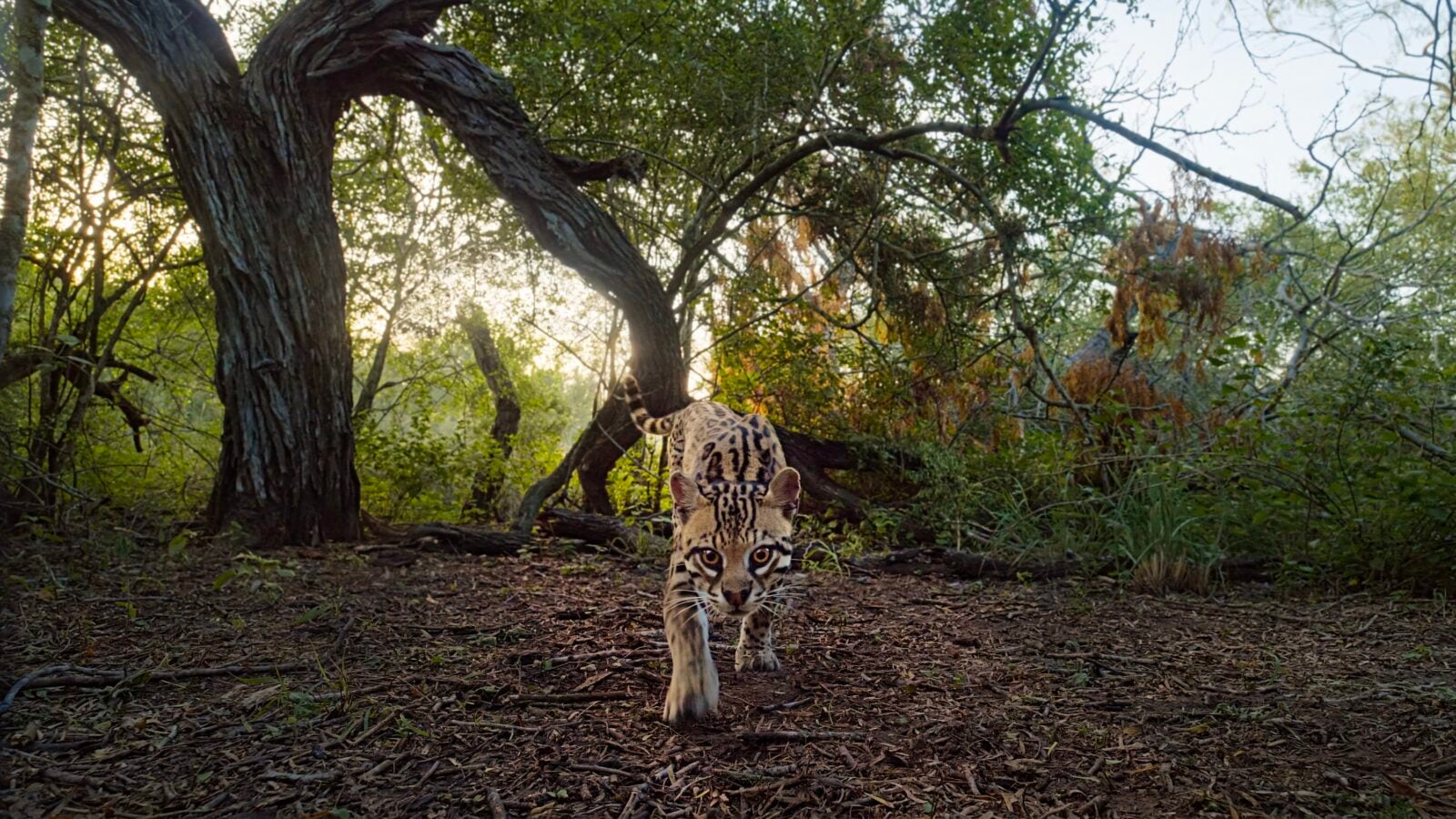
Photo: Ben Masters
The last ocelots in the United States dwell in the Tamaulipan thornscrub of South Texas, where they hunt small rodents, rabbits, and birds by night.
Trap after trap holds nothing save a few disgruntled racoons and one lively wood rat, all of which bound away when we open the doors. Even though the forest around us pulses with life, and even though I’ve seen footage of the cats with their sculpted heads, orb-like eyes, and striking coats gliding on elegant legs through this very habitat, it’s still hard to believe one might be nearby. As East Foundation veterinarian Ashley Reeves tells me later, “They do look like something that shouldn’t live here—and most people have no idea that we have ocelots in the United States.”
But the wildcats are, after all, impressively adaptable. They can thrive in all manner of habitat, including rainforests, savannas, mangrove swamps, and cloud forests in South and Central America, where that fabulously dappled coat helps them melt into the shadows—especially from dusk to dawn, when they’re active and hunting. Ocelots once roamed as far north as Texas, Louisiana, and Arkansas, and a stable population still lives across the border in Mexico. But in the last 150 years, a wicked combination of threats—predator control programs, pesticide use, habitat loss, and road building—chipped away at their numbers to the point that scientists feared them extinct in the United States.
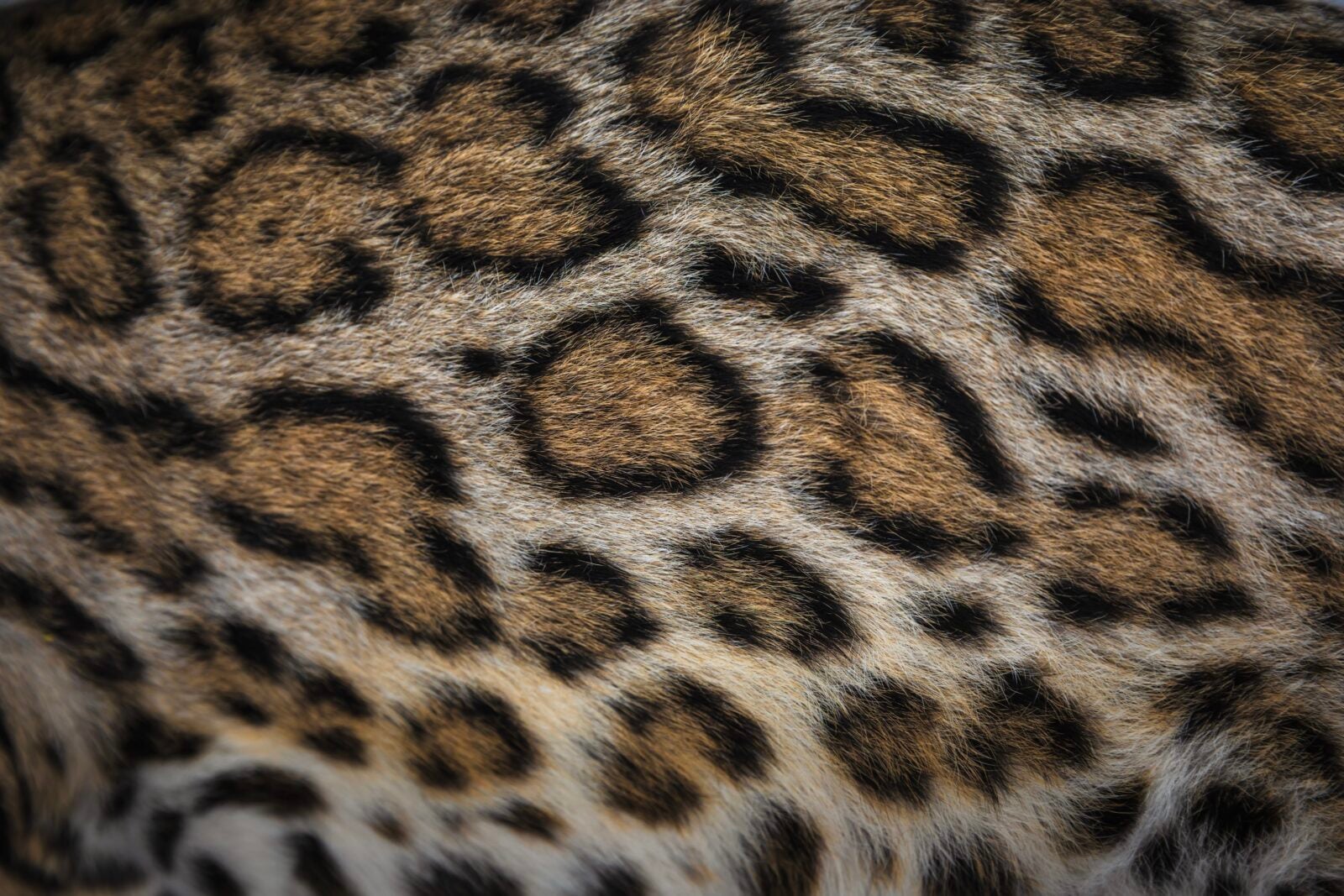
Photo: Ben Masters
The dramatic spots, rosettes, and stripes of an ocelot’s coat help it disappear into the landscape, and like a human fingerprint, no two patterns are the same.
But one wildlife biologist, Michael Tewes of Texas A&M University, believed he could find pockets where the species was hanging on, and he set traps around South Texas until he finally caught one on a private ranch in 1982. He later discovered a population at Laguna Atascosa National Wildlife Refuge.
The results of his research illuminated a dire situation: Today, just two breeding ocelot populations totaling no more than 120 animals remain in South Texas—a smaller one at Laguna Atascosa and a larger one at a nearby tract now known as El Sauz Ranch, where I’m watching deer leap away from our field truck as two scissor-tailed flycatchers swoop overhead.
Biologists have studied these last strongholds for decades now, enlisting the help of camera monitoring and trapping. When an ocelot is caught—and the team does catch them, usually some ten a season—it’s a huge shot of adrenaline; they know they’ve got one by the way the trap rattles as they approach. A notifying text message goes out, a group of biologists arrives, and a field station goes up. In under thirty minutes they’ve sedated the animal, fitted it with a radio collar, drawn blood and genetic samples, and if it’s male, collected semen for potential artificial insemination. They often bestow nicknames: an especially good-looking cat became Romeo; another, Louis after a researcher’s father; a female, which is much rarer to catch, Valentina.
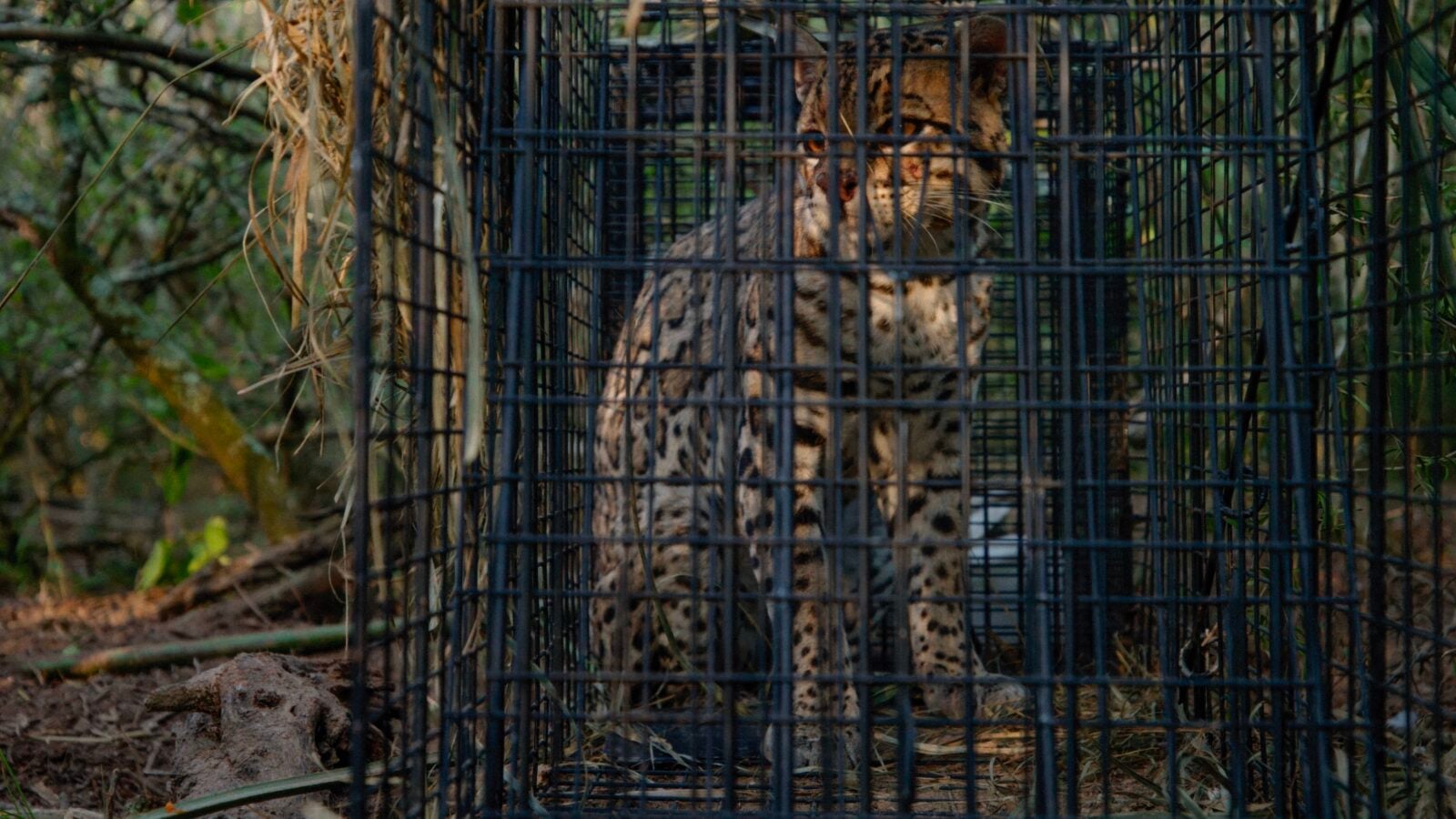
Photo: Ben Masters
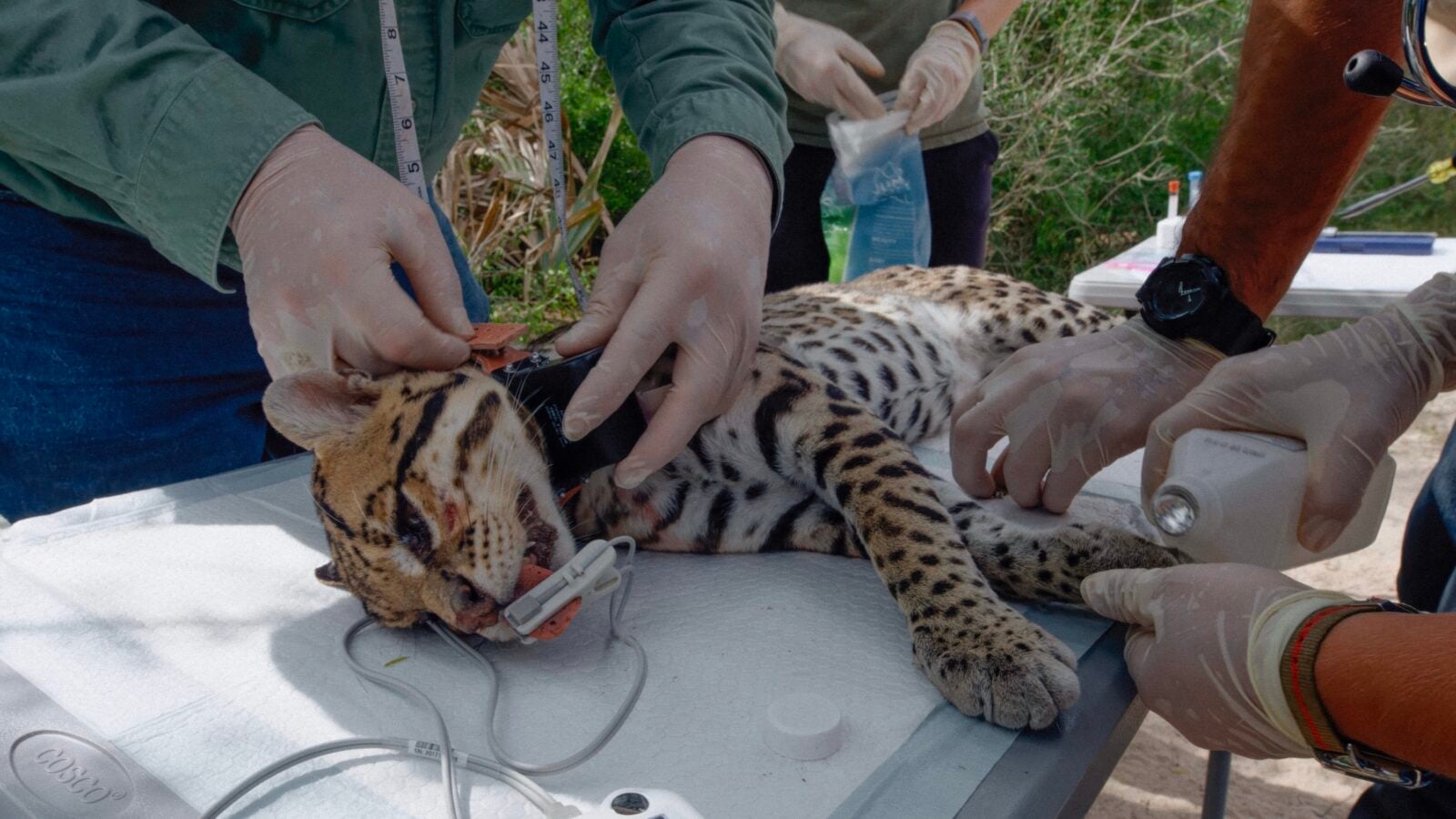
Photo: Ben Masters
Michael Tewes, who has worked with the species for over four decades, attaches a radio tracking collar to an ocelot nicknamed Romeo on East Foundation’s El Sauz Ranch.
The data has illuminated how the ocelots move across the landscape. One male ventured across some thirty miles of difficult terrain between El Sauz and Laguna Atascosa, indicating how resilient, tough, and determined these cats are when there’s even a glimmer of habitat connectivity. South Texas today is a patchwork of agricultural lands, ranches, development, and wind turbines, all sliced up by roads with flying vehicles against which an animal twice the size of a house cat stands no chance. In the past year alone, three male ocelots were struck and killed.
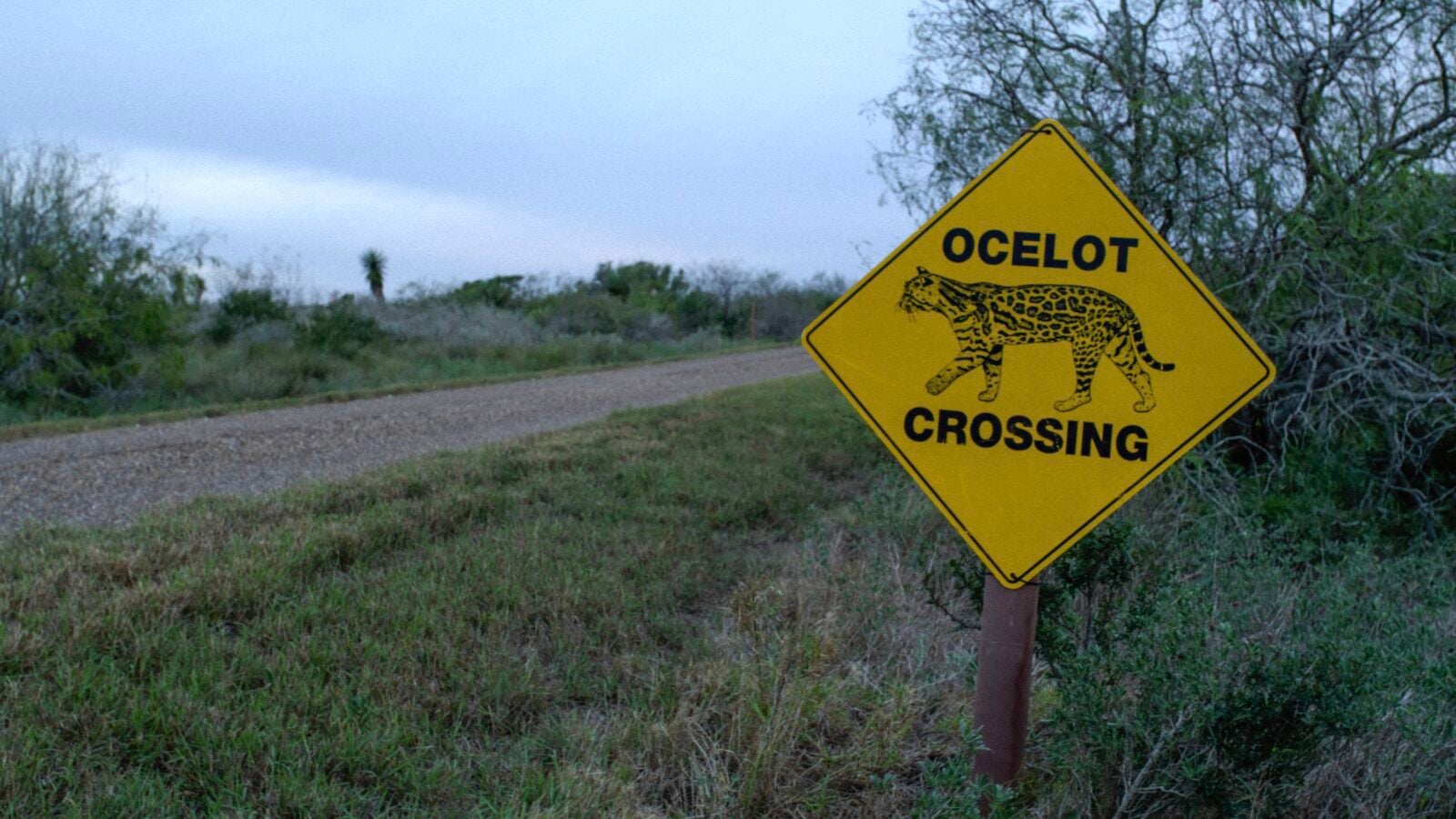
Photo: Ben Masters
Car strikes in human-dominated landscape have long been the leading cause of ocelot mortality.
The consensus among biologists is clear. If the ocelot is going to be saved in the United States, it needs to be done soon—numbers aren’t trending upward on their own, and with so few cats left, genetic diversity is a concern. “It’s time for action beyond research,” says Reeves, who signed on with the East Foundation team seven years ago. “We need to be actively recovering them.”
Reeves is working with East Foundation research project coordinator Lindsay Martinez and a vast coalition of partners, including Texas A&M, federal and state agencies, and zoos, to launch a first-of-its-kind captive breeding facility in Kingsville, Texas, called the Caesar Kleberg Wildlife Research Institute Ocelot Conservation Facility. Set to open this fall, it’s the result of years of work by biologists to decipher a concrete path forward. Artificial insemination proved difficult within the wild population; so did forging a cross-border relationship to translocate cats from Mexico. Finally, the partners struck on the idea of pairing females from zoos across the country with wild males from Texas, an approach modeled loosely on the successful recovery of the Iberian lynx in Spain.
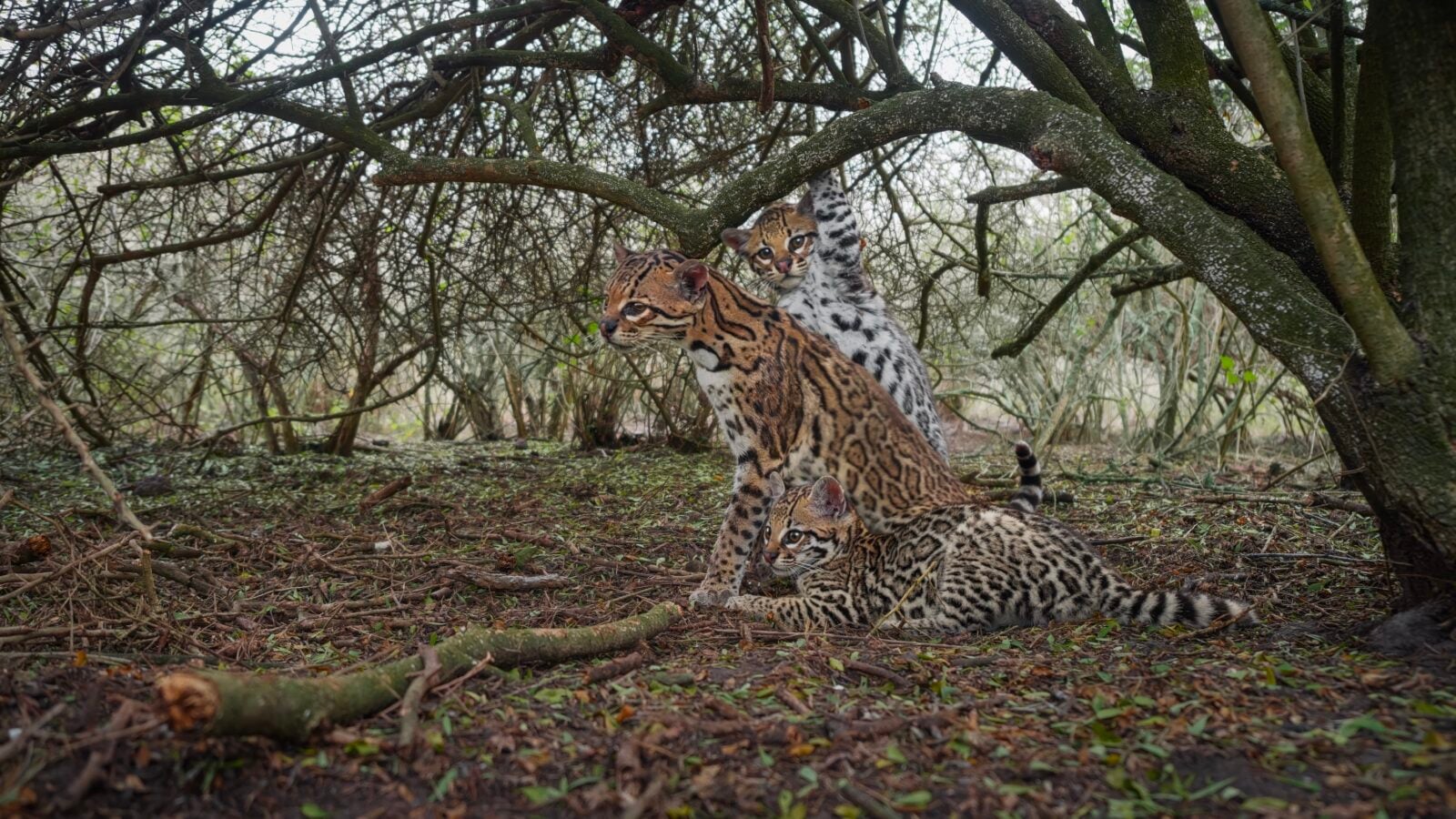
Photo: Ben Masters
For his 2022 PBS documentary, American Ocelot, Ben Masters captured incredibly rare footage of a female ocelot, whom he nicknamed Mama Jane, raising her two kittens in the Texas thornscrub.
The facility’s goal is to establish a third ocelot population at San Antonio Viejo, an East Foundation ranch situated well inland from the threat of hurricanes. (As Martinez puts it, “You can’t put all your ocelots in one basket when that basket is sitting right on the coast.”) After a soft opening with bobcats to identify any unforeseen infrastructure issues, the facility will receive its first four female ocelots in the coming months. Then the team wants to trap males from the wild and bring them in temporarily for breeding, which will ensure that wild Texas ocelot genes are represented in the resulting kittens. Eventually, the biologists plan for young ocelots to be released into the wild.
In our modern world, the reality is that “the wild” won’t ever mean vast and pristine stretches of habitat. In Texas, 95 percent of land sits in private hands, and working ranches hold the key to the future of wildlife diversity. Martinez illustrates this point when we climb a sand dune and look out over El Sauz. Past its borders, the green and brown tangle of thornscrub halts abruptly, giving way to flat, cleared land studded with wind turbines. If it weren’t turbines, it could be a factory, a town, a monoculture farm, or another development. “Ocelots didn’t survive here in spite of ranching,” Martinez says pointedly. “They survived because of it.”
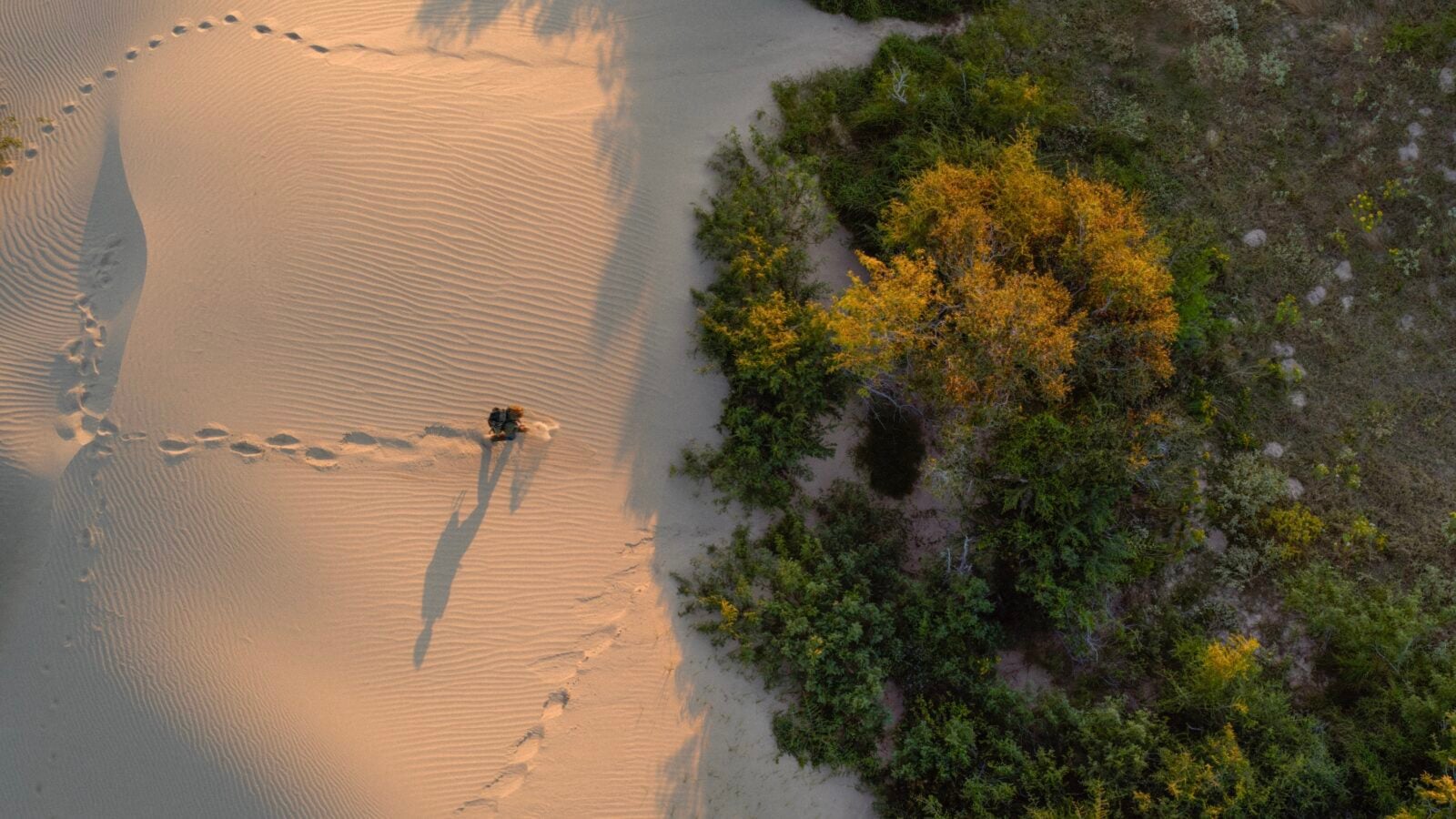
Photo: Ben Masters
Videographer Ben Masters treks into the thornscrub habitat on El Sauz Ranch from the sand dunes on the Laguna Madre, near the Gulf of Mexico.
After a morning spent checking traps, I take an afternoon drive with Martinez and Reeves. We pass munching cattle, a reminder that this is a working ranch, but see a dizzying array of wildlife alongside them. Ranches in Texas typically rely on two streams of income, one from cattle and the other from hunting. Maintaining healthy, diverse habitat is beneficial for both, as grazing livestock uses thornscrub for shade and rest, while game species like deer, turkey, quail, and invasive nilgai antelope dwell within it.
East Foundation provides the science behind the benefits of this conservation-minded management, the results of which we see at every turn. We stop to admire a slow-moving tortoise, watch roadrunners and deer hurry off, startle a covey of quail, and glimpse a Harris hawk wheeling overhead. That we don’t encounter an ocelot, though, is expected. It’s hard enough to trap them; spotting one of the elusive and camouflaged animals on the move is almost unheard of. “Most of the time, it has to be enough to know that you walk where they walk,” Martinez says.
But then, as we bump along a narrow road, Reeves gasps and slams on the brakes. In the hushed tone of someone who scarcely believes her eyes, she breathes, “That’s an ocelot.” The cat sits in the middle of the sandy path. It turns its head, fixes its huge eyes on us, and then springs into blurred motion so fast that my mind only pulls out the image of a long, sweeping tail, ringed with black, disappearing into the brush.
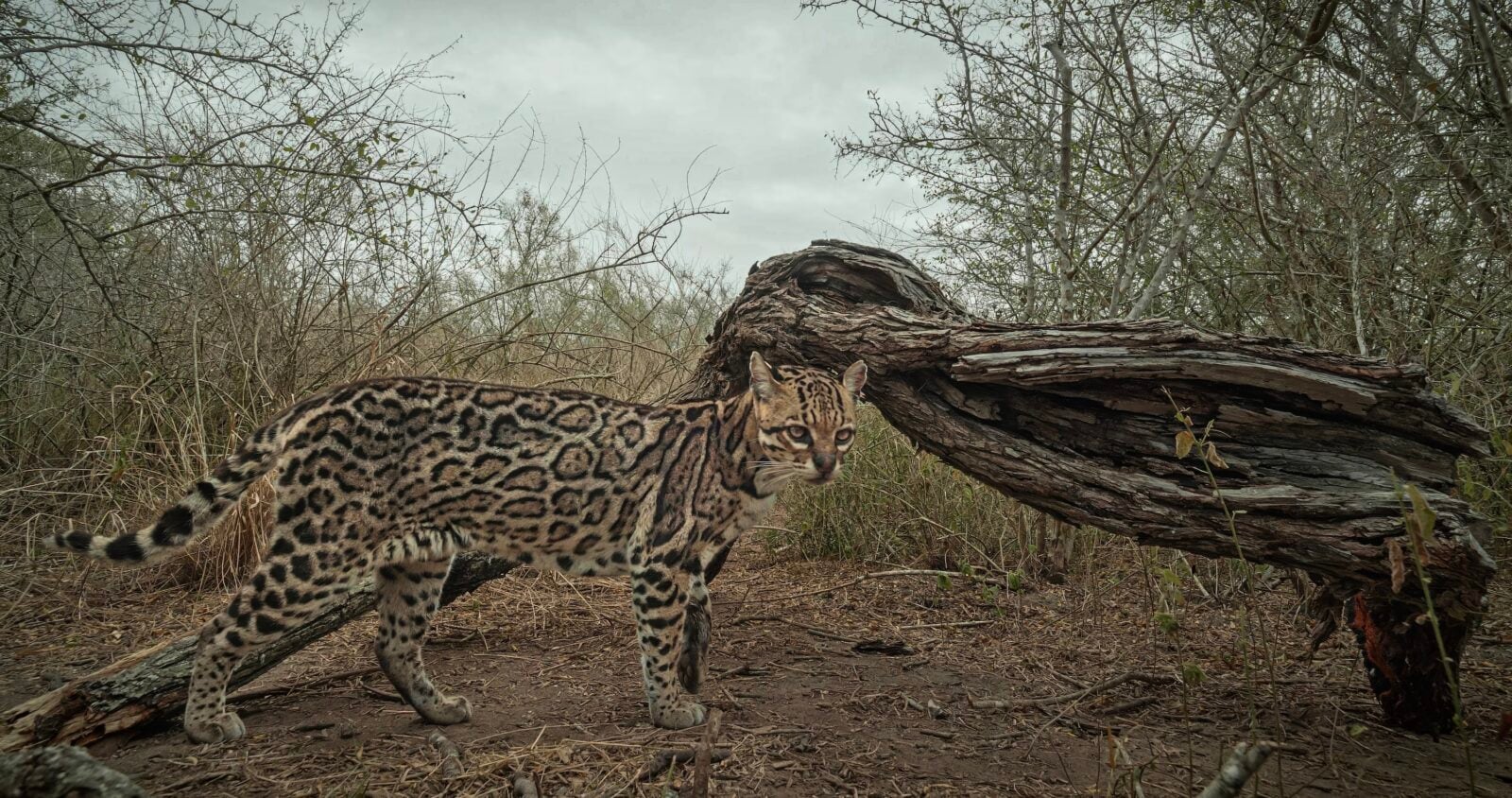
Photo: Ben Masters
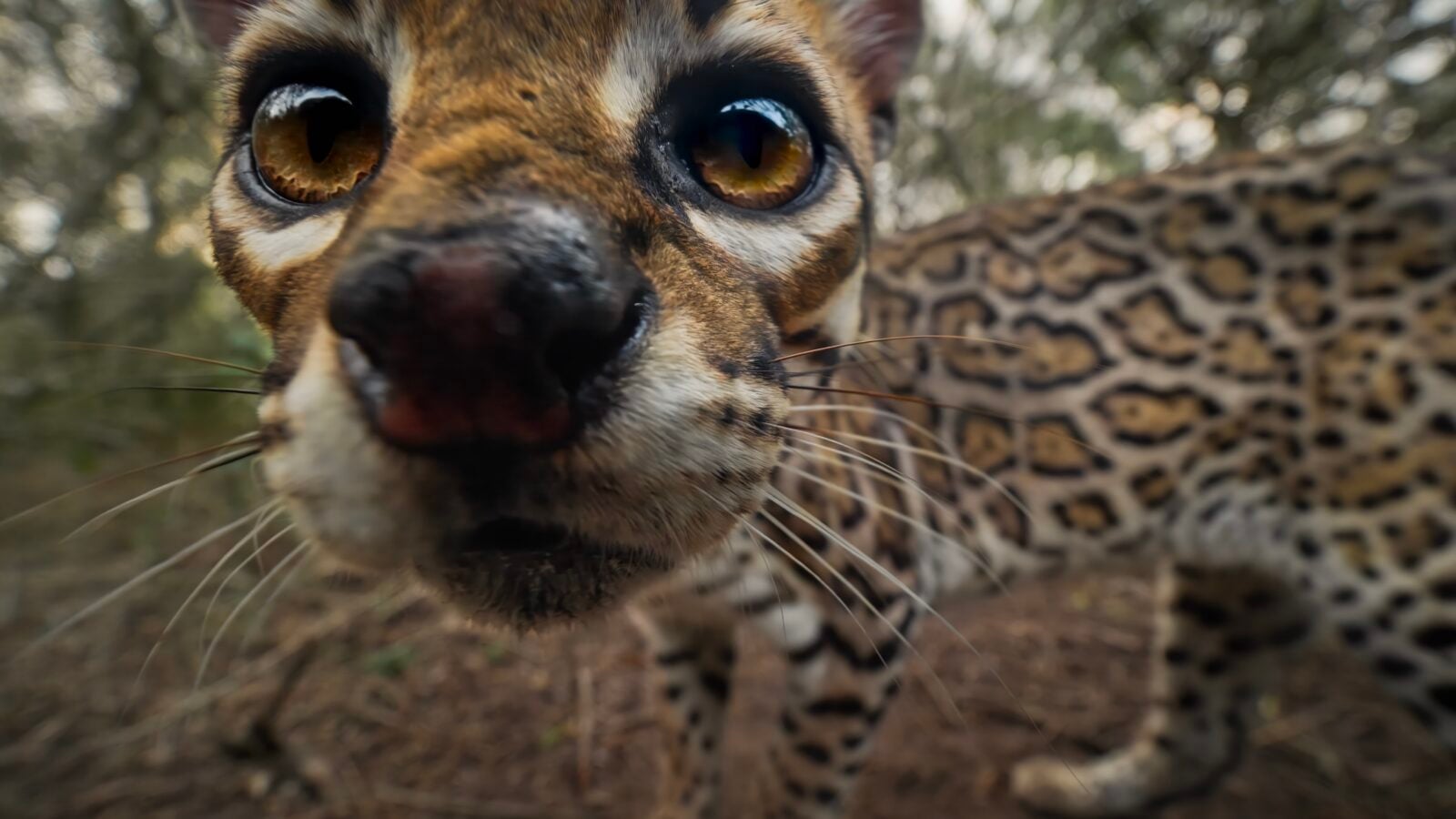
Photo: Ben Masters
Seeing an elusive ocelot in the wild is incredibly rare, but motion-sensored cameras offer a window into their secret lives.
In her seven years working with the species, Reeves has seen many ocelots in traps, but she has never crossed paths with one in the wild. Neither has Martinez. After a moment sitting in stunned silence, we climb out of the truck and find a set of small, perfect cat prints in the sand—evidence that we didn’t imagine this creature that seems almost mythical.
It’s an auspicious sign on the eve of the opening of the breeding facility, which came together after so many years of effort, research, forged partnerships, and paperwork. Through it all, the duo tells me, the sheer mystique and charisma of the ocelot kept the momentum going. “People love this cat,” Reeves says. “In the end, we all want the same thing: To bring the ocelot back from the brink in Texas.”
Ben Masters spent four years filming his groundbreaking 2022 documentary, American Ocelot, and much of it takes place on El Sauz Ranch. It’s available for streaming on Amazon Prime, PBS Nature, and Apple TV.
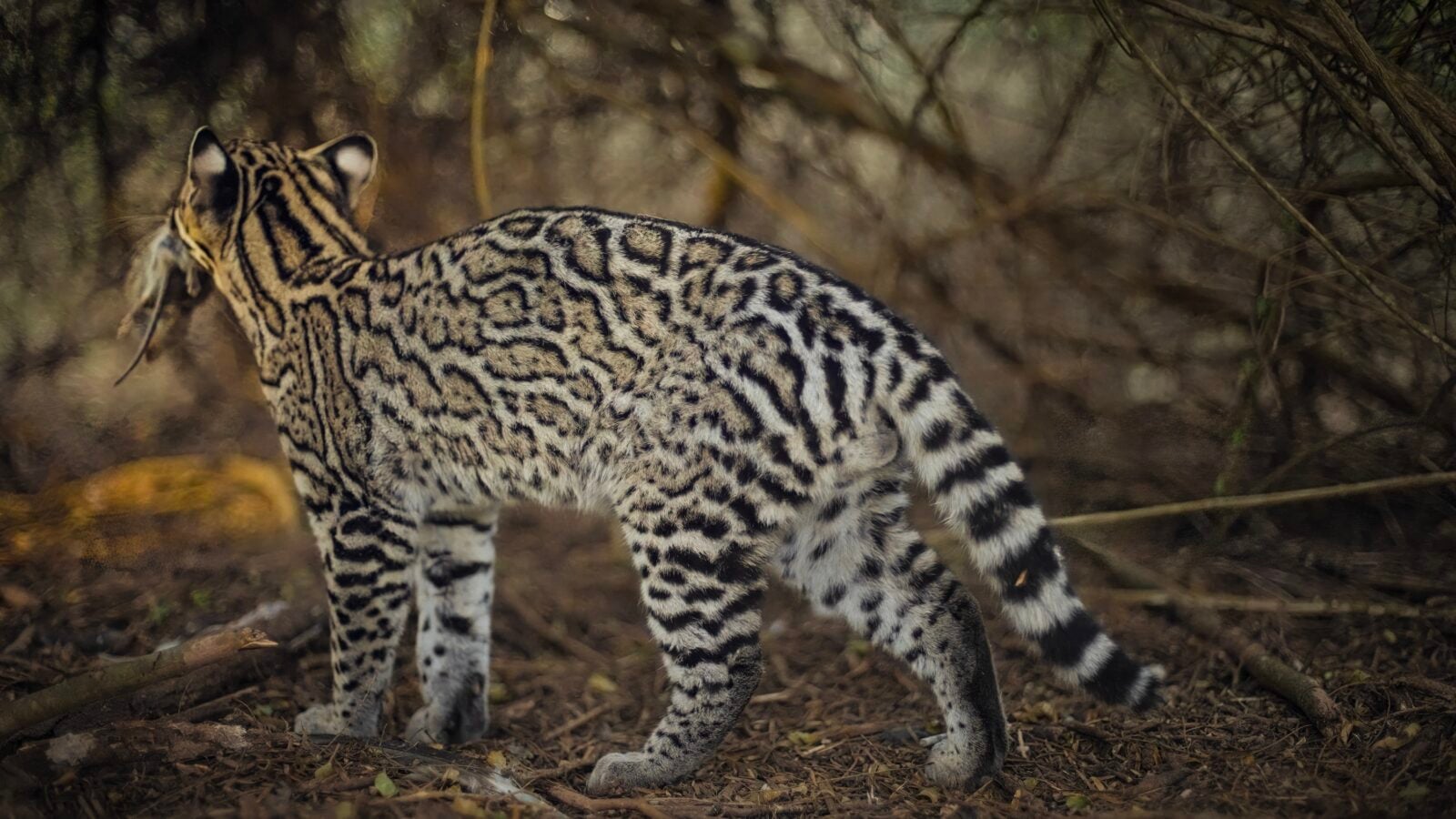
Photo: Ben Masters
A mother ocelot heads back to her kittens after a successful hunt.
Lindsey Liles joined Garden & Gun in 2020 after completing a master’s in literature in Scotland and a Fulbright grant in Brazil. The Arkansas native is G&G’s digital reporter, covering all aspects of the South, and she especially enjoys putting her biology background to use by writing about wildlife and conservation. She lives on Johns Island, South Carolina.