

I double-check the address to make sure I’m in the right place. I’ve just arrived in Thompson’s Station, a hamlet about a half hour south of Nashville. A century-old former grain warehouse sits beneath a sprawling Bradford pear tree across from decommissioned railroad tracks. The unassuming building hardly looks like the kind of place that helped pioneer a new era of whiskey making in the state.
I expect Company Distilling to be quiet on a Thursday afternoon. Instead, most of its barstools are occupied, and I land in the middle of a lively conversation. The group is with Whiskey University, a Tennessee-based spirits education company, in town for its annual gathering. One man, from Arizona, tells me he’s visited all of the thirty-plus stops on the Tennessee Whiskey Trail.
Company Distilling’s location here is small—you can practically tour it by turning in a circle—but this spot became Williamson County’s first legal distillery in more than a century when attorney Heath Clark opened it as H. Clark Distillery in 2014, after helping change a long-standing state law in 2009 that restricted spirits production to just three counties. Former Jack Daniel’s master distiller Jeff Arnett and other partners rebranded it in 2022, also opening a larger distillery in Townsend, near the entrance to Great Smoky Mountains National Park, and, more recently, a location in Lynchburg, the longtime home of Jack.
Company is just my first stop on a road trip to explore the newer distillers and blending houses growing Tennessee’s whiskey scene in and around Nashville, which is now attracting visitors drawn to mash bills as much as music. And this one was worth the drive. After sampling through a tasting flight, I take home a single-barrel Tennessee whiskey finished with applewood that’s delicate in its honeyed aroma and finishes with a rich, black-pepper sip.
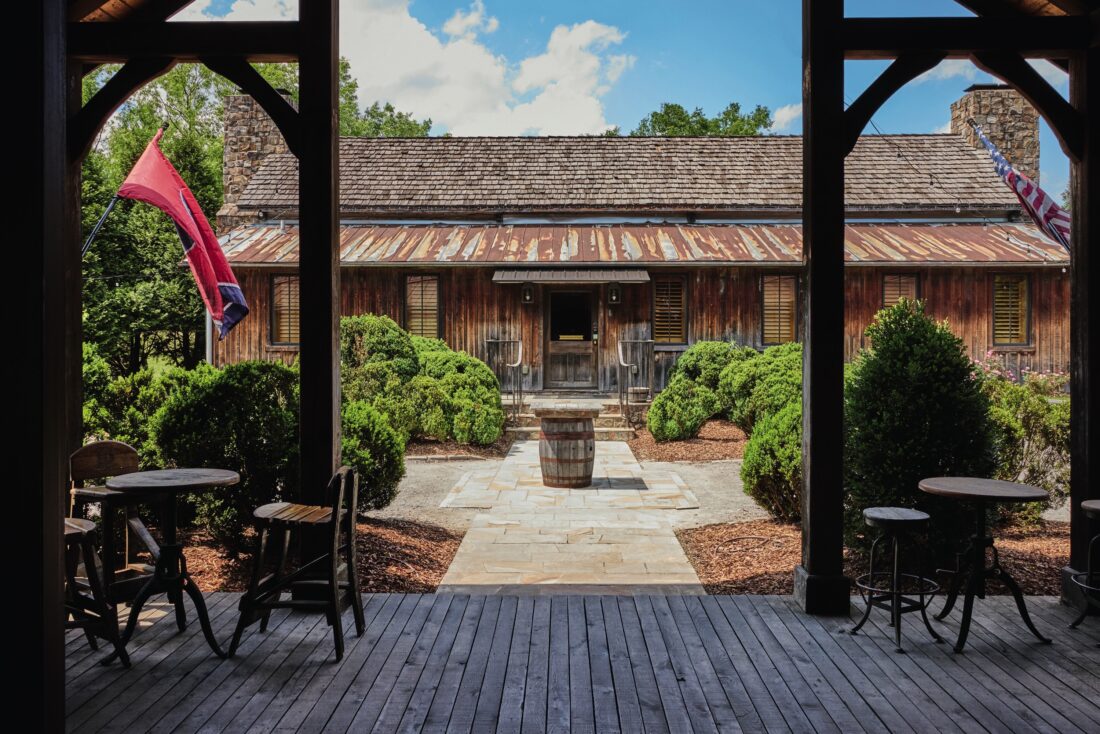
My next stop, Leiper’s Fork Distillery, awaits about twelve miles down the road, past rolling farmland and several new residential developments. Chief distiller Lee Kennedy and family members founded it in 2016, and like the hundreds of farm distilleries that once dotted the state in the 1800s, he uses locally grown grains and a traditional pot still to make pre-Prohibition-style bourbon, Tennessee whiskey, and rye. “Culturally, whiskey is ingrained in the founding of Tennessee,” he tells me as we sit in rocking chairs on the stillhouse porch, sipping a bottled-in-bond bourbon layered with toasted grain and an earthy nuttiness alongside caramel and oak. Most of those early farmstead operations were wiped out by 1910, however, after the state instituted a ban on producing alcohol, a decade before federal Prohibition began.
A few years after Prohibition’s repeal, Tennessee allowed counties to vote on whether to permit distilling again. Most said no, leaving only Moore, Coffee, and Lincoln Counties—home to the distilleries for Jack Daniel’s, George Dickel, and Prichard’s, respectively—to anchor Tennessee’s whiskey industry for the next seventy years. As a result, it’s had some catching up to do compared with its Bluegrass State neighbor to the north.
“We essentially skipped an entire generation,” says Charity Toombs, executive director of the Tennessee Distillers Guild and Tennessee Whiskey Trail. “But the people crafting [whiskey] here now are younger and very innovative.”
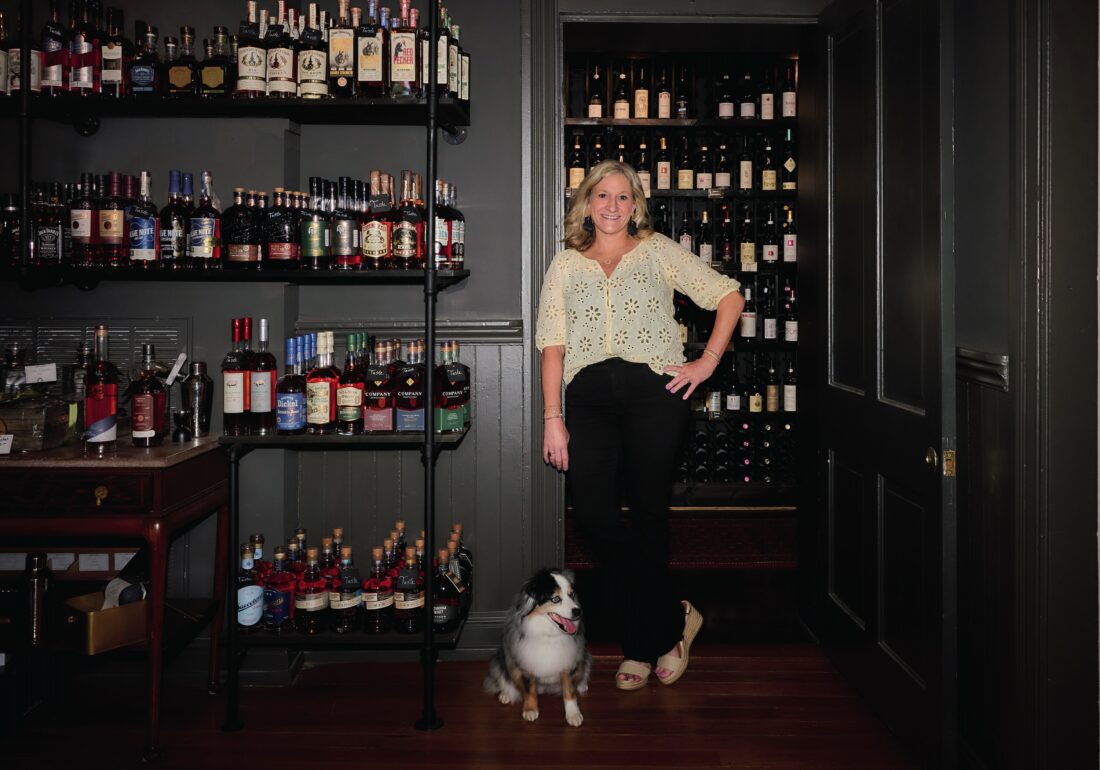
Later that afternoon, in nearby Franklin, I study wall-sized displays detailing this history at House of Spirits, Leiper’s Fork Distillery’s tasting room, a space the group plans to duplicate in Nashville Yards this summer. At the Harpeth Hotel, which holds daily whiskey tastings, I try a robust single-barrel bourbon from Happenstance Whiskey, an all-female-owned start-up in Nashville. Next door, at the bespoke Saint Goose Wine and Spirits, I browse shelves lined with Tennesseemade whiskeys that didn’t exist a decade ago.
Nashville is home to a number of them, and the next morning, I make the short drive north to Nelson’s Green Brier, one of the first modern distilleries to stake a claim in the city when brothers Andy and Charlie Nelson resurrected the brand, established by their triple-great-grandfather in 1870. Although the brothers are no longer involved, they have reentered the whiskey business with their Belle Meade Bourbon and will open a tasting room in nearby Dickson this year.
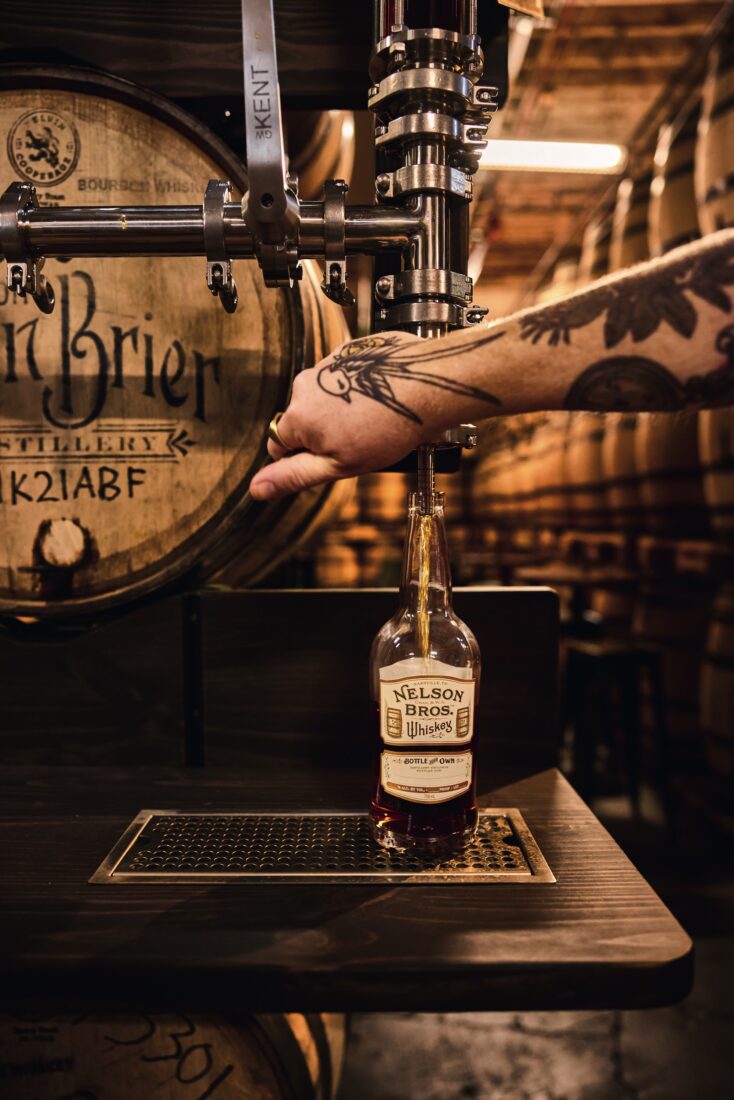
Nelson’s has meanwhile expanded to include a restaurant and more offerings for visitors. I meet Dan and Beth Schultz, in town from St. Louis, during a “bottle your own” experience launched there last year and hosted in a speakeasy-style nook among aging barrels. As we fill bottles after tasting and choosing our favorites—a white-port-barrel-finished bourbon for me—Dan says he didn’t get into whiskey until a few years ago, but now every trip begins with scouting out distilleries to visit. “Always the whiskey first,” he says. He’s hardly alone. Walking through the repurposed Marathon Village complex next door, I notice that the tasting rooms for Corsair and Tennessee Legend are similarly busy.
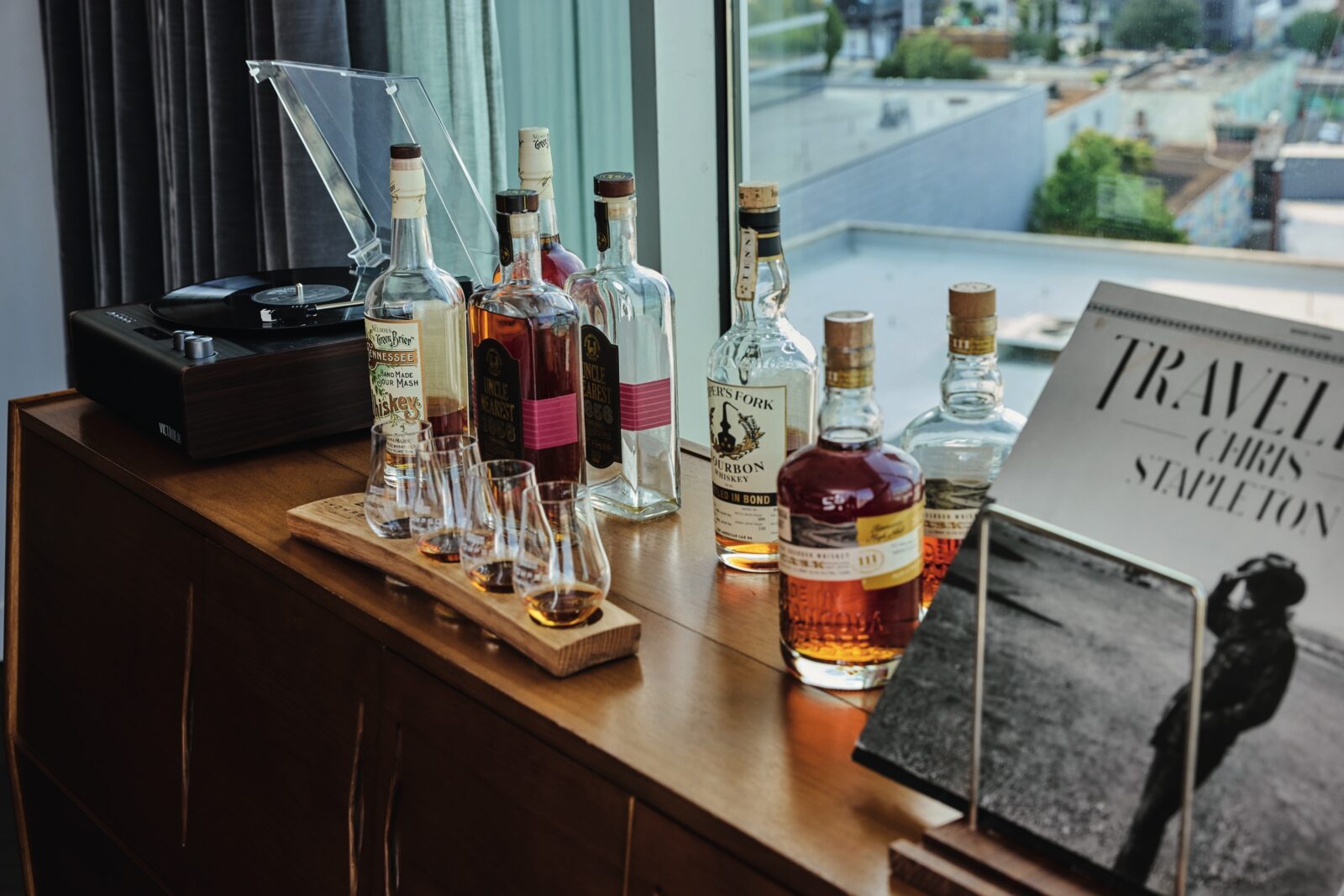
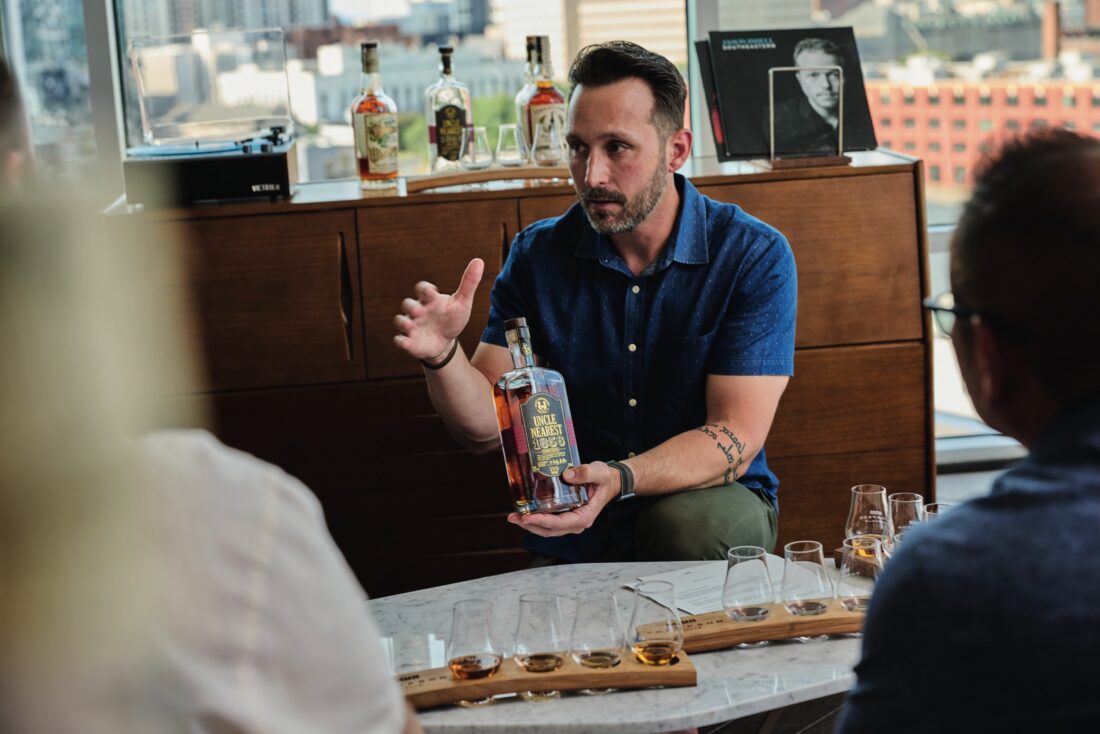
I keep moving to an intimate Whiskey and Vinyl session hosted in a suite at the Thompson Nashville hotel in the Gulch. I meet two gentlemen in town for a wedding, and the conversation flows as musician and whiskey expert AJ Soldo pairs four Tennessee-made whiskeys with music from Southern artists—a pour of Uncle Nearest 1856 with Margo Price’s “Hurtin’ (On the Bottle),” for example. “That’s one of the amazing things about whiskey,” Soldo tells the small group as we taste. “It’s a spirit that brings people together.”
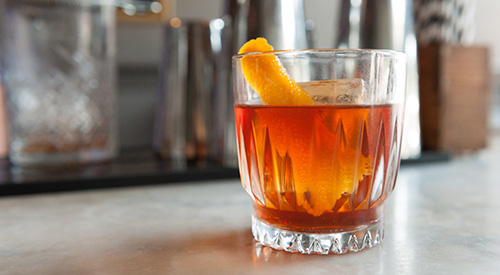
I’m reminded of that again at dinner, sitting shoulder to shoulder with diners around the U-shaped counter at the Catbird Seat’s new location in the Voorhees building. Partly owing to the restaurant’s playful atmosphere (the chefs have affixed googly eyes to its newly earned Michelin star plaque) and helped along by wine and cocktail pairings, I’m soon laughing and conversing with my fellow guests. A sweetly bitter Alpine Julep with bourbon and Fernet-Branca Menta at Patterson House, the adjoining cocktail lounge, makes an ideal nightcap.
The following day, I meet Carey Bringle at Peg Leg Porker, the barbecue restaurant he founded in 2013 as the Gulch was beginning its transformation into a hospitality district. The Nashville native has since launched Peg Leg Porker Spirits, with a tasting room in the Berry Hill neighborhood. Between bites of a pulled-pork sandwich and mac and cheese, Bringle explains his method of filtering aged bourbon through hickory charcoal, the pitmaster’s twist on Tennessee whiskey’s traditional charcoal mellowing process. “I wanted to make it unique and more me,” he says. I expect a heavy dose of smoke, but the bourbon is soft and restrained, with a silky mouthfeel and balanced depth.
At Nashville Barrel Company, that spirit of reinterpretation takes a different form. Built on its founders’ reputation for selecting standout barrels, the company focuses on blending bourbon and other whiskey drawn from multiple sources, as well as single-barrel releases. During a guided tasting, we sample whiskey thieved straight from the barrels. Cofounder Michael Hinds says the experiential side of the business has become just as important as distribution, which now reaches more than thirty states. “We saw a record number of bookings last year,” he says. “People might not be buying as many bottles, but they’re definitely here for the experience.”
I’ve so far avoided the crowds of Lower Broadway, but I make an exception to check out a cocktail class at Standard Proof Whiskey Co., dodging throngs of cowboy-booted revelers as I enter its tasting room near Printers Alley. Here, blenders infuse 80-proof whiskey with honeysuckle, ginger root, Texas pecan, and other natural flavors. As we shake and stir, I anticipate sipping something akin to a Yankee Candle, but I’m pleasantly surprised by the harmony of an espresso martini made with arabica coffee–infused rye.
The experience underscores a shift underway around Nashville and across the state. These days, Tennessee whiskey—or rather, whiskey made in Tennessee—feels less like a fixed category than a widening field of possibility.
Still thirsty? Keep reading:
>> Belly Up to the Bars at These Five Standout Southern Distilleries
Tom Wilmes is a journalist based in central Kentucky who covers bourbon and other spirits, travel, and food. A contributor to Garden & Gun, he has also written for Whisky Advocate, The Local Palate, Southbound, and other publications. A Kentucky Colonel and Certified Executive Bourbon Steward, he has spent years reporting on—and indulging in—the culture he covers, a responsibility he doesn’t take lightly. Follow him on Instagram @americadistilled.