
“I don’t listen to music that wasn’t made in Athens,” says photographer Jason Thrasher. Given his hometown, that’s easy to do. From the B-52’s, R.E.M., Pylon, and Widespread Panic in the late seventies and eighties, to Matthew Sweet, Elf Power, and Neutral Milk Hotel in the nineties, to the gritty Southern rock of the Drive-By Truckers at the turn of the century, the Classic City’s place in music history is chiseled in stone. And with storied venues like the 40 Watt, Georgia Theater, and Caledonia Lounge, there are plenty of places to hear up-and-comers, too. Thrasher’s new coffee table book, Athens Potluck, is a fascinating visual and narrative journey through Athens’ diverse music culture, documenting thirty-three artists of varied genres and decades through photos, stories, and interviews.
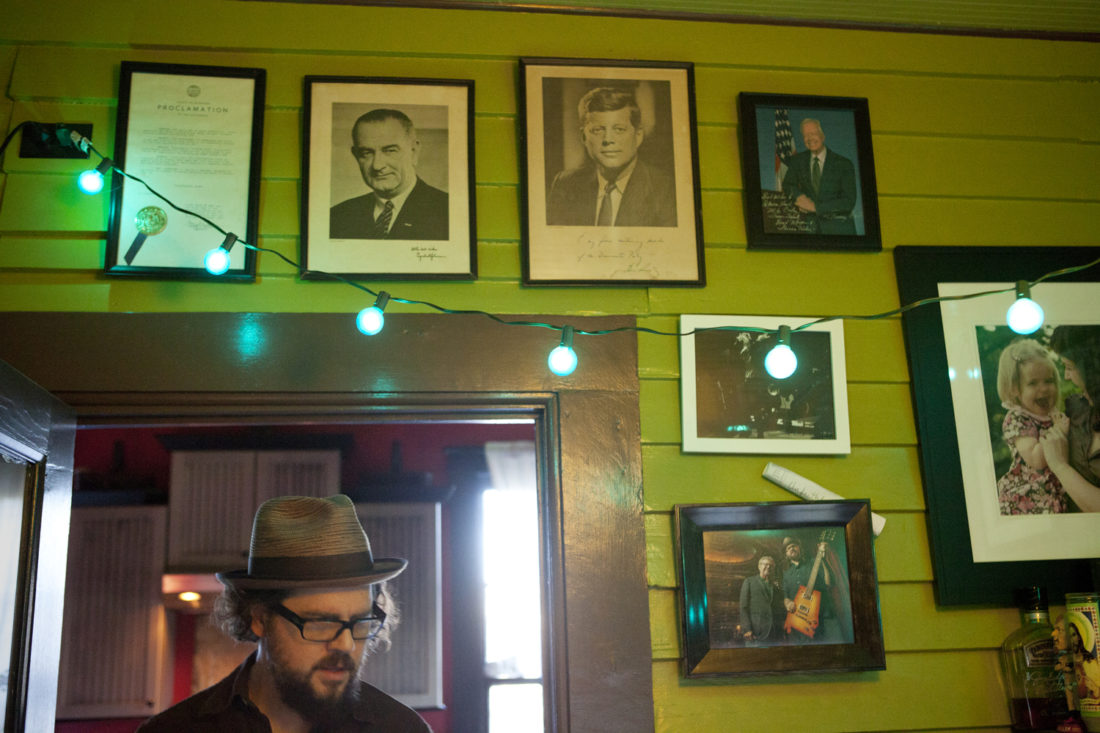
Photo: JASON THRASHER, COURTESY OF DEEDS PUBLISHING
Patterson Hood, co-founder of the Drive-By Truckers, in his home office in Athens.
Thrasher began the project in 2011, photographing local musicians and letting each one choose the next subject in a stream-of-consciousness style. The first musician Thrasher profiled, Laura Carter of Elf Power, pointed him to Will Cullen Hart, whom she’d worked with in the collective Elephant 6, and the book took off. Each section is connected by an interview from one artist to the next, written on whatever can be found at the time: a cardboard box, an old record, a map of Southern Germany.
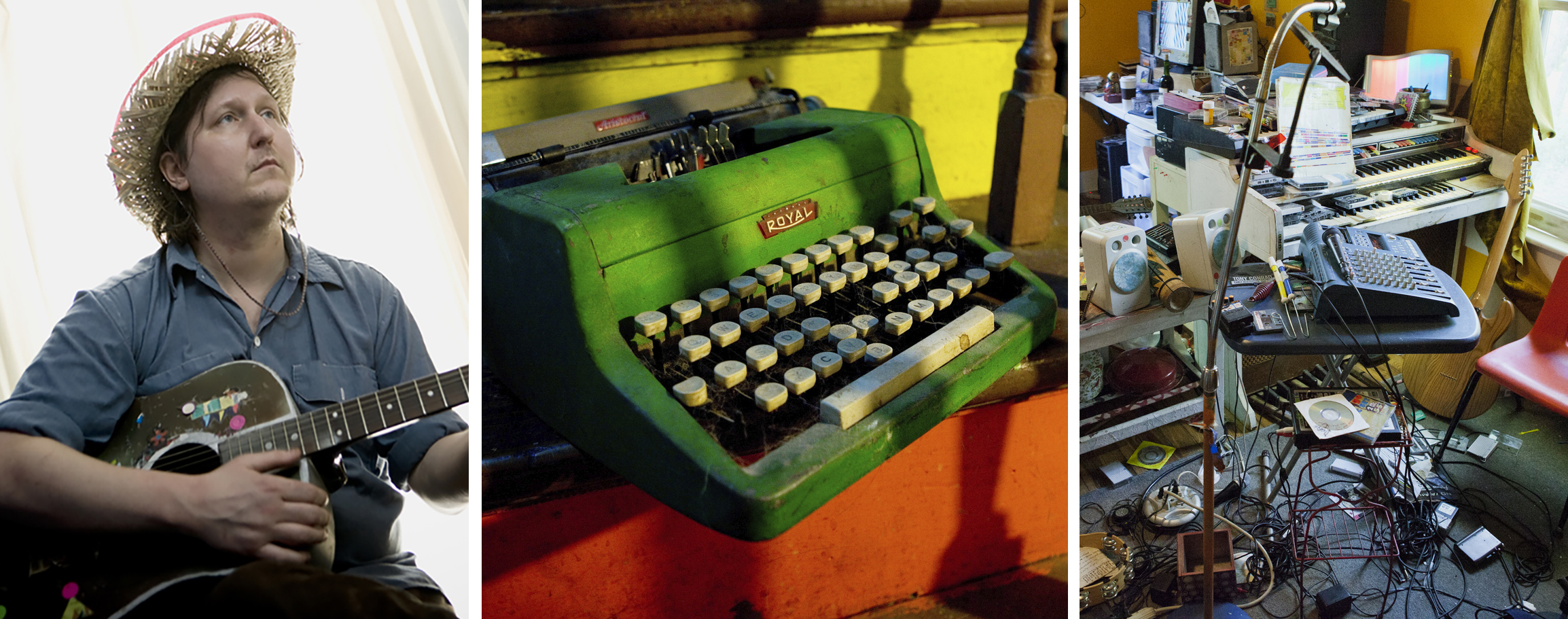
Photo: JASON THRASHER, COURTESY OF DEEDS PUBLISHING
Left to right: Will Cullen Hart; Hart’s typewriter; his studio.
“I wanted to focus on individuals, rather than bands, since this project is so personal,” says Thrasher, who makes much of his living photographing bands for magazines, album covers, music videos, and other promotional purposes. “There are references throughout the book to artists of all kinds—even bands that don’t exist anymore and people who have died,” he says. In fact, Earl Murphy, famed old-time Athens fiddle player, died the morning Thrasher was scheduled to photograph him. His section became a tribute to the whiskey-drinking troubadour. Later, Elf Power’s Andrew Rieger, who Thrasher playfully claims normally might have been “too cool” to pick such a famous artist as R.E.M. front man Michael Stipe, made the decision to interview Stipe the day his renowned band announced they were breaking up.

Photo: JASON THRASHER, COURTESY OF DEEDS PUBLISHING
R.E.M.’s Michael Stipe in his backyard.
By telling the stories of great bands-gone-by alongside those of rising stars, Athens Potluck takes readers behind the city’s iconic music scene and into the lives of the people who make it. “Artists just gravitate to Athens,” Thrasher says. “Things are always happening here.”
Athens Potluck is available at deedspublishing.com.