Many of us mistakenly think that old-growth forests exist only in remote places. But sixteen distinct types of them grace the American South, from cypress-tupelo swamps to dry-mesic oak forests, and a surprising number grow near urban spaces. They each bestow a “wide diversity of sensory experiences,” says Sarah Adloo, the executive director of the Old-Growth Forest Network, a nonprofit that seeks to identify such forests, protect them, and share their locations. (Its website offers a state-by-state tool to find old-growth and notable mature growth forests.)

While scientists don’t always agree on what defines “old growth,” the term usually means the trees are a hundred-plus years old and haven’t been logged, the forest contains canopy layers, and dead, woody material has accumulated there. Whether you walk on “hemlock needles or crunchy leaves or rocky areas, you have a different suite of sounds,” Adloo says, and you might also encounter some of the species—red-cockaded woodpeckers, winter wrens, warblers, salamanders, lichen, and moss—that require such an ecosystem to survive.
“The smells are different, too,” Adloo says, “because you have a lot of fungal diversity in older forests.” The scents, sights, and general ambience can be a mental health and immunity booster for forest-goers, and a recent Finnish study found that the restorative impact is multiplied if the forest is mainly older-growth. Another study found that forest exposure can even play a role in fighting off cancer.
So consider it doctor’s orders: Take a healing sensory stroll through any of these cherished woods.
Keystone Ancient Forest
Sand Springs, Oklahoma
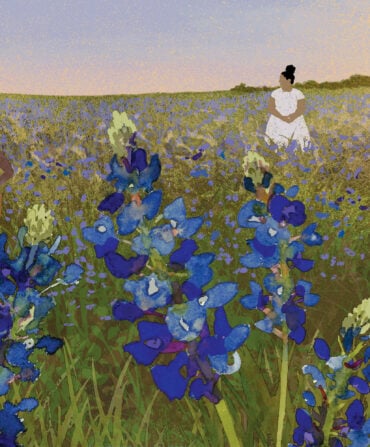
Thirteen miles of trails wind through this 1,380-acre park near Tulsa, some below ancient cedars, 300-year-old post oaks, and blackjack oaks. Stroll through an oak savanna dotted with Indian paintbrush, blue stems, and other wildflowers and grasses where you might spy a few of the eighty resident butterfly species.
When hiking, too many people spend their time looking down, says Rocky Kelley, the forest’s program director. “They forget to actually ‘be’ in the forest.” The park’s forest bathing programs encourage visitors to “be in nature with all five senses, which is very therapeutic for some people. It’s the same ecosystem from centuries ago,” he says. Organized walks may include barefoot hiking and edible berry tasting.
Cathedral State Park
Preston County, West Virginia
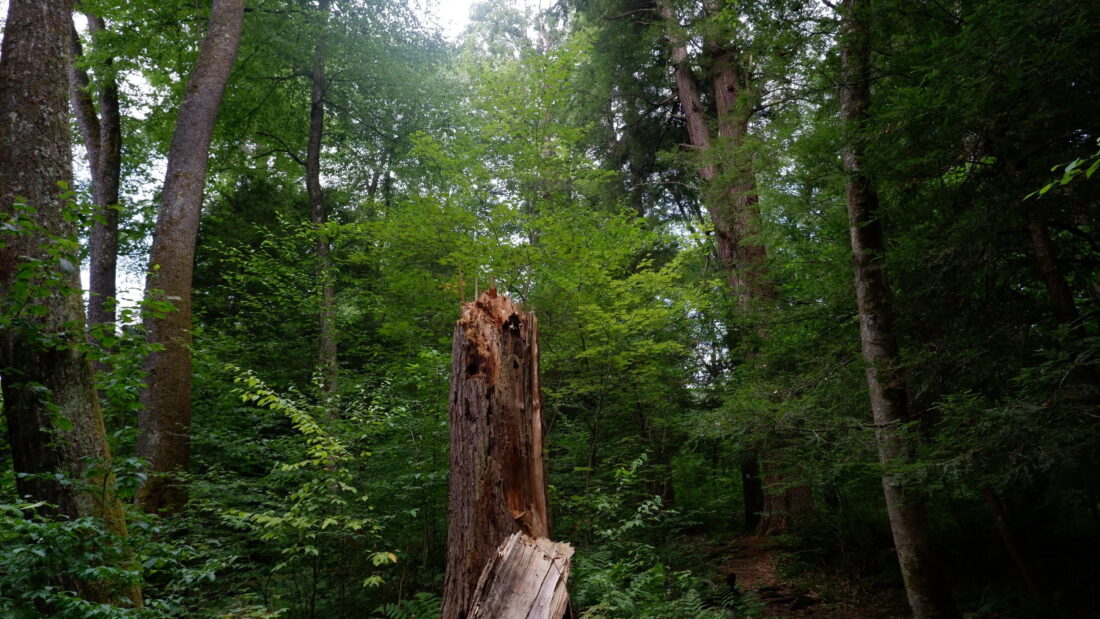
This hilly, 133-acre tract is West Virginia’s largest old-growth forest, with stands of unlogged eastern hemlocks dating back 400 years, rising to 90 feet, and boasting up to 21 feet of circumference. Three miles of day-use trails meander through some 30 species of trees, 50 species of wildflowers, and a beautiful, layered variety of ferns in these Appalachian Highlands.
Congaree National Park
Richland County, South Carolina
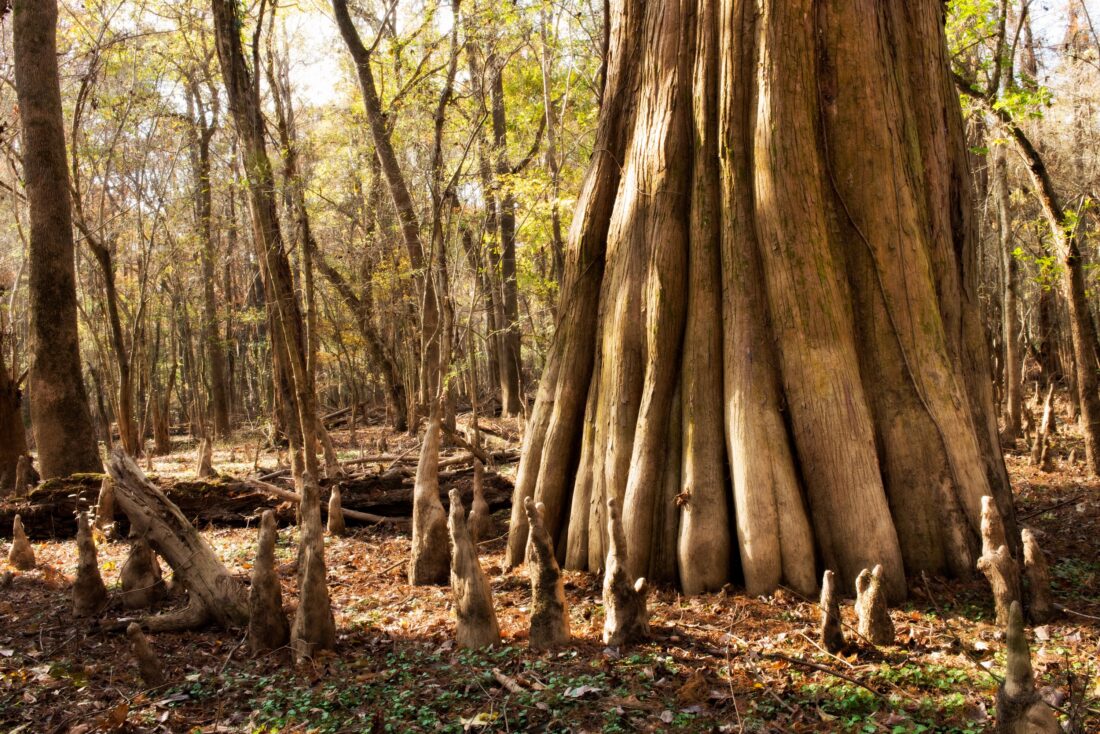
Just 20 miles from Columbia, this park contains 11,000 acres of old-growth bottomland hardwood forest, the largest intact expanse in the southeastern United States. Featuring oaks on the more elevated sites and cypress and tupelo on the lower—along with huge loblolly pines throughout—the area boasts both state and national champion trees, some over 160 feet tall. The 2.6-mile (round trip) Boardwalk Trail offers easy access to the bottomland area. (Check the website for closures and updates, as the boardwalk has recently undergone construction.) For a little more of a workout, a challenging 7.1-mile Oakridge Trail leads into the uplands and oaks.
Boyd Track, Weymouth Woods Sandhills Nature Preserve
Southern Pines, North Carolina
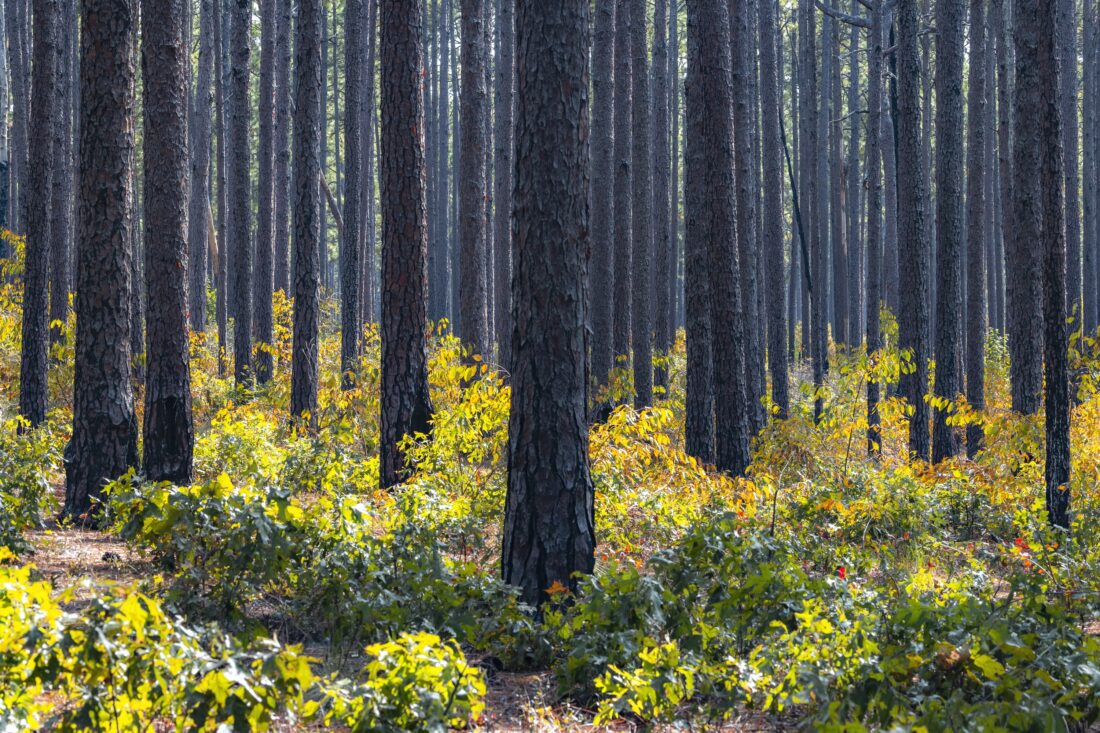
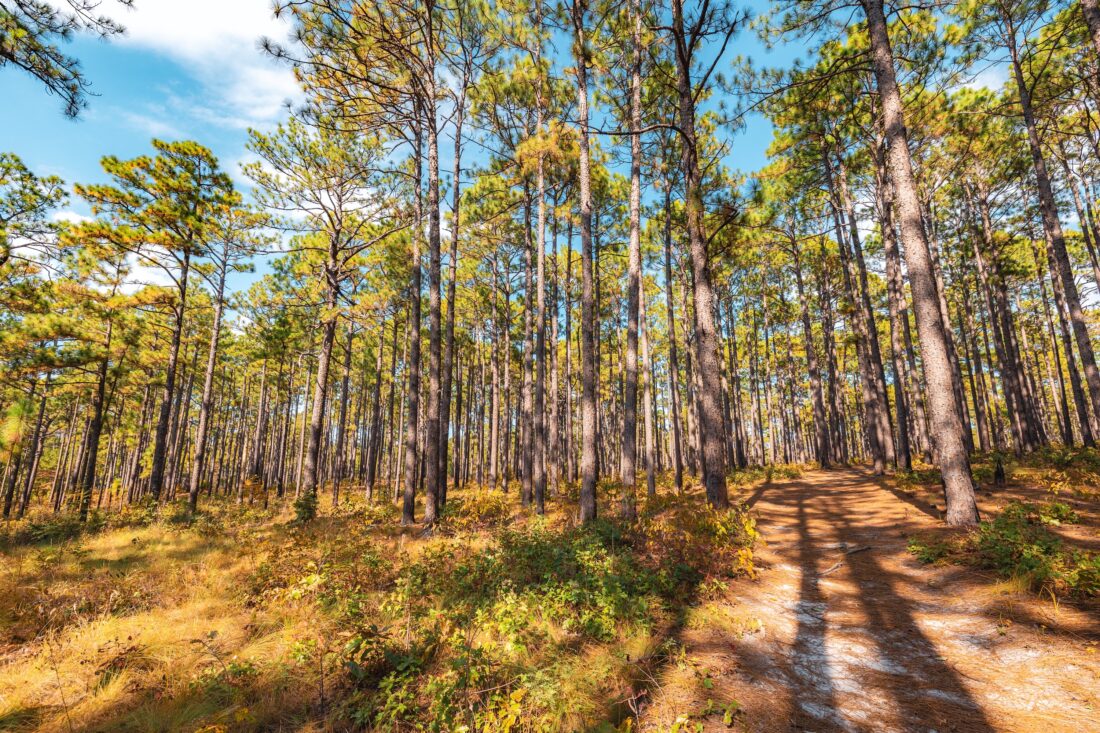
About 100 acres of the 165-acre Boyd Track is old-growth forest, and some of its longleaf pines are more than 400 years old. To see the oldest living longleaf pine tree and the former state champion longleaf, check with the ranger on staff for directions. (It’s unmarked to prevent vandalism.) Open the Merlin Bird ID app and listen for the red-cockaded woodpecker, “which has to have old-growth longleaf pine trees that have advanced in age enough to be able to make its nests,” Adloo says. It’s the only woodpecker that excavates nest cavities in living pine trees.
Albright Grove
Great Smoky Mountains National Park, Tennessee
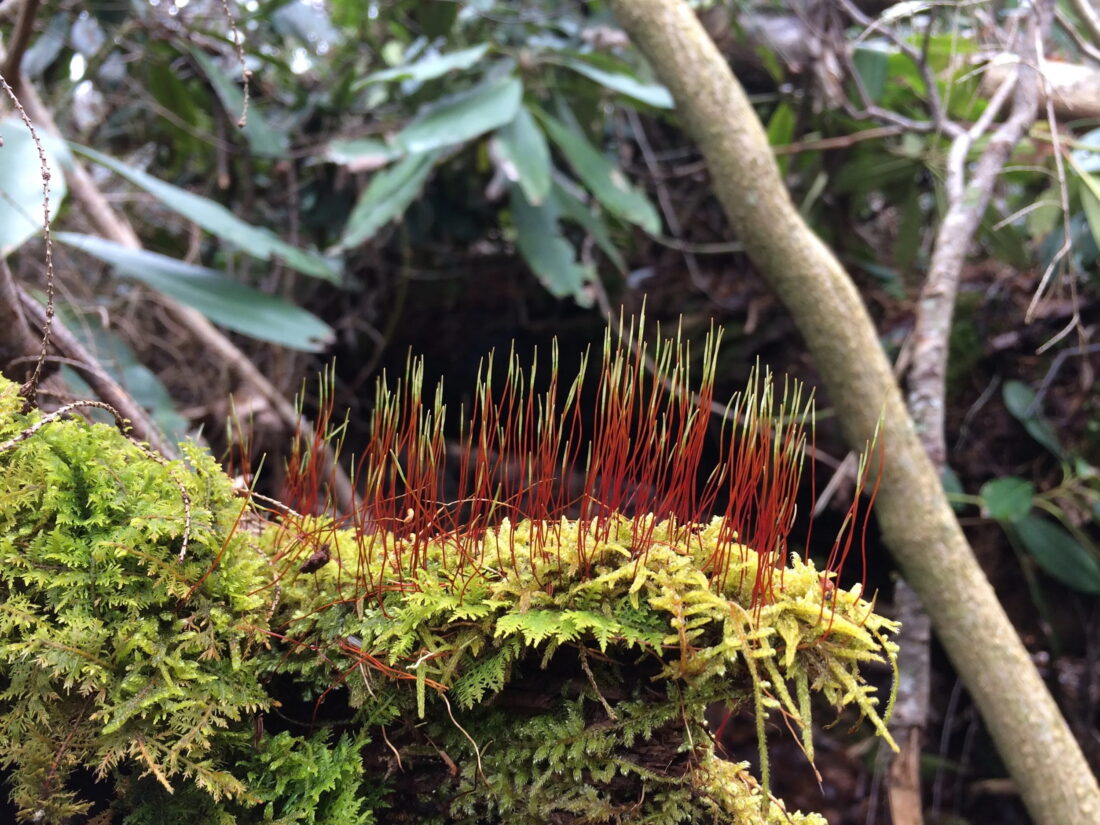
Accessing this old-growth cove hardwood forest takes effort, but it contains some of the oldest and tallest eastern hemlocks and tulip poplars in the popular park. The Maddron Bald Trail leads upward through a second-growth forest to reach the Albright Grove Loop, making the path 6.5 miles round trip. You’ll also spy splendid buckeyes, Fraser magnolias, basswood, and sugar maples.
Corkscrew Swamp Sanctuary
Naples, Florida
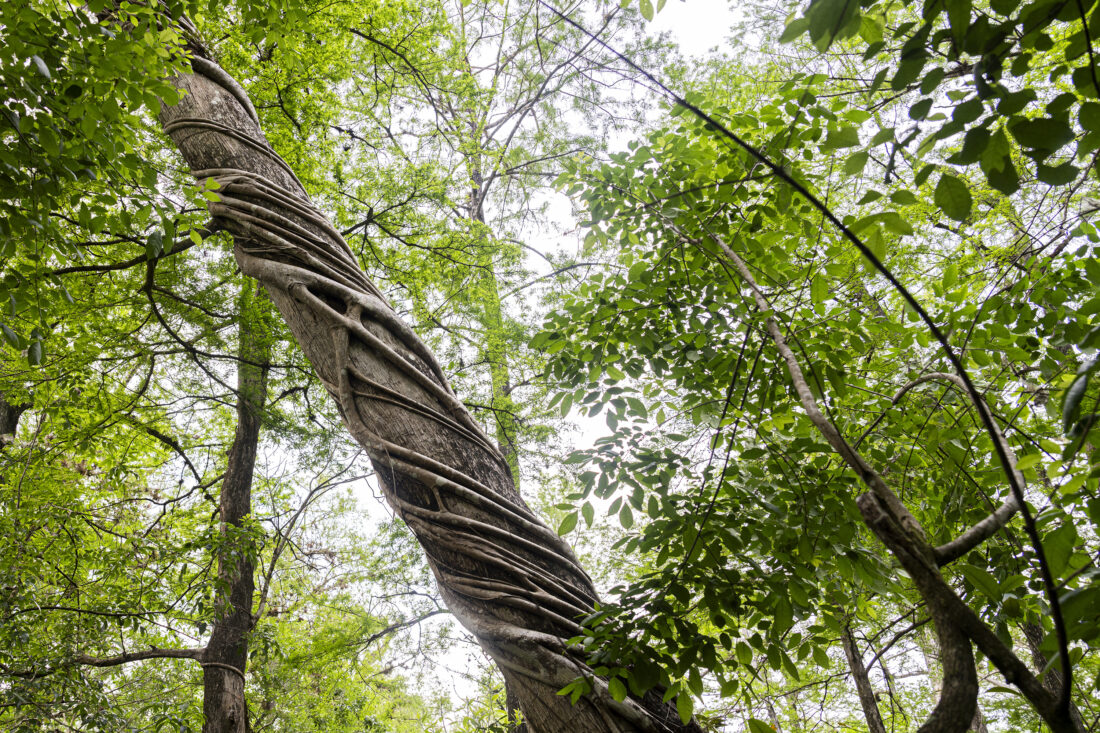
This 740-acre forest, which sits within a 13,000-acre preserve, is “one of the crown jewels of the Audubon network of sanctuaries,” says Sally Stein, the director of the site’s public programs. She says she often ponders “all the history the trees have seen over the years” and what they’ve survived, including lightning strikes and hurricanes.
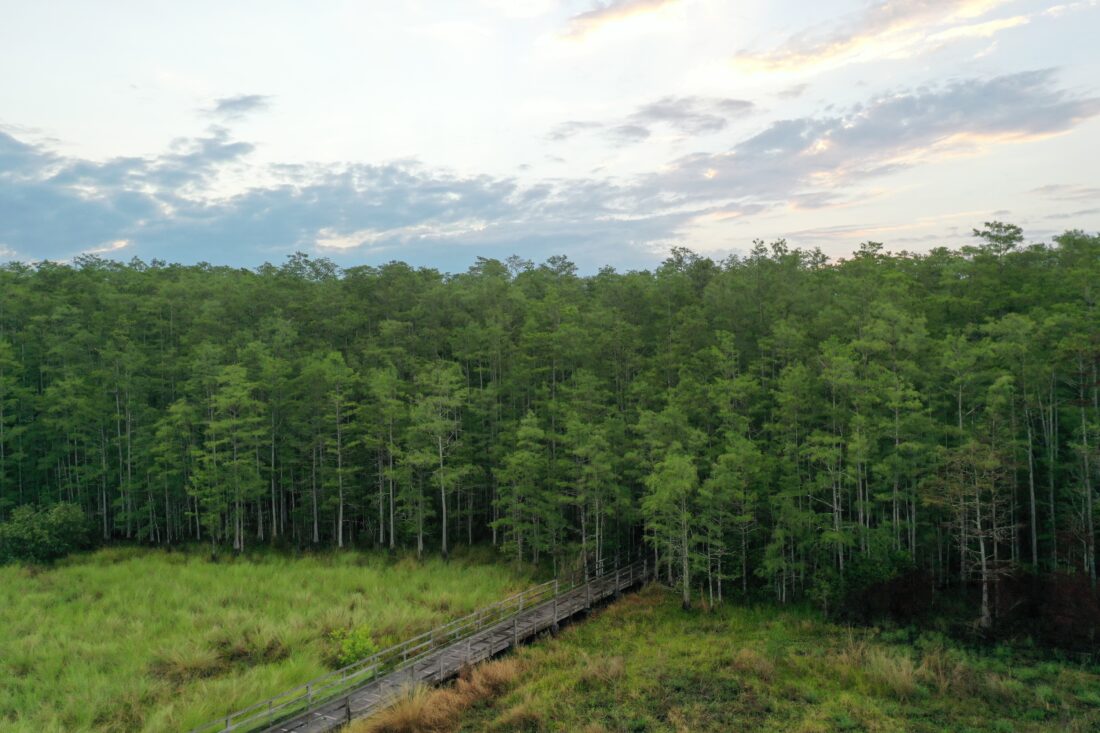
Walking the 2.25-mile boardwalk path, visitors will find half a mile of old-growth bald cypress forest, the largest remaining stand in the world. It’s a habitat rich with birds, butterflies, invertebrates, and flowers. The highest-growing and most blooming ghost orchid ever recorded abides here, but you’ll need binoculars to get a good view of its off-trail location. The preserve is also a critical home for the endangered Florida panther and vital to area stormwater absorption and groundwater recharge.
Joyce Kilmer Memorial Forest
Nantahala National Forest, North Carolina
These old-growth groves have “stillness and a lot of layers,” Adloo says—“a quiet complexity.” And while this 3,800-acre forest isn’t yet in the old-growth network, it’s well known and will be soon. Find over 100 tree species, including many that soar more than 100 feet tall and have stood for more than four centuries. In 1936, the forest was dedicated to poet Joyce Kilmer, who died in action in World War I. Follow a looping two-mile trail through the tulip poplars, oaks, sycamores, and basswoods to his memorial. “I think that I shall never see,” he famously wrote, “A poem lovely as a tree.”