
Home & Garden
Suleika Jaouad’s Love Letter to a Two-Hundred-Year-Old Farmhouse
In an 1830s Delaware River Valley home, the writer and her husband, musician Jon Batiste, planted bulbs and blessings for the future
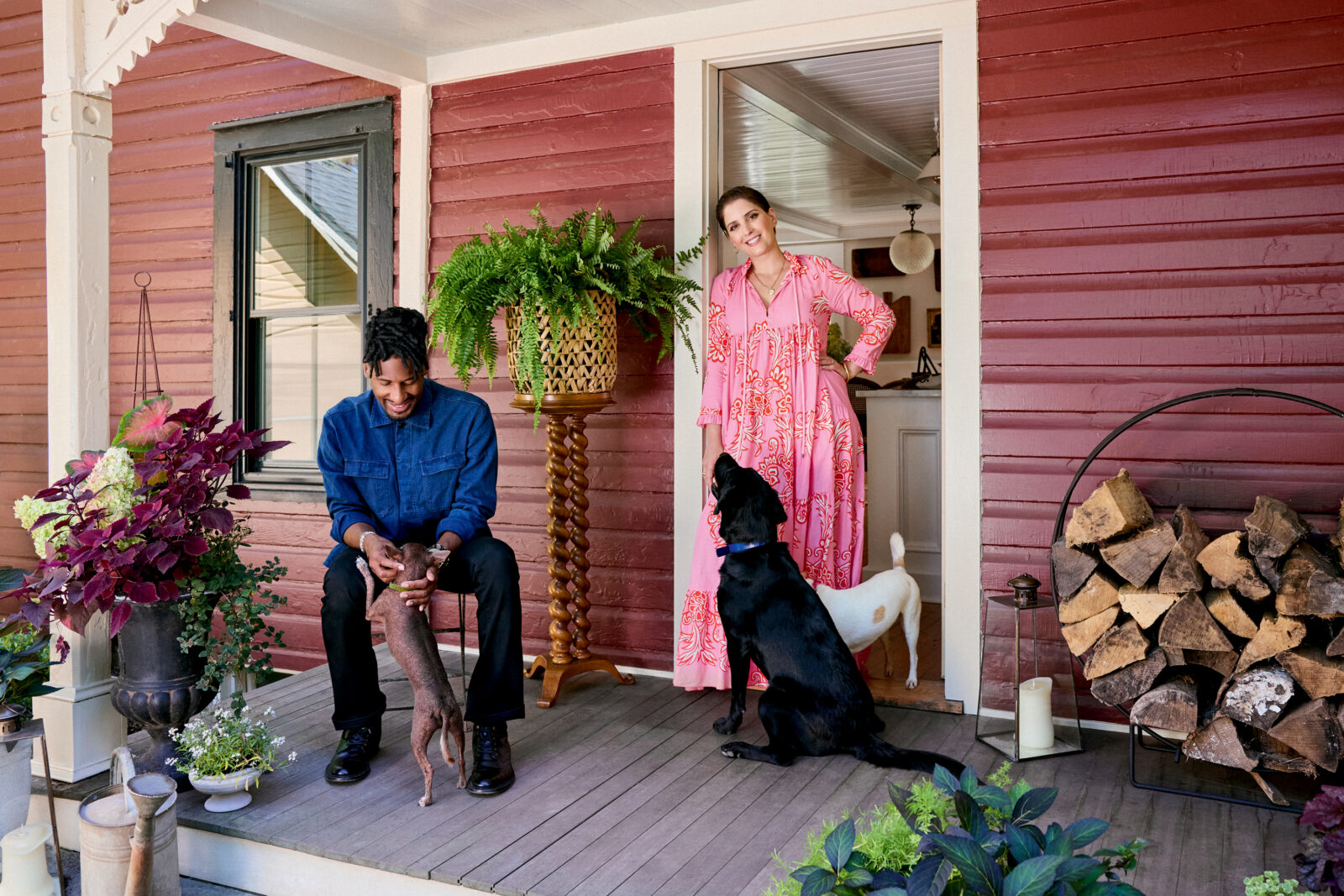
Photo: WINNIE AU
Jon Batiste and Suleika Jaouad on the front porch with dogs Lentil, River, and Sunshine.
The first time I saw it, I felt an odd flicker of recognition, as if I had dreamed it before and was only now remembering. The modest 1830s farmhouse in the Delaware River Valley was painted red and slightly crooked, tucked into a grove of towering trees. In the garden stood two yellow potting sheds that seemed to lean toward one another companionably, like a pair of gossiping aunts. My then-boyfriend, Jon Batiste, wandered through the rooms humming—his version of a blessing. “This is a happy house,” he said with quiet confidence.
This was December of 2020. The pandemic had a way of sorting couples into two categories—all in or all out—and Jon and I seemed to toggle between the two, depending on the week. We’d fled Brooklyn for my childhood home upstate, then to a log cabin in Vermont with no cell service and unreliable Wi-Fi. What strained us wasn’t emotional turmoil so much as logistical exhaustion. At the time, Jon was the bandleader of The Late Show with Stephen Colbert, with a film score and an album due; he needed room to burst into song and a robust internet connection. I was on deadline for both my first book and my graduate thesis and needed quiet to focus. Eventually, practicality intervened, and we separated for a spell, each of us chasing the conditions required to keep working.

By late summer, we reunited at an artist’s residency in Frenchtown, New Jersey, worn thin from months of improvisation. The valley worked on us. We walked the trails along the river, dunked in the nearby swimming hole, and ate long, unhurried dinners alfresco, accompanied by the sounds of crickets and bullfrogs. We liked that the town was small enough that the person pouring your coffee one morning might be the very same one ringing you up for garden clippers the next afternoon. We began imagining what it might be like to settle there. We met a local real estate agent, and I began dragging Jon to every listing within fifty miles. Each house produced new questions—about money, safety, children, and how many dogs I could reasonably strong-arm him into adopting. Houses are deceptive that way. You think you’re choosing a structure; you’re really choosing a life.
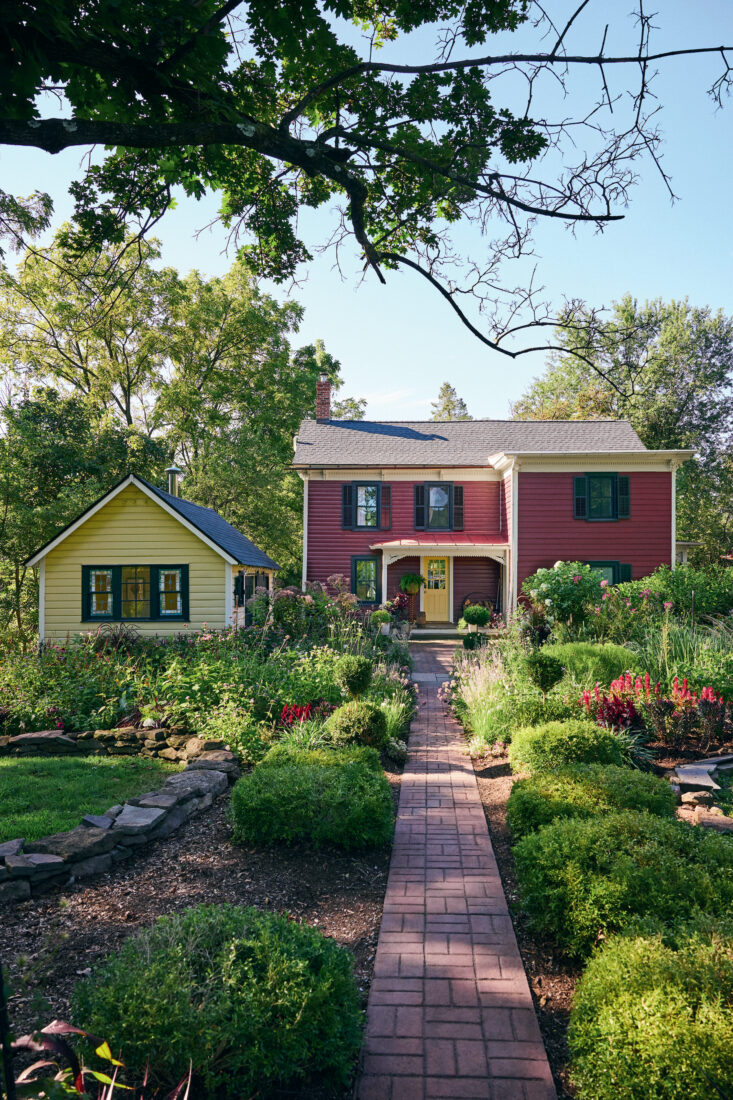
Photo: WINNIE AU
The author’s yellow writing shed/painting studio sits alongside the home and front garden.
Then one autumn morning, a listing for the little red farmhouse appeared online. We arrived within the hour. Inside: wide-plank pumpernickel pine floors, a claw-foot tub, a stone hearth large enough to sit inside. Out back, an acre, perfect for our two dogs—Oscar, a scruffy terrier mutt, and Loulou, a blind hound—and beyond that, a sloping hill fringed with evergreens. The place felt sturdy where it mattered, but pliable enough to make room for our plans.
The poet Rilke wrote that a good marriage is one in which each partner appoints the other the guardian of their solitude—that even between the closest people, infinite distances remain. Love, he suggested, consists in honoring what those distances protect. The house seemed to understand this intuitively. Each yellow shed offered a room of one’s own: One, with wavy glass and paint-splattered terra-cotta tile, I claimed as a writing office, and the other, better insulated and set on the edge of the property, Jon earmarked for music. We could retreat, then reconvene—for dinner, for tea, for a game of fetch with the dogs.
We made an offer on the spot. The seller accepted it with a handshake. We moved in just before Christmas. That first night, with no furniture and very little ceremony, we ate ramen cross-legged on the kitchen floor, feeling the vertigo of having made a big decision—excitement interlaced with the brief, bracing thought that we might have made a big mistake, moving so far from family into an old house whose rules we barely understood: septic tank, well water, bats in the attic. Jon called his friend Pastor Drew and asked him to bless our meal, our new home, our future. It snowed overnight. In the morning, we woke to children shrieking as they sledded down the hill across the road. A happy house—it was true.
The poet Donald Hall once wrote this of marriage: “Each member of a couple is separate; the two come together in double attention.” Essential to marriage, he posited, is having a third thing to share: “objects or practices or habits or arts or institutions or games or human beings that provide a site of joint rapture or contentment.”
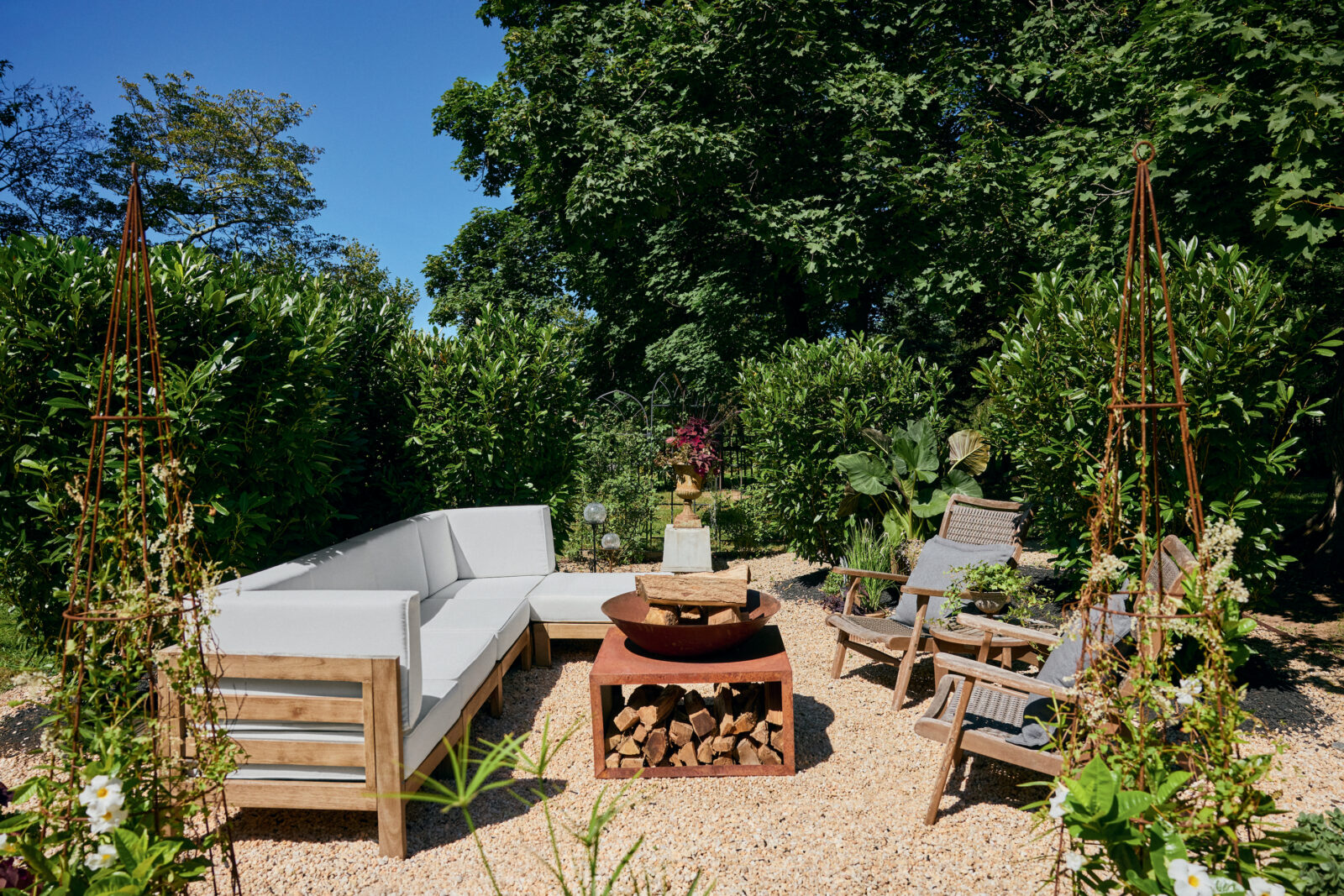
Photo: WINNIE AU
An outdoor firepit.
The house became that third thing—a collaborative creative project, in which our lives, work, and taste braided together without losing their individual strands. We jokingly referred to the resulting aesthetic as Tunisiana, a nod to Jon’s Louisiana roots and my Tunisian heritage.
We approached interiors the way we approach our creative work: experimentally, in layers. I scoured flea markets and Facebook Marketplace—anywhere objects with soul tend to congregate—while Jon weighed in, adding his own touches: art, an upright piano. We fell in love with an antique spindle bed so beautiful we overlooked the fact that it couldn’t fit up the stairs; a friend’s teenage son later solved the problem by sawing it in half and reassembling it in our bedroom.
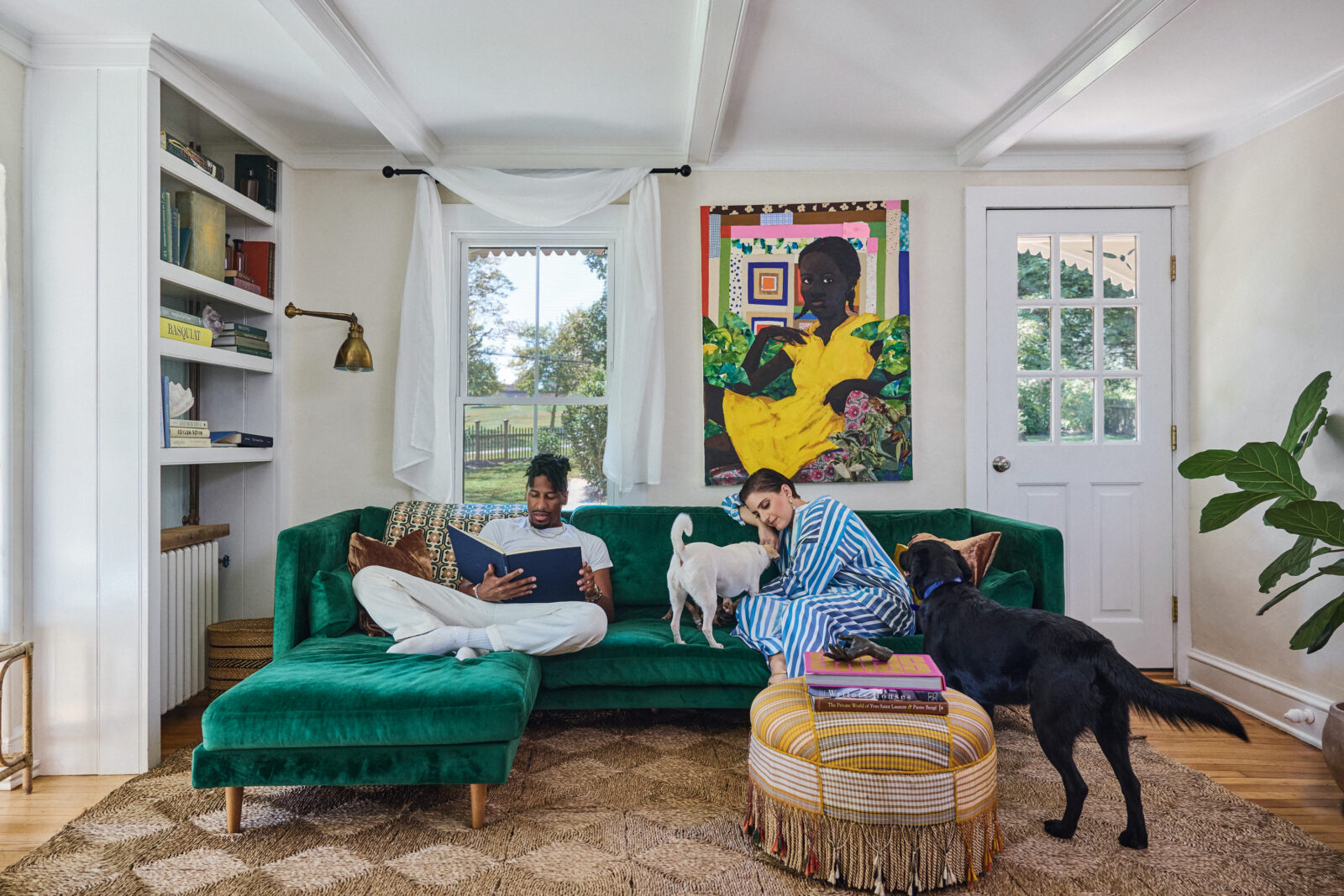
Photo: WINNIE AU
A painting by Ransome and an ottoman reupholstered in a Tunisian tablecloth adorn the living room.
To soften the stone hearth, I hung a French velvet valance I’d been holding onto, unsure if I’d ever find a place for it. It fit perfectly. I reupholstered an ottoman with a Tunisian tablecloth for the living room. When temperatures dropped below freezing, I bought a cast-iron woodstove from a man in rural Pennsylvania and drove it home in my Subaru, only to realize I had no plan for getting it inside. Our neighbor Jody came to the rescue, sliding the stove down a plank like a reluctant rhino from Noah’s ark.
I worried how Jon—raised in New Orleans, shaped by New York City—would take to country life. But he adapted quickly. He bought coveralls and rubber boots from the tractor-supply store, learned to dodge deer while navigating the back roads, and arranged logs just so to keep the woodstove burning and the house heated through the night. In lieu of takeout, he began Face-Timing his mother for cooking lessons, the scent of red beans and rice wafting through the house. The landscape even worked its way into his music in the form of an Americana- and country-inspired album that he recorded in a nearby horse barn.
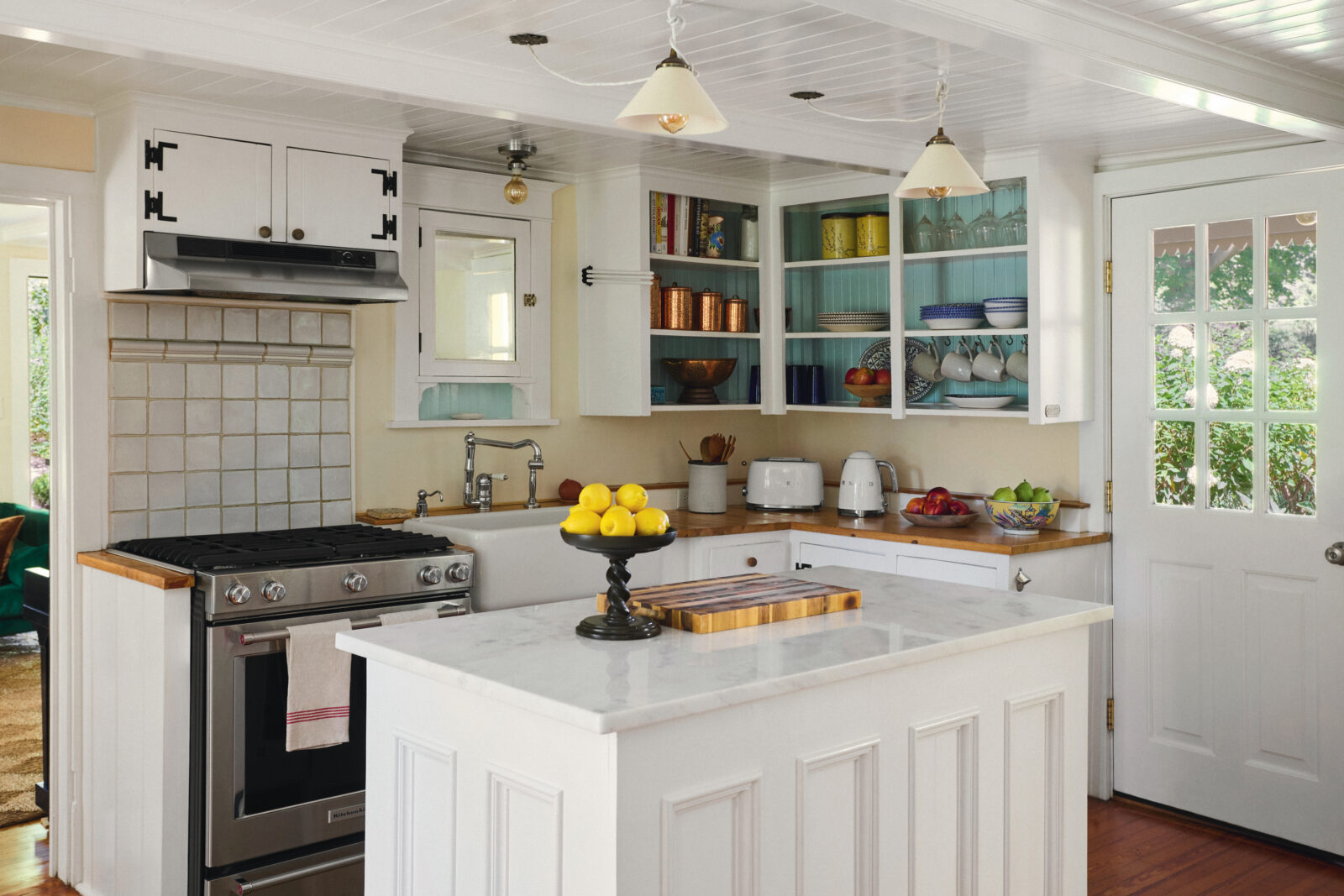
Photo: WINNIE AU
The kitchen where friends and family gather.
We began hosting—something we hadn’t had much space or time to do before. Friends crowded around the farm table in the kitchen for game nights. We built bonfires and projected movies onto a sheet strung between trees. Evenings ended with sing-alongs at the piano, neighbors drifting in for a nightcap.
The garden came last. When we first moved in, it was little more than patchy grass and a few stubborn shrubs. I wanted it to feel enchanted but not precious; structured enough to guide the eye, but unruly enough to get lost inside. With the help of my friend Sharon, I studied Virginia Woolf ’s gardens for inspiration and planted with visual art principles in mind: scale, contrast, negative space, rhythm. One afternoon, Jon drove us to a nursery and chose dozens of trees, among them a flowering magnolia like one from his childhood backyard. It struck me as a quiet devotion: He was learning to love the land I loved.
That first spring and summer, it felt like everything was opening—the days, the garden, something in me I hadn’t realized I’d been guarding. But with it came a shadow. Could this bliss possibly last?
The call came in late November, nearly a year after we moved in. The leukemia I’d had at twenty-two was back. My prognosis was poor. We needed to decamp to New York immediately for chemotherapy and a second bone marrow transplant. In seventy-two hours, we cleared our calendars, packed essentials, and handed our keys to neighbors. It felt as though the ground had opened beneath our feet, threatening to take our happy house and future with it.
Rehoming the dogs was its own grief. I memorized the feel of Oscar’s fur as we left him with a friend; he pressed his head into my chest, as if he understood. Dropping Loulou with her new family, I forced a grateful smile through tears. The alternative was collapse.
Amid the chaos, on our last night at home, Jon proposed. We’d planned to wait—for the pandemic to ease, for a proper gathering—but he refused to delay. “We’re doubling down on love,” he said. “Love is an act of defiance.” It was the clearest expression of faith I’ve known.
As we drove away, the house glowed under early snow. I took a mental photograph. Before leaving, I’d asked Sharon to plant five hundred bulbs, hoping I might live to see them bloom. But I didn’t know when, or if, I’d return.
The months that followed were a blurry fever dream. From my hospital bed, IV bags emptied and refilled, nurses traded shifts beneath fluorescent lights, and the skyscrapers outside the window swallowed the little sky I could see. The farmhouse felt unreachable. Yet in my mind’s eye, I could see it—winter settling in, friends keeping vigil. Jody turned on lights at dusk to make the house look lived-in and reorganized our garage—because when odds of survival can’t be fixed, clutter still can. Our friend Cat worked at the kitchen table while her teenage daughter played our piano, filling the house with music again. Sharon tucked the hundreds of bulbs into the soil, one at a time. As chemotherapy nuked the cancer and my brother’s stem cells slowly took hold, deer tiptoed through the woods, the maple trees put on buds, and the hedges inched taller and thicker.
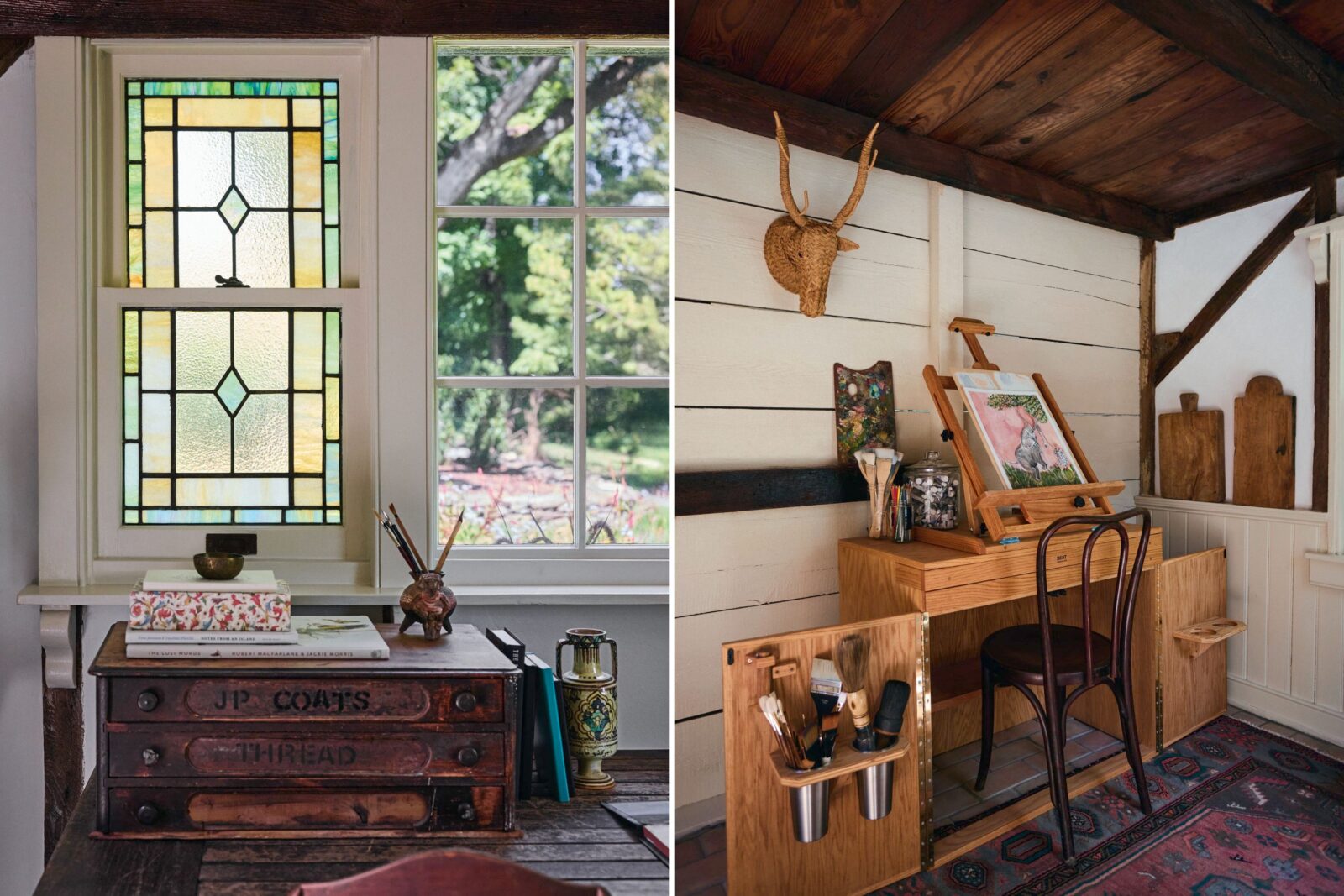
Photo: WINNIE AU
A peaceful view from the cottage; Jaouad’s painting space.
Nearly a year later, we came home to a garden in full riot—purple alliums, peonies, hydrangeas, delphiniums, verbenas, white irises lifting their throats sunward, and butterflies and bees threading the air. Our new dog, a sleek black Labrador named River, bounced through the flower beds with the uncomplicated joy of a creature for whom the past has no jurisdiction.
Slowly, our days found their shape again. Jon worked on a symphony in the cottage. I turned part of my writing shed into a painting studio and spent long hours watching watercolor bloom and misbehave on paper, drawn to how little control I had and to the way the colors seemed content not to resolve themselves too quickly. Seasons passed. More dogs arrived: Sunshine, an exuberant shelter puppy; Lentil, a tiny, toothless senior gal without a stitch of fur, happiest when napping on the warm flagstones between our sheds.
This past winter, five years after we first moved in, we handed over the keys to friends—a fellow writer-musician couple—who are now caring for the house. We decided to leave not because love has failed, but because it has expanded beyond the house that first held it. It is hard to let go of a place that witnessed so many beginnings—and just as hard to leave the shadows of what was lost here, too. Before we left, we planted five hundred bulbs again—not for us this time, but for the happy house’s new stewards. Small acts of faith, pressed into the dark, trusting spring to finish the sentence.
Garden & Gun has an affiliate partnership with Bookshop.org and may receive a portion of sales when a reader clicks to buy a book. All books are independently selected by the G&G editorial team.
Related Stories:
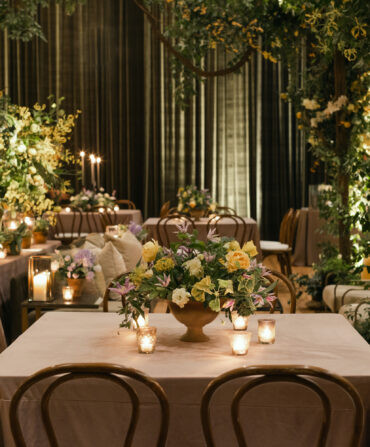
G&G Weddings
How a plant-loving family and an inventive floral team transformed a historic hall into an otherworldly oasis
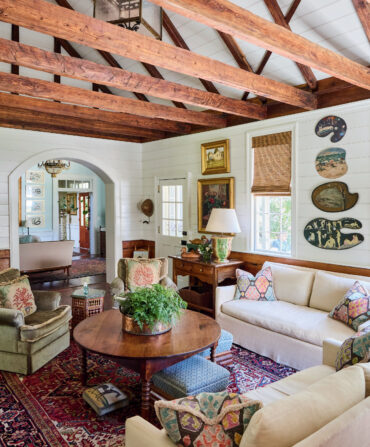
Homeplace
A wee South Carolina home offers an artist refuge—and endless inspiration
Trending Stories:
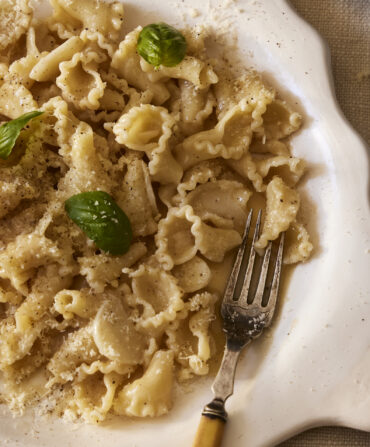
Recipe
Garlic, white wine, and a hint of umami from anchovies kick up the childhood comfort food in a new cookbook all about butter
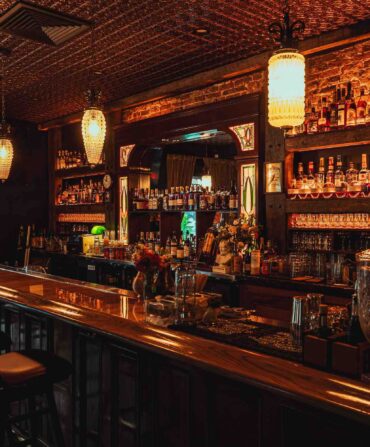
Distilled
Where to belly up for “dusties” in the South and beyond
Home & Garden
Let ’mater master Frank Hyman narrow the field to a delicious quartet