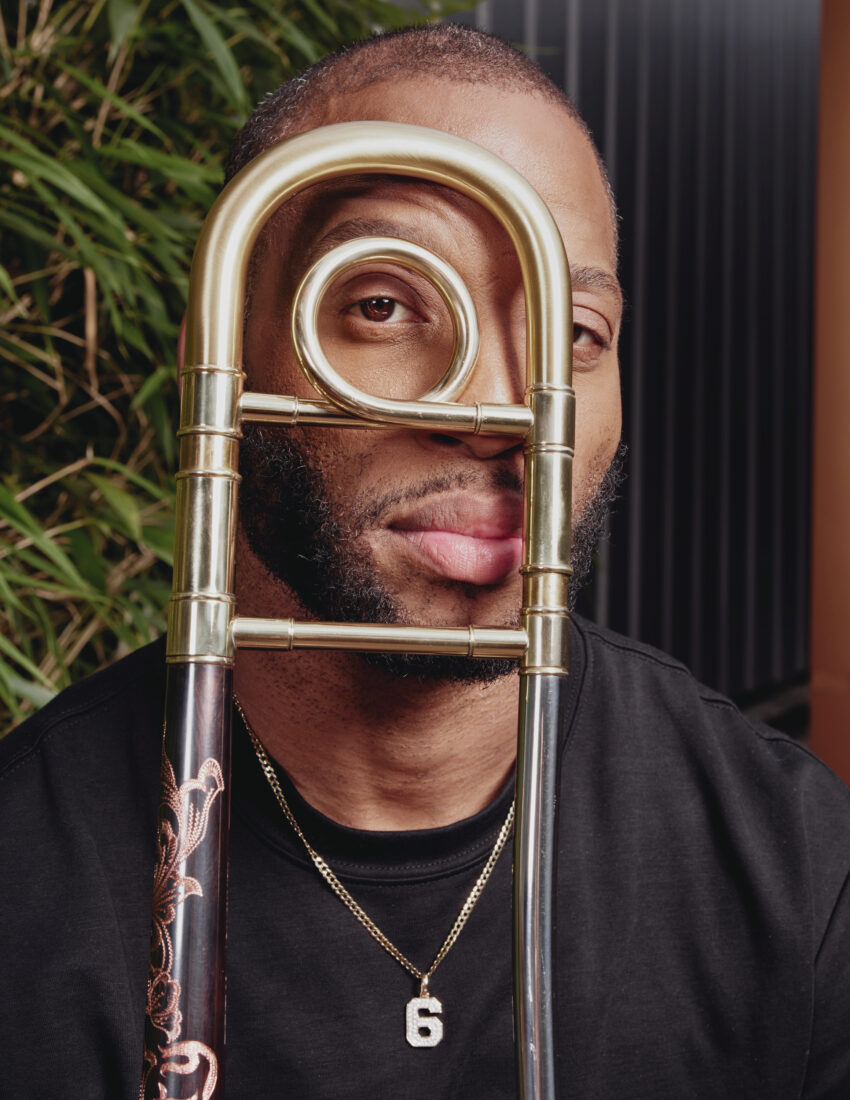
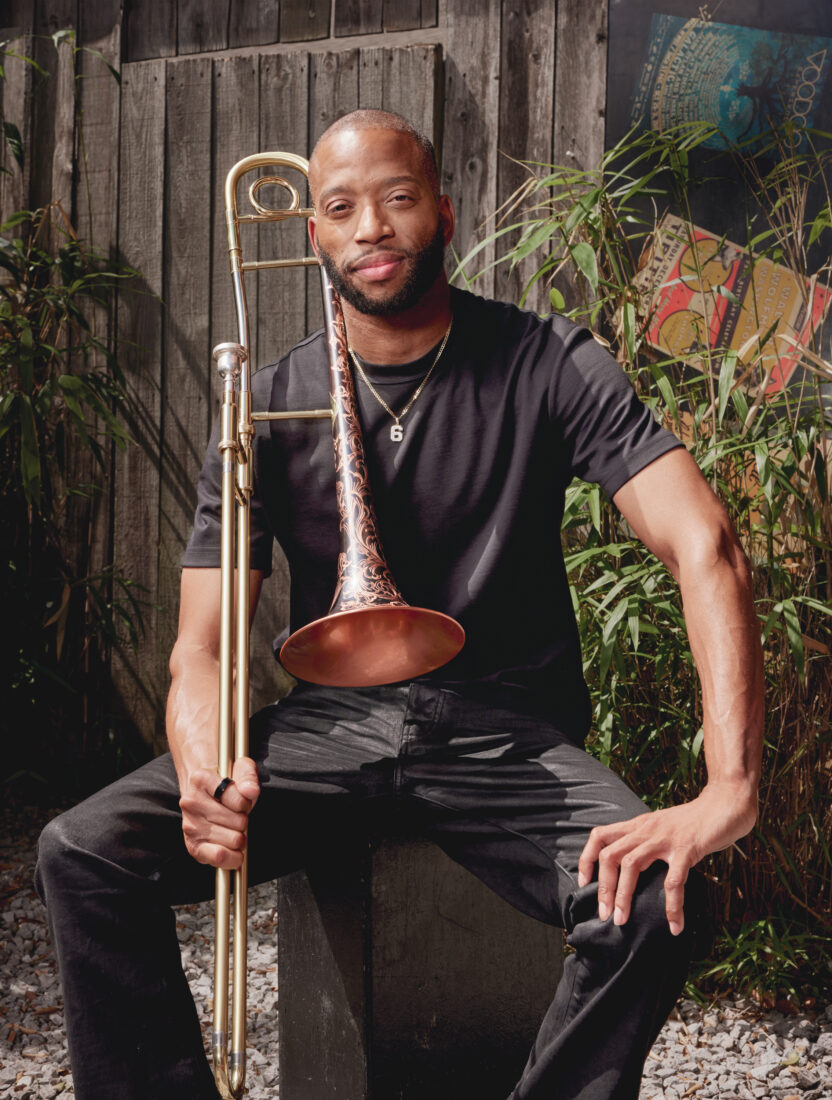
You can call him Trombone, Shorty, or even Bone. Troy Andrews answers to nearly as many nicknames as the number of musical genres he’s fluent in. And as he’s become a beacon for present-day New Orleans music, bringing the funk of his hometown all over the world, he’s collaborated with an A-list to make you swoon: Elvis Costello, U2, and Eric Church, to name a few. Not to mention the glorious version of “America the Beautiful” he performed with the singer Lauren Daigle at this year’s Super Bowl. And while Andrews relishes the highlight-reel opportunities, a cause closer to home brings him just as much joy.
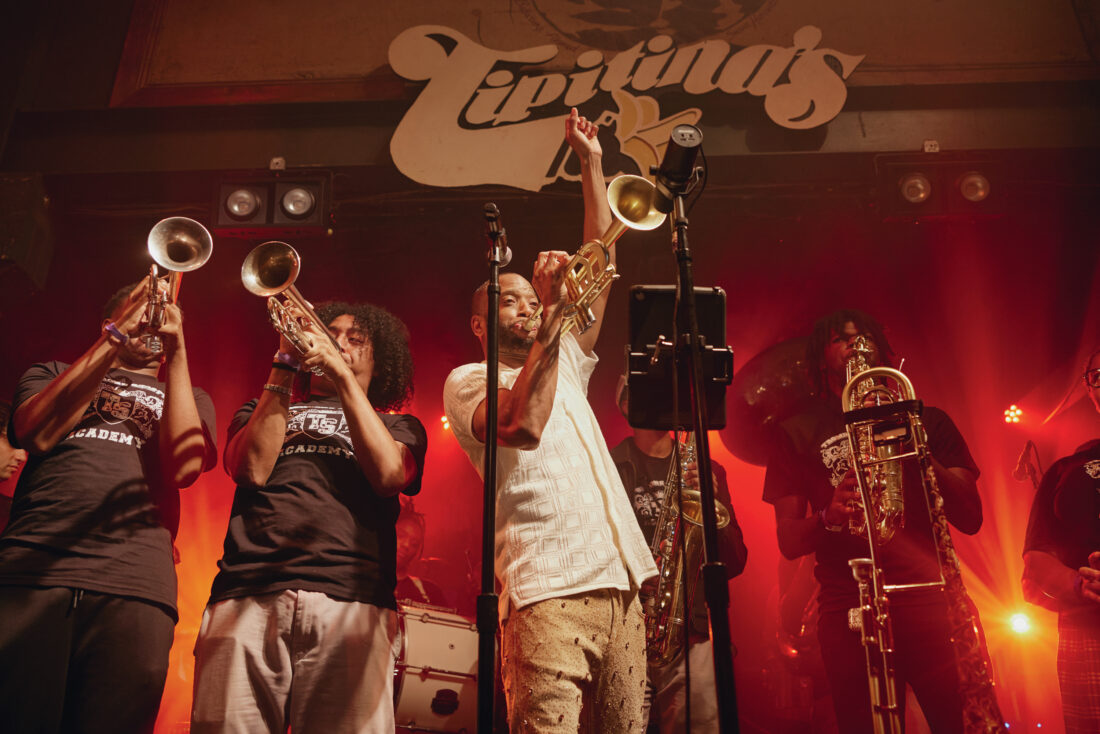
In the aftermath of changes that Hurricane Katrina brought to New Orleans, Andrews founded a nonprofit, the Trombone Shorty Foundation, with his friend Bill Taylor in 2011 to ensure that the legacy of the city’s music gets passed to the next generation. The early days of handing out piecemeal trombones led to the formation of an after-school program and now a full-blown academy where students hone their craft and learn about the music business. Current and former students also get to jam with Andrews and assorted guests during Shorty Fest, an annual hot-ticket fundraiser at the legendary club Tipitina’s during Jazz Fest. “They come offstage and it’s like a basketball team has won a championship—they’re high-fiving each other and clowning around,” Andrews says. “The amount of love that we give to each other is bigger than anything we can play musically.”
What has been the most rewarding thing about working with kids at the foundation?
Being creative has an amazing impact on the kids. At that moment, it’s not about the phone, Instagram, or social media; it’s about your imagination and what you can create. If you’re a creative person, when something starts to click, you get more excited. Music is a tool for some of these kids to escape from things they might not be able to put into words right now. It’s just a spiritual connection.
How have you expanded the program?
We always say in New Orleans, we know how to make music, but we don’t know the music business. We’re trying to help the kids become the world’s greatest musicians, music agents, record label CEOs, and producers. It’s always playing in a band that opens up the curiosity about the entertainment business. Love for the music is the most important thing. It’s not money, it’s not fame.
You have been taking students to Cuba for several years as part of a cultural exchange, but you actually also visited the country when you were a kid.
I was there with my brother James. He took me all over the world, but Cuba—even though I couldn’t understand what they were saying—didn’t feel foreign to me. And I never forgot it.
This year, you brought along Taj Mahal, George Clinton, and Big Freedia on the Cuba trip. How did Freedia go down?
They love Big. Whenever he comes on the stage, he’s a superstar. Everybody in Cuba has rhythm. People who don’t play music, people who play music, the kids, they are all dancing. But it’s always fun to see the Cuban dancers who usually do salsa and see Big Freedia doing the American twerking thing. [Laughs.]
There’s a great story about you getting onstage with Bo Diddley as a four-year-old.
I was playing with my brother in a second line parade at Jazz Fest, and my mom promised me a sno-ball after because it was hot outside. I had just learned to play this loud note that sounded like an African elephant. My mom told me I couldn’t play, but I didn’t care. I just kept jamming this note, and eventually Bo brought the music down and said, “Who is that stepping on my set?” The crowd surfed me to the stage, and I played a couple of notes, then they handed me back to my mom over the barricade. She was a little freaked out!
When did you realize music was your calling?
When I was nineteen, I joined Lenny Kravitz’s band for my first world tour in arenas and stadiums. That was the first time I departed from the New Orleans sound, and I was able to learn so much, and then took that influence and brought it home.
What did you learn from him?
He’s the ultimate rock star, and being in rehearsal with him, everything was so tight and so clean. It wasn’t like in New Orleans, where we learned a song and just put our spin on it. With him, it was discipline. I brought that back to my band, and things started to change. He was just with me at Jazz Fest, and I’m so grateful that he’s in my life.
You’ve maintained a strong relationship with your childhood friend Jon Batiste, too.
He is my brother, and nothing has changed with us. One time, we talked on the phone for five hours, and my phone beeped because it was too hot.
What do you talk about for five hours?
Very little of it is about music. We talk about our favorite personal pan pizzas, basketball, video games. I mean anything.
It’s the twentieth anniversary of Katrina. What or who in town triggers reflection?
I don’t think a week goes by where a New Orleanian doesn’t mention Katrina. It’s been twenty years, but it’s still so present in our minds. The other day, I wanted to go get a po’boy from this place [that never fully recovered], Gene’s, with my cousin, and he said, “Man, that’s been gone for so long.”
If you could have people leave New Orleans with one piece of musical knowledge, what would it be?
That all New Orleans music is played with love. And make sure to listen to the Neville Brothers. Whenever I’m missing home, I listen to the Neville Brothers, and I can imagine streetcars and horns. They’re just wonderful.
Matt Hendrickson has been a contributing editor for Garden & Gun since 2008. A former staff writer at Rolling Stone, he’s also written for Fast Company and the New York Times and currently moonlights as a content producer for Ohio University’s Voinovich School of Leadership and Public Service in Athens, Ohio.