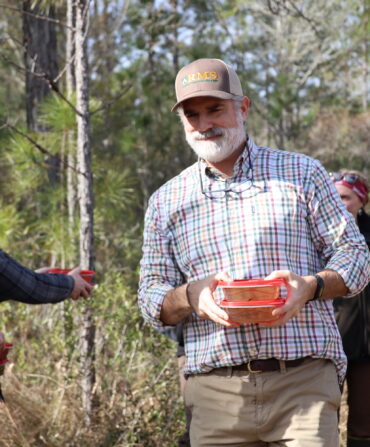
Cold temperatures don’t trap Jesse Akozbek indoors. From his home base in northern Alabama, the wild-food educator behind Feral Foraging gains more from the winter landscape than most do year-round. While the foraging fare dwindles in January and February, most places in the South remain free of snow, and what remains becomes easier to spot and collect.

For those new to foraging, Akozbek recommends starting in your neighborhood and looking for readily available items like kudzu and wild garlic (see a handful of suggestions below). “There’s nothing better than just becoming familiar with the place where you naturally are most of the time,” he says. Akozbek also treks into national forests and preserves, armed with a proper rundown of their foraging rules and his own food-finding app Gather.
He urges others to get out and explore, too, and discover the bounty the colder season has on offer. “The winter calls us to be inside,” Akozbek says. “But I love these other things that draw me outside to go on a walk, to go to a new place.”
Here are seven of his favorite winter finds in the South that are in reach for beginner foragers.
Shagbark Hickory
Carya ovata
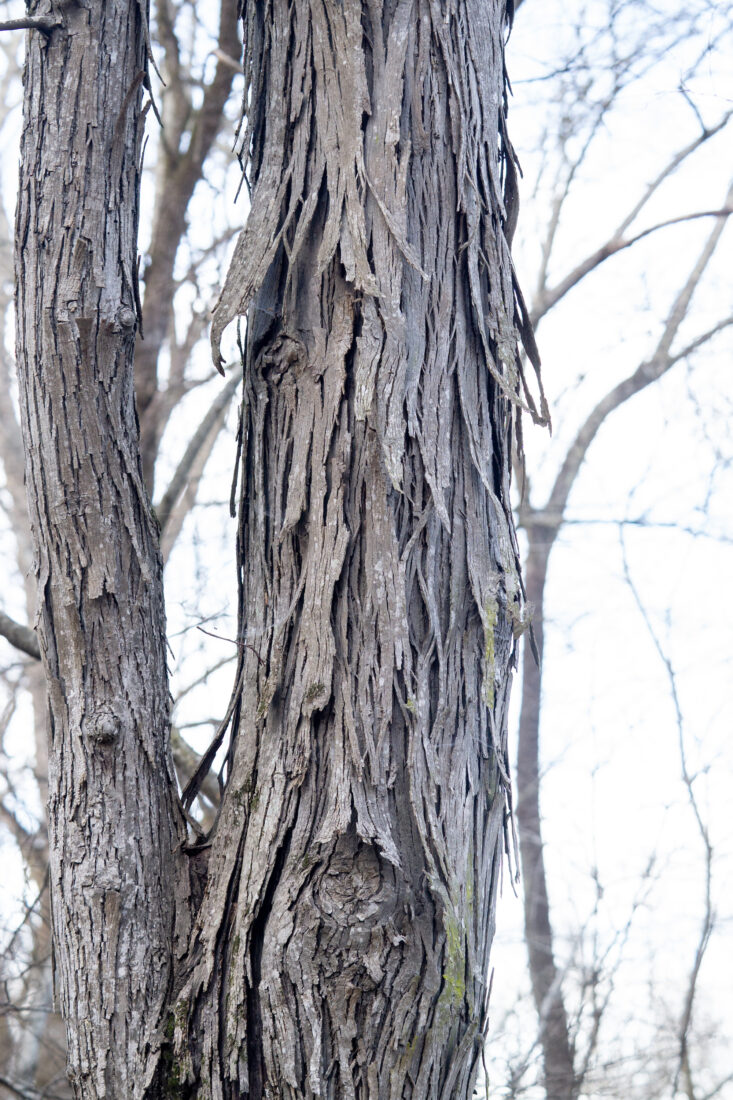
Northerners have maple syrup, but few in the South are aware of our own variety of sweet sauce. “We don’t have the weather conditions for a good sap run to occur, but we can still get the flavor from shagbark hickory,” Akozbek says.
Shagbark hickory is a large deciduous tree with curling strips of bark that look ready to peel off. They are common in large yards, parks, and natural areas across the eastern and central U.S.

Akozbek gathers pieces of the bark and roasts them in the oven at 400°F for about twenty minutes, then steeps the roasted bark into a tea. On the stovetop, he boils down the tea as if he was making a jelly, adding a heap of sugar to taste. What remains is a smoked hickory bark syrup that can be enjoyed like its maple cousin.
Pine Needles
Pinus spp.
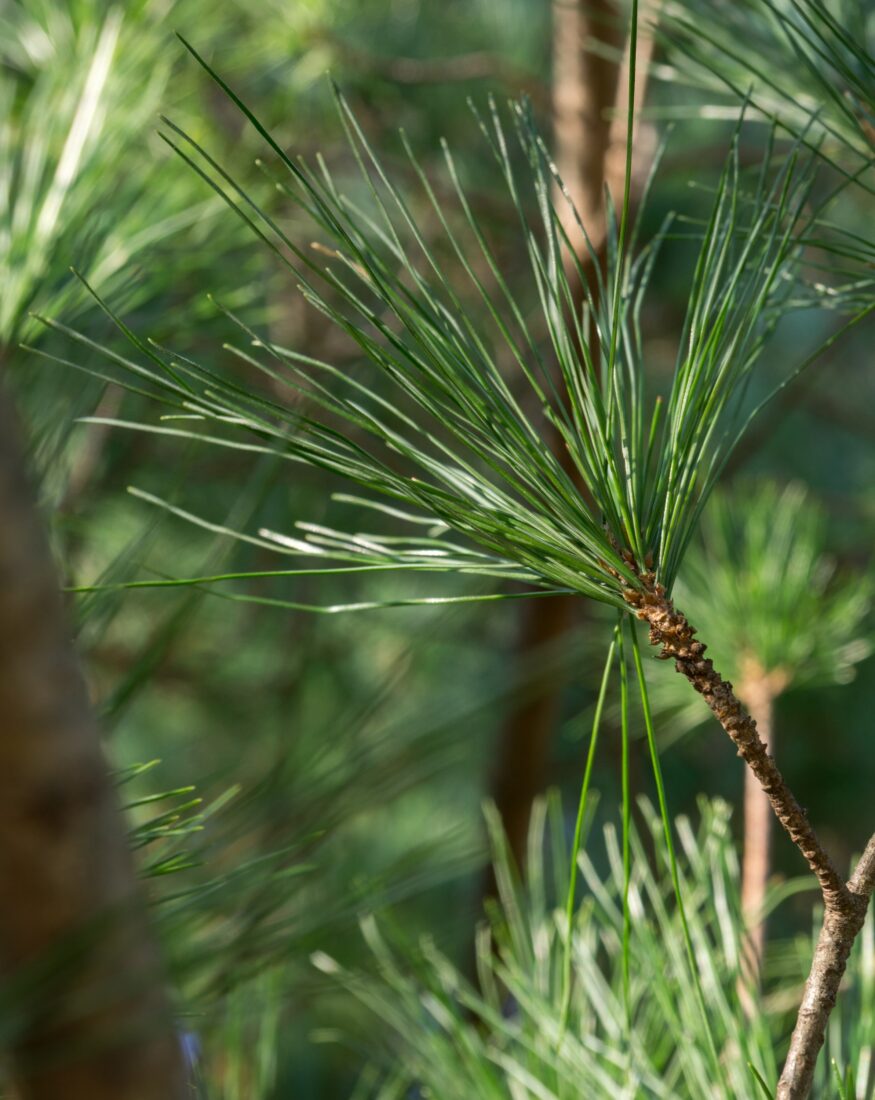
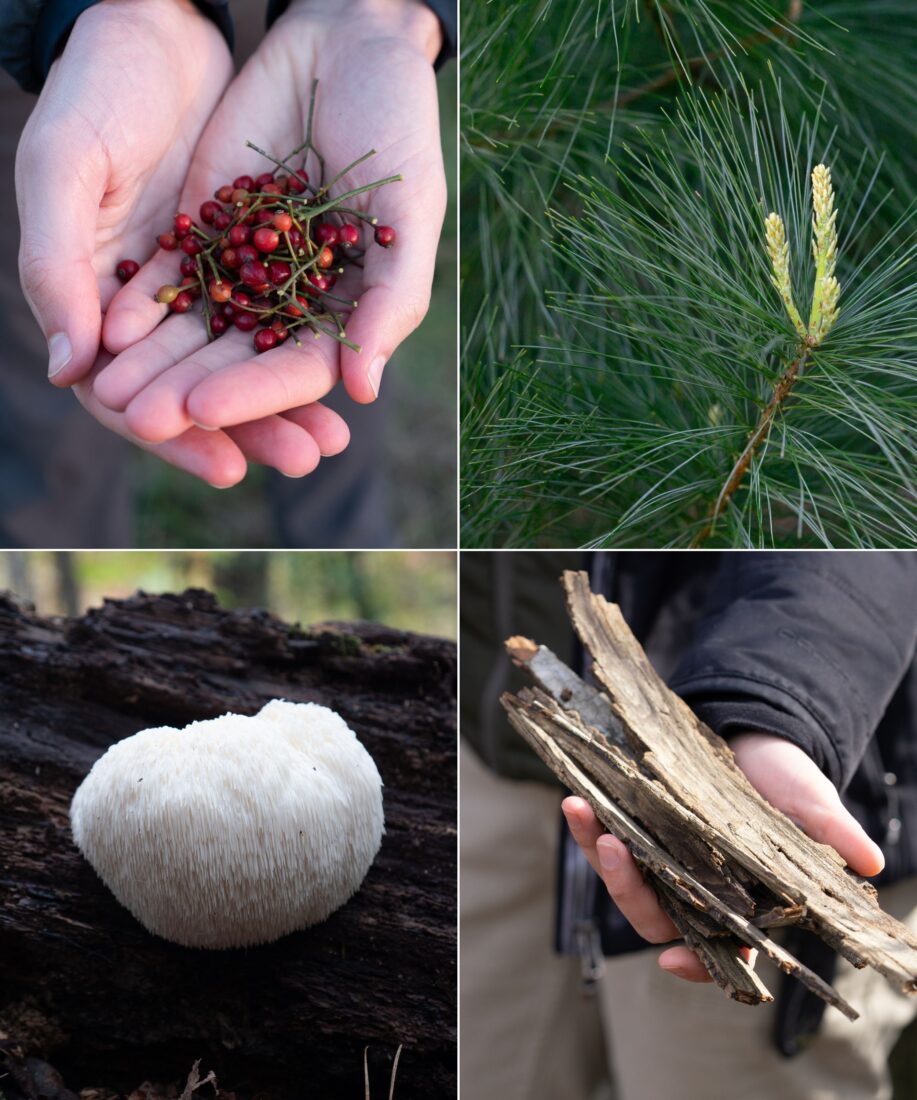
Abundant in yards across the South, pines offer an easy grab for the beginner forager. Akozbek likes to collect their green needles—be they loblolly, shortleaf, longleaf, or slash—every winter for a boost of vitamin C. After cutting them to size for a teapot, saucepan, or cup, he adds boiling water and steeps the needles for about fifteen minutes. After straining out the needles, the tea is ready to be sipped, delivering an acidic and citrusy flavor.
Wild or Field Garlic
Allium vineale
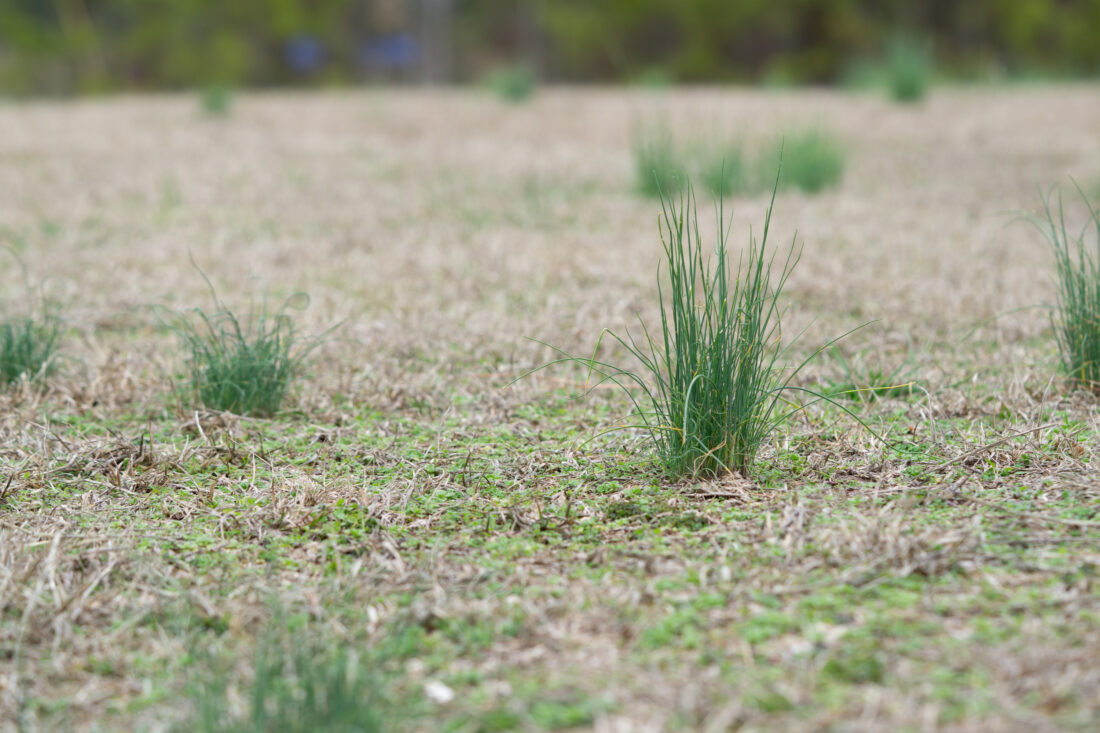
A cool-season perennial, wild garlic bursts forth every fall and winter in tall clumps. It outcompetes grass in growth rate, and its grey-green blades are easy to spot even after mowing. Abundant in yards, along trails, and in meadows and disturbed areas, it can liven up soups and stocks or even take the place of chives if the fibrous leaves are chopped thin. Akozbek says there isn’t much by way of look-alikes but cautions, “If it doesn’t smell like onion, avoid it.”
Lion’s Mane
Hericium erinace

Search the neighborhood for decaying silver maples or hackberry trees, and you’re likely to find a lion’s mane. The draping spines of this large white mushroom give it a shaggy appearance, and it grows widely throughout the eastern and central U.S. in hardwood forests. Lion’s mane offers a delicious flavor, meaty texture, and plenty of nutrition to make the forage well worth the low effort, and it can be cooked, dried, or powdered.
“Mushrooms are not inherently more dangerous than plants are. There are dangers to be aware of in both worlds,” Akozbek says. “In fact there are many great beginner-friendly mushrooms.” Lion’s mane, for one, has few look-alikes. “You’d have to really want it to be lion’s mane when it’s not to make the mistake.”
Slippery and Siberian Elm
Ulmus rubra and Ulmus pumila
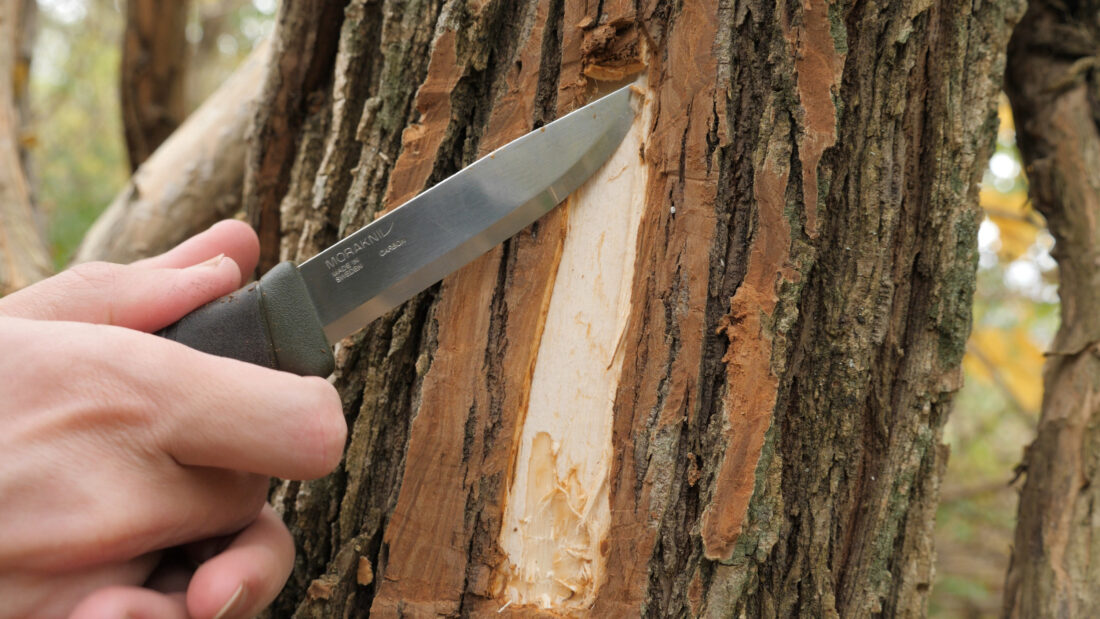
Both native slippery elm and invasive Siberian elm grow across the eastern and central U.S., most commonly near rivers or in floodplains. These large leafy trees have deep-set ridged bark that feels corky when pressed. In the winter their prominent purple-brown buds dot rough, hairy twigs hanging from the overstory.
Within the bark of both elm varieties is a compound similar to okra—and sweet and delicious in taste. Akozbek forages slippery and Siberian elm bark to use in sautés, stews, and tea. “You can shave off bark from branches. You can use twigs. But if you harvest from a live tree, take a vertical strip.” he says. This avoids girdling and killing the tree. Akozbek does this by slicing away the rough outer bark in vertical slashes until he reaches the lighter inner flesh of the tree. He cuts a slice of this pale fleshy interior about one inch wide and peels up to harvest a strip of the bark.
Kudzu
Pueraria spp.
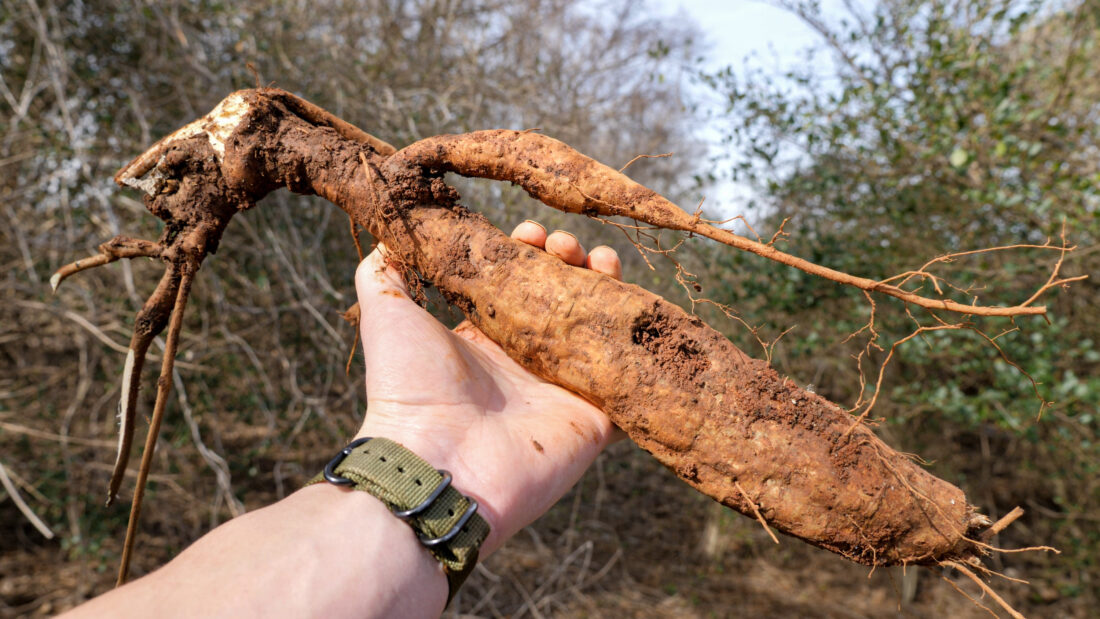
A common sight across the Atlantic Coast, invasive kudzu climbs and drapes its dark green three-leaved foliage across whole landscapes. In winter, though, the plant becomes a tangled mass of thick woody vines, and it’s best identified by its hairy stems and distinctive raised bumps.
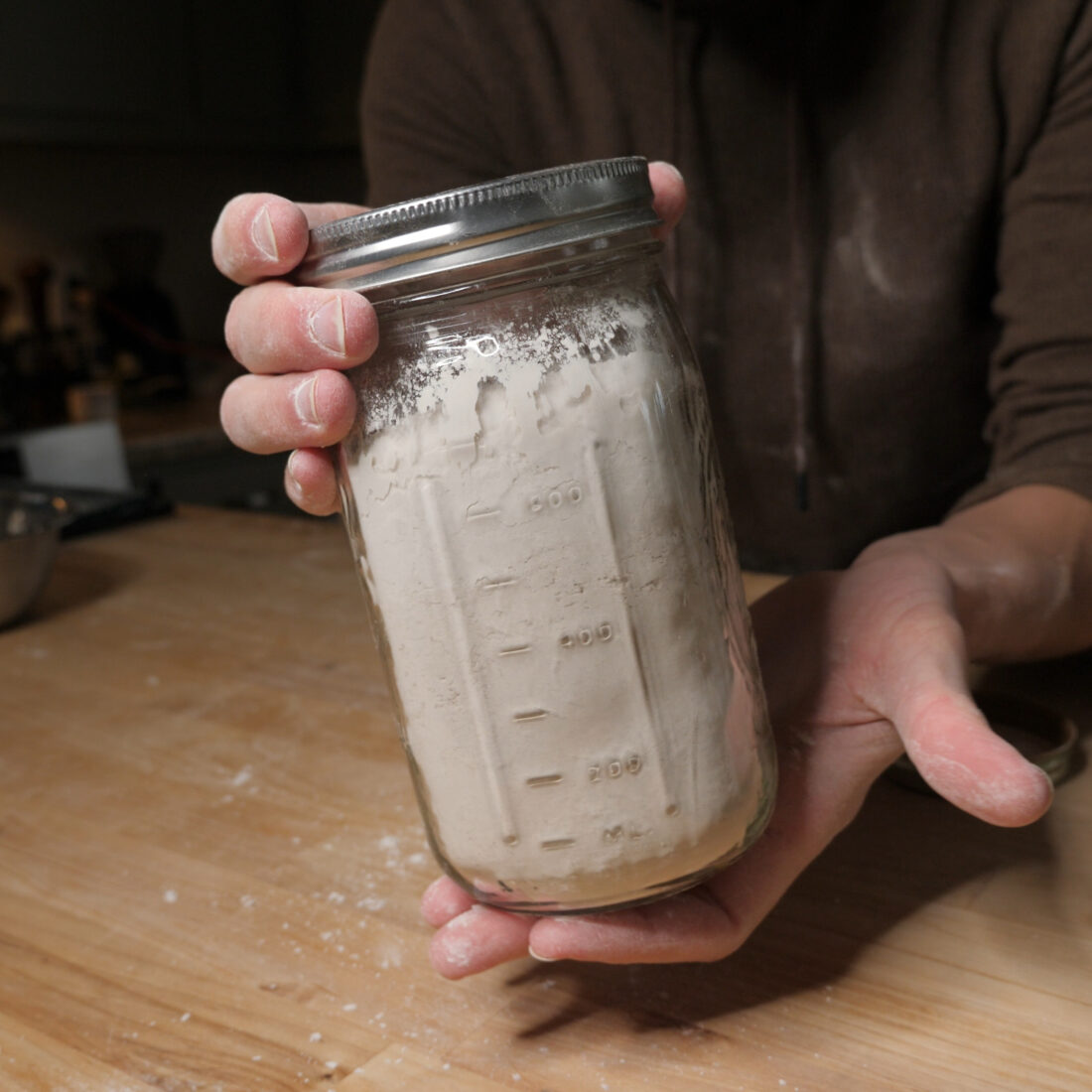
Beneath the smothering vine, kudzu roots grow just as abundantly. With a bit of digging, Akozbek gathers the roots—which can grow as long as he is tall—and chops them, blends them, and strains the contents through a kitchen cloth to collect a cloudy liquid. The starch will eventually settle, and the water can be poured off. He repeats this process a few times by adding fresh water and stirring the settled starch. On the last pour-off, he scoops out the wet starch and spreads it onto a sheet pan to dry, either with the lowest setting of a dehydrator or in a dry area of the house. He then blends the compacted pieces of starch and sieves the powder through a mesh jelly bag to remove any remaining impurities. What’s left is kudzu starch that can be used in place of corn starch (see a video tutorial here).
Multiflora Rose
Rosa multiflora
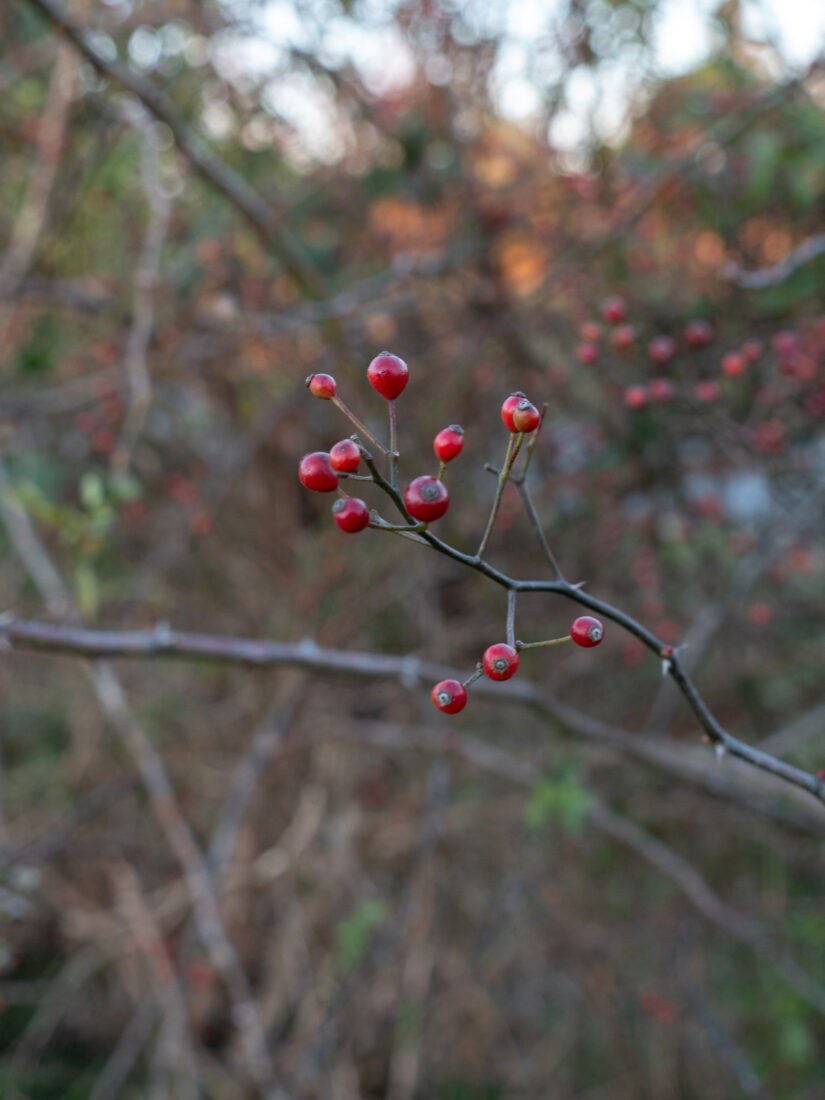
A thorn in the native ecosystem’s side throughout most of the United States, multiflora rose is an invasive species that can form large thickets in meadows, fields, and forest edges. While its small white flowers and leaves die off in winter, the rose hips remain for most of the season as small colorful berries on its green prickly stems. Akozbek likes to use the rose hips for tea, passing the steeped liquid through a filter to remove the irritating hairs that remain.