
Arts & Culture
An Audience with the King: Richard Petty on Life Beyond the Track
“Nobody talks racing. They say, ‘Hey, Richard, how you doing?’ I’m part of the woodwork.”
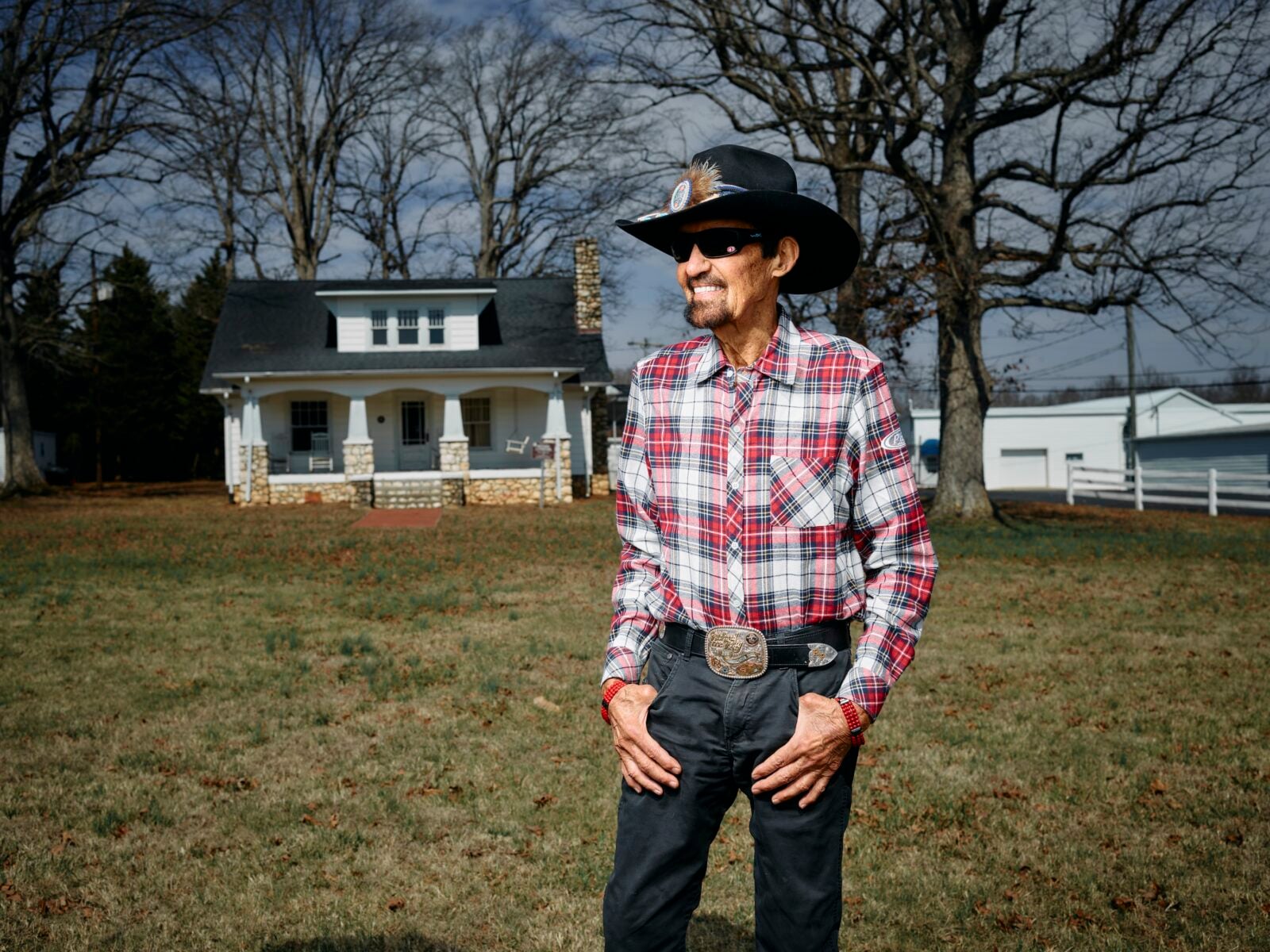
Photo: Chris Edwards
Richard Petty, photographed in his hometown of Level Cross, North Carolina.
At eighty-eight, the racing legend Richard Petty continues to be a fan favorite long after his career on the track ended, drawing crowds larger than many current drivers. Since retiring from the NASCAR circuit in 1992, the winningest driver in the sport’s history—two hundred Cup victories, seven championships, seven Daytona 500 checkered flags, to name a few feats—has shifted gears.
These days he focuses largely on philanthropy through the Petty Foundation and Victory Junction, a year-round camp for children with chronic medical conditions founded in honor of his late grandson Adam. Dressed in his signature sunglasses and cowboy hat at his home in North Carolina, the King of NASCAR opens up about memories of racing, his current life in his hometown of Level Cross, and his legacy over a pack of Nabs and a Coke.
What was your dream car as a kid?
The first car I had was a ’56 Dodge. It was the one that I got. At that time, I really was not interested in anything but the race car.
How does racing today compare with the old-school cars and drivers?
In 1949 they just drove them off the street and took the hubcaps off, put the seat belt in, and ran them. Then they started breaking stuff. Every year they improved the car—safety-wise, mechanical-wise. If you just finished a race, you had a chance to win.
In 1970 I turned over a Plymouth, and my arm kept coming out the window; Riverside, California, was a road course and everything went to the right. They had nets [to cover the window], but it wasn’t mandatory. Once my arm kept coming out the window, NASCAR made it mandatory. My mother made them out of fireproof material—same thing as what the uniforms were.
Now there’s super factories, engineers, everything’s electronic. I’m gonna say what my son, Kyle, says: “The only thing [connecting] racing today and what it used to be when it started is they throw the checkered flag.”
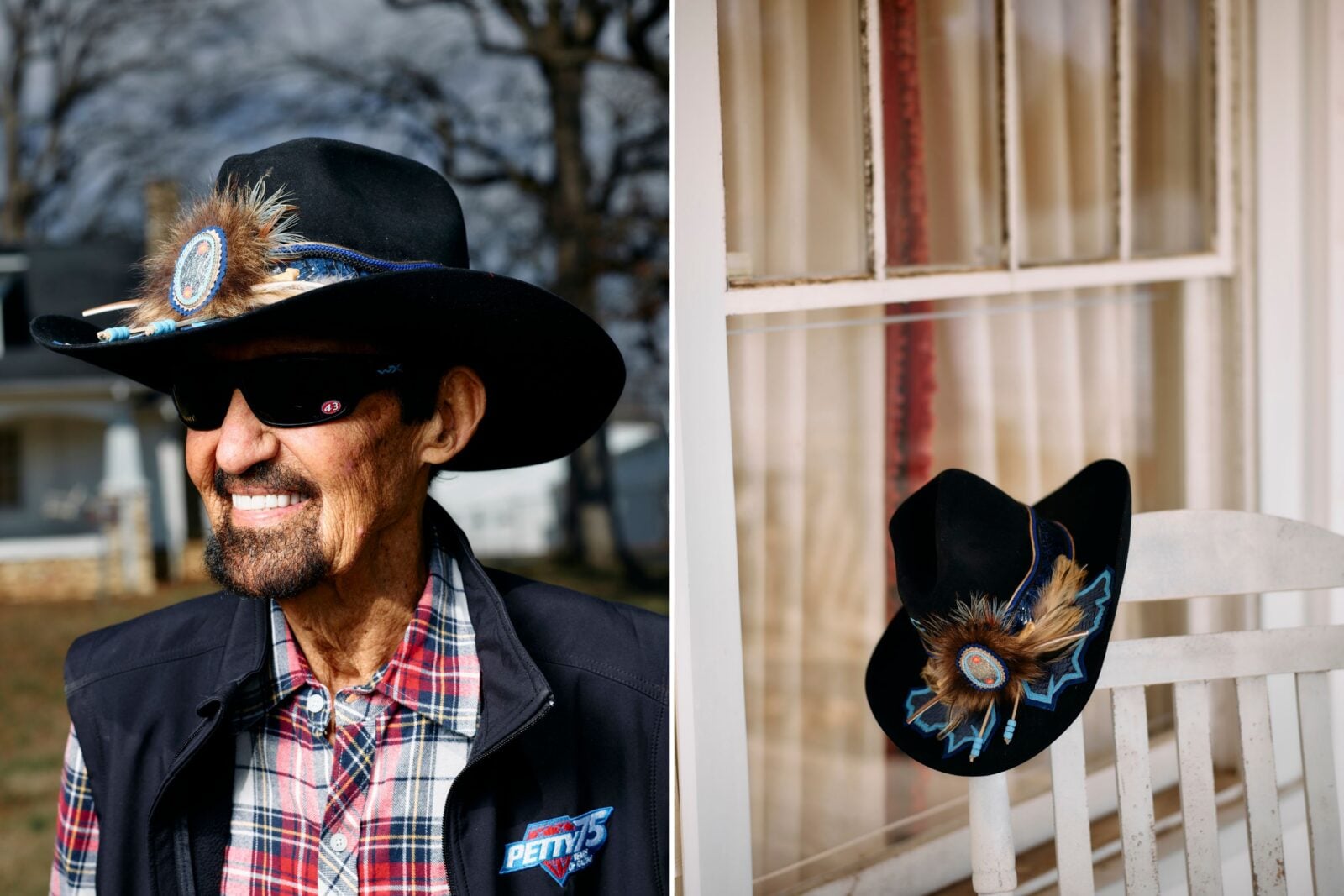
Photo: Chris Edwards
Petty at his home in Level Cross.
If you were running NASCAR, what would you change, and what do you hope never changes?
The green flag, the checkered flag, I hope never changes. I’m not involved in racing enough to know what really needs to be changed. Maybe it don’t need to be changed. Overall the cars are so much safer, better than what they used to be when I drove. Spectator-wise, it makes a better race out of it.
If you were to get back on the track today in any car, from a long time ago or today, what would it be and where would you race?
It would be Daytona, because we won a bunch of races in Daytona, and it’d probably be my 1970 Superbird.
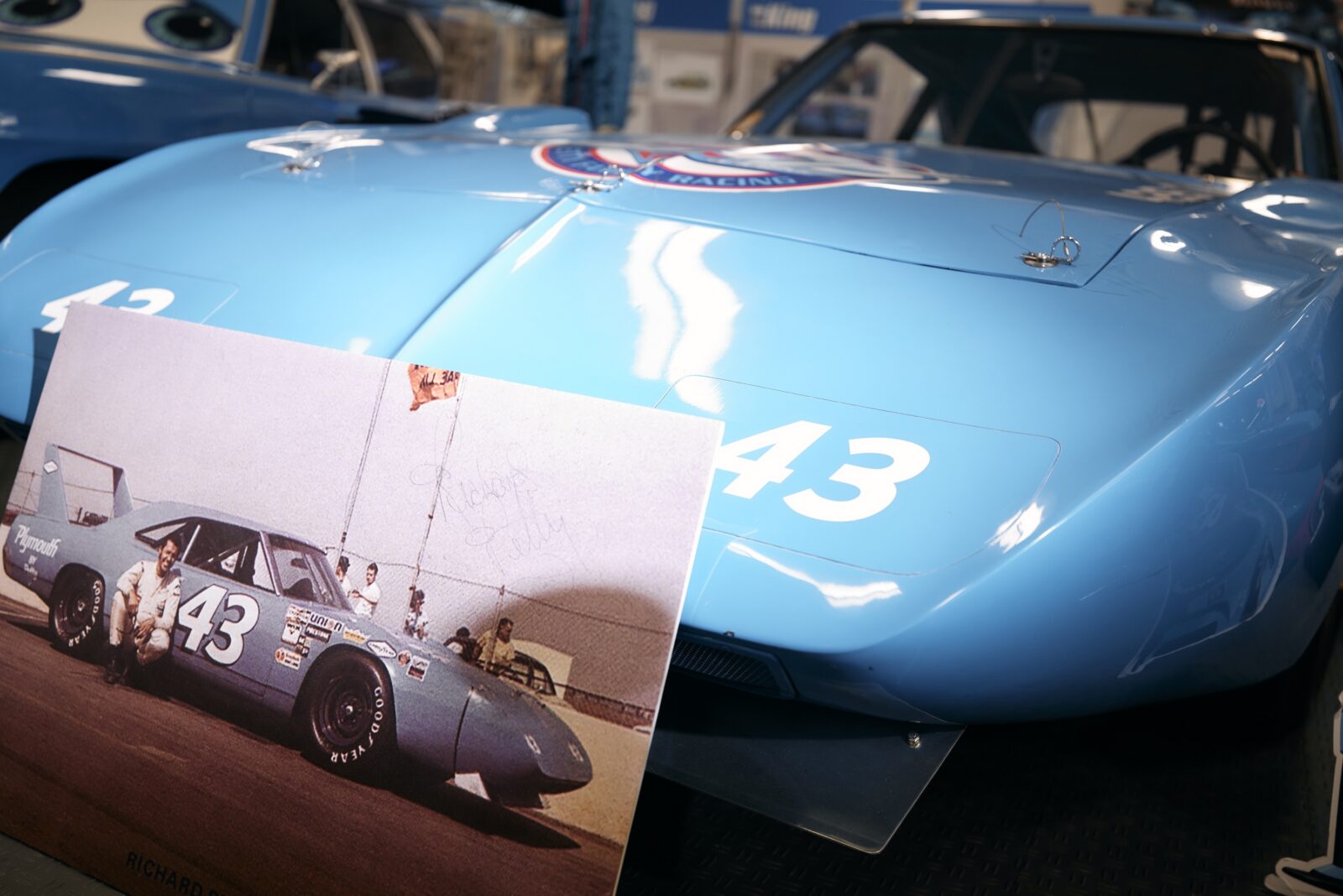
Photo: Chris Edwards
Petty’s 1970 Plymouth Superbird.
What are some of your favorite memories of growing up in Level Cross with your family?
All of them are great. I had one brother and he was about a year and a half younger than I am. We lived in a house up here with grandmother and granddaddy. Nobody thought anything about that. That’s the way life was at that time. When we lived over on the other road, we didn’t have electricity, we didn’t have running water, no telephone. We were as well off as the guy next door. I didn’t know whether it was poor or not. Nobody knew. You didn’t have radio, TV, so you just lived in a smaller world.
During your racing career, you were known for avoiding alcohol sponsorships because of a promise you made to your mother. How have family values impacted your career?
Mother set the pace and daddy followed it, so I followed daddy. There’s certain things you did and certain things you didn’t do. I learned from my mother. Whether it was right or wrong, I don’t know, but that was my environment. That’s what I grew up with, and I try to follow that still, because most of the time it’s kept me out of trouble. I figure it’s pretty good advice.
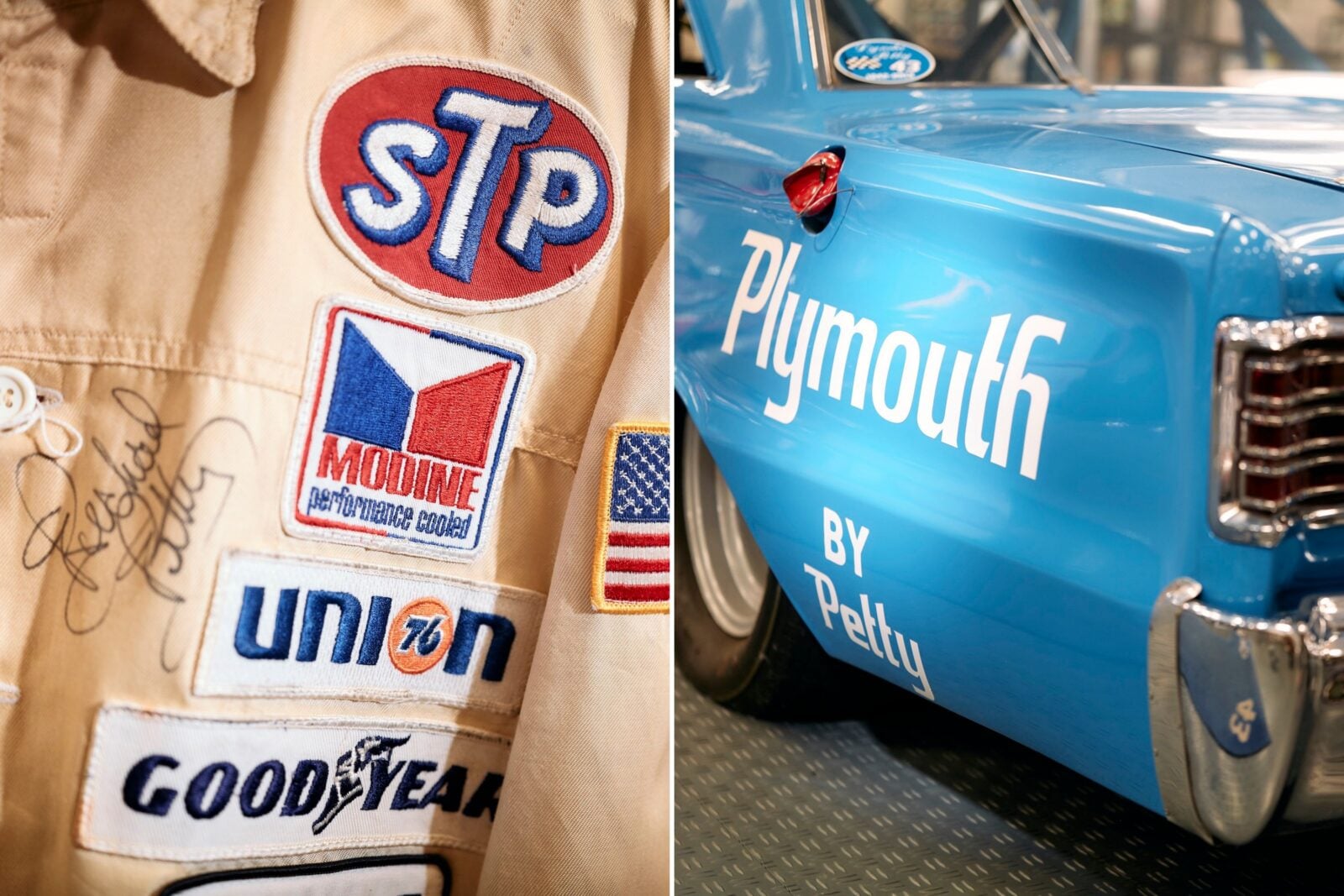
Photo: Chris Edwards
A signed racing jacket; Petty’s 1966-1967 Plymouth Belvedere at the Richard Petty Museum.
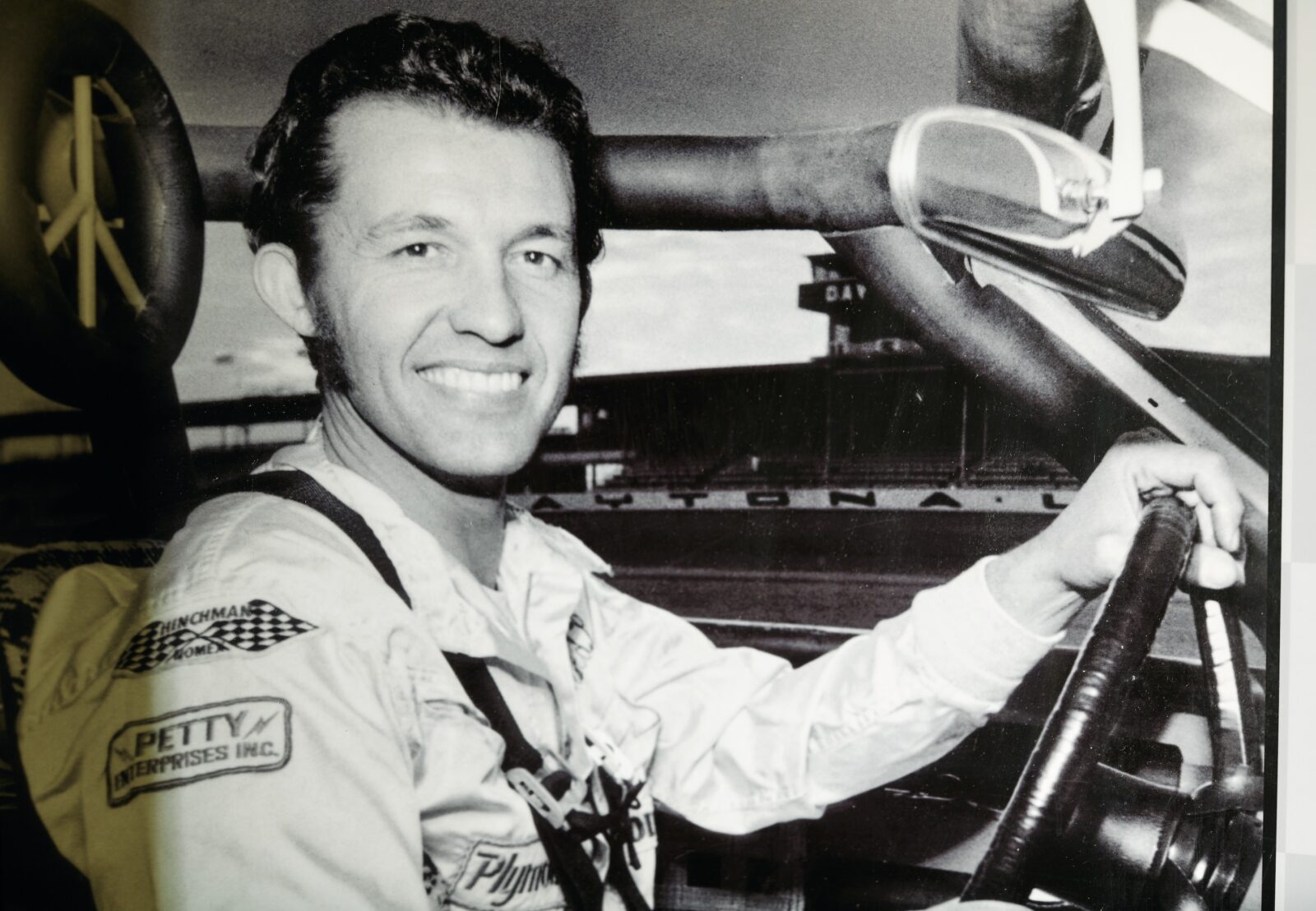
Photo: Chris Edwards
Petty in the early 1970s on the track at Daytona International Speedway.
Why has it been important to you to keep Petty Enterprises in Level Cross?
Because it started here in 1949. We still got the floor and the original building that was built around it. This is home. I grew up here. I knew everybody here. I never thought about living anywhere else.
What should visitors to Level Cross be sure to see, do, and eat?
They need to come by the Petty Museum because this is where, in 1949, NASCAR started. Basically my father, Lee Petty, was the first professional racer. Most of the time, somebody owned a car, the drivers had jobs during the week, and they just came to the race and had fun. Parties and all that stuff. My dad looked at it and said, I can make a living for my family, so we were basically the first family business in NASCAR. Then over a period of years, other people took up the same thing, and now it’s all very professional.
There’s the place up here at the county line—Frank & Larry’s. Super hot dogs. Hamburgers ain’t bad, but I’m a big hot dog man. I like a little mustard, a whole bunch of onions, and a little slaw from time to time.
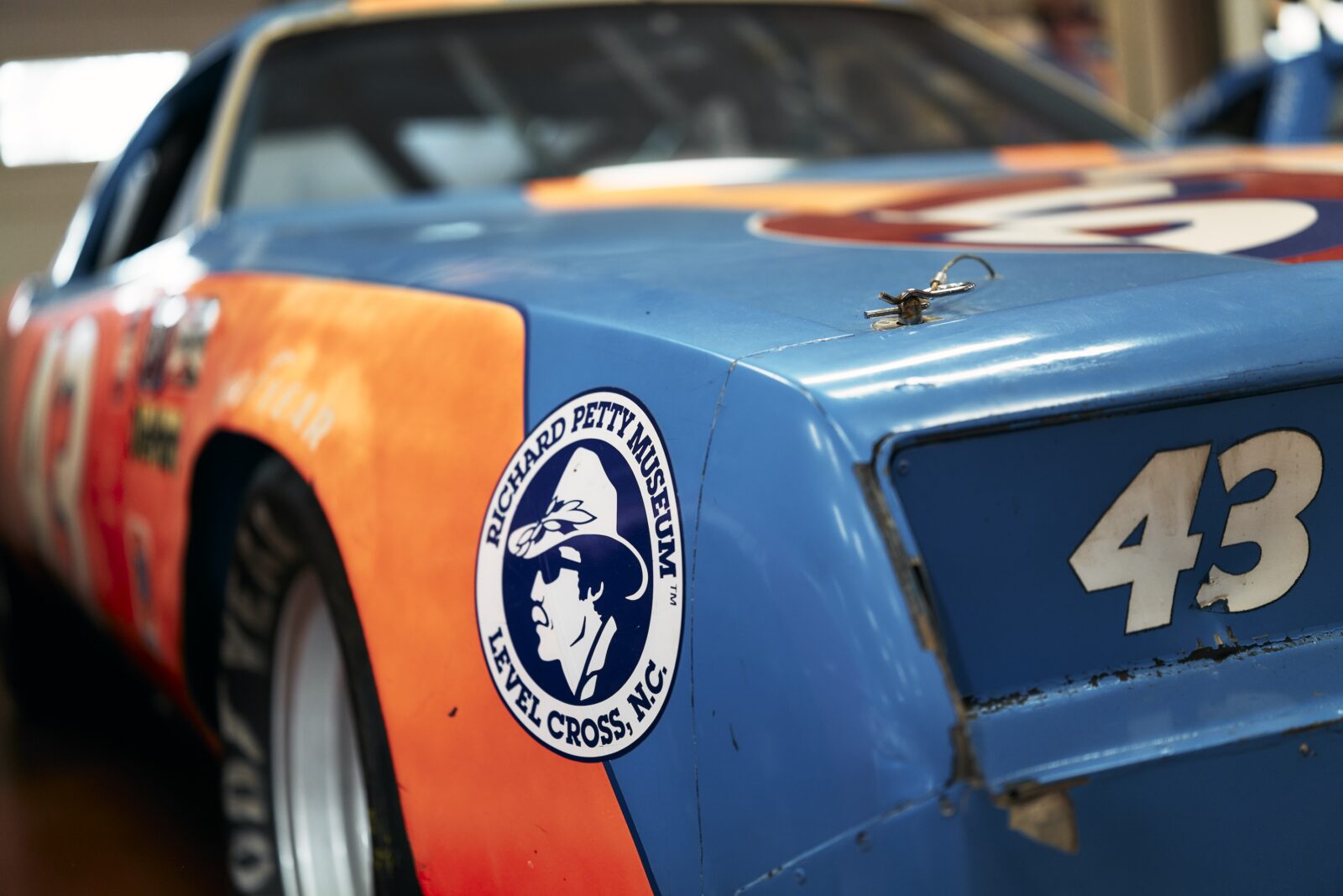
Photo: Chris Edwards
The Richard Petty Museum displays cars from Petty’s career, including winners from the Daytona 500.
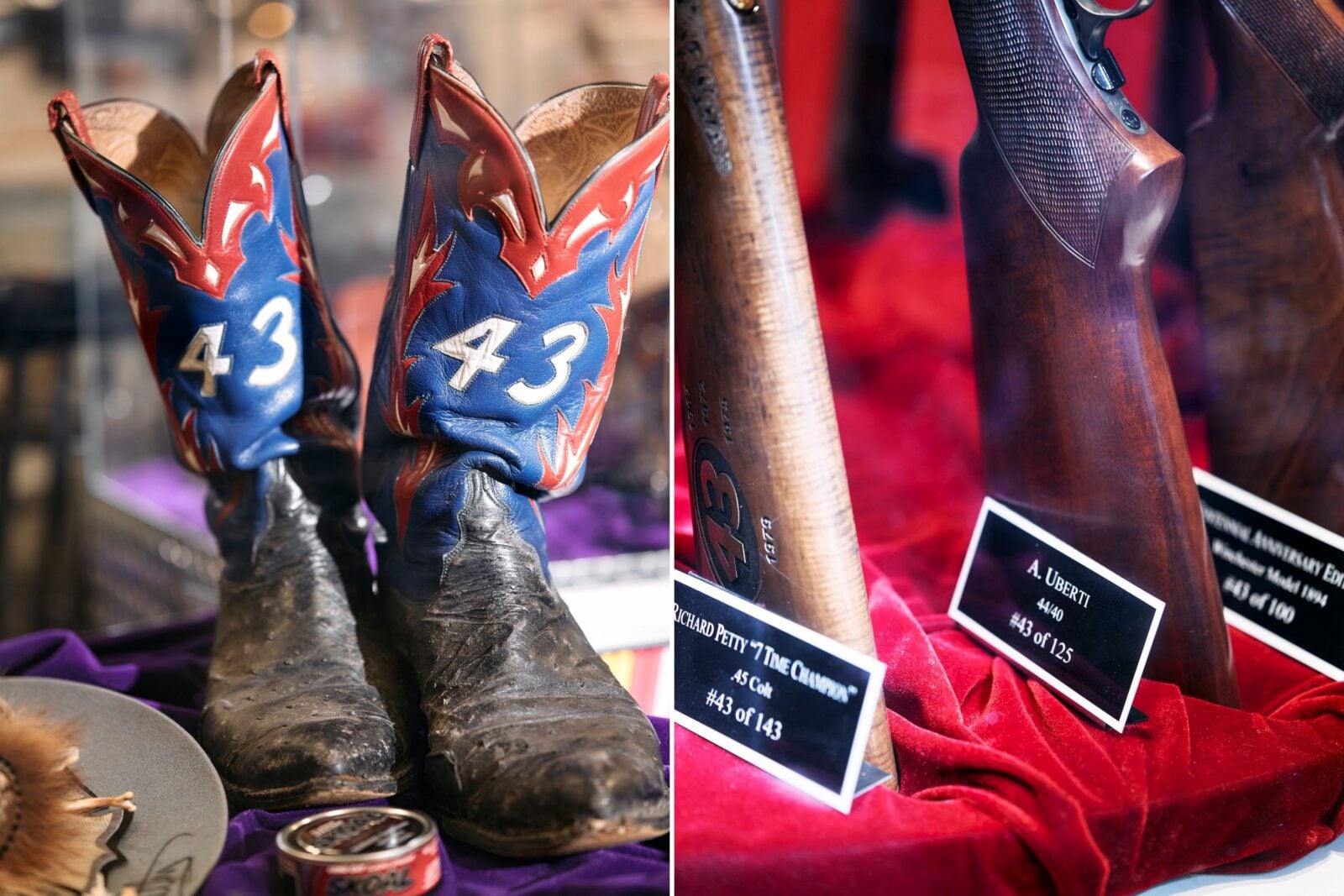
Photo: Chris Edwards
“43” memoribilia at the Richard Petty Museum.
You retired from racing in 1992, but when you visit the track, the lines to meet you are longer than for current drivers. Why have the fans always been important to you?
When racing first started, there was no outside sponsorship. I learned early on that the more people in the grandstand, the better chance I had to make a little money. Once I looked at the standpoint that the promoter paid me nothing—the fans paid me—I said thank you. Thank you for being a race fan. Thank you for buying a ticket. Thank you for helping me feed my kids.
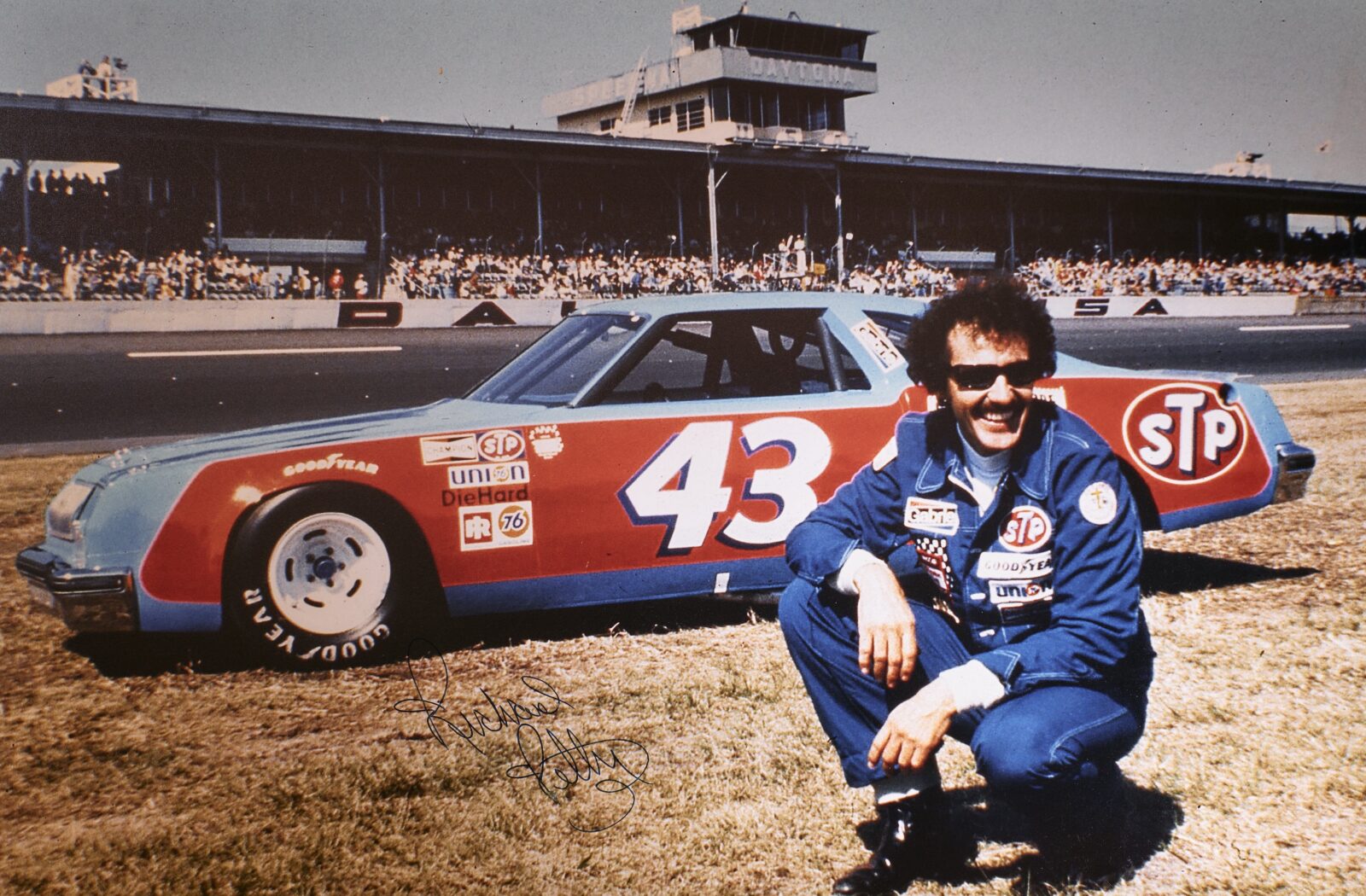
Photo: Chris Edwards
`Petty after his win at the 1974 Daytona 500.
Outside of Level Cross, you are known as the King, but how do the people here know you?
They know me as Richard Petty. They grew up with me. They went to school with me. We went to church together. We’re just neighbors. So I’m not the King. I’m just one of the crowd that goes to the ballpark up here. Nobody talks racing. They say, “Hey, Richard, how you doing?” I’m part of the woodwork.
The Petty family has a history of philanthropy, which continues through the Petty Family Foundation, supporting veterans, children, and other causes. How did that begin?
We got involved with Paralyzed Veterans of America about twenty-five years ago. I’m kind of a spokesman for them. Otherwise, our foundation does mostly things around here, like Victory Junction. We try to keep most of the money in the community.
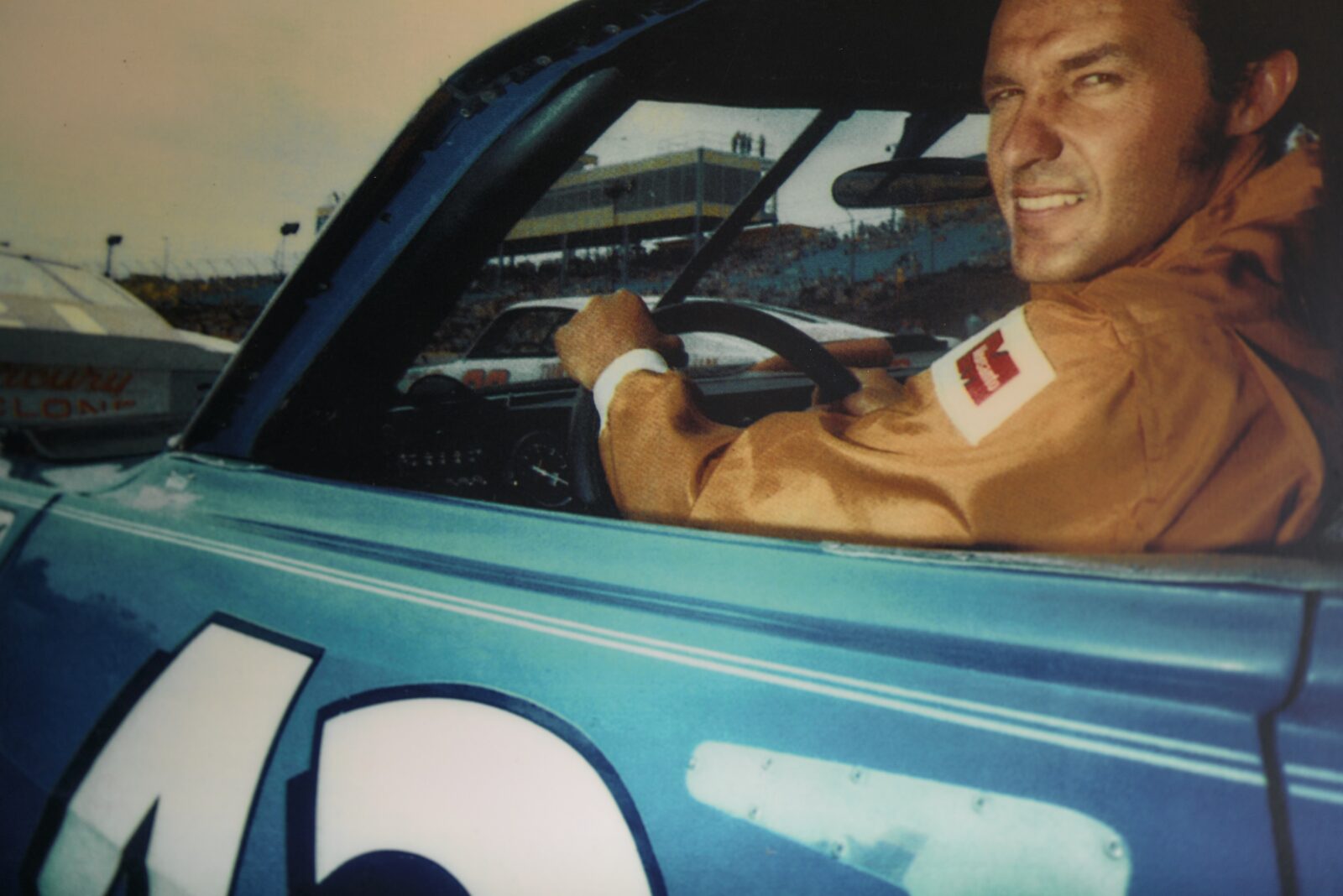
Photo: Chris Edwards
In the driver’s seat.
You and your late wife, Lynda, donated land for Victory Junction. Why is the camp so important to you?
Adam and his dad, Kyle, had been to Paul Newman’s the Hole In The Wall Gang Camp, and [Adam] said, “Why can’t we do something like that?” He came back, I was looking for land, and in the meantime, we lost him. [Adam Petty, also a driver, died at age nineteen in a crash during a Busch series practice round at New Hampshire Motor Speedway, in 2000.] The family got together and said, “Let’s do something.” All the drivers got behind it, the tracks got behind it, then NASCAR got behind it, the fans got behind it. In a couple years it was up and running. It was Adam’s idea, and the family took it and finished his idea.
You are most famous for two hundred career wins and seven Cup Series championships, but what do you want your legacy to be?
My legacy, and I hope the Petty legacy, will be Victory Junction. At the camp and off-campus deals, we’ve seen like 135,000 to 140,000 kids. That’s a bunch of kids that can’t go to a YMCA camp or a church camp. They’re too afflicted. What’s really been neat is we’ve had kids come through there, then come back as counselors. So it’s really, really good.
Who knows if we’ll be racing in twenty, thirty, or forty years? It might not even be a sport anymore. But the camp can be there.
Related Stories:
Arts & Culture
Cowboy boots, floor-to-ceiling jewelry cases, a customizable hat bar, and a real bar celebrate Texas and Tennessee
G&G Weddings
Bespoke linens, gorgeous gardens, and heartfelt heirloom details made for a romantic farmhouse wedding
G&G Weddings
The three-day affair fused the color of an Indian bazaar with the classic elegance of the Swan House
Trending Stories:
Recipe
Garlic, white wine, and a hint of umami from anchovies kick up the childhood comfort food in a new cookbook all about butter
Distilled
Where to belly up for “dusties” in the South and beyond

Home & Garden
Let ’mater master Frank Hyman narrow the field to a delicious quartet