Where: Virginia
When: year-round
If you like: the outdoors and sports, conservation
Why you should go: American chestnut trees dominated Eastern mountainscapes at the time of European colonization, standing one hundred feet tall and ten feet wide at maturity and covering an estimated 200 million acres from Mississippi to Maine. Carpenters prized their lumber. Gourmands regaled their nuts as the world’s finest.
Then came an invasive turn-of-the-century blight that wiped out virtually every wild tree by the 1940s. “The devastation marked one of the biggest changes in natural plant population ever recorded,” says Cassie Stark, director of science implementation for the American Chestnut Foundation (TACF). It fundamentally changed the scenery on what became the Appalachian Trail. “Hikers would have experienced a radically different landscape,” she says, “and been able to roast tasty, foraged treats over fall campfires.”
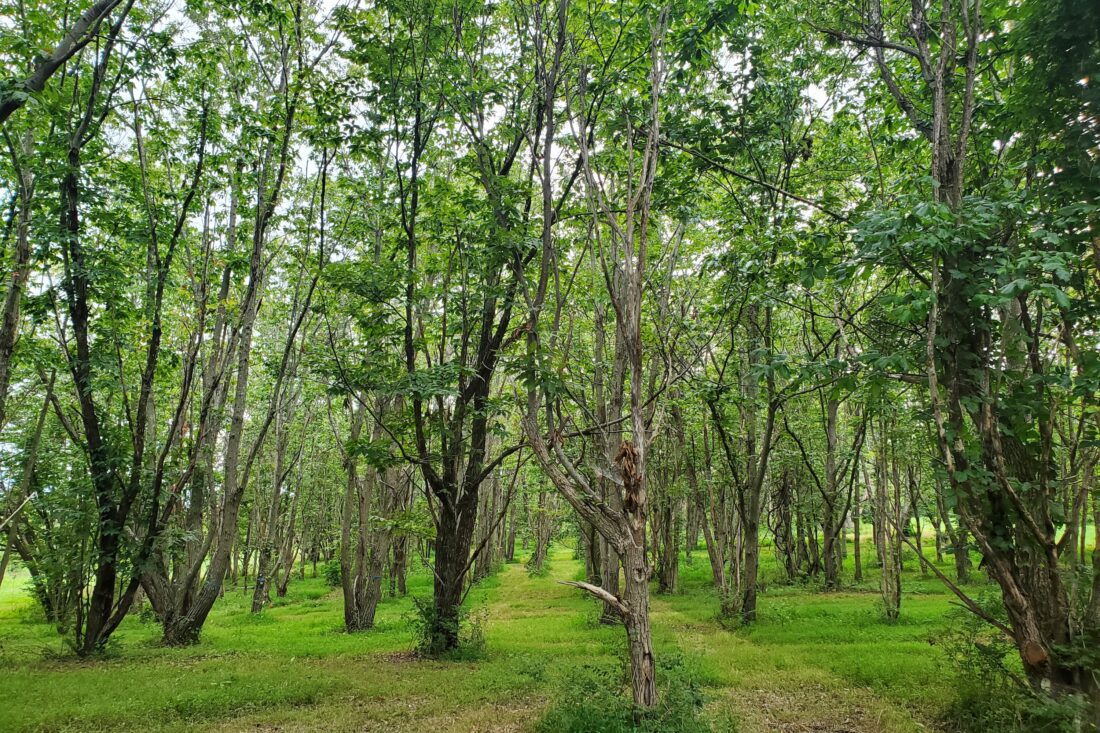
TACF and an armada of partner conservation organizations have spent about seventy-five years trying to reverse the damage. A groundbreaking program to breed trees with high blight immunity is headquartered in Meadowview, Virginia, and has spearheaded experimental plantings over four generations. Some have not only survived but reached maturity. Virginia’s Lesesne State Forest sits in the Blue Ridge Mountains and holds some of the largest and most successful plantings to date. A one-and-a-half-mile trail leads from the park’s gated entry and circumnavigates a magical-seeming thirty-acre grove of second-growth woods anchored by effectively wild American and hybrid chestnut trees. Some are upwards of seventy-five feet tall and produce the famously delicious wild nuts that few living people beyond foresters and researchers have ever tasted.
G&G tip: Lesesne’s chestnut trees are a sight to behold year-round, but early-fall visits yield a special treat. Nuts drop from mid-September through the first week of October. Retrieving them requires some bushwhacking, so be sure to wear long pants and bring leather gloves to handle the spiky husks.