Alabama
A New Spot for Sonic Euphoria
Music
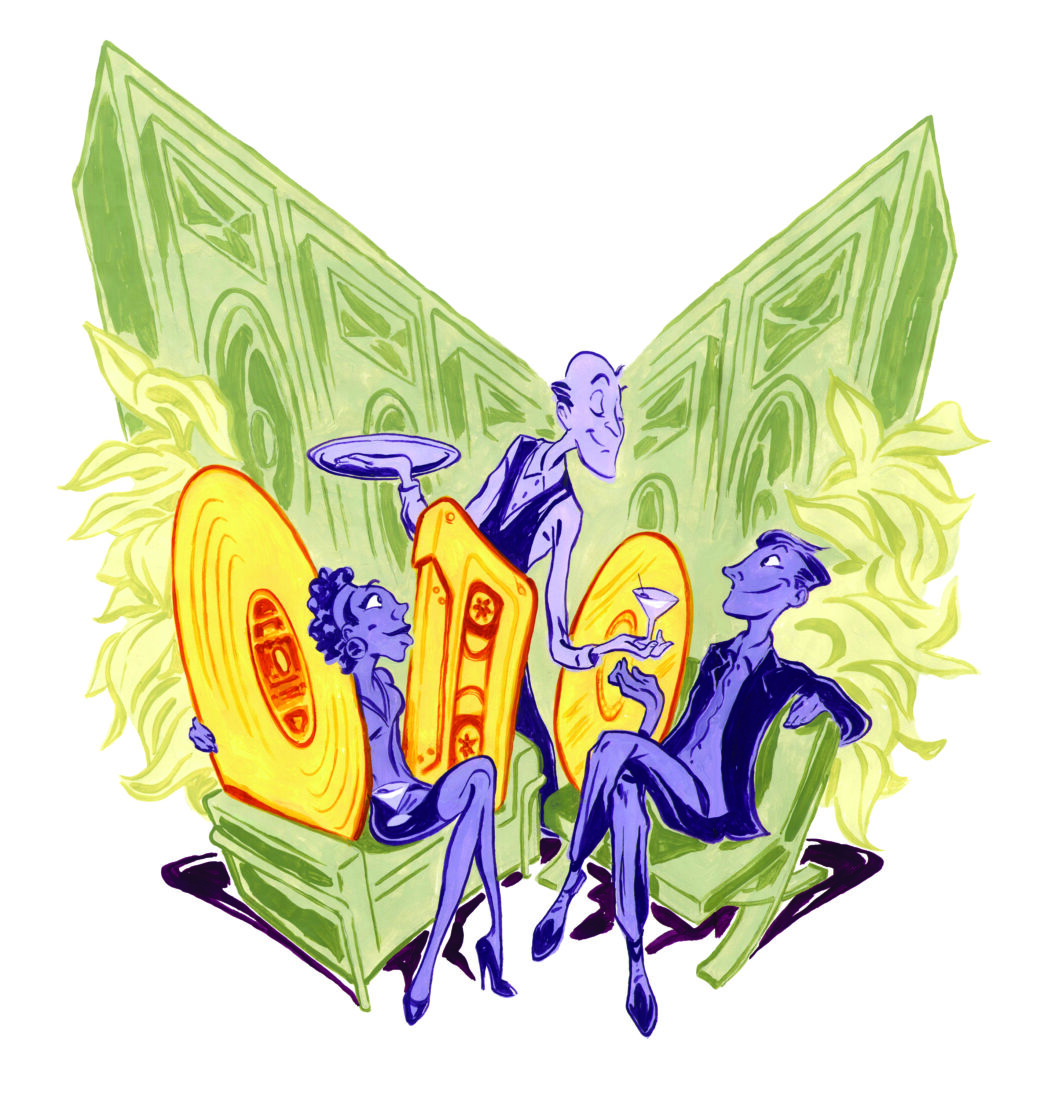
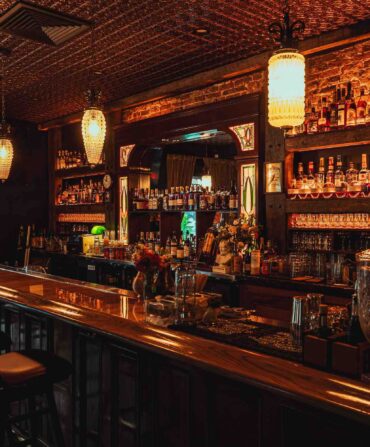
At Birmingham’s recently opened High Dive HiFi Lounge, the chef and vinyl record aficionado Sean Brock created a menu to echo listening lounges’ Japanese roots; the concept became popular there during the 1920s. Miso-caramel lattes, pork katsu milk-bread sandwiches, and panko-crusted, deep-fried deviled eggs arrive alongside sips from a sake program and multiple Magic City–made beers. The combo coffee shop, restaurant, bar, and listening room features a mix of tunes playing in various nooks—from jazz, Bakersfield country, and classic rock to the Grateful Dead and ABBA. A custom, state-of-the-art sound system’s crisp, immersive delivery of every chord and chorus, whether emanating from vinyl, a digital playlist, a cassette, the CD jukebox, or a live musician, resonates with guests, who note that songs come through crystal clear while they comfortably carry on conversations. “It’s really mellow and calming,” says owner Bart Stephens. But it’s what guests don’t hear that gets Stephens most excited. “While food, decor, and service have evolved into art forms, sonic hospitality has been neglected,” he says. “We worked with acousticians to make the walls massive sound traps. Clanking cutlery, coffee machines whirring—it’s all absorbed.” And noisemakers such “as refrigeration units sit outdoors. “Then we layer in desirable sound—music,” turning the place into a feast forall the senses.
Arkansas
Going Underground
Outdoors
The Dripstone Trail at Blanchard Springs Caverns starts with a 216-foot drop in an elevator, which opens into the heart of a living limestone cave. Situated in the Ozark–St. Francis National Forest near the town of Mountain View, Blanchard Springs was mapped in the sixties and seventies and carefully developed to maintain its wonders. Now, after more than fifty years of operation by the U.S. Forest Service, the caverns are slated to become Arkansas’s fifty-third state park. Visitors walk along paved, dimly lit paths to admire an underground river, stalactites, stalagmites, and fragile “soda straws” (baby stalactites). “The formations look pretty much as they did when the original explorers discovered the cave,” says David Thomas, a biologist at Lyon College who documents the caverns’ inhabitants, including the endangered gray bat and Ozark blind salamander. Aboveground, the same mountain spring that formed the caverns over thousands of years feeds picturesque Mirror Lake. “If you visit in the spring,” Thomas says, “the leaves are back out on the trees, the wildflowers are blooming, and all the birds are returning. It’s magical.”
Florida
A League of His Own
Baseball
Eighty years ago, Jackie Robinson stepped onto a Daytona Beach field and took the first steps to integrating Major League Baseball. The Georgia native, who had been signed by the Brooklyn Dodgers, spent his first year playing for its Montreal Royals farm club, and then made his Florida spring training debut in 1946. Home to historic Black college Bethune-Cookman University, the town was perhaps more welcoming than other cities might have been. Local Black churches prayed for Robinson at morning services before the Sunday game. Then congregants paraded to the park and filled the segregated right-field grandstand. But fans in all sections cheered when he first stepped up to bat. Now called Jackie Robinson Ballpark or “the Jack,” it’s listed on the National Register of Historic Places. “The game is a beautiful thing, but it’s more than baseball,” says Jim Jaworski, general manager of the Daytona Tortugas, the minor-league team that today calls the stadium home. The park, its $30 million upgrade nearly completed, honors Robinson with a statue, and all of MLB honors him on April 15, Jackie Robinson Day.
Georgia
Changing of the Greens
Golf
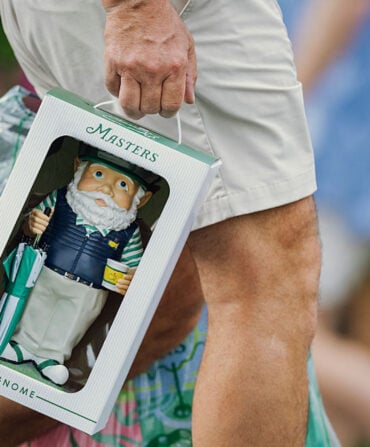
The golf world felt a tremor late last year when Augusta National Golf Club shook up its qualification criteria for the Masters Tournament (April 9–12). Not all PGA event champions will receive automatic invites anymore; rather, the Masters will expand its global reach by inviting a new slate of champions from the Scottish, Spanish, Japan, Hong Kong, Australian, and South African Opens. Closer to home, the expansion generating the most buzz is the reopening of the “Patch,” formerly known as the Augusta Municipal Golf Course, after a redesign of the original eighteen holes by legendary duo Tom Fazio and Beau Welling. The complex will sport a new driving range and short-game area, and Tiger Woods has also added a nine-hole short course called the Loop. Although the city owns the property, Augusta National led the renovation, which means that playing the Patch will give nonmembers their closest experience to teeing up at the legendary course. Golfers of any handicap can find fun at the Back Nine and Approach Shots, two golf simulators in town, before celebrating at Emil’s, a new self-pour (!) tap house.
Kentucky
Countdown to the Derby
Traditions
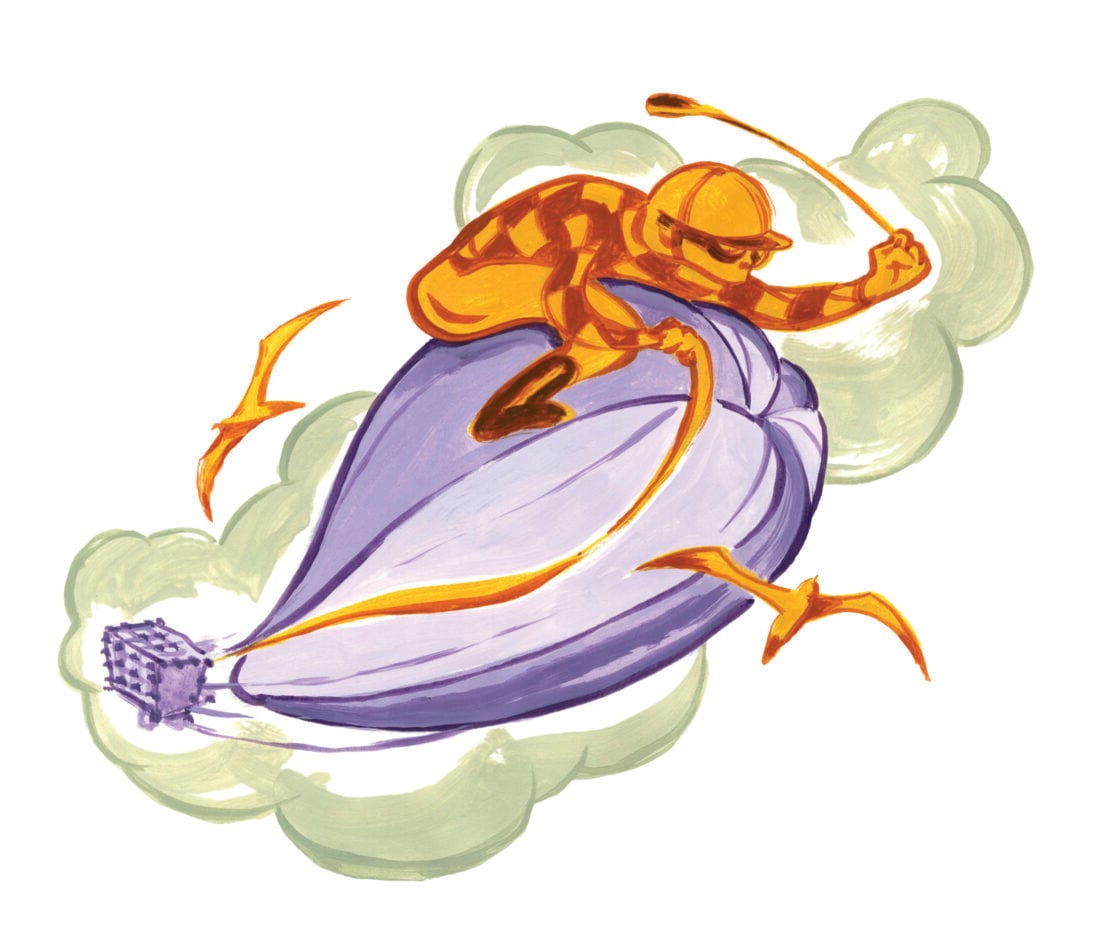
All eyes are on Churchill Downs the first Saturday in May, of course, but the Kentucky Derby Festival—held throughout Louisville in the weeks leading up to the greatest two minutes in sports—is another can’t-miss spectacle. The community celebration with more than seventy events is high camp and hugely entertaining. In some cases, participants race anything but horses, from bicycles and steamboats to hot-air balloons and mattresses on wheels. (The fiercely competitive Great Bed Races feature teams of five, often local businesses or nonprofits, forcefully pushing a comfortable contraption that’s part sleigh bed, part parade float, and part go-kart around a figure-eight course.) Everyone turns out for Thunder over Louisville, the nation’s largest annual fireworks display, established nearly four decades ago and still spearheaded by veteran producer Wayne Hettinger. “We design this show like it’s a finale all the way through,” he says, “and then we put a finale on top of the finale.”
Louisiana
A Warm Island Welcome
Conservation
Forty miles off the Gulf Coast, the Chandeleur Islands—a thin chain of barrier islands—form the easternmost point of Louisiana. The shifting sands offer a safe harbor for wildlife; some 171 species of birds have been recorded there, including thousands of redhead ducks. But over the past century, hurricanes and erosion have whittled away more than 90 percent of the archipelago. A new $3 million North American Wetlands Conservation Act grant to Ducks Unlimited and partners will help address that loss, joining a larger project to restore 5,000 acres of beach, dune, and back barrier marsh habitat, plus protect the extensive seagrass beds, which host lemon sharks, redfish, sturgeon, and tarpon. “You can’t beat these remote barrier islands when it comes to habitat diversity,” says Cassidy Lejeune, the director of conservation programs for Ducks Unlimited in South Louisiana. Starting in early summer, biologists will await especially important visitors: Kemp’s ridley sea turtles, the world’s smallest and most endangered sea turtles, which began nesting on the Chandeleurs again in 2022, the first time they’d been documented there in more than seventy-five years.
Maryland
A Blessed Crossing
Outdoors
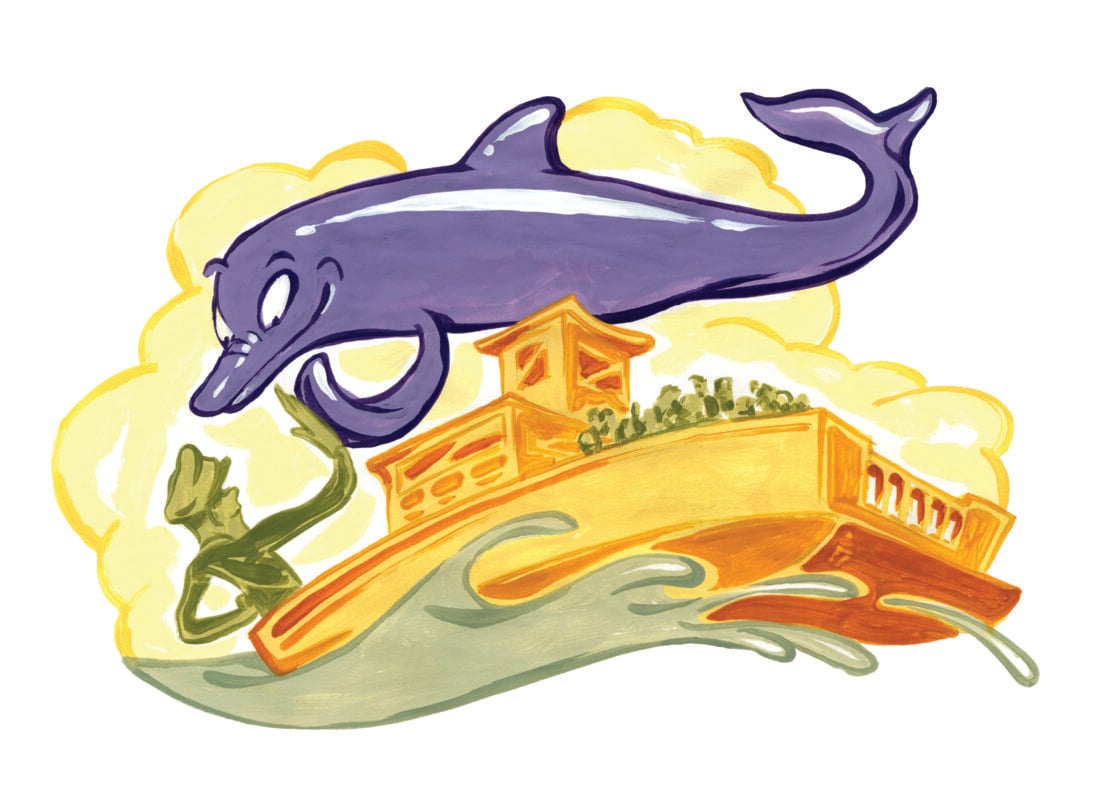
In Oxford, Maryland, spring arrives with a splash of river water and a prayer. The annual Blessing of the Oxford-Bellevue Ferry, scheduled this year for April 4, seeks safe passage and good fortune as the vessel returns for the season. “It’s for the crew, it’s for the ship, it’s for those who travel on it,” says Episcopal priest Kevin Cross, known locally as Rev Kev. The maritime ceremony usually includes a sea shanty followed by a community potluck and deck party. Considered the nation’s oldest privately owned ferry, the service began operating in 1683, running across the Tred Avon River, part of the Chesapeake Bay watershed. Today the ten-minute trip spares passengers from a meandering twenty-mile drive through the marshes and peninsulas of the Eastern Shore. Last year Jim Andrews’s company, JettyLight, purchased the ferry, which carries nine vehicles along with pedestrians and cyclists. Although he’s made a few updates like adding a ticketing app, the U.S. Coast Guard veteran says no one could ever improve upon the route’s history and scenery, which can include sightings of ospreys and dolphins. “Every crossing is different,” Andrews says. “This is more than just transportation, it’s tradition.”
Mississippi
Mister Rodger’s Neighborhood
Music
“Today his contributions are widely praised, but it wasn’t always so,” says Alana Broughton, executive director of the Jimmie Rodgers Foundation. “A magazine once ran an ad telling music stores not to sell his ‘Everybody Does It in Hawaii’ record, saying it was unclear what everybody was doing.” Meridian, Mississippi’s Jimmie Rodgers Music Festival will draw fans May 7–9 with live acts—the Marcus King Band headlines—and a talent show (a young Elvis competed in the first contest) for the seventy-third year, making it the country’s longest-running music festival. It honors native son and musician Jimmie Rodgers, who, working as a train brakeman in the 1920s, blended sounds and stories gleaned from other railway workers and travelers into his folksy, blues-laced songs and distinctive yodeling style. He’s considered the “father of country music,” but Broughton reckons him as “father of American music,” period. “He was in the Country Music Hall of Fame’s inaugural class,” she says, “as he’s in the Folk Music, Blues, Rock & Roll and Songwriters Halls of Fame, too.”
jimmierodgers.com/2026-festival
North Carolina
From Hosiery Factory to Art Haven
Anniversary
Winston–Salem’s Sawtooth School for Visual Art is frequently called a hidden gem, but residents know it well; the downtown art center, tucked inside the original Hanes hosiery factory built in 1911, offers workshops year-round, including popular crafts (ceramics, jewelry making, woodworking) alongside almost bygone ones (letterpress printmaking, loom weaving, darkroom photography). The community art school has been around for eighty years, a milestone it’s celebrating this spring with a commemorative exhibition and a black-tie gala (May 8). Under the theme Icons + Eras, the school will salute luminaries who have contributed to Sawtooth’s legacy, from the “founding mothers”—daughters and wives of Reynolds, Hanes, and other prominent early-twentieth-century area businessmen who shaped the school’s “art for all” ethos—to such contemporary artists as Rashaun Rucker. “My grandparents and mom saved up so I could take classes,” Rucker says. “When I think about my life as an Emmy Award winner, an artist with work in the Smithsonian, Sawtooth was foundational.”
South Carolina
Fair Winds and Following Seas
Sailing
What started as a little regatta launched out of the City Marina on the Ashley River by the Charleston Ocean Racing Association thirty years ago, with a tent in a parking lot and a scratch card of twenty-nine boats, has since morphed into Charleston Race Week (April 16–19), now the Western Hemisphere’s largest keelboat regatta. Nearly two hundred boats from across the country and beyond helmed by internationally renowned sailors race for three days in both the harbor and the open ocean. “Sailing is a chess game,” says Randy Draftz, the longtime director of Race Week. “You’ve got wind shifting back and forth, and in Charleston, the tides moving in and out.” These days, Race Week is held at Patriots Point, a naval and maritime museum complex on Charleston Harbor centered around the aircraft carrier USS Yorktown. “We love the juxtaposition of these new ultramodern racing ships and our eighty-two-year-old historic warship,” says Allison Hunt, executive director of Patriots Point Development Authority. And this year, for the first time, races will be broadcast in real time on screens on the aircraft carrier using live trackers.
Tennessee
Memphis in the Green Time
Gardens
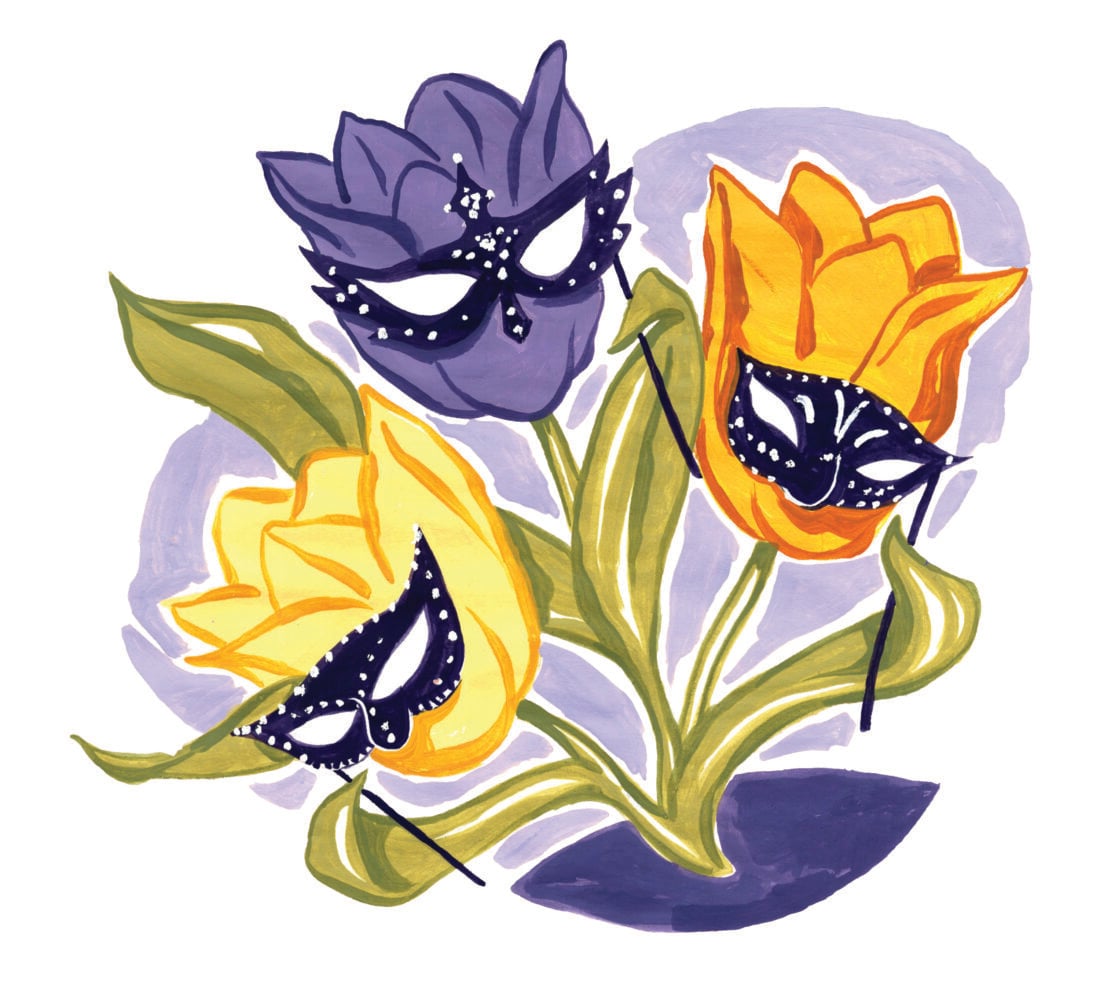
This spring, Dixon Gallery and Gardens in Memphis turns into a profusion of petals, including some 600,000 tulips—a rainbow of fringed, wild Asian, and double flowers, plus a custom golden-yellow tulip bred in the Netherlands for Dixon’s fiftieth anniversary. Add in the Memphis Garden Club’s “Masquerade” Flower Show (April 10–12), and Dixon’s seventeen acres achieve maximum blooming beauty. One of the country’s eight major Garden Club of America shows, the event features a keynote address by style mogul Aerin Lauder, and competitive displays. “I love pondering what from our personal gardens I and others might enter in the horticulture contest,” says Garden Club president Elizabeth Coors, who then echoes what most Southern gardeners are thinking each spring: “Will we have a late freeze? What will come up at the right time?” Around the gallery, dozens of creative floral designs will interpret and sit alongside whimsical paintings by the Memphis artist Mary Sims. “These aren’t your grandmother’s arrangements,” says Dixon curator Julie Pierotti. “They’re dramatic and avant-garde, combining plant materials like seedpods and bare branches with flowers.”
dixon.org/memphis-flower-show-2026
Texas
Grass Roots and Skylines
Arts
The artist James Prosek has long immortalized the now-rare prairies of Texas in watercolor and ink, and now his work has an unlikely new canvas in Fort Worth: a mechanical shroud that hides machinery atop the Westbrook, a deco revivalist building in Sundance Square. Alongside his eight-person team, Prosek created what can now be called the world’s largest prairie mural by transferring sketches onto the metal using an Italian Renaissance method called pouncing. The team then drew the design in graphite and finally added color and detail with weather-resistant enamel paint. The colorful finished work—of more than a hundred species of native grasses and wildflowers like Indian blanket, big blue-stem, and milkweed—stretches three hundred feet long and fifteen feet tall. “I think about the mural as a clearing for nature in this urban space, which hopefully starts a conversation,” says Prosek, who emphasizes the need to restore and manage complex grassland ecosystems. “Fort Worth was built on ranching, and ranching was built on prairies.”
Virginia
Hearth Transplant
Food
A fire is every baker’s nightmare. Siblings Evrim and Evin Dogu, owners of Richmond’s venerable Sub Rosa Bakery, have lived through two. In 2013, a discarded cigarette ignited the historic Church Hill building that houses the James Beard Award-nominated shop. “That fire didn’t touch the bakery at all,” Evrim says. “The water and smoke damage were so minimal that all we did was repair a back wall.” The blaze in November 2024 was different. Most likely caused by construction debris near the chimney, the conflagration shuttered the space for a year and led to some tough choices. After more than a decade building their reputation on turning house-milled wheat into flaky croissants and seeded flatbreads baked over a brick hearth, Evrim and Evin chose—out of both prudence and progress—to reopen this past winter with an electric model: a gleaming, Bassanina EcoPower deck oven assembled in Italy. “It’s incredible,” Evrim says. “We can load fifteen breads in one fell swoop now.”
Washington, D.C.
Capital Gains
Openings
Fresh talent fuels the D.C. food scene, but this spring, it’s industry veterans who are debuting spots around Washington. Slip into a Georgetown alleyway and meet Ox & Olive, chef Ryan Ratino’s “neon-gothic” steak house, where, despite his Michelin star–studded résumé, there are no white tablecloths. “It’s full of personality,” Ratino says, “and somewhere you don’t need to open an expense account for a celebratory meal.” Expect martinis, marbled flat irons, and clever riffs on the classics. Set to serve French Ethiopian fusion in the Bridge District is Mélange, a refined expansion of chef Elias Taddesse’s fast-casual spots slinging burgers and berbere margaritas. And in Adams Morgan, wife-and-husband team Jill Tyler and Jon Sybert will open Rye Bunny (the name a nod to their pups) after shuttering their much-lauded restaurant Tail Up Goat. The switch to counter service is new, but their commitment to mid-Atlantic flavors and local vendors endures. Tyler says the ethos is simple: “We want everyone to feel welcome at the table.”
hivehospitality.com, melangedc.com, ryebunny.com
West Virginia
Flocking to the Gorge
Outdoors
During the New River Birding & Nature Festival (April 27–May 2), avian enthusiasts swoop into southern West Virginia to ogle neotropical migrating birds in New River Gorge National Park, a crucial stopover for several species. During guided field trips, small groups search for the sky-blue cerulean warbler, which festival codirector Rachel Davis calls a “jeweled migrant,” as well as her personal favorite, the golden-winged warbler. Herpetologists and botanists point out other fauna and flora, too. “We see deer, lady’s slipper orchids, and spots where trillium carpets the ground,” Davis says. The event raises funds to celebrate and preserve the Gorge’s biodiversity year-round by getting local youths out into the wild. “I love watching the smiles and excitement,” she says, “hearing the ‘What did you see today?’ chatter as they compare notes.”
—Larry Bleiberg, Crai Bower, Kinsey Gidick, Robert Alan Grand, Jennifer Kornegay, Lindsey Liles, and Grace Roberts