
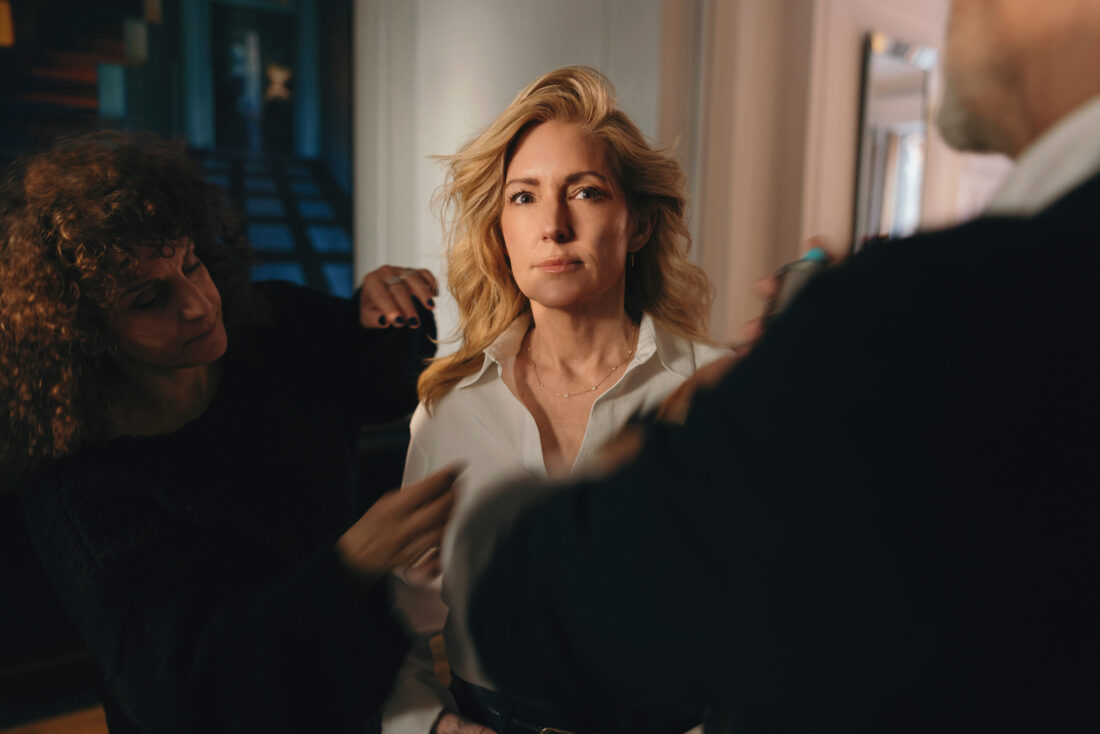
Seventeen years ago, Kathryn Stockett rocketed to the top of the bestseller lists with The Help, a novel set in Stockett’s native Mississippi about the lives of African American domestic workers as they navigate racism and white privilege in the early 1960s. The book sold more than fifteen million copies before getting adapted into an Oscar-winning film (directed by Stockett’s longtime friend Tate Taylor), but it also ignited a cultural firestorm about voice and representation in mainstream publishing. Now, after getting a divorce, living in Bali for two years, fixing up a house near Taylor’s in Church Hill, Mississippi, and enduring countless false starts, Stockett is back with her second novel, The Calamity Club, out May 5. “I don’t know how to quit,” she says. “I don’t have that in me.”

Some writers begin a story with an image or an idea that they can’t get out of their heads. What was the case with The Calamity Club?
For me, it’s always trying to find the right voice. Once I land on a voice that feels comfortable and I can embody, then I can make up the circumstances. I went looking for somebody, and I found this child’s voice. Her name in the story is Meg. Because maybe inside I’m still an eleven-year-old girl, it resonated with me, and it was an easy voice to make vulnerable. If I can get to that vulnerable place in a character, I can write about them all day. I’m going to keep trying to figure out: What is this person’s problem?
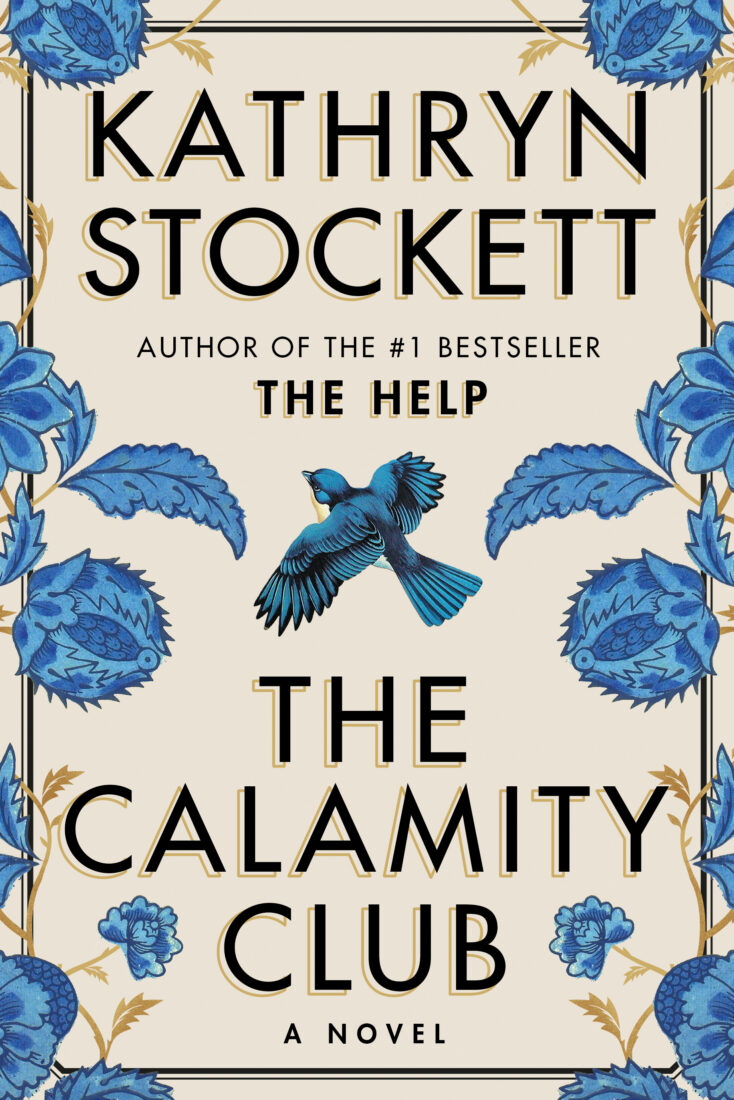
The story is set in Oxford, Mississippi, in 1933. What about that moment spoke to you?
I was intrigued by it because of my grandparents. For most of America, the Depression started with the crash in 1929, but it started way before that in Mississippi. I wanted things to be as bad as they could get for a place like Mississippi, which happened to be right before Prohibition was repealed in 1933. That was another thing I knew: I wanted to entwine a bawdier story. I wanted drinking to still be really, really taboo—alcohol and bootlegging and all that. So that was fun.
Both novels follow female characters as they navigate tight social structures. How did growing up in Jackson influence that?
I was born to fight what people consider the social norms of being a Southern woman. I was born to argue and break rules and get in trouble. I’m probably going to get in trouble for The Calamity Club for a couple of reasons. I got in trouble for The Help. I’m always going to be pushing those boundaries, because it challenges me as a writer. I want to write about things, and I want to write about people, and I want to write about voices that maybe haven’t been written about enough, certainly not by Southerners. And I understand that there’s a responsibility that comes with that. What I’m talking about, really, is the appropriation as a white woman writing in a Black voice. I got in a lot of trouble for that. And the thing is, I understand—I get it. I’m sure I would not have written The Help today.
Most writers don’t experience either of those extremes: the intense high of having a mega-bestseller or the intense scrutiny and criticism that followed. What did that experience teach you?
First of all, it wasn’t easy. It wasn’t an overnight success. I got sixty rejections, just from agents. So I was used to being told “no.” I was used to the door being slammed in my face well before The Help, and then I wrote The Help, and it exploded. This new book took so long and I had so many false starts that my publisher fired me. There were many years when I thought, “Well, I’m one and done.” I was a little bit ashamed. I was disappointed in myself. All seventeen years I was writing, but I don’t think it really got good until about seven or eight years ago.
In the past, you’ve said that you’re drawn to women who are underestimated.
I think a lot about my mom. She’s this sweet little old lady you see in the grocery store with big crazy glasses and big hair and all that. But the truth is, as a Southern woman, she was one of the first in Jackson to get a divorce. She was the editor of the Junior League magazine, and when she got a divorce, they encouraged her to step out. They didn’t want divorced women as part of their club. She ended up resigning because they wouldn’t allow Jewish members, much less people of color. So she taught herself to code, and she helped write an immunization program for children in Mississippi. I will say, the Junior League of Jackson has come a long way, and has made a hugely positive impact on my hometown.
How is the Kathryn Stockett who wrote The Calamity Club different from the one who wrote The Help?
I hope I’m a bit wiser. Definitely a bit more cognizant and not as naive about the voices that I take on. When you write your first novel, you don’t really hear your readers in your ear. They’re not even in the room. And when you write your second novel, they are right there, staring you down. So I’m more aware now as a writer of what the reader is going to think of it. How is it going to make the reader feel? And some of that works strategically as a writer, but it also kind of limits you.
What was it like to face both those limits and the freedoms of writing a novel after so long?
I’ve had a ball. I toured for The Help for almost five years—they put me on the road and did not stop. Then I was doing speaking engagements. At the same time, I was going through a divorce and raising a child as a single mother. Fortunately, I had so much help. We lived in a great neighborhood in Atlanta with lots of other kids, but it was hard to carve out that quiet time. Then, when my daughter was in tenth grade, things in the public-school system got a little cliquey. So we packed our bags and moved to Bali. I wanted her to see the bigger picture. I really think she is a more compassionate human being because of that.
What I learned is that as a Southern writer, I need to be based in the South. I need to hear the cadences of those voices, and I need to feel the humidity and just…soak up the South to be able to write about it honestly. When you’re away from that, you kind of lose touch with what it feels like to be from Mississippi. It’s a place I love and a place I don’t love, but it’s my home.
Garden & Gun has an affiliate partnership with Bookshop.org and may receive a portion of sales when a reader clicks to buy a book. All books are independently selected by the G&G editorial team.