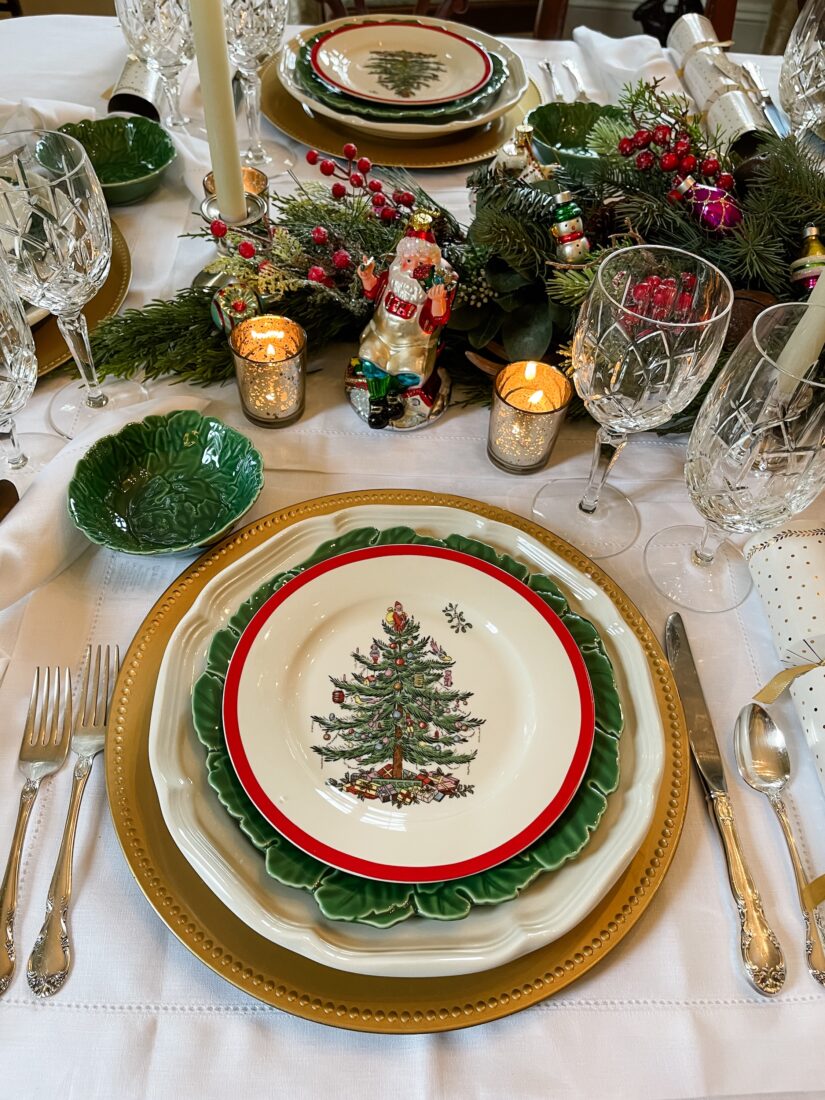
“We all know someone who has Spode Christmas Tree,” says Keith Winkler, a manager at Replacements, Ltd. in McLeansville, North Carolina, the world’s largest retailer of china, crystal, and silverware and the South’s go-to spot for unique antique finds.

This, of course, is an understatement. The iconic pattern, which depicts a fully decorated fir tree surrounded by gifts and rimmed traditionally with a band of green, was Replacement’s top selling china pattern from 1985 to 2019, and Winkler says it’s still one of top three patterns, holiday or otherwise, that the company sells each year.
“So many people have used Spode Christmas Tree at their grandmothers’ tables,” says Keith Meacham, owner of the Nashville home goods shop Reed Smythe & Company. “It has so many memories and family history associated with it.”
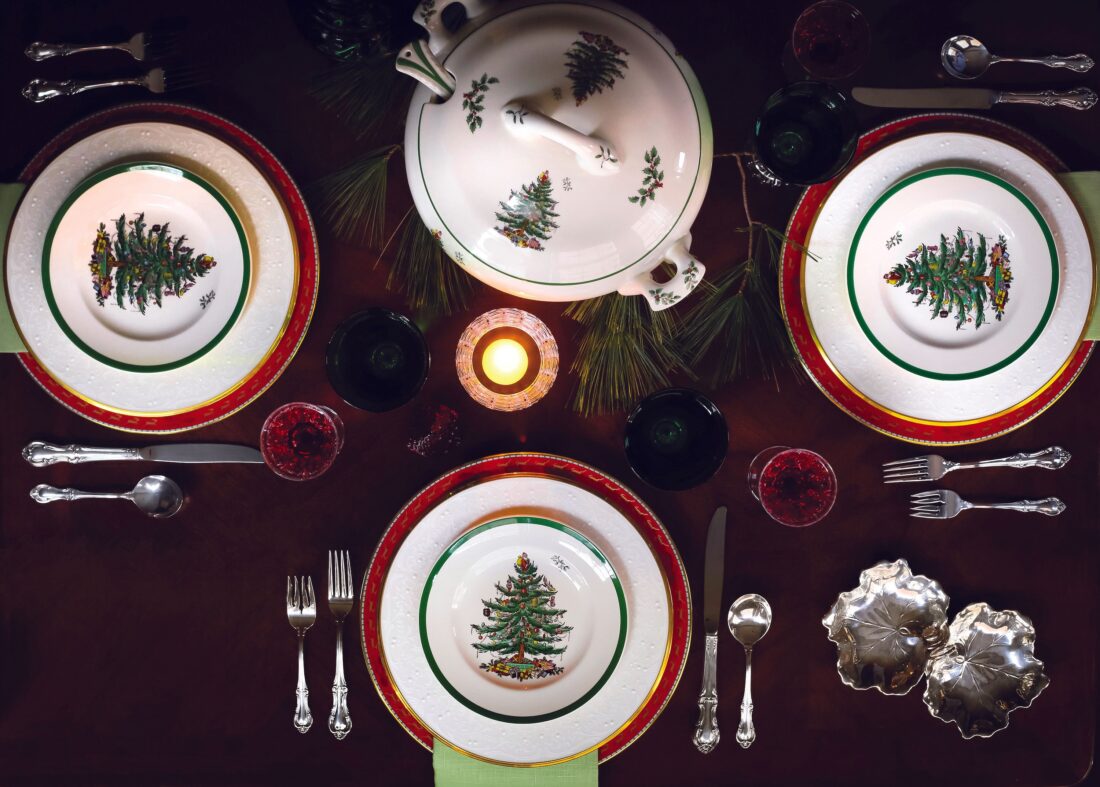
“One of my favorite holiday traditions is the china swap the day after Thanksgiving,” says Vera Stewart, a cookbook author based in Augusta, Georgia, and the host of The VeryVera Show. “I tuck away my beautiful Spode Woodland Quail, and out comes Spode Christmas Tree, officially signaling the holiday season in my home.”
I myself remember the proverbial changing of the guard every December when I was younger, when my mom would carefully pull her Spode salad plates and mugs out of the china cabinet, swapping some of our everyday china for the holiday-themed ware instead.
Based in Stoke-On-Trent, England, Spode started producing china in 1770. But the Christmas Tree pattern was only introduced in 1938 at the request of the company’s sole U.S. salesperson, Sydney Thompson. Up to that point, the company had never produced holiday-specific china, but Thompson foresaw how festive tableware might resonate with his American clients.
Spode designer Harold Holdway had never seen an American Christmas tree, and his first sketches depicted an evergreen with small gifts scattered throughout the branches, as was the tradition in Victorian England, and crowned with a Santa Claus figurine. Thompson encouraged Holdway to shift the gifts under the tree but left Santa at the top instead of swapping it with an angel or star.
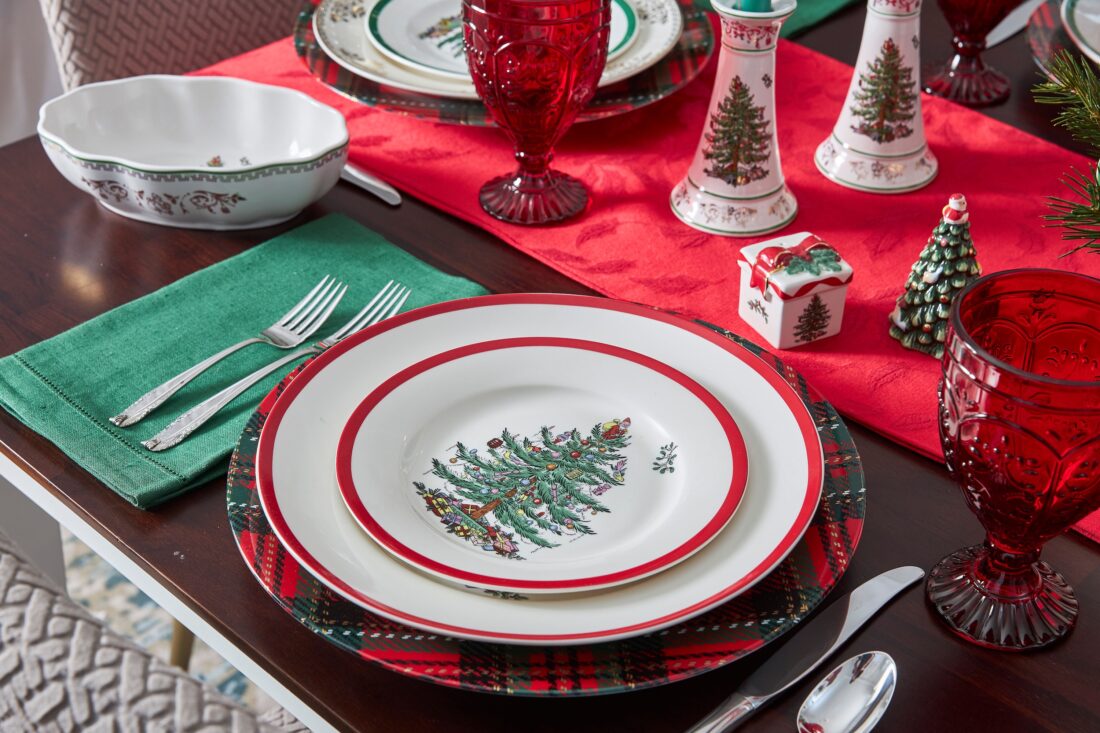
Spode was only sold in one department store in New York City at the time, but that didn’t stop its meteoric rise. It was the first true holiday china pattern on the market and remained that way for years. (Lenox debuted its popular holly-and-berry pattern in 1974; Bernadaud released its toy soldier–inspired motif in 1989.)
Being the only choice originally certainly doesn’t guarantee a fandom, but there are a few theories as to why Spode has stuck around. One is family tradition.
“Typically brides registering thirty, forty, fifty years ago would always register for an everyday pattern, a formal pattern, and in a lot of cases, a holiday pattern,” Winkler says. That’s what Stewart did. “I registered for Spode Christmas Tree when I got married in 1974,” she says. “It reminded me of my late mother, and I knew she would have been thrilled to see me using and delighting in this pattern—and now I’ve started collections for both my daughters-in-law.” Meacham, too, registered for Spode because both her mother and mother-in-law had it.
The pattern also invokes nostalgia in and of itself. “I think the Spode Christmas Tree pattern is so beloved in the South because the classic, traditional tree instantly reminds us of the warmth of a true Southern Christmas,” Stewart says. “It’s inviting, familiar, and quietly elegant—everything Southerners value when it comes to entertaining.”
Now, with a family of my own, I find myself yearning each year to pull out the plates my mother set out when I was young and create new memories around the holiday table with my own children.
“Every single time I’ve tried to mix it up and use some other china on Christmas Day, I get a mass revolt,” Meacham says. “My family says, No, this is the Christmas plate. This is Christmas.”