From the bayous to the balds, the South is starting to stage its slow-rolling, annual wildflower bloom. A handful of spring festivals offer front-row seats as these blossoms unfurl in their native habitats. Some have been running for nearly a century, and others are brand-new.

Oconee Bell
Salem, South Carolina
The Shortia galacifolia, with its delicate white, bell-shaped blossoms, launched one of botany’s greatest wild goose chases when, in 1839, Asa Gray found a dried specimen in a Paris herbarium. He described a new genus based upon it, and then spent nearly four decades searching for it in the wild. Scientists across the U.S. joined the hunt and hit dead ends until a teenager stumbled on it in the Blue Ridge Mountains in 1877. Search no more: The annual BellFest (March 21) includes guided hikes into the Jocassee Gorges of Devils Fork State Park during the rare few weeks a year when this belle is in bloom.
Giant Blue and Abbeville Red Irises
Acadiana, Louisiana
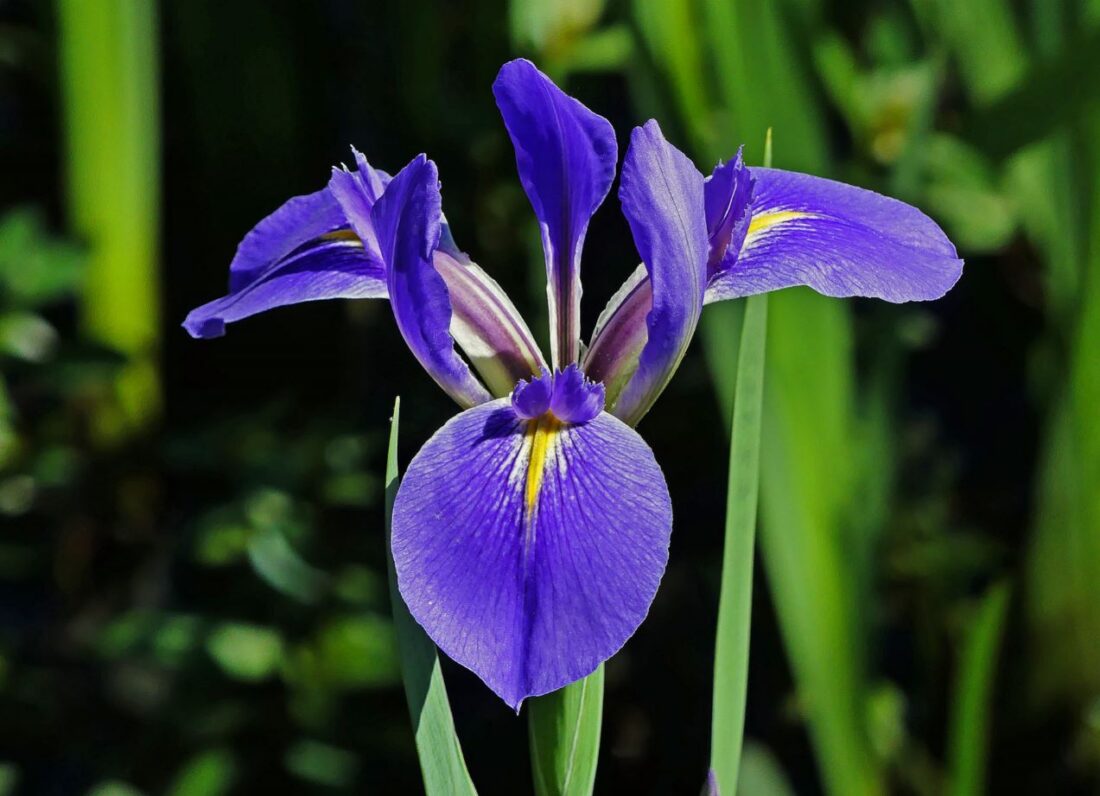
Louisiana is home to a number of wild iris species, including the state wildflower, the Giant Blue, Iris giganticaerulea. The inaugural Louisiana Iris Festival in New Iberia (March 28) and Lafayette (March 29) will celebrate the plant on the banks of the Bayou Teche and in Moncus Park, home to Louisiana’s largest display of iris cultivars, respectively.
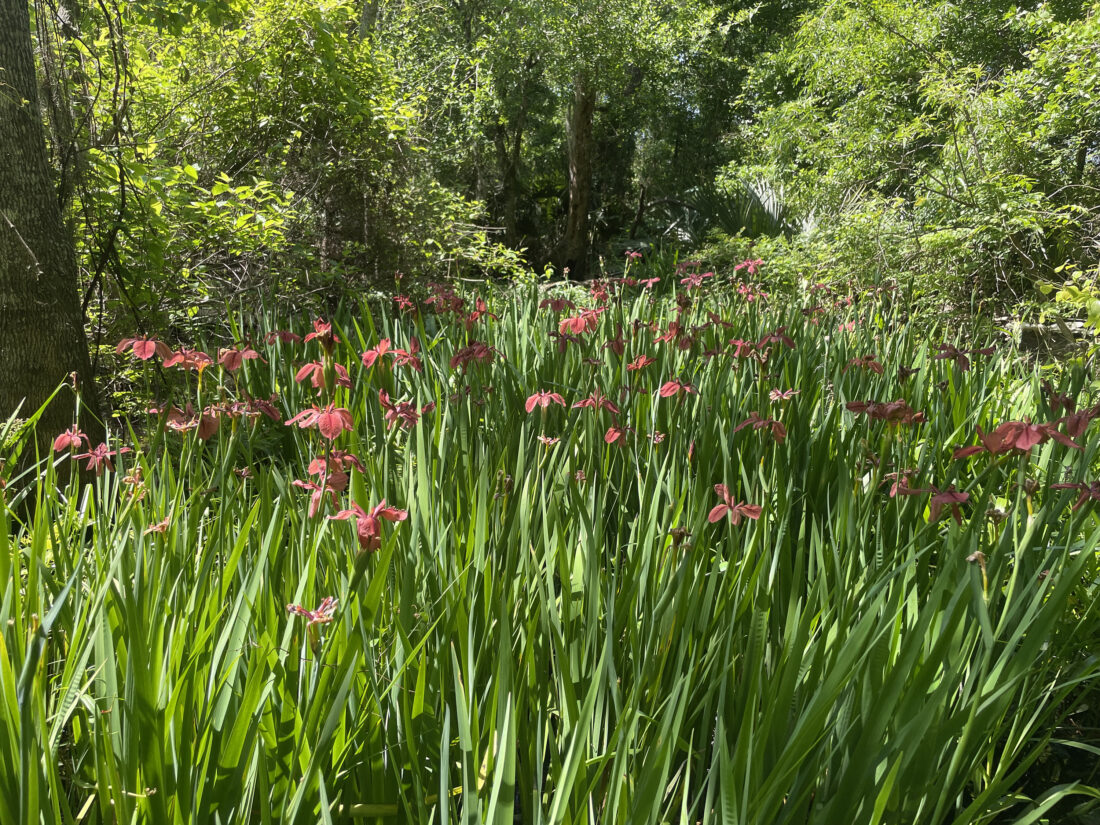
One endemic species, the critically endangered Abbeville Red, Iris nelsonii, grows in a single swamp on Earth, near its namesake town. Seeing them in bloom is always a privilege, says Gary Salathe, founder of the Louisiana Iris Conservation Initiative. “They are so rare, you cannot find them to purchase.” Salathe—who’s spearheaded the rescue of over 60,000 wild iris rhizomes from disappearing Acadiana habitats—will cohost the annual viewing of the Abbeville Red Iris Bloom at its “ground zero” viewing location in Palmetto Island State Park (April 11).
Pink Lady’s Slipper
Slade, Kentucky
Cypripedium acaule can vanish underground into vegetative dormancy for up to twenty years before resurfacing. Ever rarer across its native habitat in eastern North America, this ostentatious orchid is among the prized species volunteers will log in the citizen-science Botany Blitz at the Kentucky Native Plant Society’s Wildflower Weekend (April 17–19) in Natural Bridge State Resort Park and Red River Gorge.
Great White Trillium
Gatlinburg, Tennessee
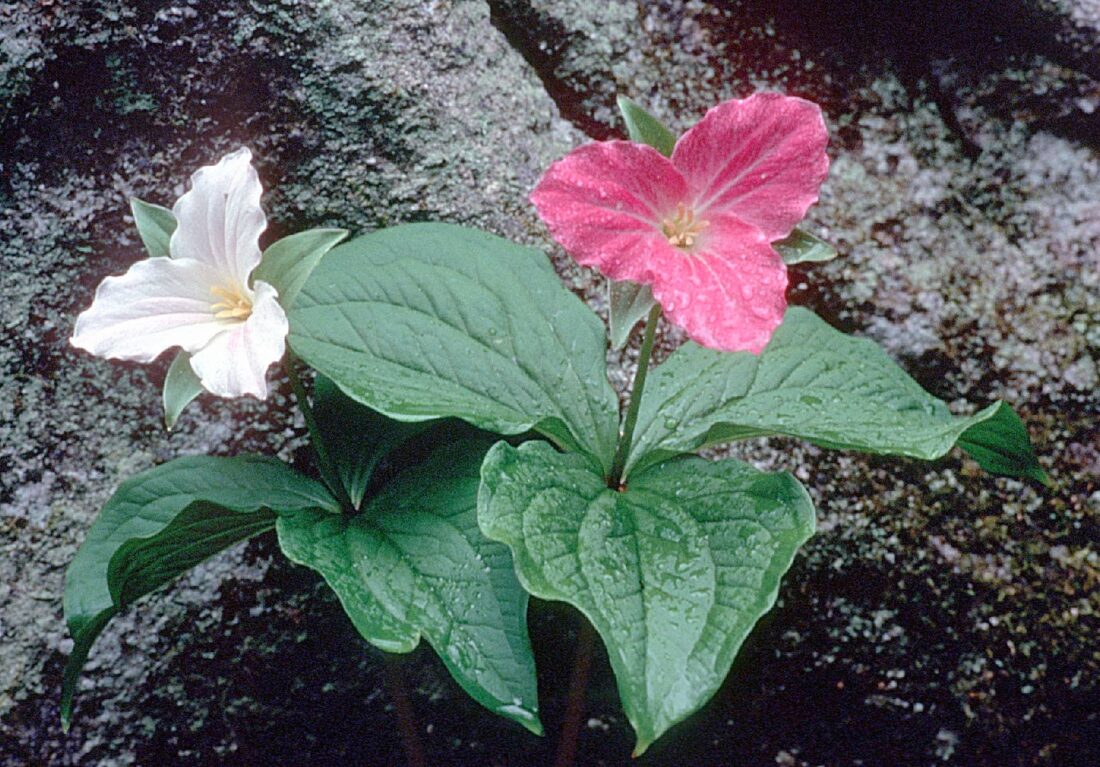
Every Trillium grandiflorum lining the trails of eastern North America, including in the Great Smoky Mountains, was planted by an ant. Seeds come attached to delicious fatty appendages, bribing ants to haul them underground and discard them in nutrient-rich midden heaps. Within these perfect germination beds, seedlings may take a decade to mature. The national park’s immensely popular Spring Wildflower Pilgrimage (April 22–25), now in its seventy-sixth year, offers guided walks to view these and more than 1,600 other kinds of flowering plants—the most of any U.S. national park.
Flame Azalea
Hiawassee, Georgia
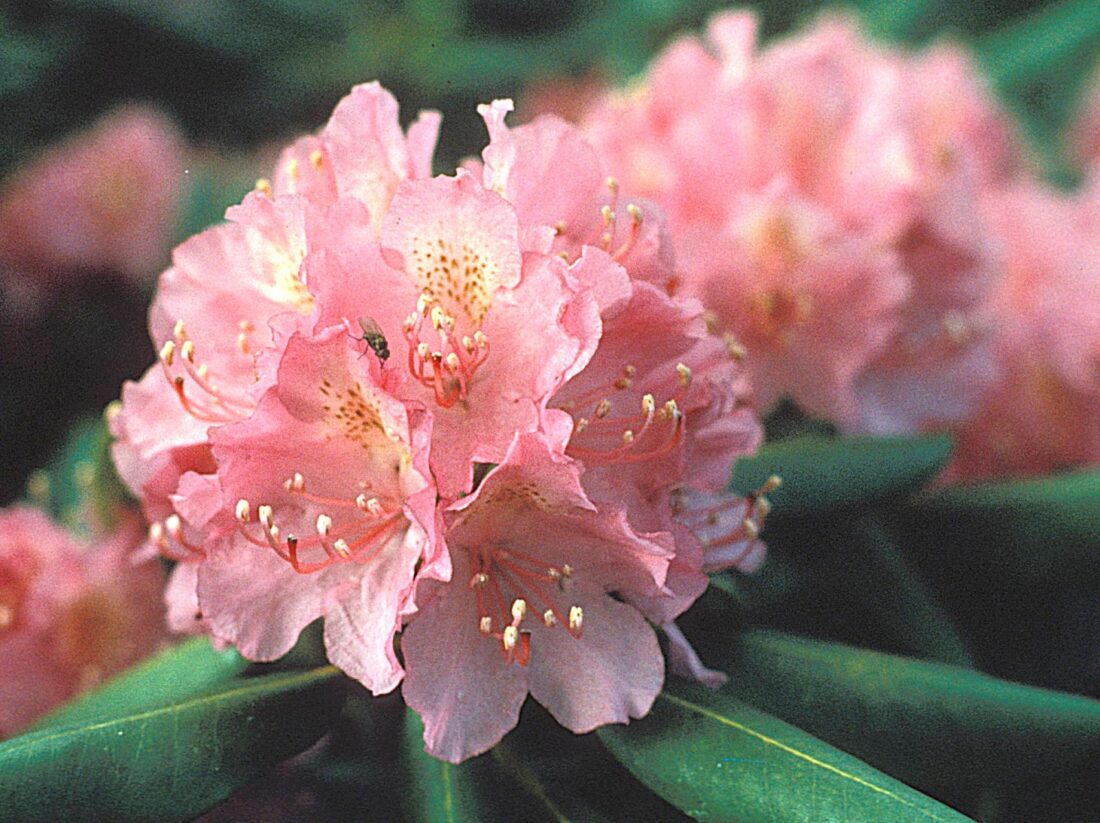
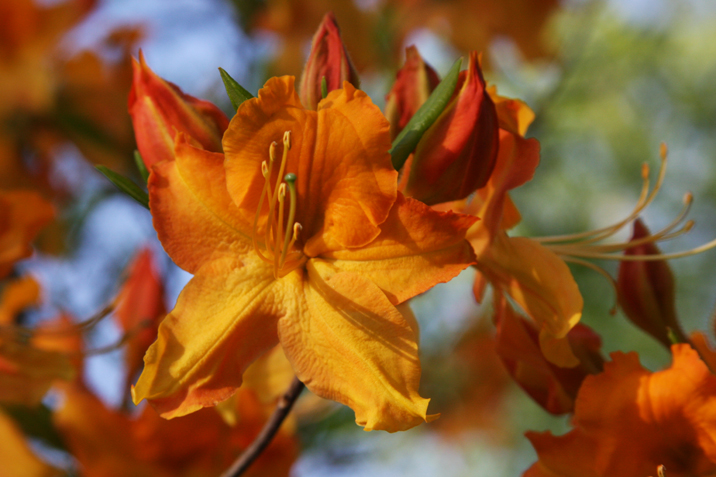
Spring 1775: As naturalist William Bartram rides through the mountains of present-day North Georgia, a hillside of Rhododendron calendulaceum stops him in his tracks. It looks like a wildfire. He has met the flame azalea. The global epicenter of deciduous azalea diversity, the southeastern U.S. is home to some seventeen species—more than five times the rest of the world’s collection combined. Hamilton Gardens in Hiawassee boasts hundreds of varieties of rhododendrons and azaleas, and its Rhododendron Festival(April 11–May 10) adds music, food, and wine to the festivity of peak bloom.
Cahaba Lily
West Blocton, Alabama, and Catawba, South Carolina
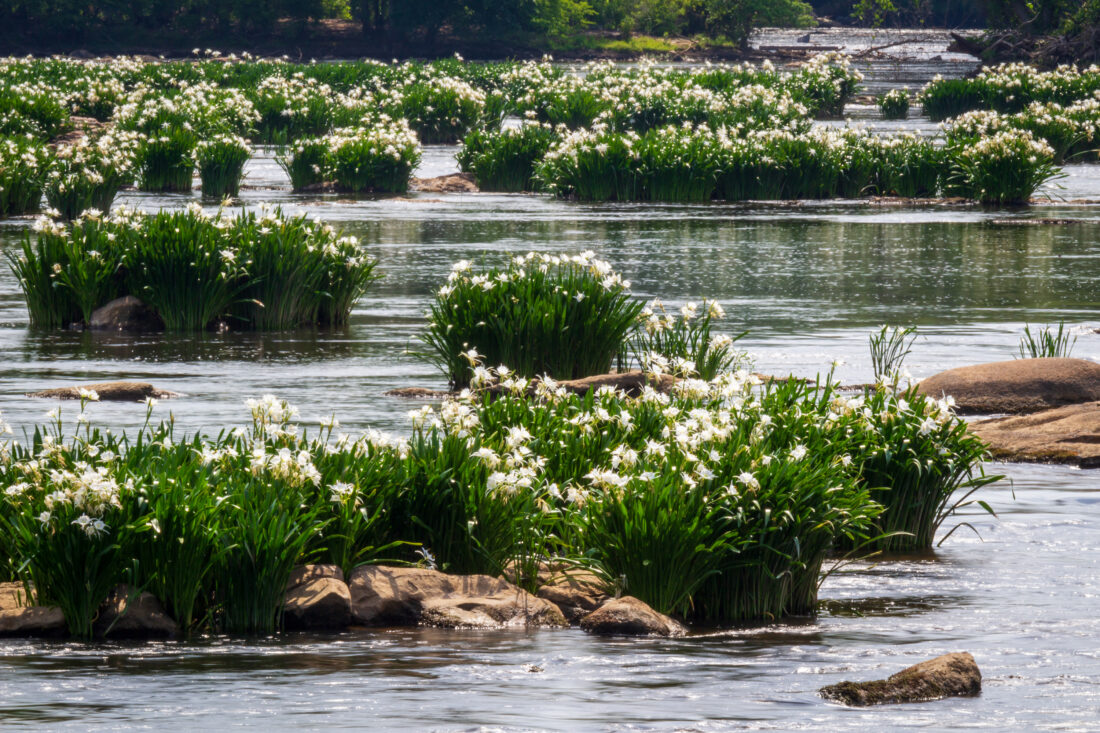
The shoals spider lily Hymenocallis coronaria roots on rocks in fast-moving river currents, growing in dramatic clusters in Alabama’s Cahaba River National Wildlife Refuge and in the Carolinas’ Catawba River. During the May–June bloom, each flower unfurls its tentacle-like, snow-white petals for just a single day. In Alabama, the Cahaba Lily Festival honors the blooms with paddle tours and talks (May 16).
In the midst of the festivities at the annual Lilyfest (May 16–17) in South Carolina’s Landsford Canal State Park, the blooms can be seen by canoe, kayak, or via a 1.5-mile hike along the Canal Trail. “People come from both the local area and from hundreds of miles away,” says park manager Nate Johnson. “The spider lilies are truly a sight to see. The rocky shoals and the rapidly flowing water make for such a harsh habitat, and yet these plants survive. I think one of the big draws [is] the wild environment that is preserved here. As development spreads into this area, we realize just how precious and rare this flower is.”
Catawba Rhododendron
Bakersville, North Carolina
For ninety-nine years, Bakersville has celebrated what may be the planet’s largest naturally occurring rhododendron bald, where across six hundred acres, at 6,280 feet, native Catawba and other rhododendron species paint Roan Mountain in purple and magenta. The seventy-ninth annual North Carolina Rhododendron Festival(June 19–20) marks the moment with crafts, music, a 10K, and two nights of dancing in the streets.