An overwhelming majority of bourbon barrels mature gracefully while stacked to the rafters of quiet, barn-like rickhouses. But not all. Sometimes, distillers get an itch to try novel, even extreme, means to speed up, slow down, or otherwise enhance the aging process. In the end, of course, those very methods also become a large part of the resulting bottlings’ stories.
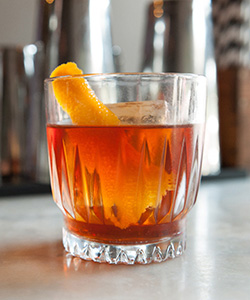
From established brands to newcomers, these five distilleries all employ different, unusual approaches to getting the most out of bourbon’s time in the barrel. We chatted with each to find out more about the methods behind their madness.
Jefferson’s Ocean
Aging method: around-the-world sea voyage
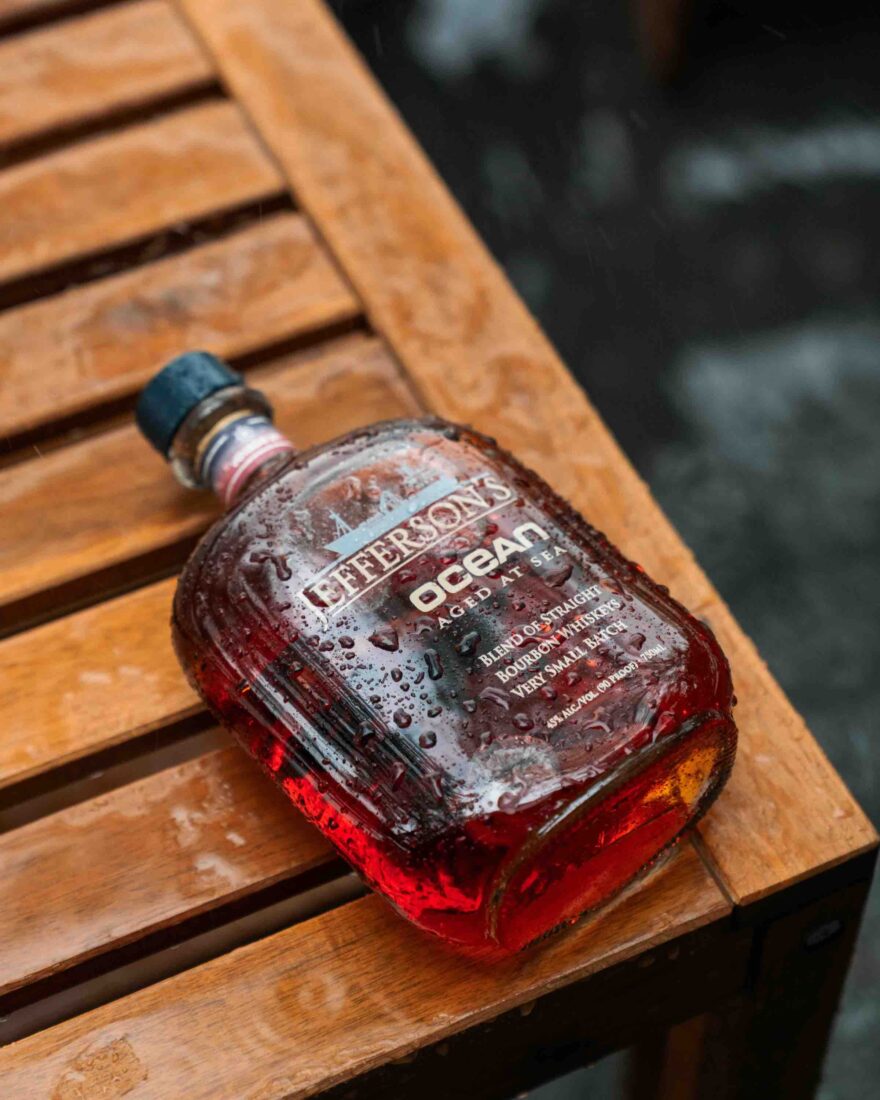
Watching the whiskey in his glass swirl to wave motion while aboard a friend’s boat in 2008, Jefferson’s Bourbon founder Trey Zoeller had a thought: Wouldn’t bourbon inside a barrel do the same, thereby increasing contact with the charred oak interior that lends mature bourbon its character? And wouldn’t an around-the-world sea voyage undergo weather extremes even greater than the seasonal seesaw that pushes whiskey in and out of the oak back in Kentucky? An initial trial sent five barrels to sea for more than three years and returned with bourbon turned thick and black. These days, Zoeller loads a thousand barrels of six-year-old Kentucky bourbon into the bow hold of a container ship that departs Savannah and circumnavigates the globe for six to eight months, visiting thirty ports that include Tahiti, New Zealand, and Shanghai before returning home via the Panama Canal, crossing the equator and the North Sea in the process.
“When the ship gets into really rough seas, the rocking causes more evaporation than in calm seas,” Zoeller says. “The barrels are partially exposed, too, so they get wet and they get snowed on. By the end, the barrel bands are super corroded.” In addition to the accelerated maturation, Zoeller says that Jefferson’s Ocean devotees detect subtle notes of salinity from months of very non-Kentucky-like salt air. Of more than thirty voyages now undertaken, he says no two have yielded exactly the same results, which is part of the appeal: “It’s like Christmas morning every time we get to unlock those containers and open the barrels.”
Maker’s Mark Cellar Aged
Aging method: distillery cellar
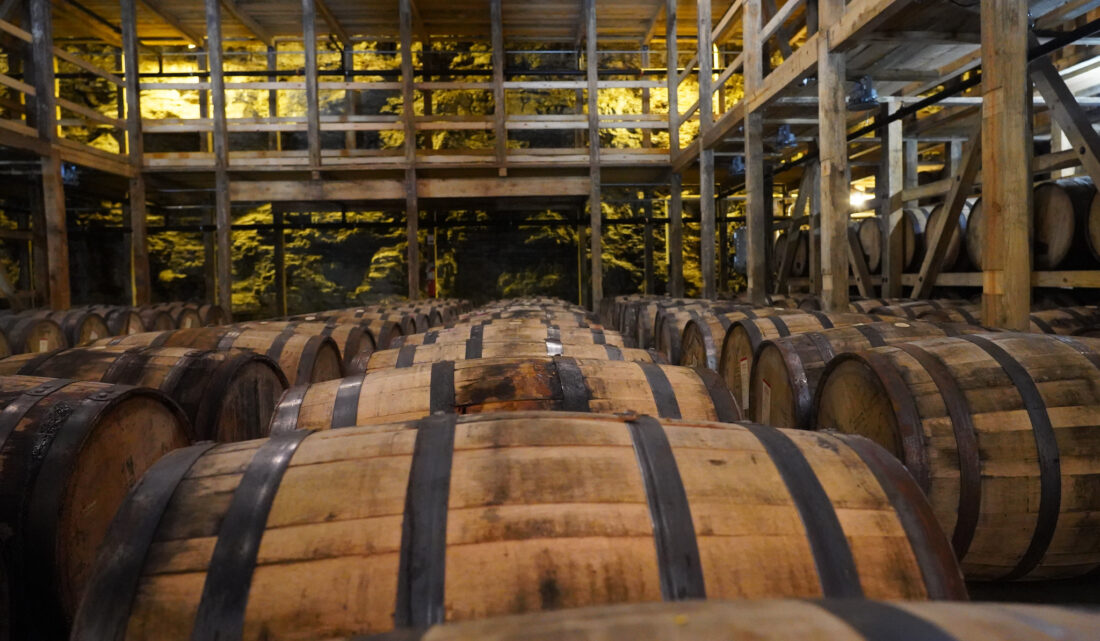
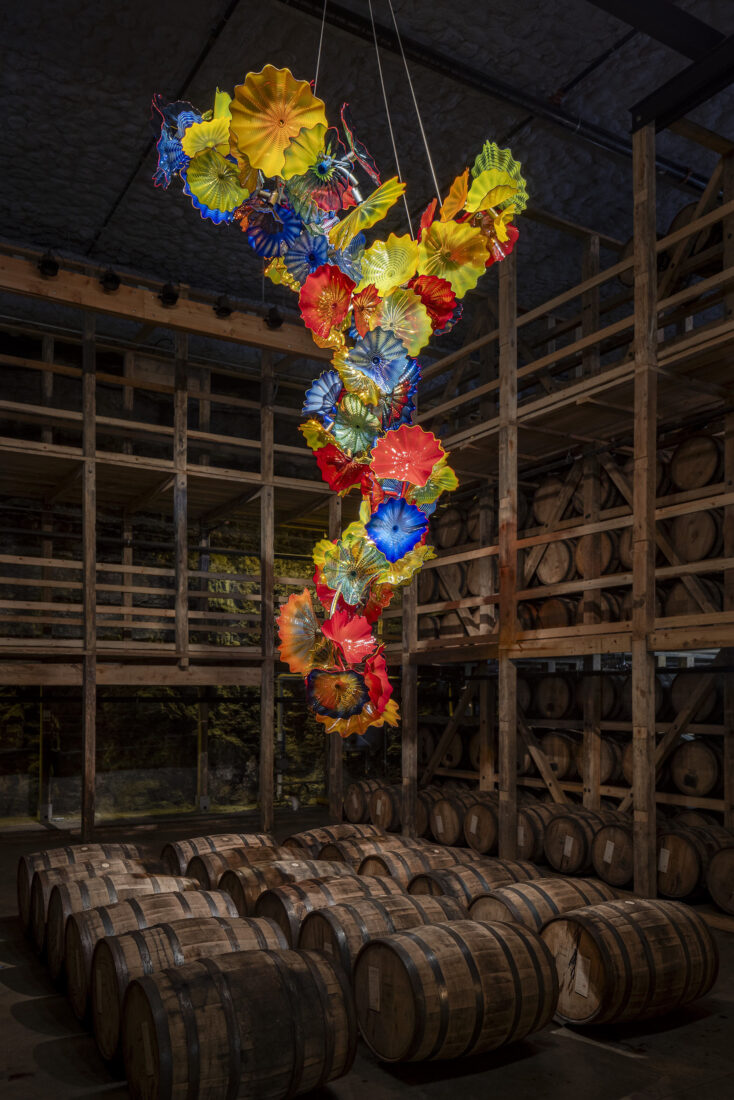
Having relied on a single bourbon mash bill since 1958, Maker’s Mark turns to proof and wood finishes to differentiate its small roster of labels. Or in the case of the annual, limited-release Maker’s Mark Cellar Aged, the distillery uses, well, just what it sounds like. For each of the past three years, master distiller Blake Layfield has moved an undisclosed number of six- to eight-year-old barrels from traditional rickhouses into the Loretto, Kentucky, distillery’s 13,600-square-foot limestone cellar to continue their aging journey for years more at a consistent temperature just below fifty degrees. (Constructed in 2016, the deep, LEED-certified space is big enough to hold 2,000 barrels used for various expressions, plus a dangling, multicolored sculpture by celebrated glass artist Dale Chihuly.) The purpose? To promote the positive and curb the sometimes negative effects of long maturation. “Aging at consistently cool temperatures slows the extraction of wood tannins while still allowing oxidation to do its mellowing work and develop a bourbon that’s complex but still approachable,” Layfield says. “By avoiding the overly bitter, tannic notes that can come with traditional long aging, this expression challenges what people might think about aged bourbon.” To that point, the most recent Cellar Aged release is a blend of Maker’s Mark’s oldest bourbons, comprising barrels that hit eleven, thirteen, and fourteen years old by the time they emerged from the cellar.
Copper & Kings
Aging method: sonic bombardment
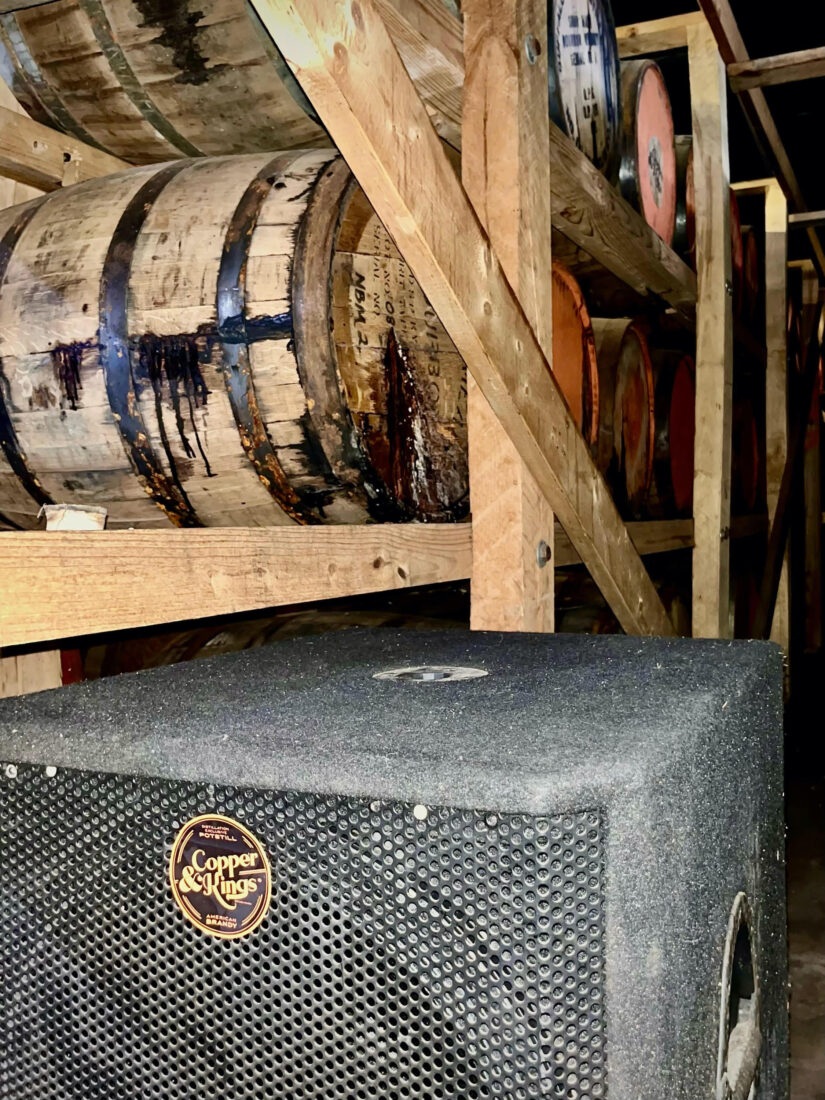
You’d think that being primarily a brandy distillery in decidedly bourbon territory would satisfy Copper & Kings’ desire to be different. Nope. The Louisville distillery ages all of its output, including a Kentucky bourbon finished in brandy barrels, under the influence of “sonic bombardment.” Eight large speakers and five subwoofers are arrayed around the barrel-aging cellar, cranked up to Spinal Tap decibel levels around the clock. “The space is fairly climate controlled, and we don’t rotate our barrels, so the vibration caused by the music acts as a natural way to get the spirit moving in the barrel,” explains owner Rob Bourdon. “Put your hand on a barrel and you can feel the vibration through the wood. That nudge over six, eight, or ten years amounts to rotating our stock.”
Though always loud enough to be heard from two floors away, the music itself varies. “It depends on the day,” Bourdon says. “Every day someone on the team curates a playlist that could be rock to rap to jazz to country. Sometimes it revolves around historic dates, like a famous musician’s birthday. We love every kind of music, but strong bass really gets the spirit pumping.”
O.H. Ingram
Aging method: Mississippi River barges
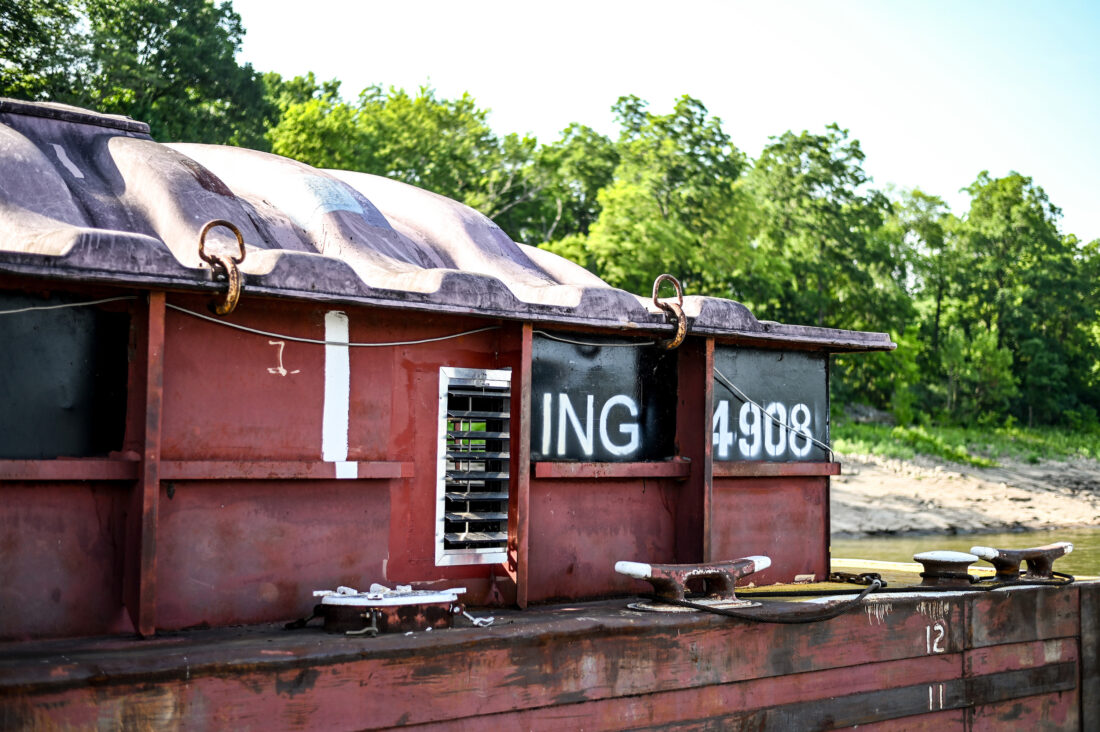
The Ingram Distillery believes in the same benefits of on-the-water maturation as Jefferson’s Ocean but without ever leaving the Bluegrass State. Combining an appreciation for bourbon history and his family’s five generations of transporting goods on the Ohio and Mississippi Rivers, founder Hank Ingram moored a pair of former grain barges filled with 5,000 barrels of Kentucky wheated bourbon on the Mississippi at Columbus, Kentucky, in 2019. (That is, after he spent several years convincing the Alcohol and Tobacco Tax and Trade Bureau that floating rickhouses are perfectly legal.) From there, the river handles much of the work, providing fluctuations in temperature, humidity, and motion more intense than on land.
“If you think about a barrel, it’s a reaction chamber, and we get all three variables acting upon this chamber,” Ingram says. “We can get fifteen feet of river elevation change that’s basically like moving barrels from the middle to upper levels of a normal rickhouse.” The result? “We’re driving complexity into our bourbon,” he explains. “We get a lot of oak influence and a fabulous structure on the back end. Wheated bourbon can sometimes be too soft, but ours is not soft. It still has a structure that might be familiar to high-rye bourbon fans.” As a longtime river hand, Ingram takes any hazards posed by the Mighty Mississippi in stride. “A couple of years ago, we had seventy-five-mile-per-hour winds and whitecaps on the river, but it will take an EF5 tornado to take out a barge. I’m more worried about a tugboat straying off course and smacking into them.”
Brothers Wright Distilling
Aging method: abandoned coal mine
When Kentucky construction firm owner Kendall Wright would pour moonshine at Wildcat football tailgates a few years back, the late Kentucky Bourbon Hall of Fame distiller Lincoln Henderson would often wander over, and the two men would ruminate on the notion of aging whiskey inside Eastern Kentucky’s many coal mines. So when Kendall and brother Shannon discovered a defunct mine on a farm property they acquired in Pike County in 2020, they changed course from building a corporate retreat to producing bourbon.
“These old mines have usually fallen in really bad, but in this one, which closed in 1946, there were still eight-to-ten-foot ceilings,” says marketing director Charles Mims. “And there is 1,200 acres of underground space.” That space hovers at a consistent sixty degrees, a temperature that allows the bourbon to penetrate the barrel’s oak grain without the extreme push and pull of seasonal swings. Now getting underway in earnest, the plan is to use that stable environment for the longterm aging of barrels while fabricating sealed chambers that would allow for additional control of temperature and humidity when desired. “Because of our mining construction background, we have the skill set to do this for what it would cost somebody else to build a rickhouse,” Mims says. “It sounds a little crazy, but it really ties into honoring our regional heritage and identity.”
Steve Russell is a Garden & Gun contributing editor who also has written for Men’s Journal, Life, Rolling Stone, and Playboy. Born in Mississippi and raised in Tennessee, he resided in New Orleans and New York City before settling down in Charlottesville, Virginia, because it’s far enough south that biscuits are an expected component of a good breakfast.