

Travel
Where to Retrace Anne Morrow Lindbergh’s Footsteps on Sanibel and Captiva Islands
Seventy years after she published “Gift from the Sea,” her words still resonate for shellers and solitude seekers in Florida and far beyond
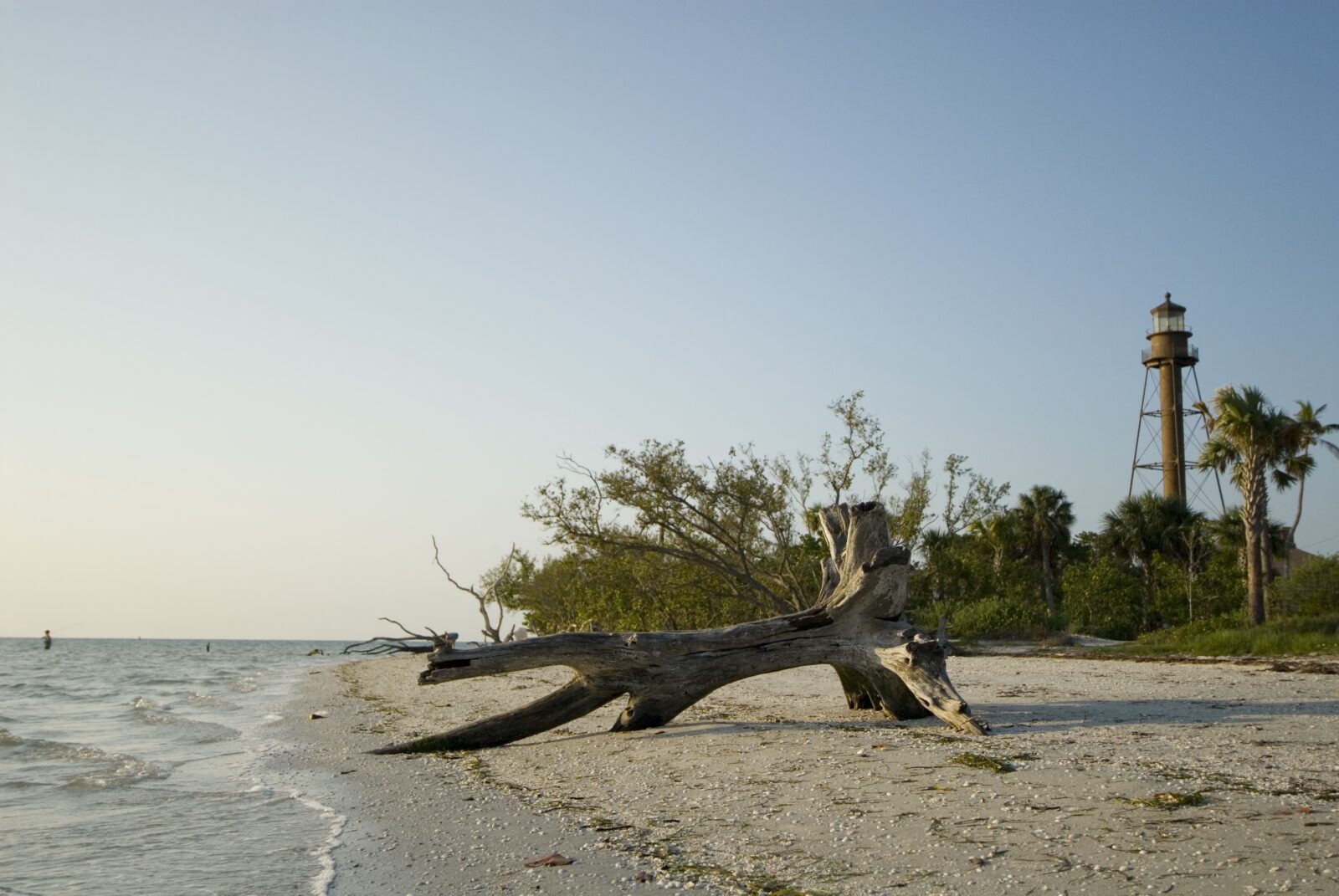
Photo: The Lee County Visitor & Convention Bureau
Driftwood and shells on the shores of Sanibel Island.
On a cold and blustery morning not long ago, I greeted the sun at Bowman’s Beach off Sanibel Island. Golden light pooled over stretches of soft dunes as waves crashed against the foaming Florida shoreline. Breathing the crisp air, I felt the sand crunch underfoot as scores of colorful shells tumbled up and down with the tide, their tinkling symphony like ice in a crystal glass. Thick beds of dried lightning whelks, fighting conchs, and bay scallops unfurled before me in a cream and coral carpet, all brought forth from the night before, a glimmering, ephemeral “gift from the sea.”
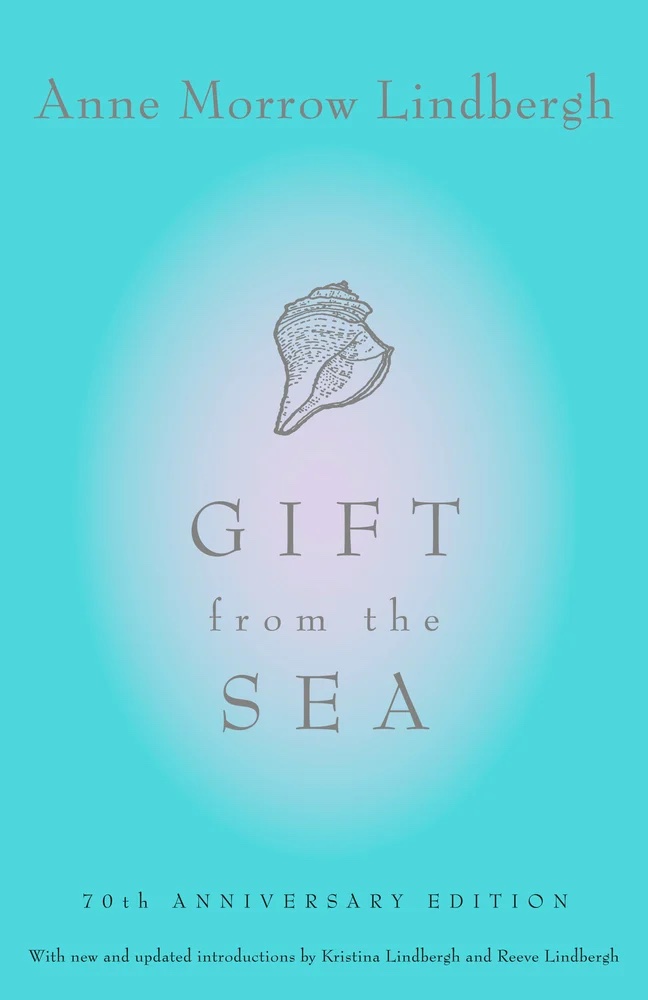
Seventy years ago, the aviator and author Anne Morrow Lindbergh published a best-selling book of the same name, recounting her solo sojourns to nearby Captiva Island and the inner peace she found in the quiet rhythm of the ocean. The book, which meditates on the virtues of simplicity and solitude amid the complexities of everyday life, remains a beloved and important cultural touchstone. Its many devoted fans include such celebrities as Hoda Kotb and Maria Shriver. “Even though it was written decades ago, it still resonates,” Shriver shared on Instagram. “It’s still so powerful. I look at it every week.”
For many readers, Gift from the Sea is a manual to return to annually or in times of uncertainty, its poetry echoing like the song of a shell. I too have sought its wisdom over the years, beginning in my early twenties. More than a decade later, the book took on a spiritual resonance when I spent a few weeks alone on the Texas Gulf Coast in the early days of the pandemic. Each morning, I considered its teachings as I combed the sand looking for whelks, sundial shells, and frosted sea glass. The exercise, albeit simple, nurtured a stillness that connected me deeply to my inner compass.
Recently, craving a respite after a challenging year, I decided to follow in the author’s footsteps. Flying from Texas to Fort Myers, I rented a car, leaving the mainland in my rearview as I crossed the three-mile-long bridge to Sanibel and Captiva, where I stayed in a seafront cottage at ’Tween Waters Inn & Marina. Established in 1931, the historic accommodations have seen many notable guests over the years, including the Pulitzer-winning political cartoonist and conservationist Jay Norwood “Ding” Darling, along with Morrow Lindbergh and her husband, Charles, who visited numerous times together.
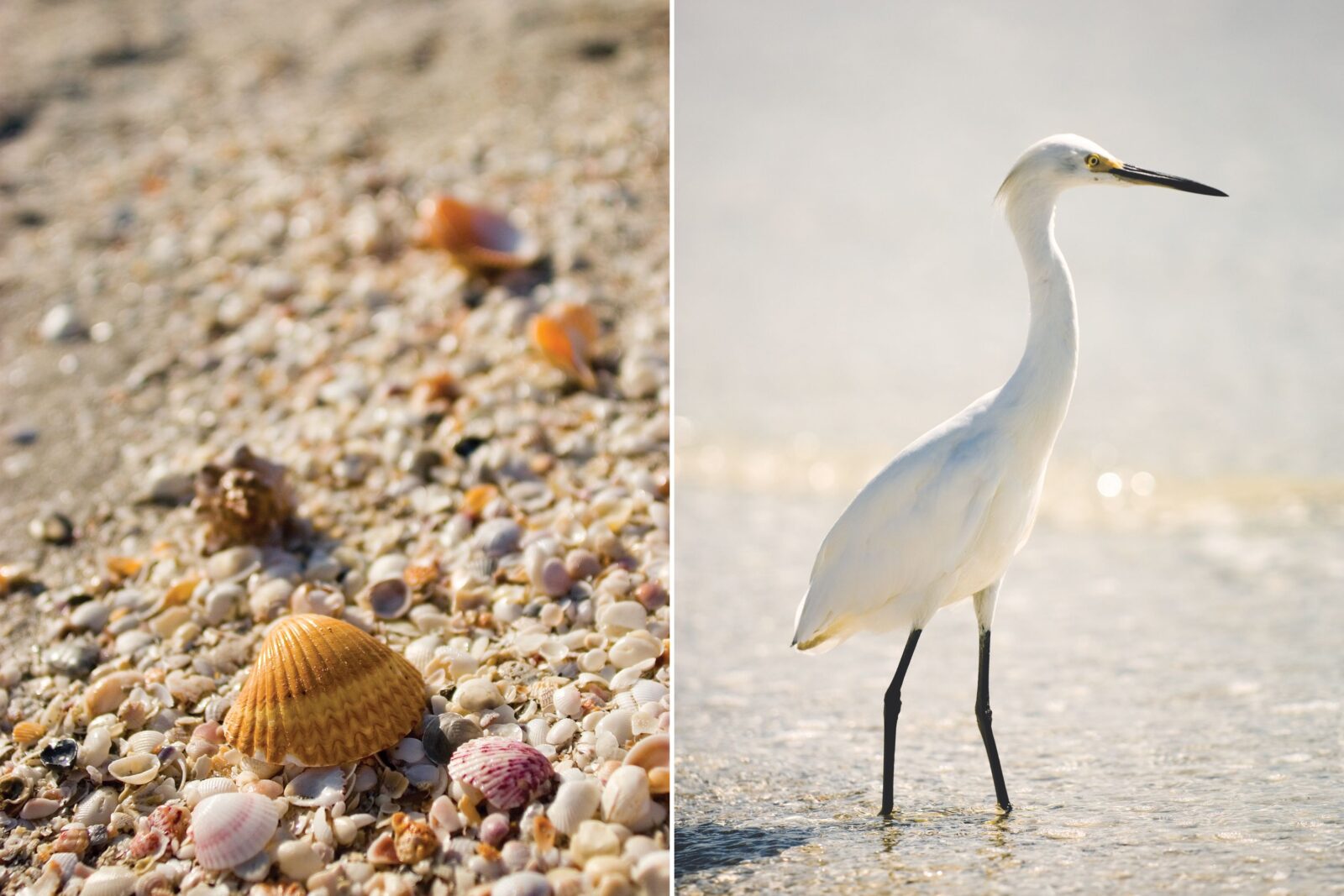
Photo: The Lee County Visitor & Convention Bureau
Seashore finds; a snowy egret.
Though the world has inevitably changed since the author’s Captiva holidays, life still moves at a sea snail’s pace on this remote barrier island. The landscape typically is lush and overgrown, concealing coastal homes with names like Stay-A-Wiles and Shell Seekers. Here in the self-proclaimed Seashell Capital of the World, the waters teem with living mollusks and abandoned exoskeletons—among them the prized junonia—thanks to a shallow continental shelf and Sanibel’s east-west orientation. Finding this spiral-shaped varietal with its signature squared spots is a rarity, and one that’ll land your picture in the local paper.
My trip to the region coincided with an atypical arctic front blown in just days after November’s full Super Moon. I spent my time bundled on the beach alongside fellow foragers, all bent over in a posture playfully dubbed the Sanibel Stoop or Captiva Crouch.
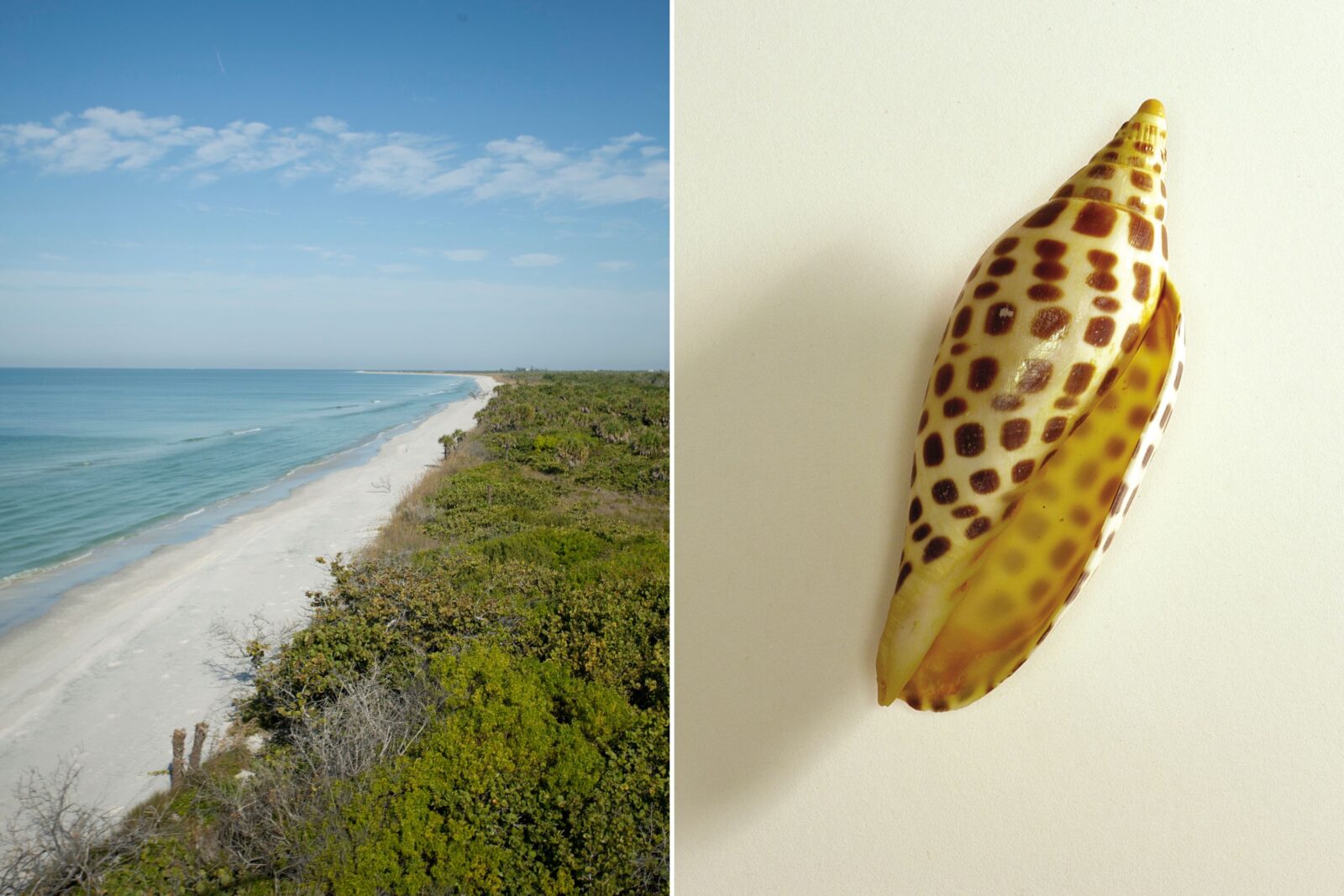
Photo: The Lee County Visitor & Convention Bureau
A quiet stretch of beach; a junonia shell.
Shelling is a serious pastime on the islands, with locals rising early to comb the shoreline, flashlights in hand. Like a child on Easter Sunday, I scooped up shells as if they were golden eggs, my delight audible as I found unbroken sand dollars and channeled whelks with their eggshell architecture still intact. It was only the author’s gentle words, still fresh in my memory, that halted my haste. “The sea does not reward those who are too anxious, too greedy, or too impatient,” Morrow Lindbergh wrote. “Patience, patience, patience, is what the sea teaches…One should lie empty, open, choiceless as a beach—waiting for a gift from the sea.”
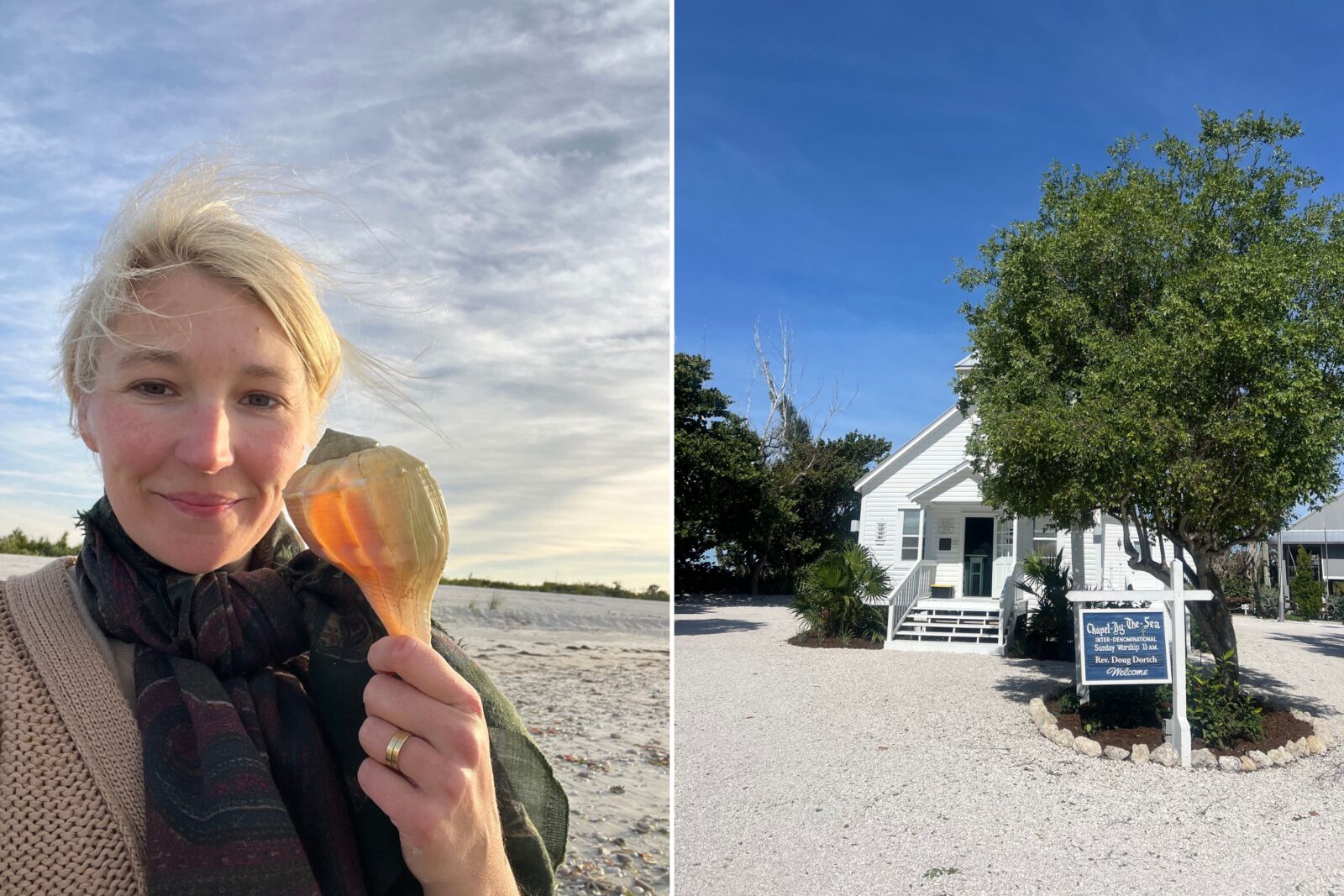
Photo: sallie Lewis
The author with a whelk; Captiva’s Chapel by the Sea.
When I wasn’t beachcombing, I passed my days exploring the islands, visiting Captiva’s Chapel by the Sea and neighboring cemetery, its tombs and graves dotted with sun-bleached shells. I perused titles by local authors at Sanibel’s MacIntosh Books + Paper and picked up a seventieth-anniversary edition of Gift from the Sea. I toured the nearby Bailey-Matthews National Shell Museum & Aquarium, which celebrated its thirtieth anniversary this year. I walked away from that visit with a greater appreciation for my collections back home, and the extraordinary creatures who made them.
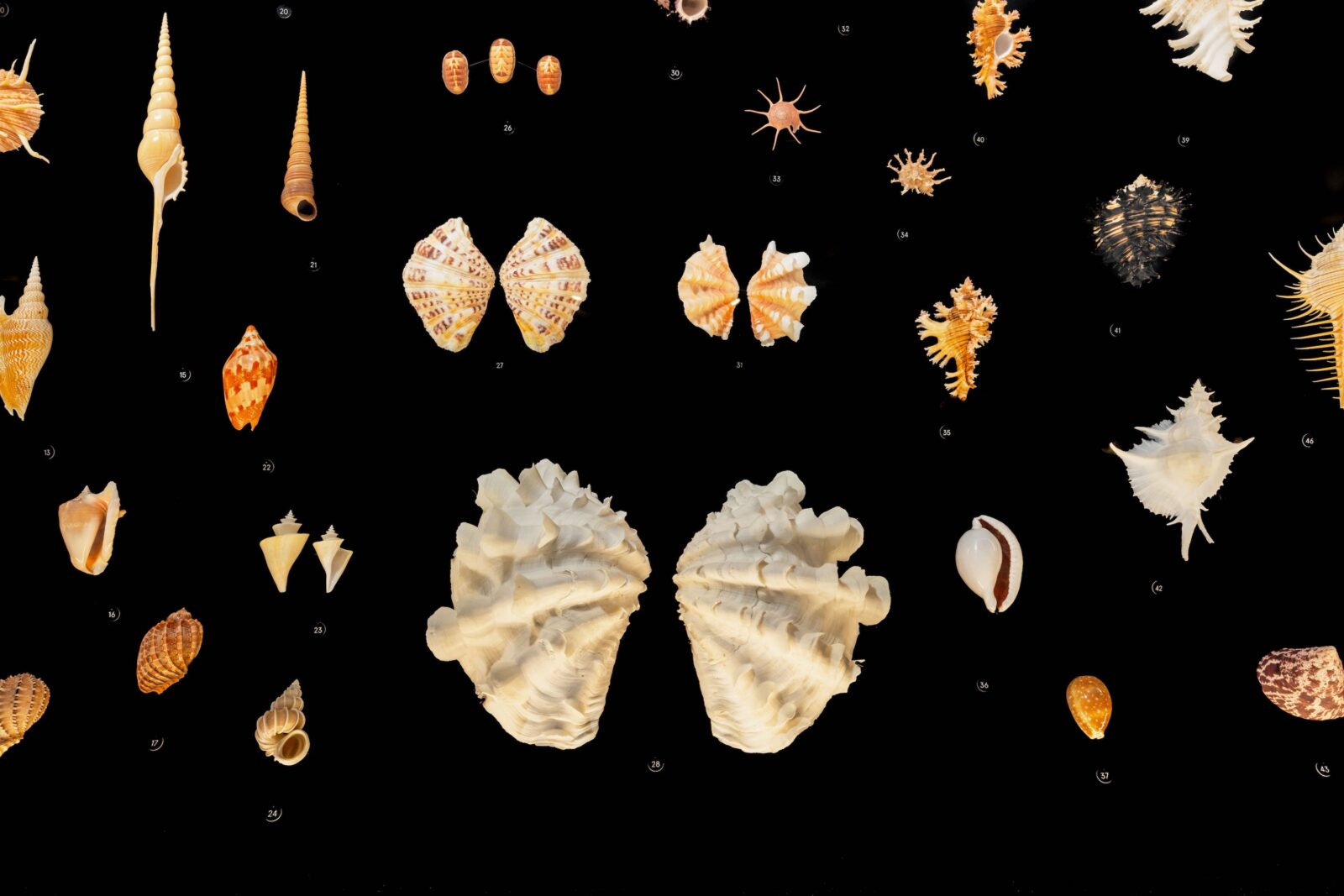
Photo: Courtesy of the Bailey-Matthews National Shell Museum & Aquarium
Specimens at the Bailey-Matthews National Shell Museum & Aquarium.
My most vivid memories were of the idle hours spent on the ocean’s edge, observing sanderlings in the surf and the shimmering shells left behind as the tide waxed and waned. On my last night in Florida, I watched from the beach as a blazing sunset gave way to a bowl of stars. My time on the islands had unlocked a constellation of emotions—grief and gratitude, heartache and hope—all of which I’d held for the past year.
Today, I often think of Morrow Lindbergh and her wisdom, trusting that life is a thing to be shared, but also nurtured in solitude. I’m reminded that, like the assorted conches and cockles I brought home from my trip, each of us tumbles too, every groove and polished edge evidence of our journey through waters rough and smooth. Most importantly, I’ve learned the greatest gifts of the sea are not the shells we seek, but the effort we make to be with ourselves, cultivating peace and stillness so we’re ready for life’s trials and treasures when they wash up from the deep.
Where to Experience Anne Morrow Lindbergh’s Gift from the Sea
In addition to walking the beaches of Sanibel and Captiva islands, discover these treasured spots:
MacIntosh Books + Paper: A charming independent bookshop on Sanibel with shelling books and copies of Gift from the Sea for sale, along with titles by local authors.
The Bailey-Matthews National Shell Museum & Aquarium: As the only museum in the U.S. devoted solely to shells and mollusks, this treasure on Sanibel is well worth a tour. Marvel at the treasures within, among them intricate Sailors Valentine’s, and walk away with an appreciation for not only shells but the animals who created them and called them home. The gift shop sells copies of Gift from the Sea, among other of the author’s works.
’Tween Waters Inn & Marina: Tucked between Gulf beaches and the natural beauty of Pine Island Sound, this historic inn on Captiva Island—established in 1931—is a nostalgic pitstop for shellers passing through. The rooms and cottages here are named for notable guests from the inn’s history, including the Lindberghs.
Related Stories:
Travel
For all the romanticism a voyage down the Mississippi evokes, cruising the river and exploring its still-wild pockets for pleasure can be fraught—even life-threatening. The few who do such, however, find rewards beyond measure. And learn that by the waterway’s very nature, no two trips are alike
Travel
With a trove of collected artwork and antiques, the new Bunkhouse property builds off the eclectic character and storied history of the Houston Heights neighborhood
Trending Stories:
Land & Conservation
The future of conservation in the South just got a little bit brighter—and not just for salamanders
Land & Conservation
The mounds may look insignificant, but they’re the craftsmanship of local crustaceans called lawn lobsters
Arts & Culture
The drawls are receiving a lot of flak across the internet, but a North Carolina linguist argues they’re actually pretty accurate