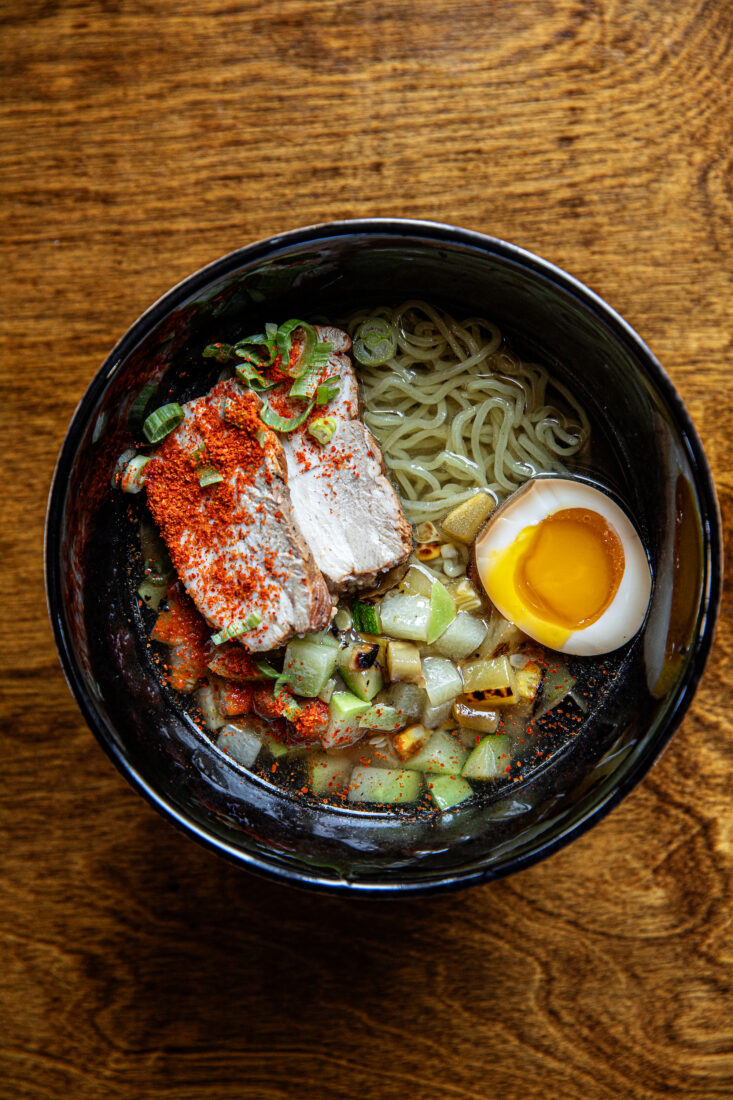
Charleston now has its own upscale Japanese tavern in Shokudô, which opened its doors on King Street last fall, serving kushiyaki (skewered meats prepared on a traditional charcoal grill) and Lowcountry-infused dishes like Japanese curry over Carolina gold rice, a Tarvin shrimp claypot, and pork ribs with smoked bourbon furikake. And of course, there’s ramen: a classic pork rendition, a take with wild boar and crispy chili, and one starring sweet potato dashi and turnips. “Ramen can be served any day, at any time,” says chef Masatomo “Masa” Hamaya, who heads up the kitchen. (You might know him from the acclaimed O-Ku Sushi, his other Charleston concept.) “We grew up with that in Japan. It was every kid’s favorite food.”

Though the dish can shine as elevated restaurant fare and Hamaya is quick to extoll the virtues of ramen masters across the United States, the savory, warming soup is also easy to make as an at-home comfort food. Start by paying a visit to your Asian market, Hamaya says, and upgrading your noodles. Instead of buying the dried instant kind, head to the freezer section for noodles that were made fresh and then frozen; Hamaya’s favorite brands are Myojo, Sun Noodle, or Yamachan, and popular flavors like tonkotsu (pork) and shoyu (soy sauce) are always good bets. From there, just follow the instructions on the package to yield the brothy noodle base.
The fun is in the toppings. “You’re just adding extra flavor and complexity,” Hamaya says. Staple Asian vegetables like broccoli, bok choy, corn, and radish work well, and from there you can get creative with aromatics, including scallions, yellow onions, and carrots. When stir-frying the toppings, Hamaya likes to add a little water to the pan to help the ingredients combine their flavors.
Below, he shares the steps for the perfect, easy at-home ramen.