

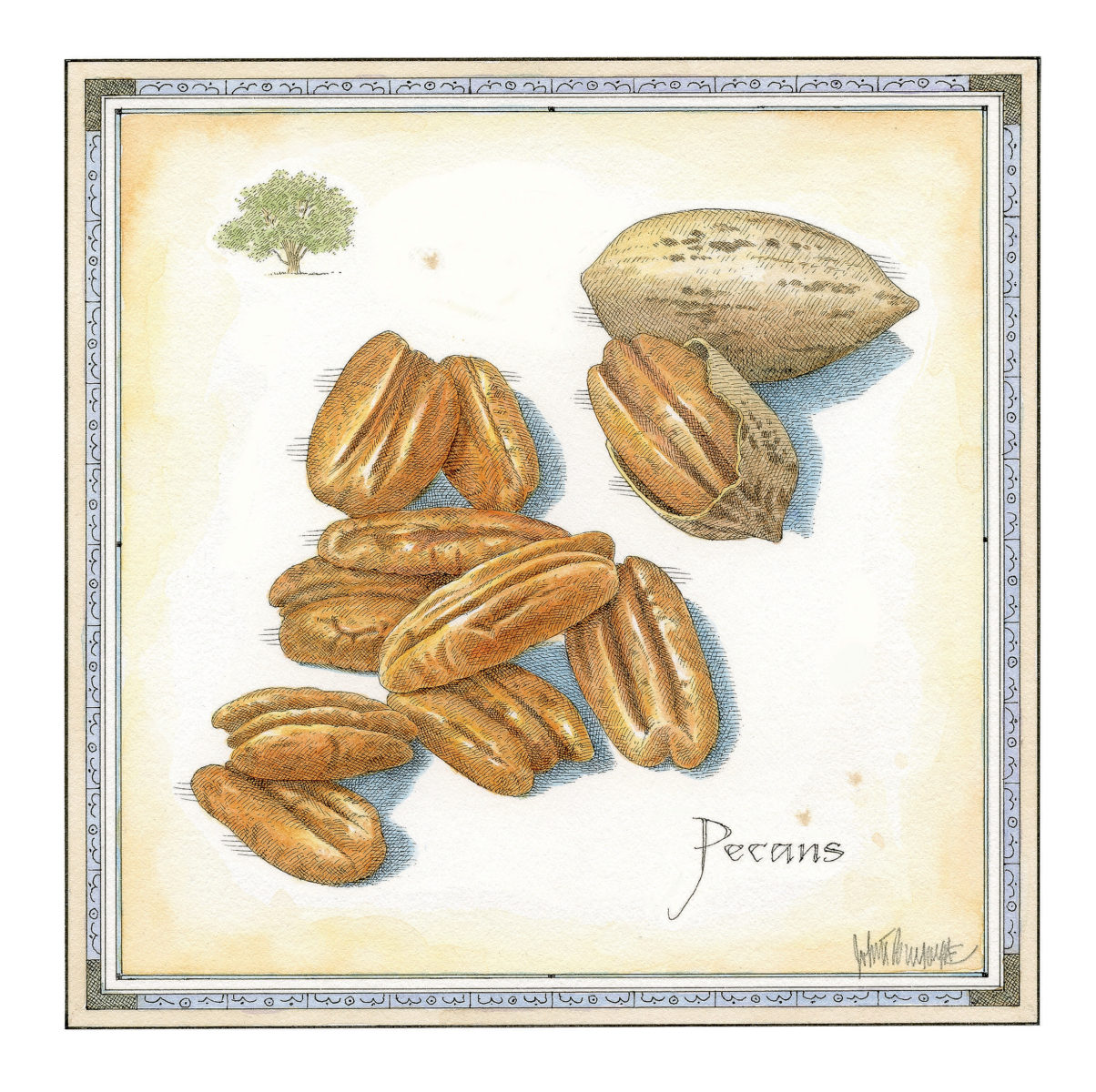
Chef Harrison Keevil was destined to be pecan obsessed. “When I was young, my granddaddy had pecan trees all over his farm in Prince George, Virginia,” he says. “He had nutcrackers throughout his house with big bowls of pecans right next to them.” As chef and co-owner of Brookville Restaurant in Charlottesville, Keevil now nostalgically works pecans into his menu from late fall through early January, making special use of their buttery heft. “Their inherent oil coats the tongue like perfectly cured lard,” he says. To preserve freshness, buy pecans whole, in the shell. They should feel heavy for their size and shouldn’t rattle when you shake them.
For a spicy-sweet snack, blanch the nuts, then dust with powdered sugar. Bake them for fifteen minutes at 325 degrees, and finish with a sprinkling of chili powder. Keevil also recommends using pecans to crust pork, and he likes to marry them with bacon for a savory twist on brittle. But his favorite preparation involves nothing more than a nutcracker and a bowl. “I love getting them in the shell and cracking them open,” he says. “Not unlike when you devour a just-steamed blue crab.”
Jenny Everett is a contributing editor at Garden & Gun, and has been writing the What’s in Season column since 2009. She has also served as an editor at Women’s Health, espnW, and Popular Science, among other publications. She lives in Mount Pleasant, South Carolina, with her husband, David; children, Sam and Rosie; and a small petting zoo including a labrador retriever, two guinea pigs, a tortoise, and a fish.
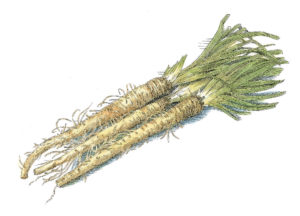 This not-so-glamorous-looking root is sometimes called goatsbeard—a reference to its long, skinny, tan appearance. Often described as tasting like an artichoke heart, salsify ripens after the first frost. Scrub and peel the fresh vegetables, then place them in water with a squeeze of lemon juice to prevent browning. Use immediately, or store in an airtight container for up to a week. Incorporate the root into soups and stews. But reserve those greens, which have a sweet, leek-like taste. Sauté them in butter for a quick and easy side.
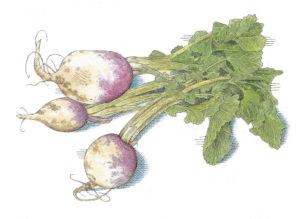 Like most root vegetables, the turnip does well in cooler temperatures, peaking in the South from late fall through February. While the bulb is perfect for pickling, braising, or slivering onto salads, the real prize on this Southern crop is the greens. When shopping, look for small, firm turnips with bright green leaves, which have a slightly spicy kick reminiscent of mustard greens. They’re ideal boiled in a Dutch oven—with a ham hock, of course.