Of all the things I love about living in Atlanta, and there are many, foraging chanterelles is perhaps my favorite. Not that this pastime is unique to Georgia; chanterelles grow all over the world, their golden-yellow cloaks turning up widely across North and Central America, Eurasia, even Africa. But to me, these mushrooms are a pleasure I firmly associate with where I live in the American South. I hail from Upland, California, a small town about forty miles east of Los Angeles, in a region that I didn’t quite realize was a desert until I moved away from it. I spent the first thirty years of my life in an arid, sunbaked landscape where chanterelles—and most wild mushrooms, for that matter—were hard to come by.

The word chanterelle comes from the Greek kantharos, meaning “tankard” or “cup.” At first glance, this strikes me as a misnomer because chanterelles grow in a variety of shapes, from bulbous lollipops to ragged parasols. Their fruiting bodies mold to whatever lies above them as they nudge up from the earth. But the mature, iconic chanterelle does indeed form a kind of funnel or vase, or I suppose a cup. Beginning in late spring and continuing through the summer, when frequent rains soak Georgia, my cup of chanterelles runs over.
It took a couple of years after moving to Atlanta in 2015 to become acquainted with Cantharellus cibarius, to notice it popping up on menus, and then on hillsides, in backyards, and on trails all over the city. The first time I tried chanterelles was at the Italian restaurant where I worked while in grad school at Georgia State. We ran a luxe seasonal lasagna special loaded with béchamel and butter-plumped chanterelles. Unlike all the mushrooms I’d had before, these were shockingly bright, with nutty and peppery notes, even a hint of fruitiness. If only I could go back to that first bite, to that moment of gastronomic revelation. As Jean Anthelme Brillat-Savarin famously writes in his seminal Physiology of Taste, “The discovery of a new dish does more for human happiness than the discovery of a star.”
My first time foraging chanterelles is a bittersweet memory. I’d recently broken up with the woman I moved to Atlanta with—rather, she’d broken up with me. We’d been together for three years, and after the breakup, we struggled to sever ties. For months we played the harebrained game of trying to remain friends.
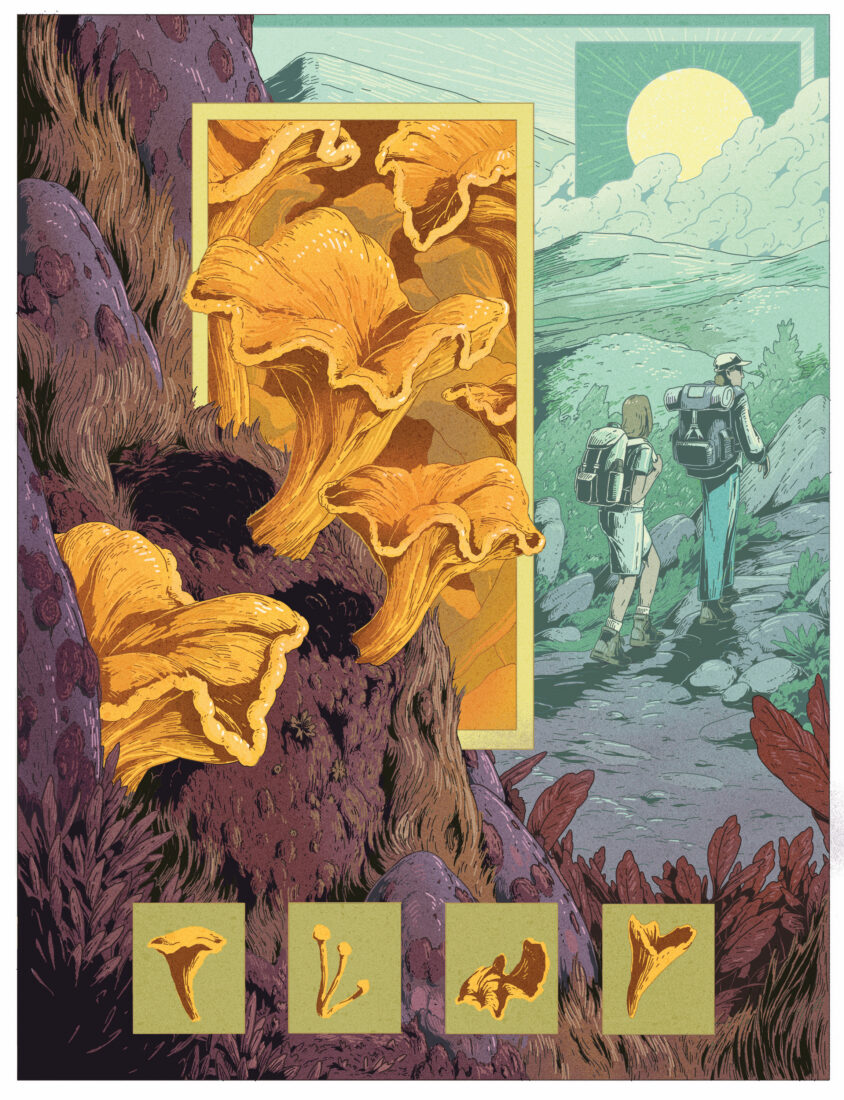
It was July of this gray period, and we were backpacking in North Georgia together, in Fort Mountain State Park. I’d taken a wrong turn and led us about half a mile in the wrong direction, but it was a fortuitous mistake: Suddenly shining on the steep, exposed trailside embankment stood a fat patch of glistening chanterelles. Though I’d never harvested them before, while purchasing our camping permit at the ranger station, I’d bought a pocket-size mushroom guide. Consulting the laminated images, I felt 90 percent sure that these were indeed them. As the guide noted, they smelled faintly of apricots. I loaded up a gallon zip-lock bag. We got back on the right path and made it to camp at dusk, an ember of sun sinking into the valley below us.
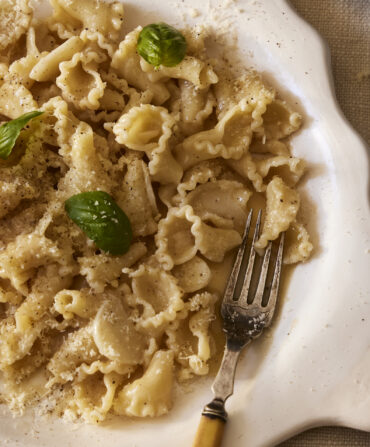
Using two small backpacking stoves, I boiled water for pasta and sautéed the chanterelles, roughly pulled into shreds, with olive oil and butter. I finished the pasta with cherry tomatoes, Parmigiano-Reggiano, EVOO, and salt and pepper, and kept the mushrooms on the side. My ex wasn’t willing to take the plunge with me, which in hindsight seems quite telling. But I was brave with wine and had nothing left to lose, having already lost her. The chanterelles seemed even brighter and more aromatic than those I’d tried before, tasting of wet sunshine and the lush landscape—the terroir—all around us.
We finished our dinner, cleaned up, got into our separate tents, and went to bed. Lying there, feeling a sudden twinge of fear, I prayed that I’d identified the mushrooms correctly, that they weren’t a poisonous look-alike, or cooked in a way that would somehow kill me. With my mind drifting to my ex’s tent, I prayed for other things too. Thankfully, the first half of my prayers were answered.
Eight years later, chanterelles are a romance that endures, an annual warm weather fling that brings so much joy to my life. It’s a ritual I now share with my wife, Katerina, whom I met just a few months after that swan song of a camping trip. Wooing my would-be wife with food, I couldn’t wait for her to taste chanterelles for the first time, to cook them for her. On our first camping trip the following year at Amicalola Falls State Park, I whipped up a pasta dish with chanterelles we’d foraged together. Before the first bite, she hesitated with her fork in the air and asked me if I was 100 percent sure. I looked her in the eye, calculating my confidence, and said that I was. She proceeded to clean her plate. Today chanterelles have become for us an experience that embodies where we live, a symbol, right alongside peaches, of Georgia’s bounty.
Like any worthwhile relationship, foraging chanterelles requires patience, effort, and a bit of luck. You can’t force the earth to cough them up any more than you can will the stream to produce a stringerful of trout. But one of the great things about the mushrooms is that they are reliably perennial and faithful to their local haunts. Once you’ve found an area they thrive in—forest, nature preserve, neighbor’s backyard, cemetery—you can expect them to return there year after year, provided enough warmth and rain. Their yolky splashes of color reappear like echoes against the season’s dense greens.
I’d be remiss not to stress the importance of doing your homework. Join mushroom forums, go out with people who know, and never eat something you can’t positively identify. But don’t be afraid, either. It’s pretty easy to discern between a chanterelle and its poisonous look-alike, the jack-o’-lantern. Though you can get them at farmers’ markets, the chanterelles you find for yourself will beat any that money can buy.
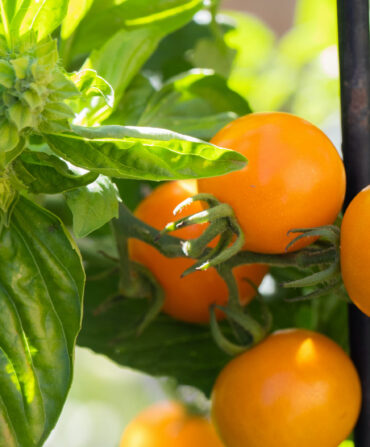
In the kitchen, chanterelles are fast friends with eggs. A French omelet heaped with chanterelles cooked in butter and fresh thyme, topped with a flourish of crème fraîche and paired with a bright Chablis, might just become, as it is for me on most days, the meal you would wish to have on your deathbed. We add them to pasta dishes and risottos—they pair extremely well with Sungold tomatoes, peak-season corn, peppers, and eggplant. Hanger steak and salmon with chanterelles are other favorites.
It turns out that relationships are an apt, even essential way of thinking about fungi like chanterelles. Plants and fungal networks form what are known as mycorrhizal relationships: The tree offers sugars and carbohydrates produced through photosynthesis, and the fungus trades water and mineral nutrients in return. Plant life was only able to thrive upon our once-scorched planet because of this mutually beneficial relationship. Simply put, we wouldn’t be here without fungi.
At a time when we’ve never been so distant from the natural world, when our focus is fragmented by an increasingly kaleidoscopic (and vitriolic) digital landscape, foraging is a small but radical act of attention. It forces you to slow down, to be present. To use your eyes and hands, your nose, and dare I say your heart to gather the earth’s goodness. Brushing the dirt from a fresh-plucked chanterelle, you can feel once again the ground under your feet, grateful that it’s there.