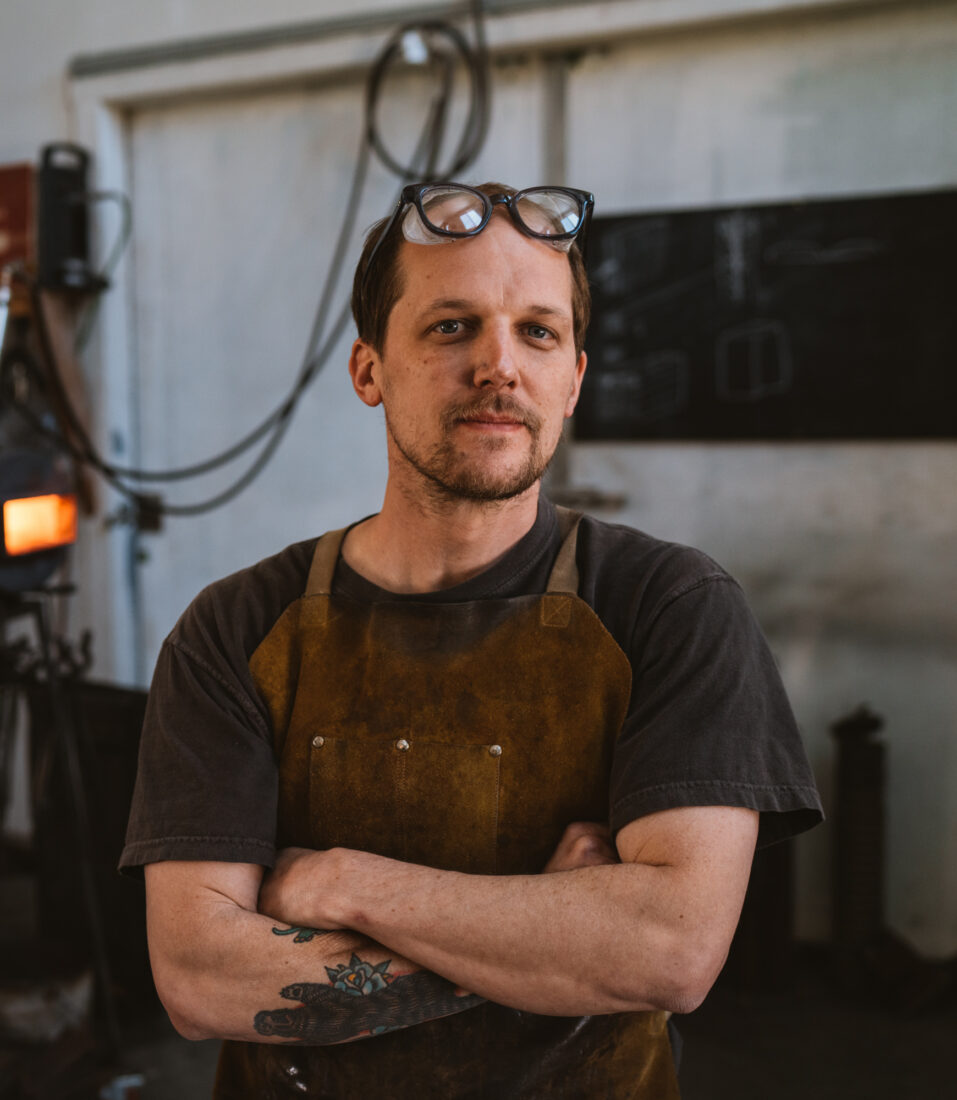
When bladesmith Will Manning was growing up, his parents hammered home two principles: “Use what you’ve got to make what you need” and “Leave it better than you found it.” Those tenets played out daily in Manning’s family. They ate meals prepared with produce from his mom’s garden while sitting in Windsor chairs his dad crafted from whole logs using only hand tools.
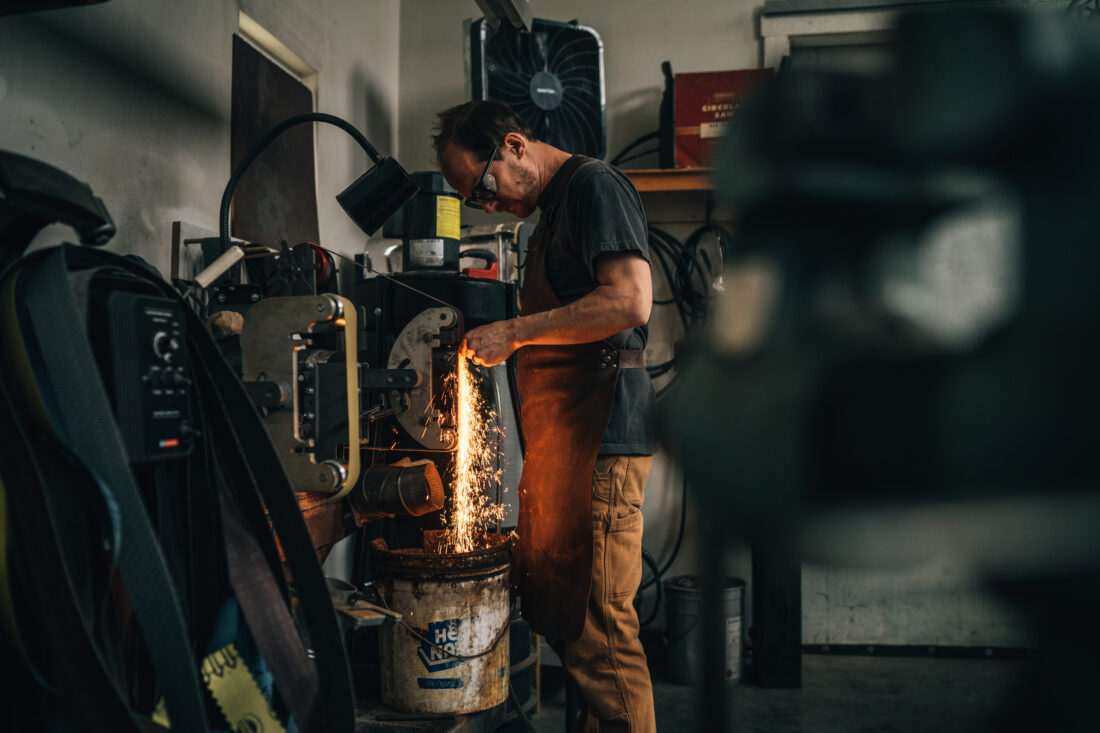
After discovering metalworking in high school, Manning diverged from his parents’ methods and materials, but their words continue to fuel his ethos at his Heartwood Forge in Jonesborough, Tennessee. From a tree-shaded, backyard studio, Manning repurposes a variety of woods and metals—often bandsaw blades from shuttered lumber mills—to create artisan culinary cutlery, including chef’s, oyster, paring, and boning knives. “It’s about an appreciation for the natural environment and a healthy respect for resources,” he says.
About a decade ago, some discarded bourbon barrels caught his eye. He was initially interested in their staves, hoping to recycle the wood into handles for his handmade knives. But after fashioning a few, he found the white oak, essential for aging bourbon, too porous. “I’ll use it by request on custom projects,” he says, “but it’s not my go-to.”
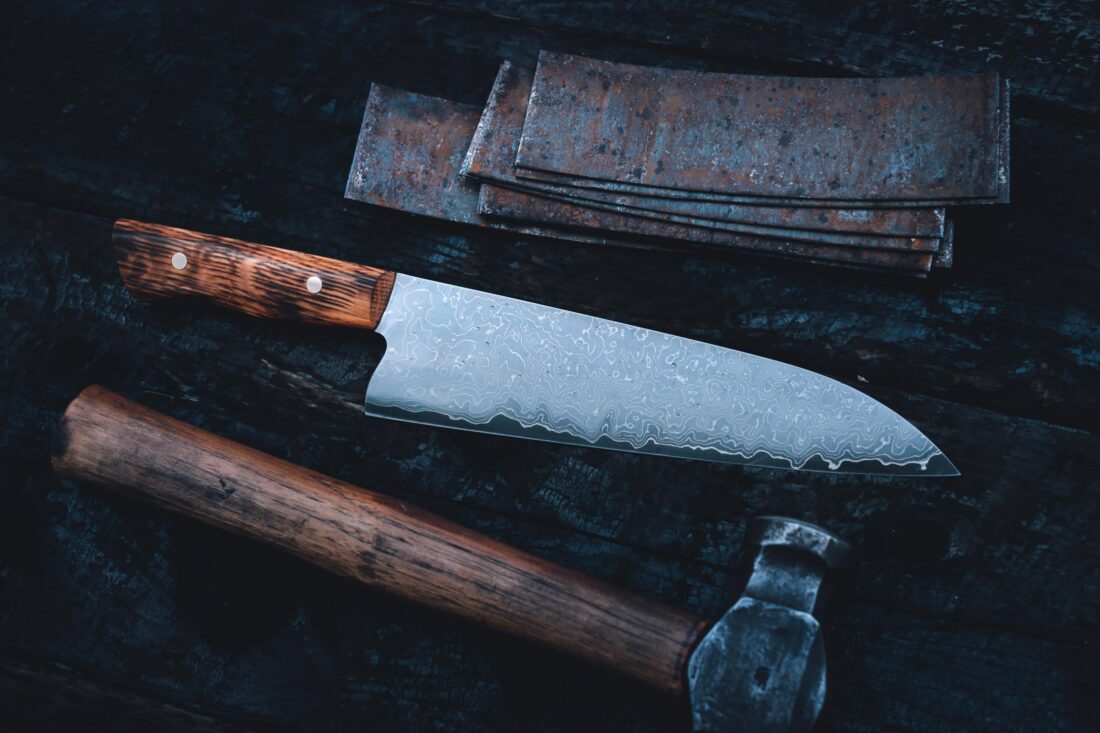
Then he went a bit deeper. Noticing the now-removed metal barrel bands stacked in a corner, he wondered if he could recycle them into blades. During his first attempt at what would become his Cask Strength chef’s knives, he discovered the bands’ low-carbon-steel composition was too soft to hold an edge. Disappointed but undaunted, he found an elegant solution in the san mai technique, an ancient Japanese method of laminating layers of metal together. “It’s kind of like a sandwich, and I actually need a softer metal for the outside layers because they protect the high-carbon-steel inside layer,” he says. “The process lets me achieve a higher degree of hardness with less risk of breaking. For a chef’s knife, striking that balance between hardness and toughness is key.”
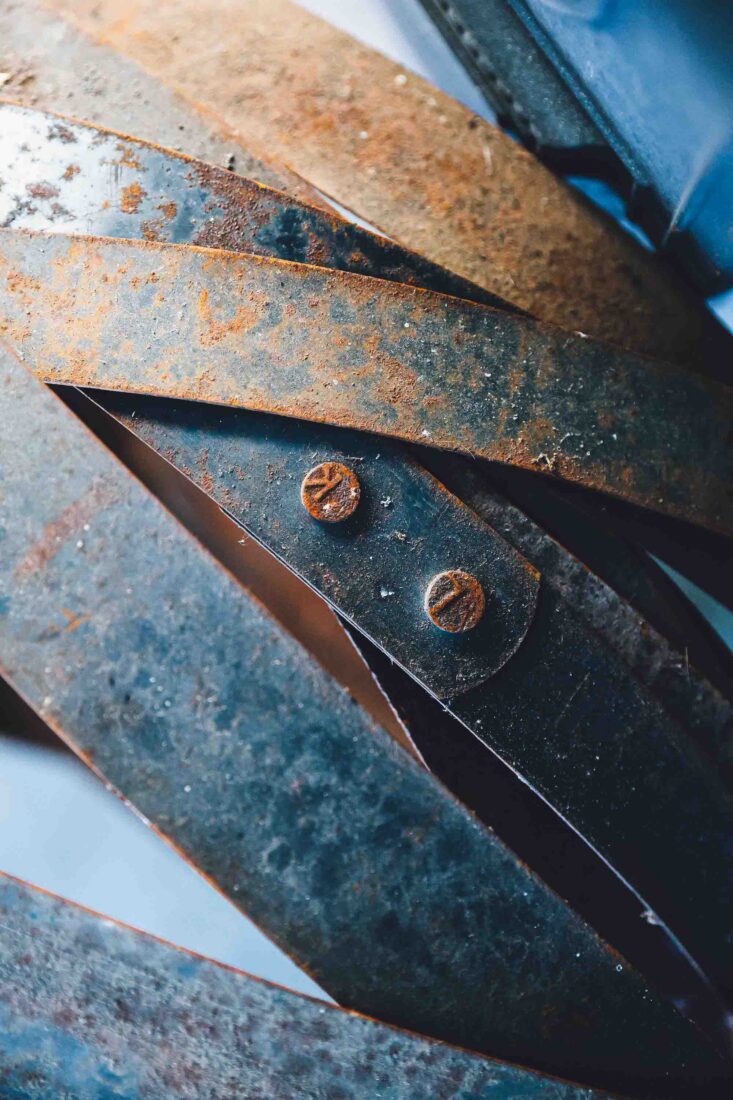
The technique demands time and patience. After first cutting the bands into strips, Manning cleans them with vinegar soaks and sandblasting to remove dirt and rust. Then he flattens the strips with a hydraulic press and stacks the blade’s layers: four band strips with nickel in between each to create the first outside layer; a quarter-inch, high-carbon-steel inner layer; and then a second outside layer of four more band strips with nickel between. He uses a welder to tack the layers together (to prevent warping) before sliding the stack into a two-thousand-plus-degree forge. It takes multiple trips in and out of the forge with hand-hammering in between to fully fuse the material. Then he can finally get to shaping and forming the blade using both hand- and power-forging methods.
Not only does the technique create the necessary strength, but it also adds beauty. A dunk in ferric chloride reveals swirls and color gradients akin to that of Damascus steel. “The solution brings out the contrast of any knife’s various materials, but the way it works on this material is unlike any other I’ve worked with,” Manning says. “That was a pleasant surprise.”
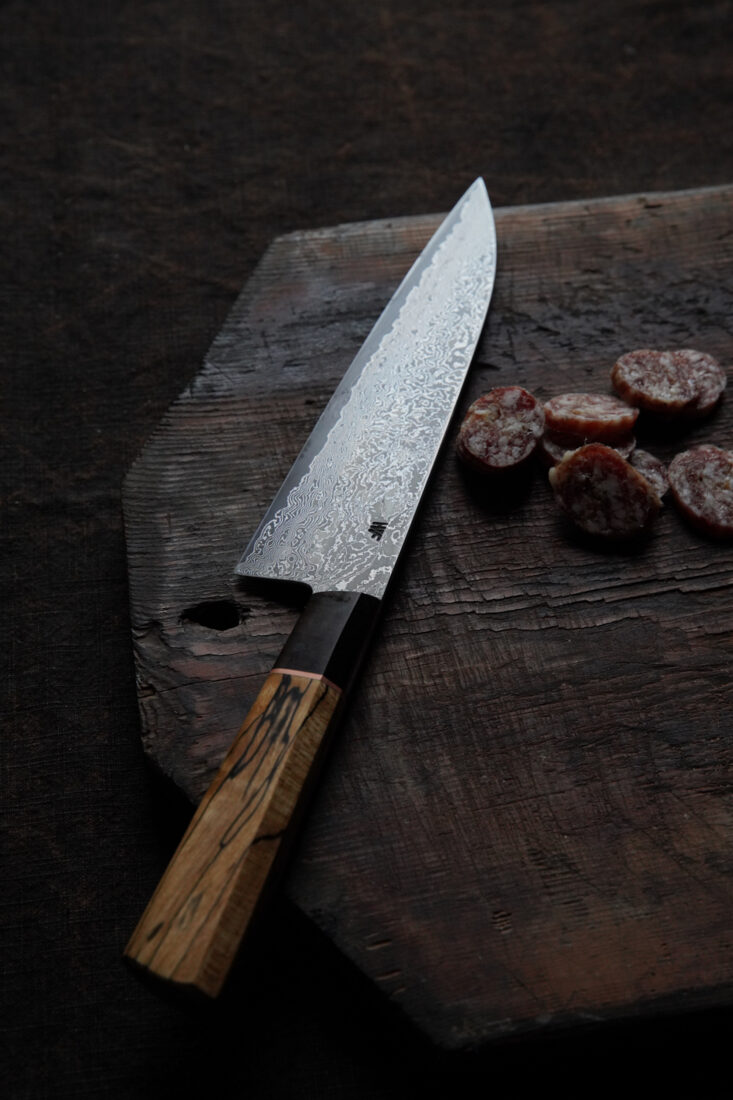
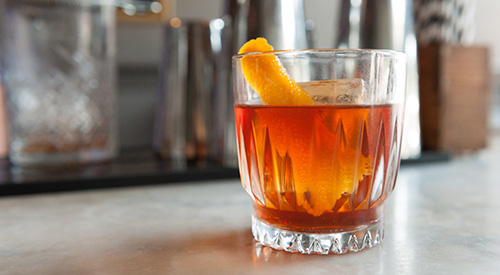
Thanks to friends who keep him supplied, Manning’s barrel-band pile remains deep. Many of the barrels once held Willett bourbon (Willett Family Estate Small Batch Four Year also happens to be his preferred pour) but come from Jonesborough’s Depot Street Brewing, which repurposes them to craft barrel-aged beer before passing them along to Manning for yet another reuse.
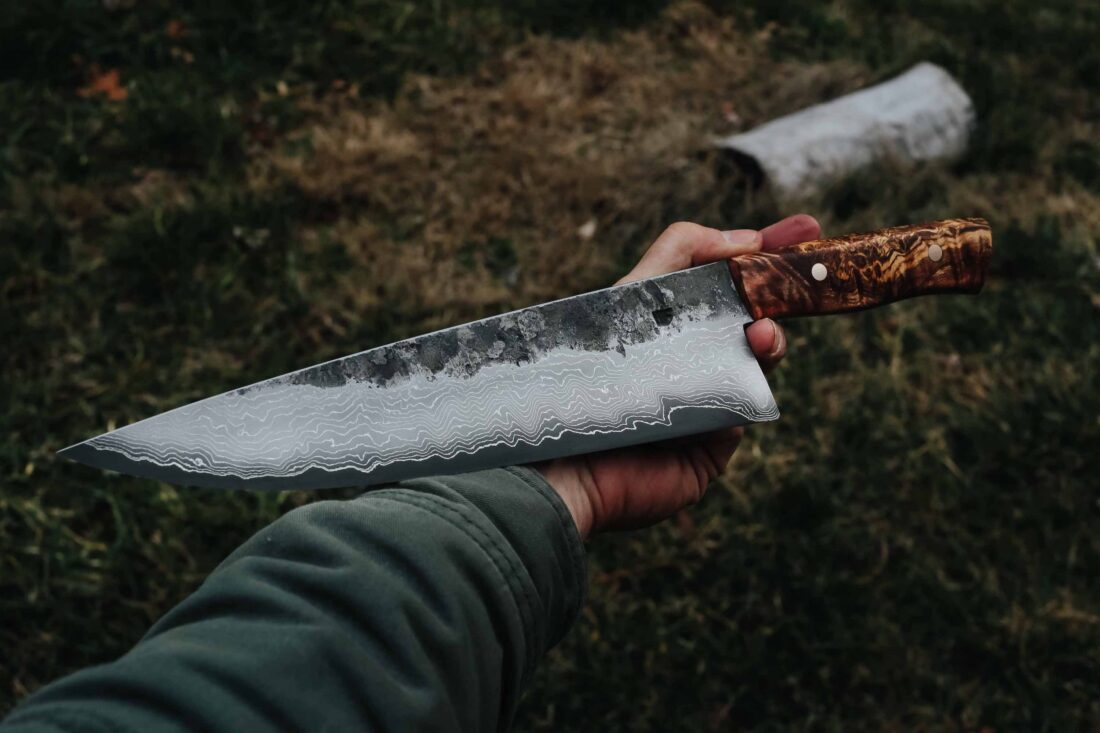
Once at Heartwood, they wait. Out of the approximately two hundred knives Manning makes annually, he forges only about thirty Cask Strength knives due to their labor-intensive process. He takes custom orders (his waitlist can stretch years) and offers some as part of the thirty to sixty knives he releases for sale online each quarter. “The Cask Strength knives take so much longer, but I love how they look, and I love knowing I’m giving the bands a second life,” he says. He might be the only one who will. “If I die tomorrow, somebody will come in this workshop and have good use for most everything, but of all the material I have, the barrel bands are the least likely to get reused.”
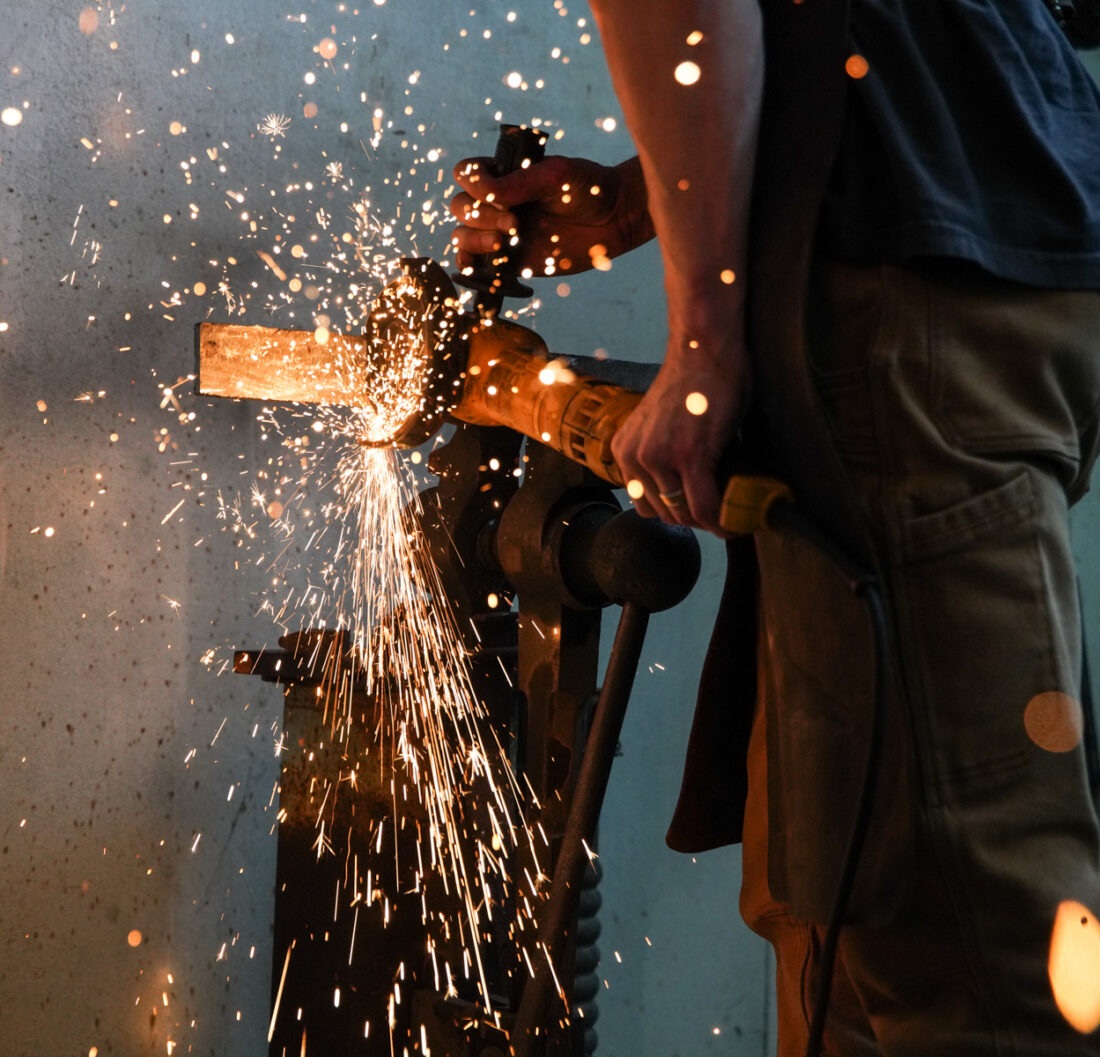
While the bands may be an unusual material choice, for Manning, the challenge of turning them into gorgeous pieces of working art is part of the fun.“They don’t all turn out, and you can get pretty far along and realize a section didn’t fuse properly,” he says. “You have a moment of heartbreak, but you say goodbye to that one and move on. That bit of unpredictability makes each one interesting, and that keeps me sane.”
Jennifer Stewart Kornegay is an award-winning freelance writer and editor based in Montgomery, Alabama. Her articles cover a variety of topics, including food and food culture, makers and travel, but the throughline is an emphasis on telling the stories of the interesting people behind them all.