
Distilled

Duck Duck Booze: Duck Breasts with Bourbon-Orange Sauce

Bourbon brings spirited depth to an easy take on the classic duck-and-orange duo
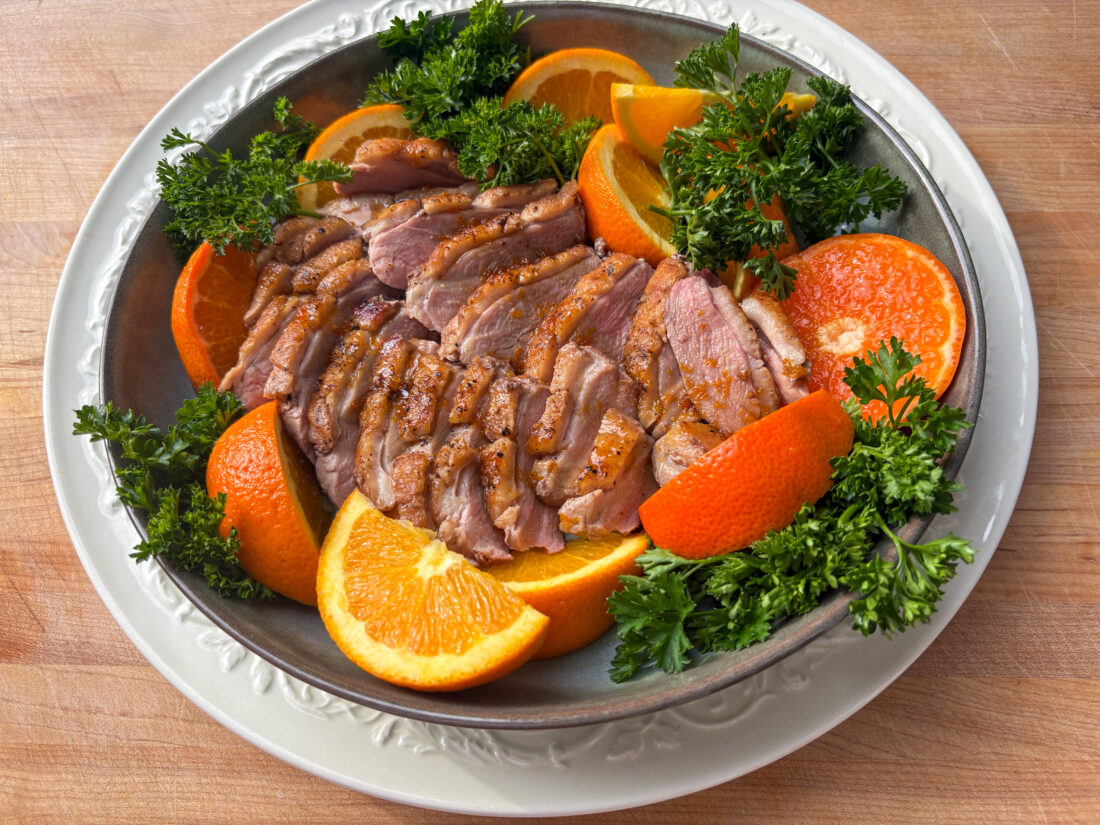
Roast duck and oranges in a bowl

Photo: KATHERINE COBBS

Duck a l’orange is a traditional French dish that Julia Child brought to American households through their television sets. The sweet-and-sour sauce she shared was the classic Sauce Bigarade, the French word for the sour Seville oranges used. Making it requires preparing a caramel, several reductions, and loads of time, which is fine when you have a whole duck roasting in the oven. But when you’re working with boneless duck breasts that cook quickly like a steak, time is of the essence. Luckily, this sweet-tart bourbon-orange sauce is a simple five-ingredient medley of honey, orange zest, orange juice, vinegar, and bourbon. It’s extremely flavorful, so a little drizzle is all you need to brighten the palate and balance the richness of the duck. The bourbon is the secret to achieving what tastes like long-simmered complexity in a sauce that takes mere minutes to make.

glass of bourbon with ice
Get Our Bourbon Newsletter!
Distilled is our newsletter about the South’s favorite spirit.

This site is protected by reCAPTCHA and the Google Privacy Policy and Terms of Service apply.

This recipe relies on the cold skillet method for cooking the breasts. It’s an ideal way to slowly render the fat cap beneath the skin without overcooking the meat. The breasts take about 8 to 10 minutes to cook to medium-rare, but you’ll want to monitor the cooking throughout. Every 2 minutes or so, drain off the accumulated fat and rotate the pan a quarter turn on the stove to make sure the duck cooks evenly and the skin crisps up nicely. Then flip and cook on the flesh side for just a minute or two.
Duck Breasts with Bourbon-Orange Sauce

Yield: 2 to 4 servings

For the duck

    • 4 skin-on boneless duck breast halves

    • Kosher salt and freshly ground black pepper

    • 1 tsp. vegetable oil

For the bourbon-orange sauce

    • ¼ cup honey

    • Finely grated zest of 1 orange

    • ¼ cup freshly squeezed orange juice

    • 1 tbsp. seasoned rice vinegar

    • 2 tbsp. bourbon

Preparation

  1. Remove the duck breast halves from the refrigerator and score the skin and fat of each, being careful not to cut into the flesh beneath. Season generously with salt and pepper. Let the seasoned breasts come to room temperature for at least 30 minutes before cooking.

  2. While the duck comes to room temperature, prepare the sauce. Combine the honey, orange zest and juice, rice vinegar, and bourbon in a small saucepan. Bring to a boil over medium heat and reduce the heat to a simmer. Simmer until slightly thickened and syrupy, 8 to 10 minutes. Set aside and keep warm.

  3. Rub a large heavy skillet with oil to coat. Place the duck breast halves, skin side down, in the cold skillet and place it over medium heat. Weigh the breasts down with a burger press or a smaller, heavy skillet that fits inside the cooking pan. The goal is to make sure as much of the duck skin as possible is in contact with the cooking surface. The fat beneath the skin will slowly render as the skillet heats up and the duck cooks over a span of 6 to 8 minutes. Every 2 minutes, remove the weight, carefully spoon or pour off the accumulated fat, and reserve (see note). Rotate the pan on the stove regularly and adjust the heat as needed to maintain a slow, steady sizzle of fat to ensure even cooking. When skimming off the fat at the 6-minute mark, take a peek at the skin. It should be golden and crisp. If not, cook 1 to 2 minutes more. Remove the weight, skim the fat a final time, and turn the breasts over to cook on the flesh side 1 to 2 minutes, or until the meat registers 130°F for medium-rare. Transfer the duck, skin side up, to a plate to rest 5 minutes. Do not cover so the skin remains crisp. 

  4. Thinly slice the duck breasts and arrange on a platter. Spoon a bit of the sauce over the meat and serve the rest on the side at the table.

  5. Note: Save the duck fat from the pan. It is easily clarified of impurities and can be kept in the fridge to use for frying potatoes, searing meats, roasting vegetables, or anywhere you might normally use butter. To clarify, simply strain the liquid fat through a fine-mesh strainer into a small bowl. Discard impurities and refrigerate the liquid until a solid layer of fat has formed on the surface. Separate the cold solidified fat from any liquid that remains beneath and store it in a jar with tight-fitting lid. Keep refrigerated and use within 6 months.


tags: