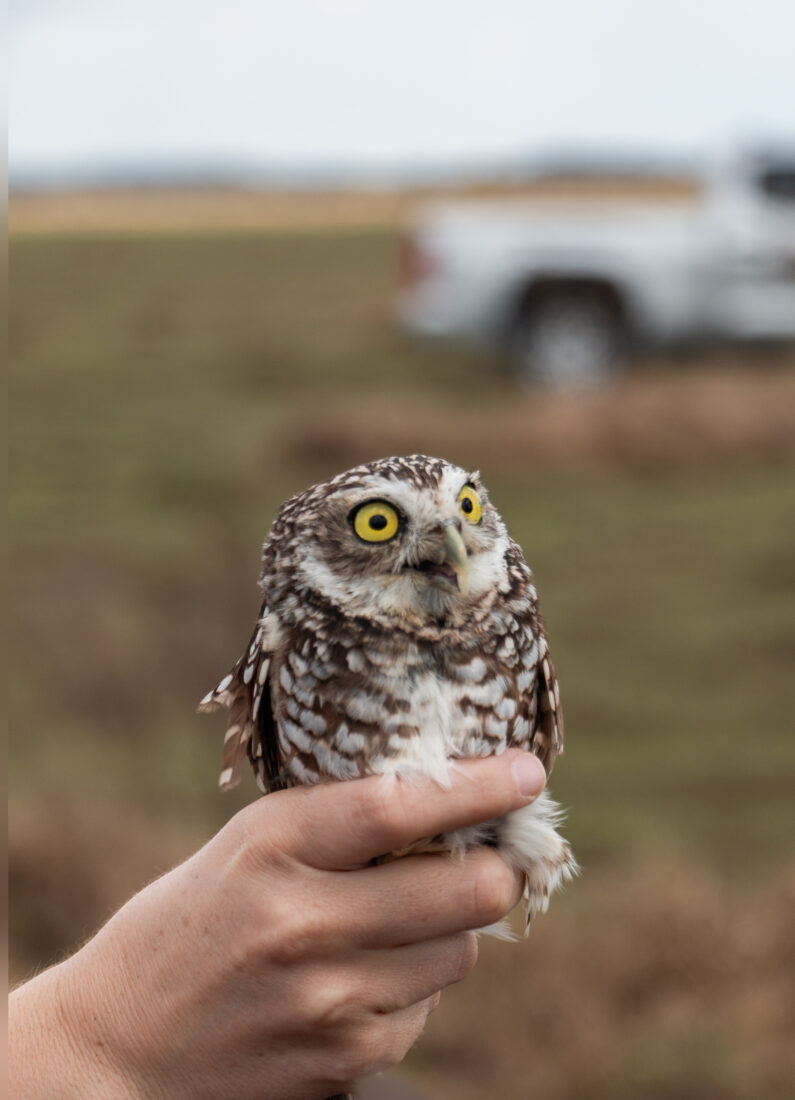
It all started last spring, when some unticketed, feathery passengers slipped on a Florida cruise ship bound for Spain: two burrowing owls, pint-sized, ground-dwelling, wide-eyed creatures known for their inquisitive nature. Benito and Concho, as they would later be dubbed, were in for an extended yearlong vacation—one that captured the attention and hearts of the passengers aboard and local media. But now, thanks to a transcontinental team of conservationists, they’ve returned home to Florida.

“We don’t know how exactly or why these owls boarded the cruise ship,” says Natalie Montero-McAllister, an imperiled species policy administrator in Florida. “There may have been something about the ship to attract them.” The towering, eighteen-deck Allure of the Seas certainly offered lots of places to hang out—over the course of the ten-day trip, passengers spotted them in the lush Central Park area, investigating the solarium, and occasionally dropping by the mini golf course. “Ship travelers and crew kept an eye on them as they cruised,” Montero-McAllister says, and after arriving in Spain’s Port of Cartagena, the crew captured them before docking and turned them over to government officials.
This isn’t the first time one of the curious creatures has snuck aboard a ship. In 2023, a burrowing owl stowed away on a two-week Caribbean cruise before a dramatic capture in Miami over the Cartier store. But the international nature of Benito and Concho’s journey resulted in a nightmare of paperwork to get them authorized for repatriation to Florida, as wildlife rehabilitation centers in Spain stepped up and cared for them in the meantime.
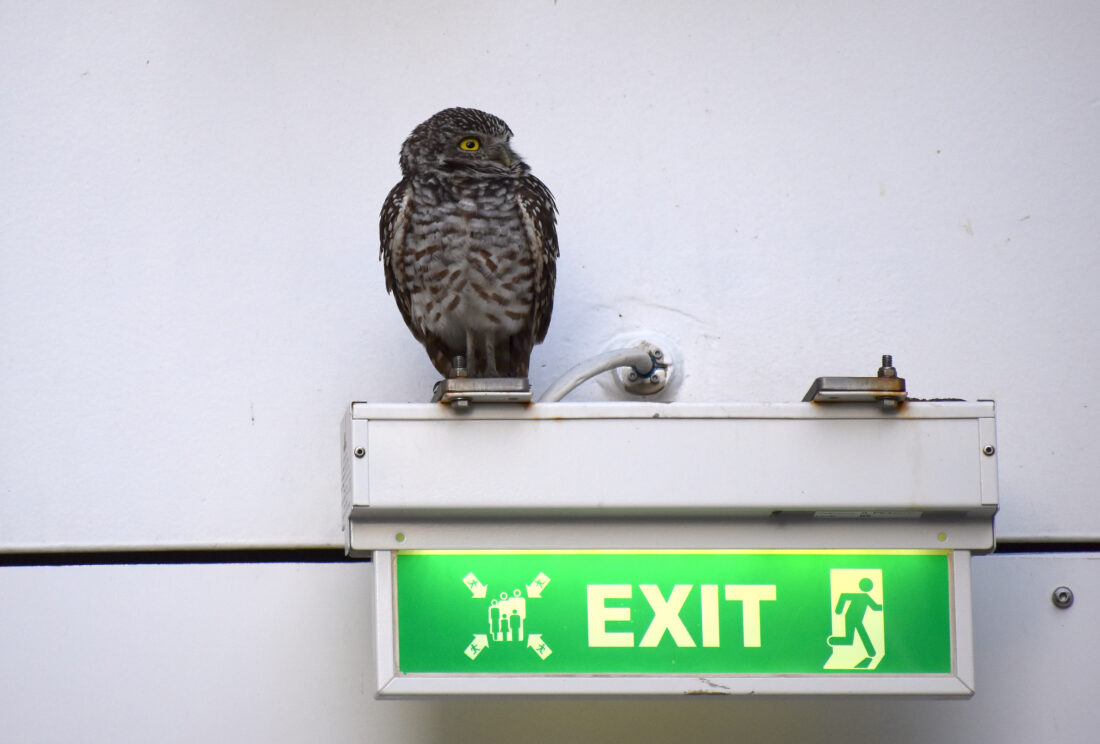
Normally, burrowing owls live on Florida’s open prairies, eating insects, reptiles, frogs, small rodents, and birds. Their long legs allow them to peer over the grasslands, and they take up residence in burrows left by other animals, enlarging them with their beaks and feet. Due to widespread habitat loss and other headwinds, including flooding and vehicle strikes, burrowing owls are classified as a threatened species in Florida, making it all the more important that the two stowaways get back home.
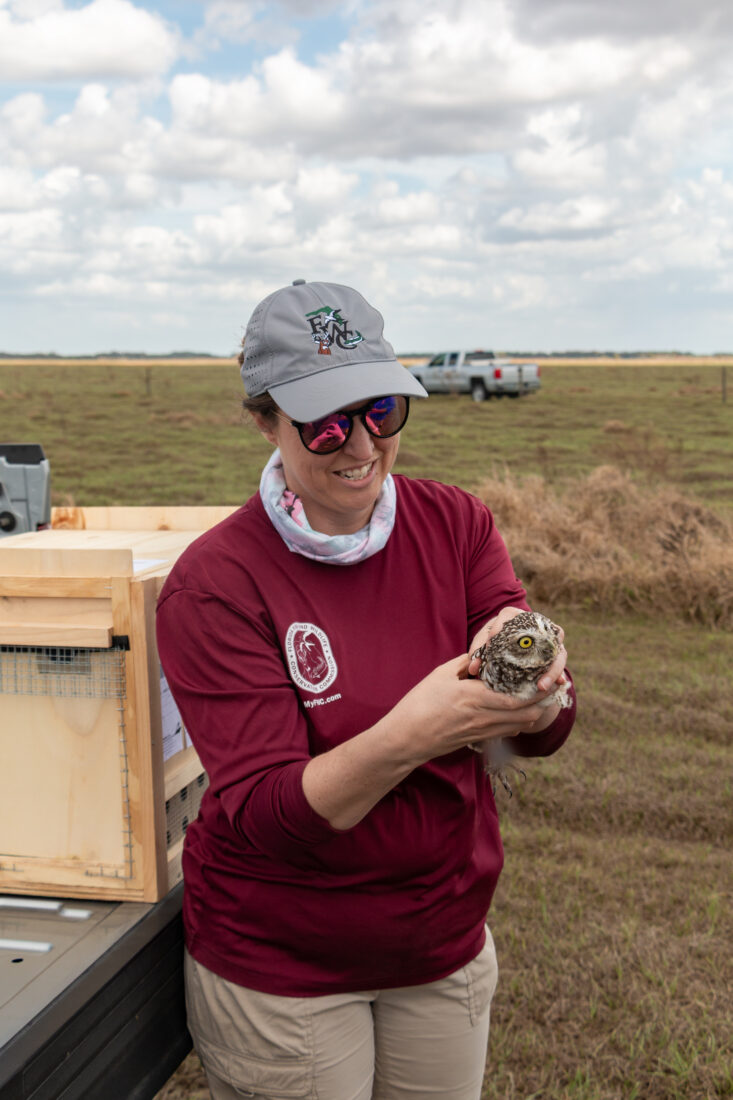
That finally happened last week, a testament to the determination of the international group working to bring them home. After permission for their return came through in February, the owls hopped a flight to Miami from Madrid, paid for by the Fish & Wildlife Foundation of Florida. They then spent thirty days in quarantine before transport last week to the Dinner Island Ranch Wildlife Management Area southwest of Lake Okeechobee, a vast, 35,000-acre working cattle ranch with plenty of open space for foraging.
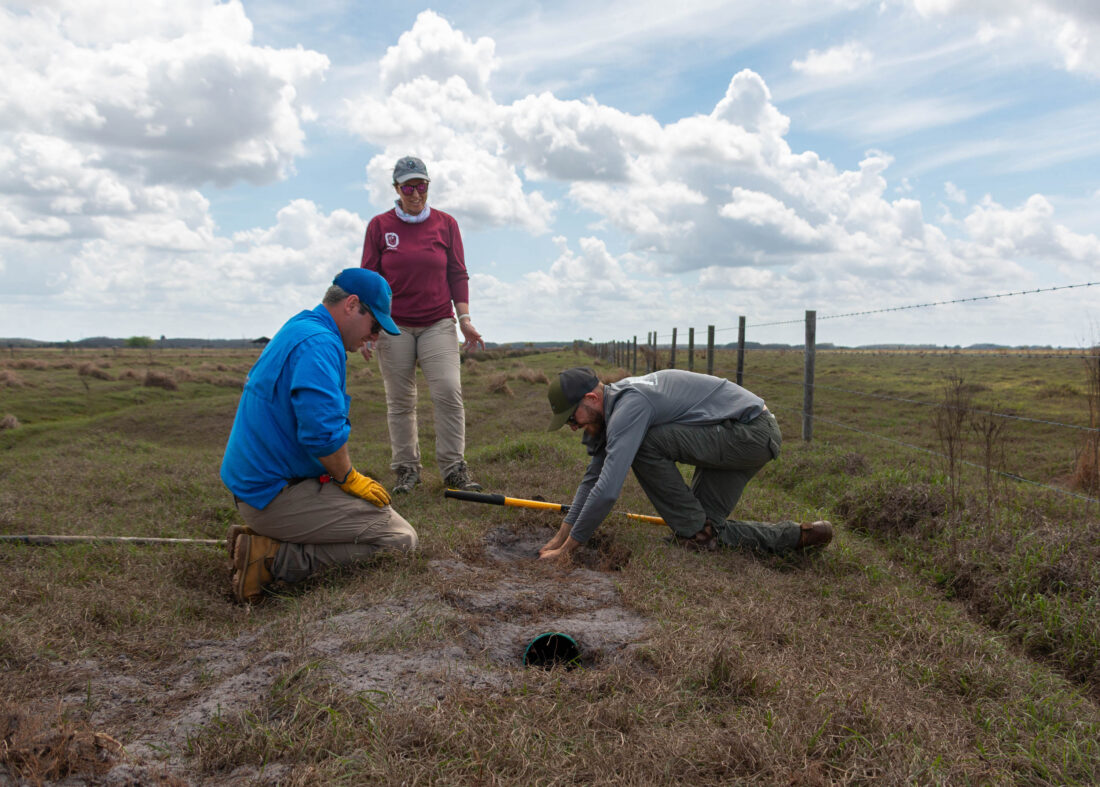
There, biologists released them near an old burrow they had cleared out, plus an artificial burrow to give the well-traveled birds options. So far, Benito and Concho have been exploring their home and enjoying their freedom and, though they are not available for comment, have no plans to take to the high seas again any time soon.
Lindsey Liles joined Garden & Gun in 2020 after completing a master’s in literature in Scotland and a Fulbright grant in Brazil. The Arkansas native is G&G’s digital reporter, covering all aspects of the South, and she especially enjoys putting her biology background to use by writing about wildlife and conservation. She lives on Johns Island, South Carolina.