

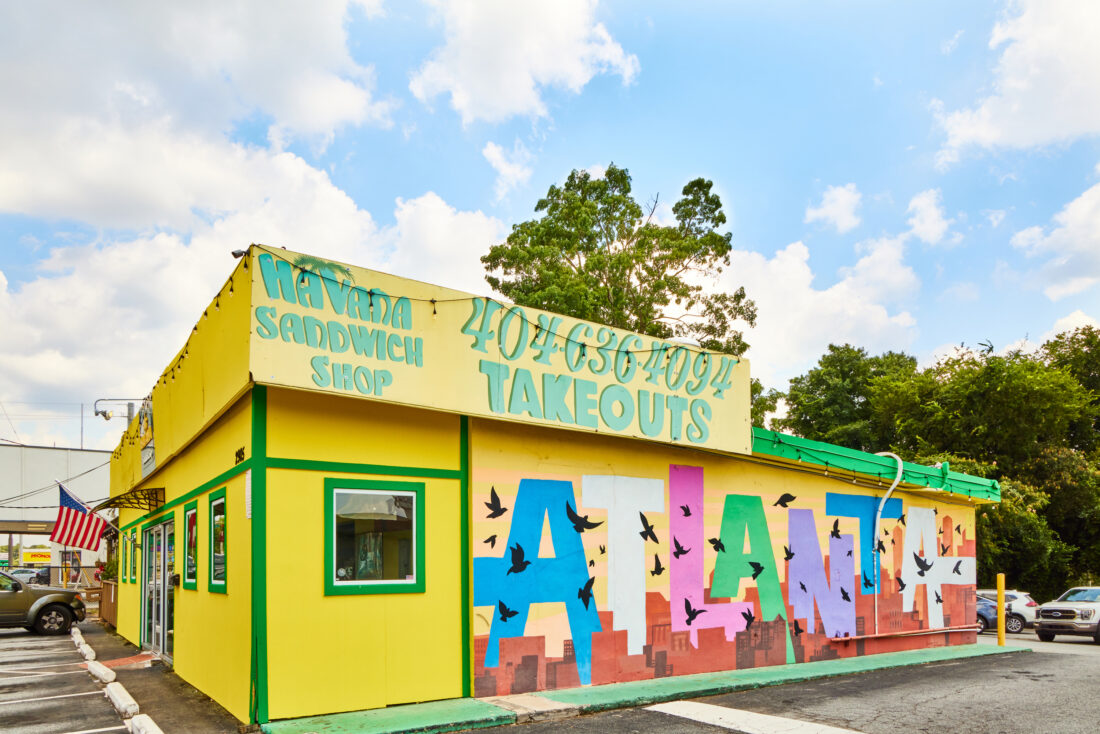
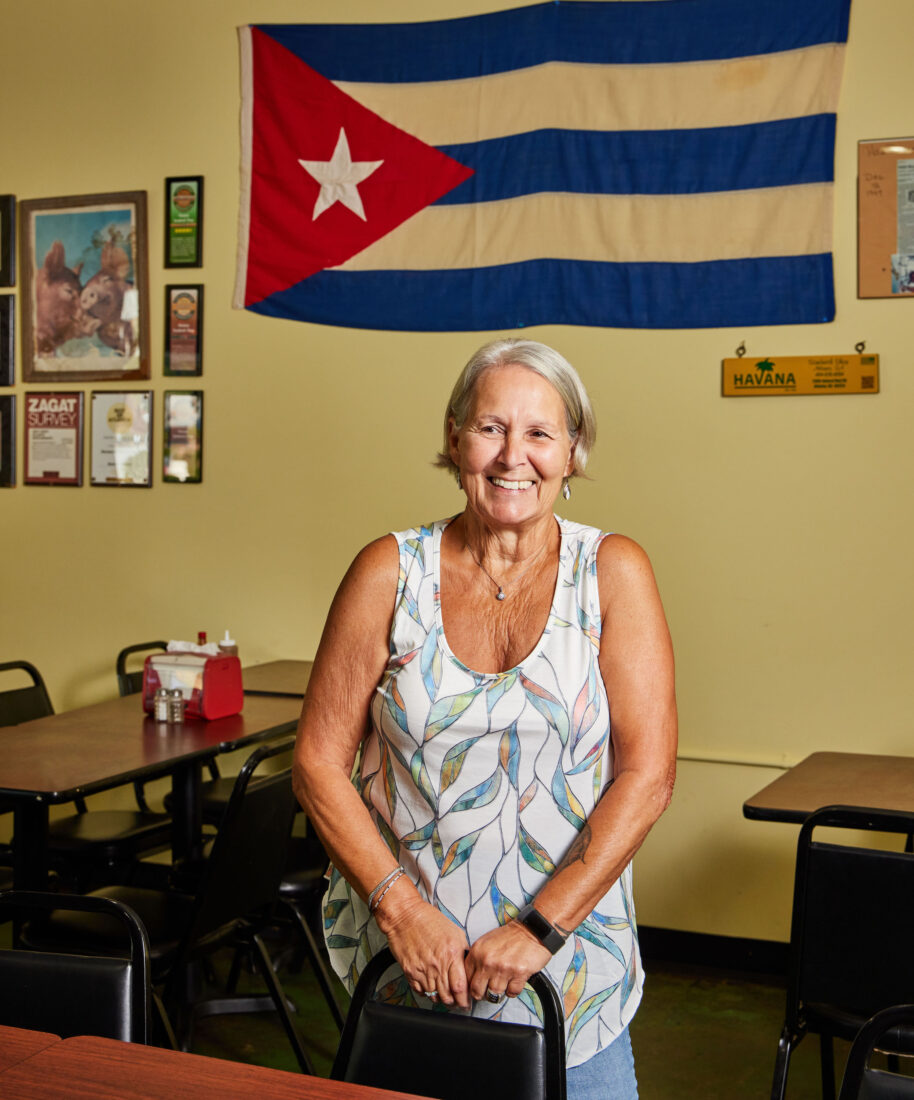
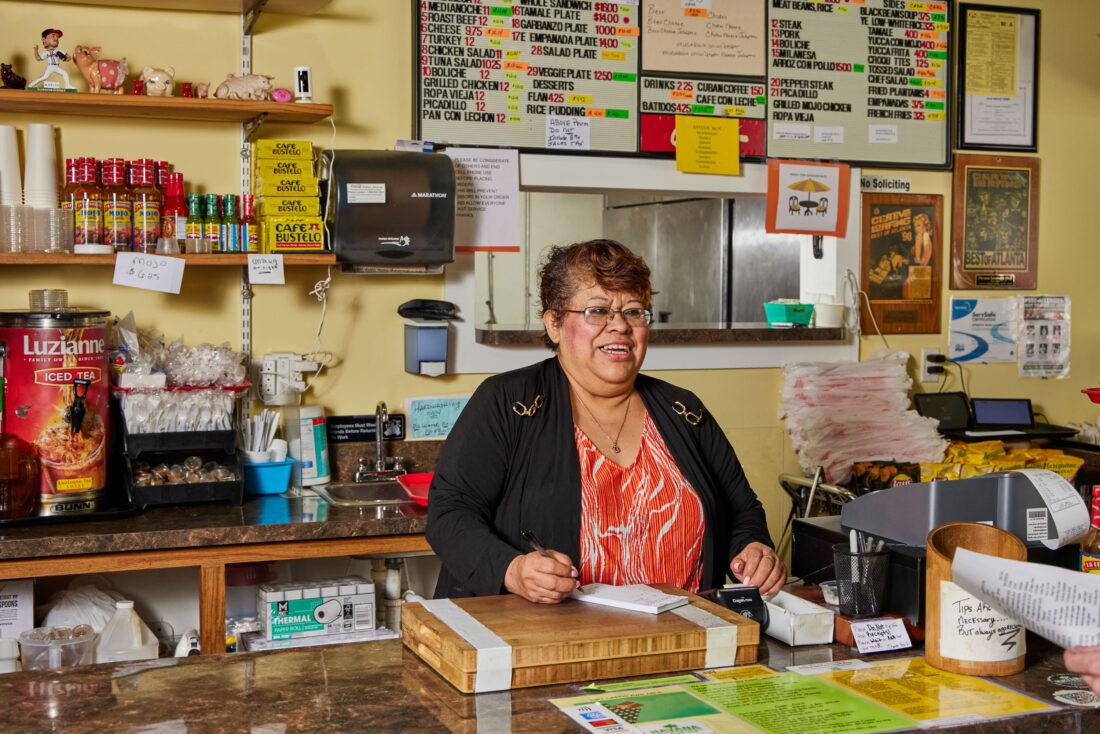
Dora Corena works the front counter at Havana Sandwich Shop, set in a onetime convenience store on the bottom end of Buford Highway, the multicultural Atlanta corridor that serves Georgia as an on-ramp for new arrivals. On the opposite wall hangs a Cuban flag that flew atop Miss Lucky, the tiny boat that the restaurant’s cofounder Eddie Benedit piloted during the 1980 Mariel Boatlift, liberating some forty people from Communist Cuba. Behind Dora, a pegboard menu reads like a greatest hits album from the post-Castro diaspora.
Dora, who has roots in El Salvador, began here in 1988, twelve years after Eddie and his wife, Debbie, along with his father and mother, Guido and Felisa Benedit, opened Havana with a menu of Cuban sandwiches, black bean soup, yellow rice, and fountain Cokes. Scribbling orders for sandwich platters on an old-fashioned green-and-white pad, Dora moves between the kitchen and the counter, pulling shots of coffee and spooning hot rice pudding into cups bound for the fridge.
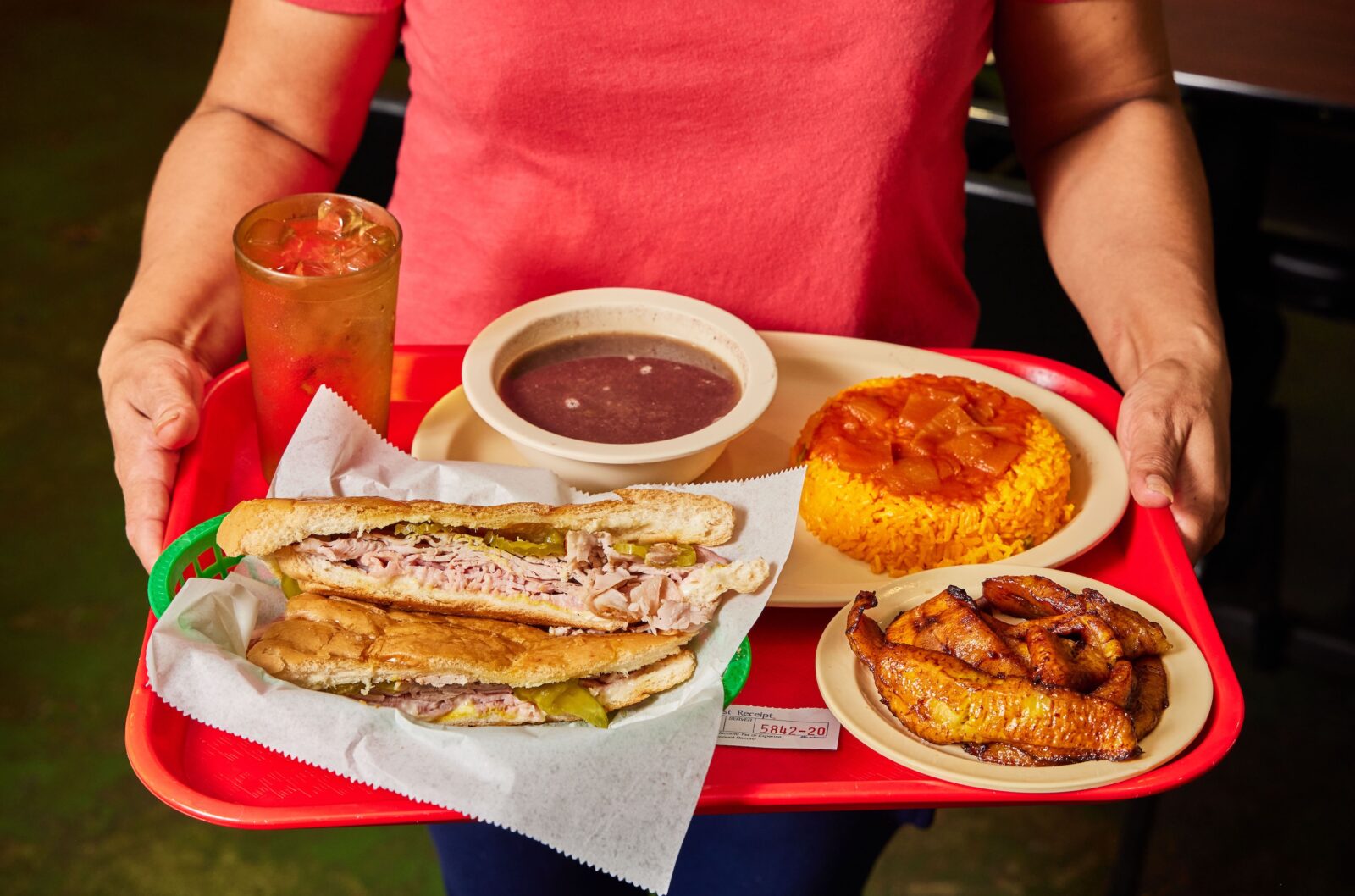
After I moved to Atlanta in 1986, my fraternity brother Brandt Furin introduced me to Havana. My order was a #17 platter—one-half of a Cuban, cut on the diagonal; a bowl of garlic-simmered black bean soup, speckled with chopped raw onions; and a timbale of yellow rice, capped with a tomato-and-onion salsa. Decades had passed since I placed my last order, but when I learned that the Benedits would celebrate the restaurant’s fiftieth anniversary in 2026, I began returning to eat more of those generous sandwiches and chart their family story.
Susan Puckett, a former Atlanta Journal-Constitution editor, suggested that I take a diversion from my #17 obsession, beginning with a plush tamale, stuffed with bits of ham, topped with ribbons of ham, and drenched in the salsa that accompanies the yellow rice. Fried-to-order empanadas with a feathery crust came next, filled with ground beef and melted cheese. Subtle and sweet yucca followed, stewed and tangled with strings of onion.
But over four visits in two months, sandwiches remain the top draw. For an hour one afternoon, I watch customers carry trays from the counter to Havana’s concrete-floored dining room, decorated with press clippings and family photos. Dora takes down thirty-six orders, twenty-eight of them #17s.
Priced at ten bucks and change for a whole sandwich, served in a loaf from a Colombian baker that’s toasted on a plancha and smeared with mustard, or fourteen for a half-sandwich platter, that Cuban is mighty. Stacked high with roasted pork, sliced ham, and white American cheese, it comes layered with pickles that jut out the sides. Want to try another sandwich? Make it a Milanesa, a breaded and fried steak cutlet topped with crunchy potato sticks, lettuce, and tomatoes.
No matter which sandwich you order, you will want to douse it in mojo. The Benedits once finished each sandwich with the citrusy and garlicky Cuban sauce. Now, to maintain the crispness of that loaf, customers add their own, squirted from one of the bottles filled with La Lechonera brand sauce that sit on every table.
Along with sandwiches, Havana serves as a showcase of immigrants’ impact on the Deep South. Brothers Eddie and Guido Jr. became the first Benedits to leave for America, arriving in 1962 when they were twelve and thirteen via student visas through the Catholic Church. Two years later, their parents followed the boys from Cuba to Atlanta, with a third brother, Willie. Known to the family as Papi, Guido took a job busing tables. Mami worked as a seamstress, as she had back in Cuba.
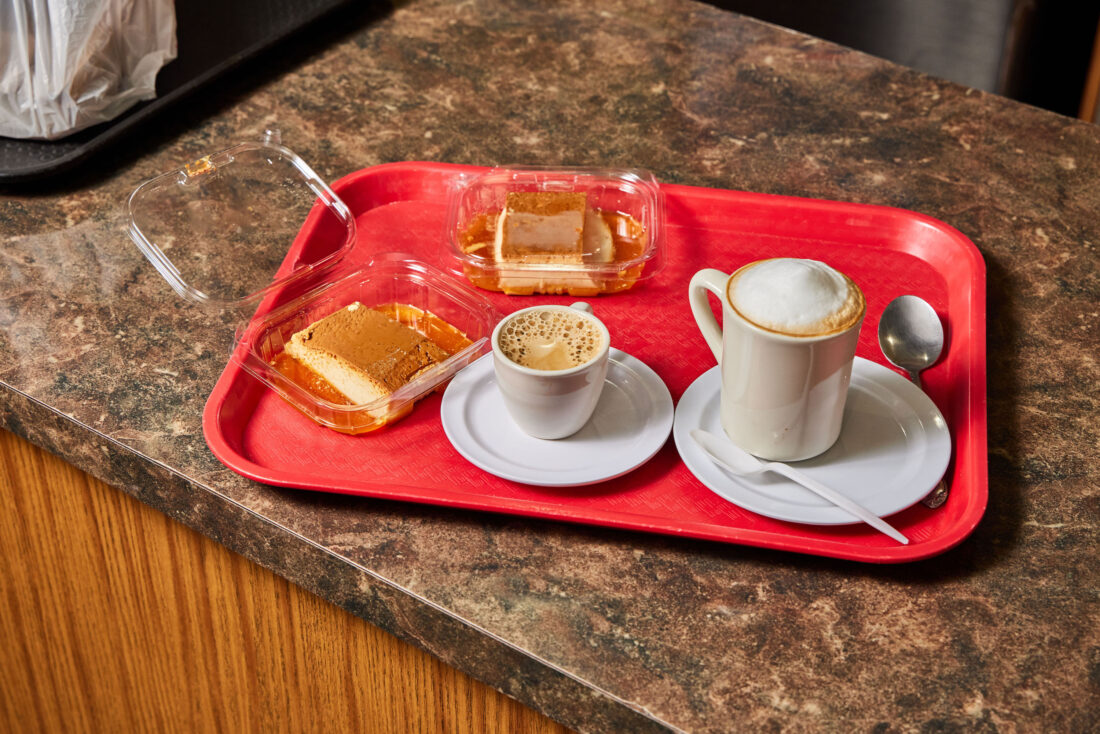
Debbie married Eddie on December 6, 1975. Her grandparents came from the city of Sparta and the village of Matrangos in Greece. In Atlanta, her father ran a twenty-four-hour diner, where as a girl she played hide-and-seek in the freezer among slabs of beef. Eddie and Papi signed the lease for the old convenience store that would become Havana on New Year’s Eve. When it opened in February 1976, Debbie, who would soon be pregnant with their son Eddie Jr., worked the counter. Eddie manned the kitchen. Papi helped out in the front and back. Mami made the flan and rice pudding.
Business surged, mostly from local workers, drivers detouring off I-85, and college students in search of cheap eats. Success fed patriotism. In the nineties, Papi bought a Cadillac DeVille. He and Mami often flew to Vegas, where they played the dollar slots. When Papi was working the restaurant and feeling the spirit, he sang “America the Beautiful,” as Eddie, his percussionist, banged a big spoon on a bigger pot.
The past couple of decades have been hard on the Benedits. Eddie died of cancer in 2001. Papi followed in 2008. Family squabbles over ownership and naming rights began. After a fire, Debbie and Eddie Jr. opened and closed a new location in a nearby shopping center, backed by a loan from Dora. Mami died of complications from Alzheimer’s in 2012.
A year after the last of the family legal battles concluded, in 2015, Debbie reopened Havana in the same spot where the Benedit family plancha-toasted their first Cuban. Dora stood tall behind the counter that day, and Eddie Jr. began to step into the role his grandfather and father had played.
Buford Highway has changed, Eddie Jr. tells me late one afternoon, after the rush has died down. When Havana opened, workers from a nearby GM plant were regulars. Now doctors and nurses in scrubs arrive from a children’s hospital across the interstate. Eddie Jr., who began working at Havana in the summers while he was still in grammar school, eating Mami’s rice pudding spooned out hot from the boil pot, now helps manage the restaurant, supporting Debbie, Dora, and the other women from across the Hispanic world who run it. When he’s not here on Buford Highway, he follows the band Widespread Panic. “I’ve seen one-hundred-fifty-plus shows,” he tells me. No matter the venue, people come up to him and say, I know you from somewhere. “And that somewhere is always here,” he says. “Some just walk up, smiling ear to ear, and say, ‘Number 17, please.’”
Plus: Filipino Comfort
More good eats on Buford
Set in a Buford Highway strip mall that’s also home to a banh mi shop, a dim sum bakery, and a karaoke bar, Kamayan ATL, opened in 2022 by Mia Orino and Carlo Gan, is a hive for Filipino people and flavors. The restaurant attracts diners from across the Deep South for bracingly tart limeade, pork lumpia dunked in sweet chili sauce, wok-blistered green beans, eggplant coconut curry, and, on Sundays, fried milkfish with garlic rice and sunny-side-up eggs.
John T. Edge, writer and host of the television show TrueSouth, began contributing to Garden & Gun in its first year of publication. He is the author of The Potlikker Papers: A Food History of the Modern South and House of Smoke.