

Food & Drink
Richmond’s Sub Rosa Bakery Rises Again
The long-awaited reopening of a tasty Virginia favorite also comes with a few surprises
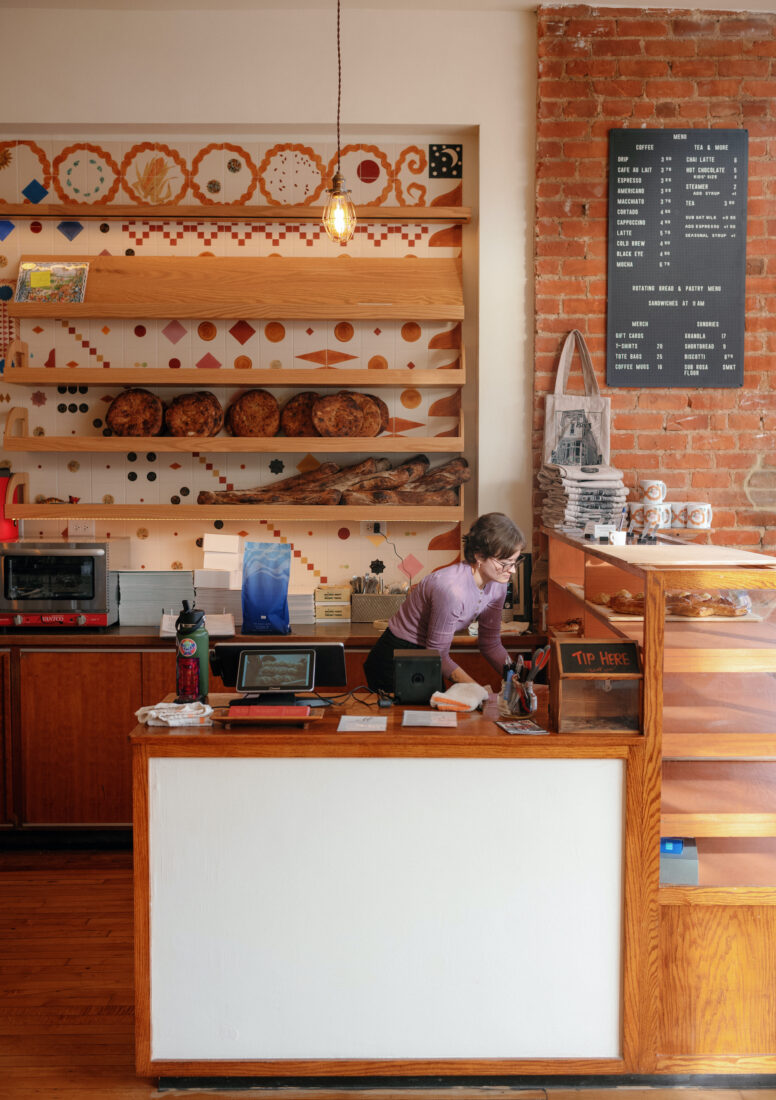
Photo: Kate Thompson
The wait is over. After a year of renovations, Sub Rosa Bakery, Richmond, Virginia’s beloved temple to flour and butter, has reopened.
A fire is every baker’s nightmare. The Sub Rosa owners, siblings Evrim and Evin Dogu, have lived through two. In 2013, a discarded cigarette ignited the historic Church Hill building that houses their James Beard Award–nominated bakeshop. “The water and smoke damage were so minimal that all we did was repaint,” Evrim says.

But November 2024’s blaze was different. Likely caused by construction debris near the chimney, the incident shuttered the space for more than a year and led to some tough choices. After fifteen years building their reputation on flaky croissants, seeded flatbreads, and whole-grain ciabatta baked over a brick hearth, Evrim and Evin chose—out of both prudence and progress—to reopen this winter with an electric model: a gleaming, assembled-in-Italy Bassanina EcoPower deck oven. “We can load fifteen breads in one fell swoop now,” Evrim says. “It’s incredible.”
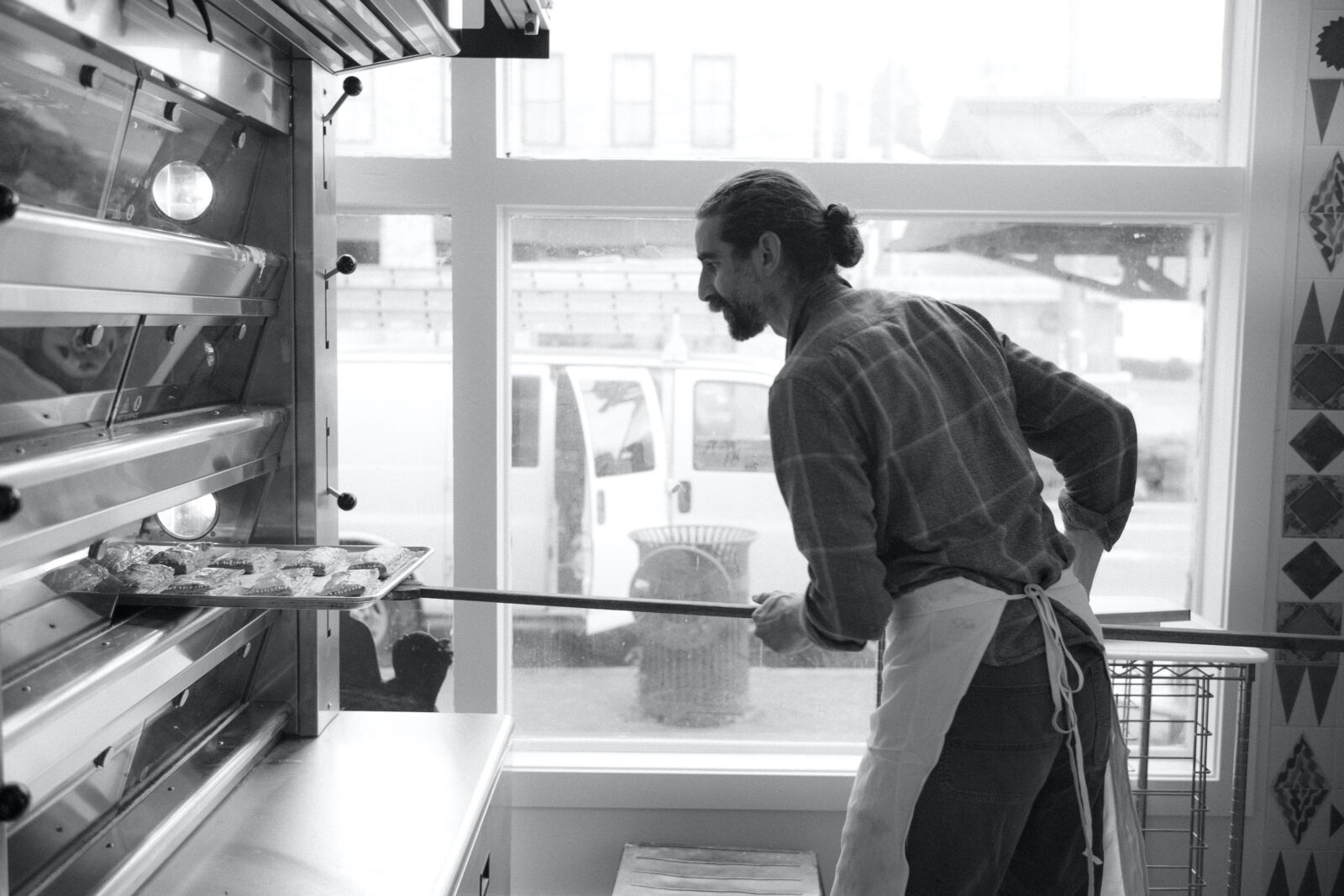
Photo: Kate Thompson
Evrim Dogu pulls fresh pastries from the new electric deck oven.
It’s not the only new element set to surprise customers, who are turning out in droves to celebrate the reopening. More than one thousand hand-painted, kiln-fired ceramic tiles now line the renovated space on North 25th Street. In the wake of the fire, offers of support poured in—including one from former Richmonder and now Massachusetts-based tile artist Pallavi Sen, who volunteered to transform the bakery’s once-blank walls. “She is one of our biggest fans, which is saying something because we do have really passionate fans,” Evrim says, adding that he figured Sen might do a small installation. “I literally thought, like, a small backsplash area near the oven.” What Sub Rosa got instead is a massive geometric three-wall mosaic. Working with the artist, the Dogus incorporated their favorite colors and themes, including braided bread, a rose motif, and patterns from Ralli and Siddi quilts, the former inspired by Pakistani appliqué work and the latter by African-Indian patchwork using recycled cloth. “Honestly,” Evrim says, “this is a dream.”
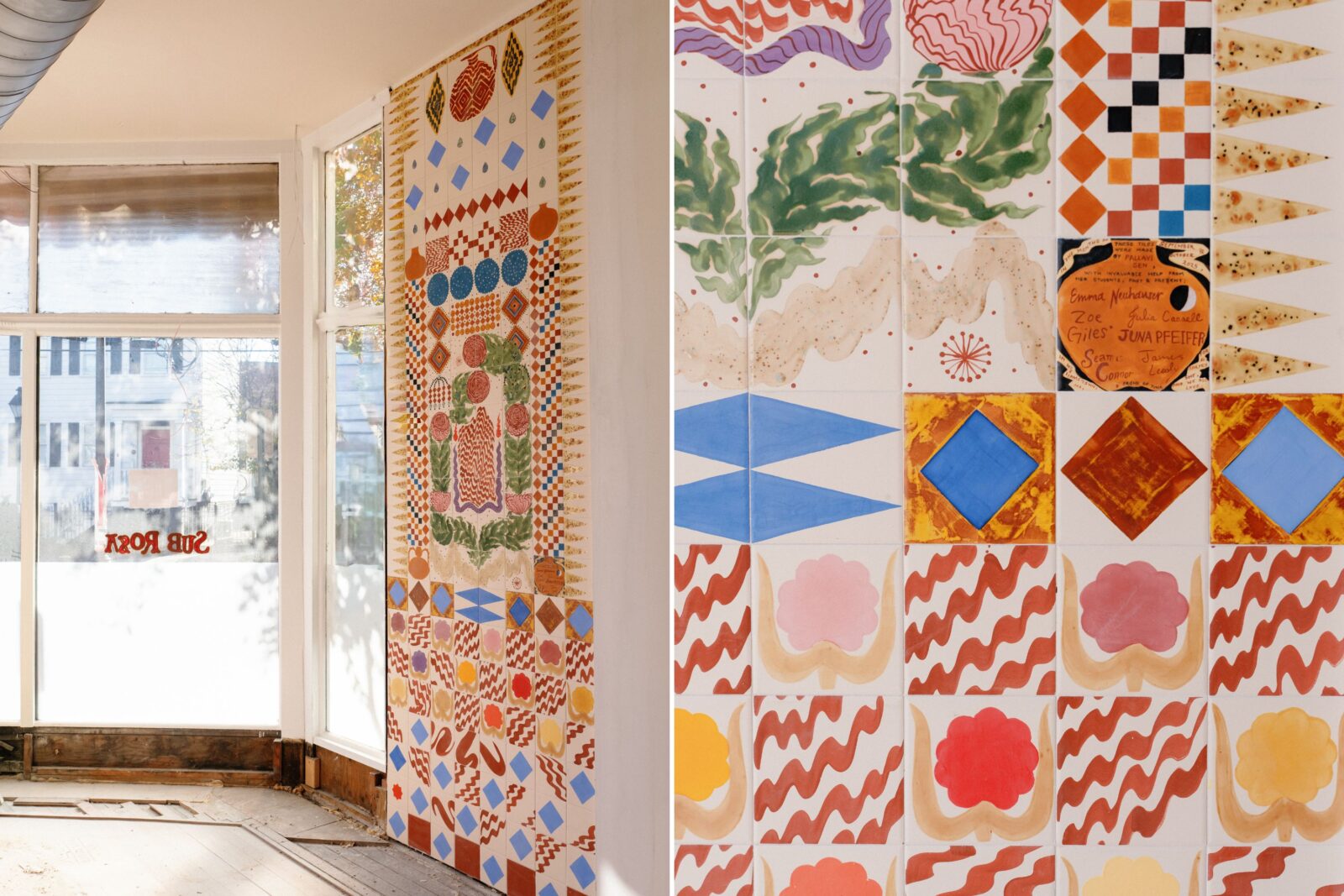
Photo: Kate Thompson
Pallavi Sen’s hand-painted tiles near the bakery entrance, installed during the renovation; a detail of Sen’s tiles, including a vase with signatures from the artist and her students.
Cosmetic changes aside, the floorplan of the bakery remains largely the same, a comfort for regulars. There’s the same lighting but with higher wattage for a brighter glow, and “we moved the mop closet out of the bathroom,” Evrim says. The offerings are as robust as ever with creative polenta chocolate chip cookies, crusty baguettes, and the savory Balkan favorite, Pogača, a Turkish breakfast pastry.
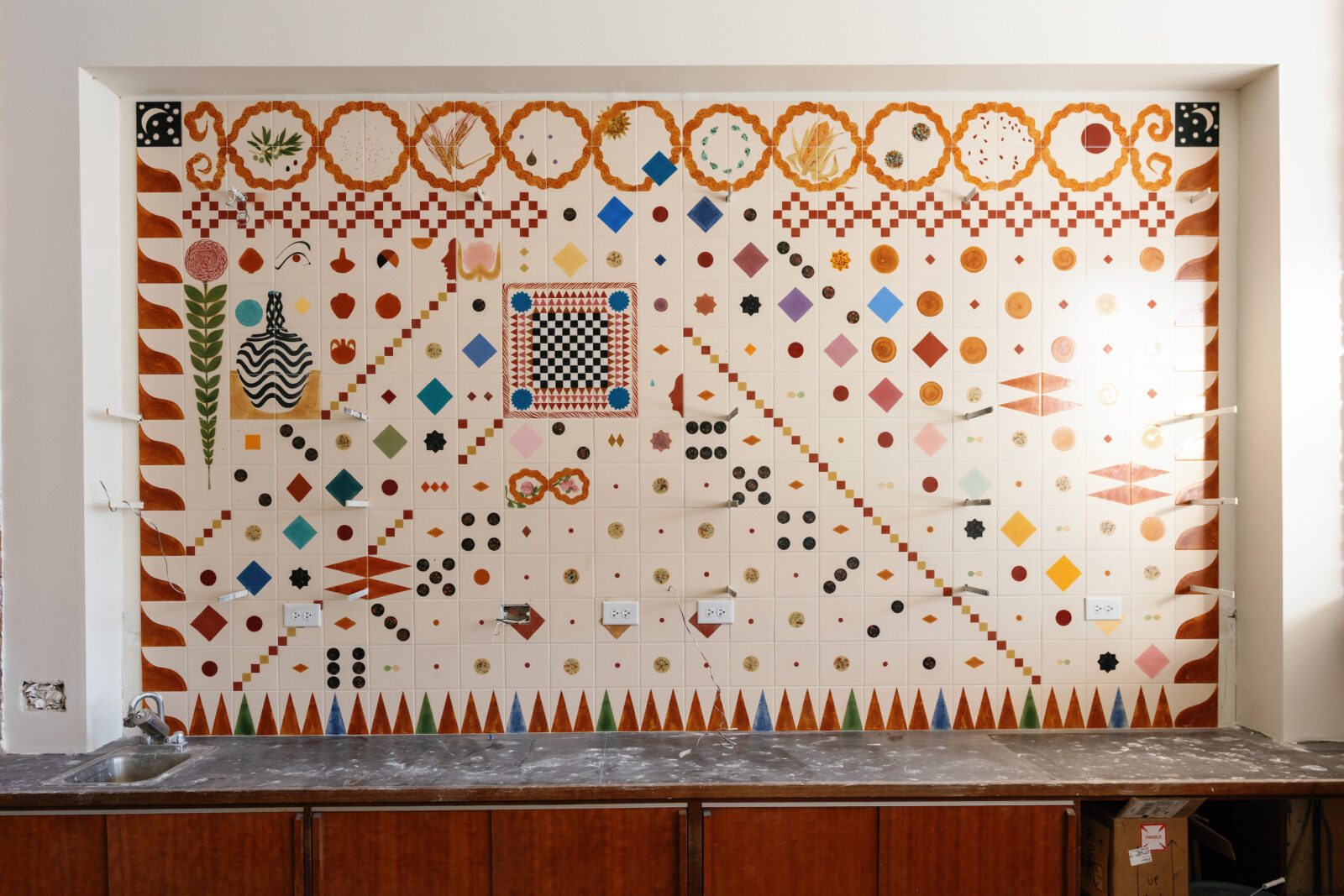
Photo: Kate Thompson
Illustrations of braids of bread, pink roses, and painterly geometric shapes adorn the mosaic.
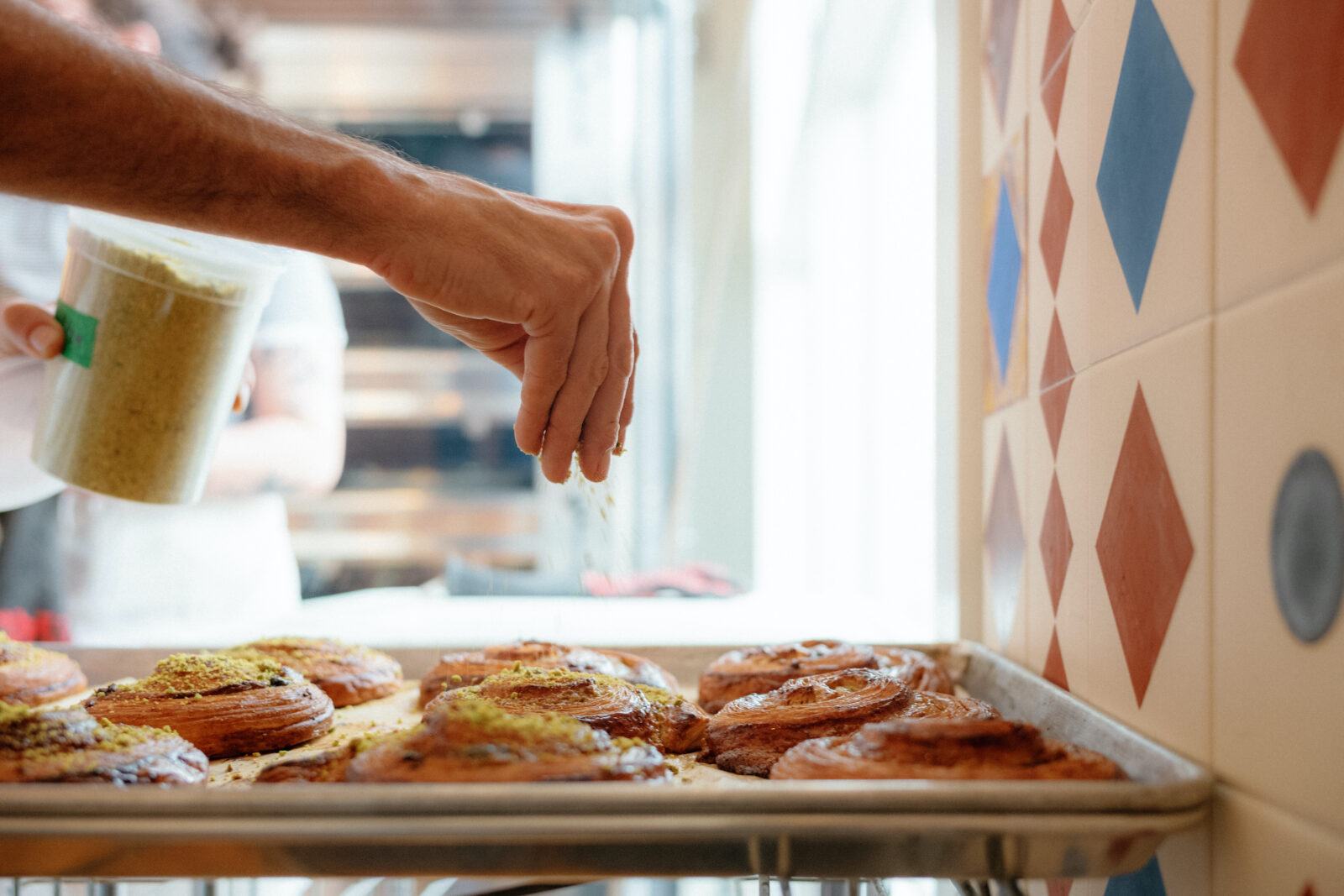
Photo: Kate Thompson
Pistachio dust tops the bakery’s popular sour cherry and pistachio croissants.
The biggest change may be the oven itself, but Sub Rosa’s bread has never been simply a product of its fuel source. “What we haven’t lost is the work we do with area farmers,” Evrim says. The Virginia-grown rye, maize, and wheat that the Sub Rosa team carefully source, hand-mill, and patiently ferment are the true stars.
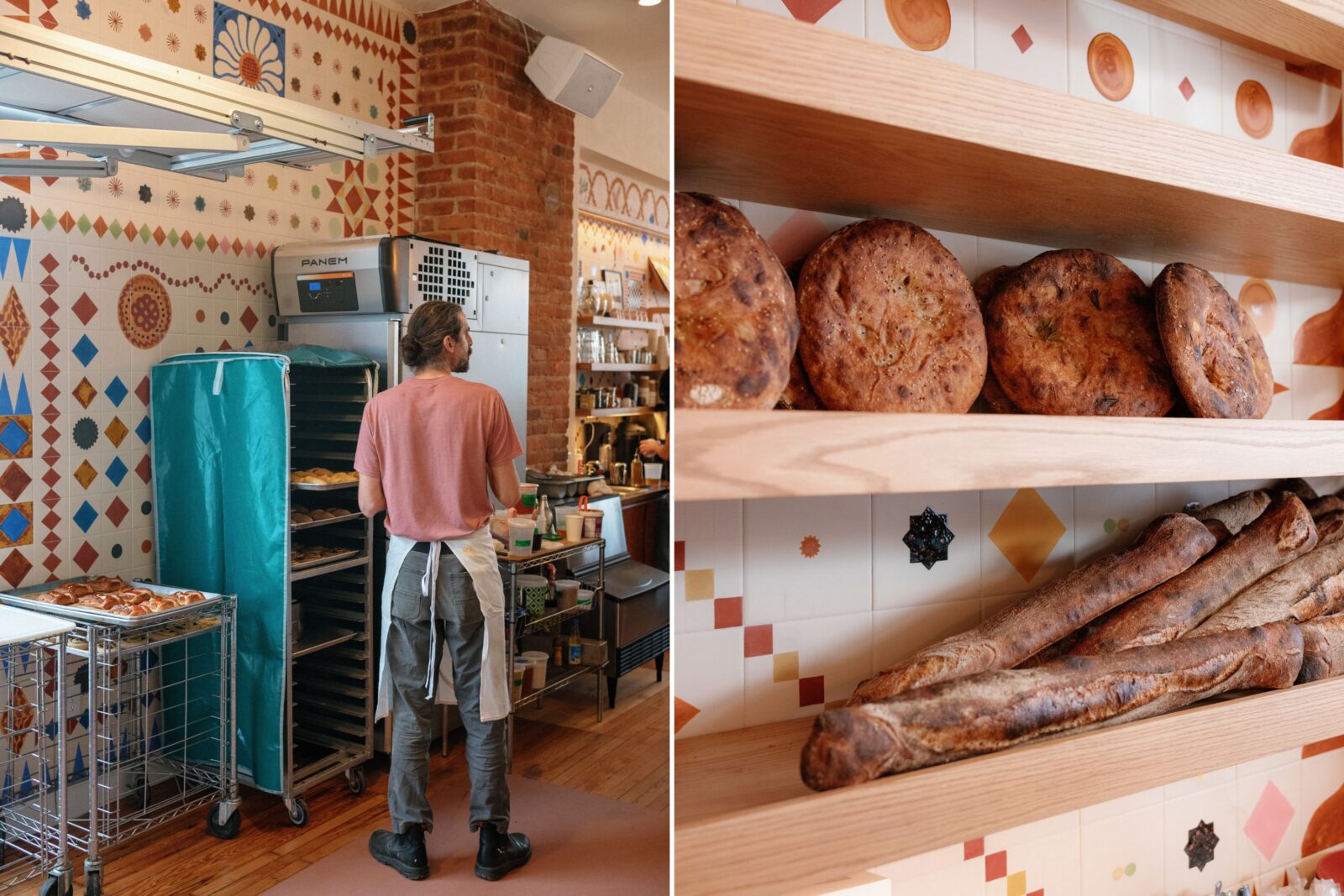
Photo: Kate Thompson
Sen’s patterned tilework spreads across three walls; shelves of fresh bread.
Evrim admits that people tended to get enamored with the romance of a wood-fired oven—and there is something undeniably beautiful about it—but that was never really the point. “We want people to think differently about grain and flour,” Evrim says. “So often the focus is on what’s added on top or mixed in: the cream, the garnish, the finishing touches. And we love that pleasure, too. But for us, the goal is to bring flour to the foreground—to be, as another baker once put it, a grain-forward bakery.” A fire might have closed one chapter for the bakery, but this community of farmers, artists, bakers, and patrons is rekindling the next.
Kinsey Gidick is a freelance writer based in Central Virginia. She previously served as editor in chief of Charleston City Paper in Charleston, South Carolina, and has been published in the New York Times, the Washington Post, Travel + Leisure, BBC, Atlas Obscura, and Anthony Bourdain’s Explore Parts Unknown, among others. When not writing, she spends her time traveling with her son and husband. Read her work at kinseygidick.com.
Related Stories:
Land
In flooded fields amid a waterfowler’s paradise, the Isbells are reimagining how to use the land—and gaining the attention of sake brewers worldwide
Food & Drink
As the Southern icon turns seventy, a peek behind the yellow sign
Trending Stories:
Land & Conservation
The future of conservation in the South just got a little bit brighter—and not just for salamanders
Land & Conservation
The mounds may look insignificant, but they’re the craftsmanship of local crustaceans called lawn lobsters
Arts & Culture
The drawls are receiving a lot of flak across the internet, but a North Carolina linguist argues they’re actually pretty accurate