
The writers Jim Harrison (1937–2016) and Peter Matthiessen (1927–2014) might have seemed, on the surface, to have little in common. A scion of a moneyed East Coast family, Matthiessen grew up in New York City and Connecticut and in the boarding schools he attended before entering Yale; Harrison, the son of a county farm agent, grew up in rural Michigan in a house so small that one sibling slept in a hallway. After graduating from Yale, Matthiessen worked as a CIA operative in Cold War Paris, where he cofounded The Paris Review; that same decade, after temporarily dropping out of Michigan State University, Harrison reputedly signed up to fight alongside Fidel Castro in Cuba, although his brief flirtation with revolutionary politics might’ve been owing to the “free donuts [and] radical ladies” at the meetings. They were a contrast in appearances as well, Matthiessen standing “stork-like at six foot one, with a wave of blondish brown hair that crashed across a high forehead and glacial blue eyes,” and Harrison beefy and dark-complected with his blind left eye askew from a childhood injury. Matthiessen once expressed an affection for “coarse dull food”; Harrison once reveled in a thirty-seven-course lunch at a medieval French manor.

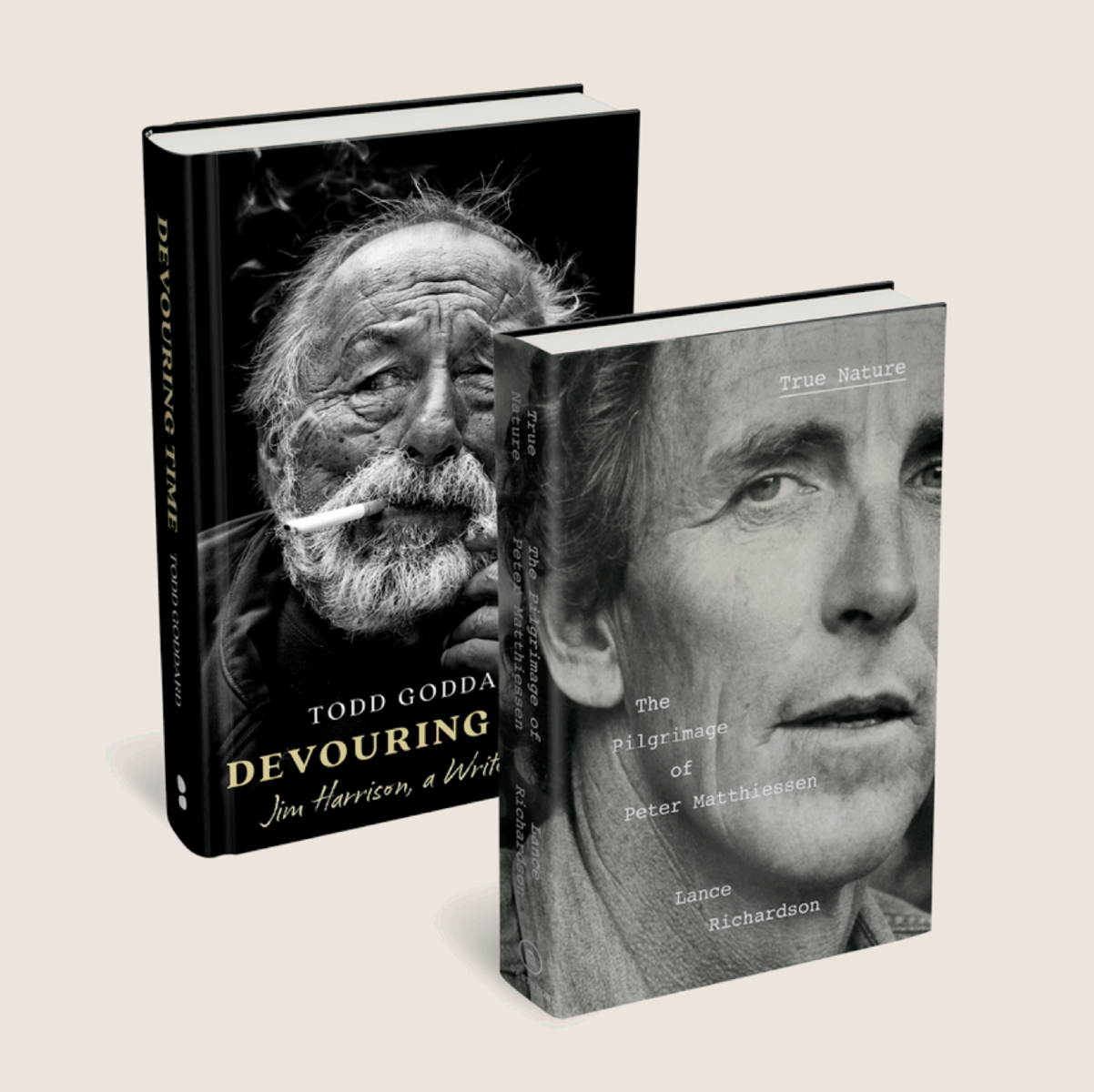
What the two men did share, however, was a fierce love of wild landscapes, both exterior and interior, and an equally fierce hatred of what Matthiessen called the “monoculture that spreads like a plastic sheet across the world, stifling the last indigenous whiffs and quirks and colors.” That, piled atop their joint devotion to literature and Zen Buddhism, fueled a decades-long friendship. It’s fitting, then, that the first major biographies of both should debut within weeks of each other, as if the pair had plotted their legacies as carefully as they did their fishing trips. Todd Goddard’s Devouring Time chronicles Harrison’s life and work; Lance Richardson’s True Nature captures Matthiessen’s. (Disclosure: Jim was a longtime friend, and I make a couple of cameos in the bio.) Both are top-notch: sensitive, probing, admiring but never fawning, and exhaustively researched. The men’s flaws go unscrubbed and their contradictions unsmoothed. Both books send you back to their works with freshened eyes and a hungry heart.
Harrison is arguably best known for Legends of the Fall, his 1979 novella collection, and for his Falstaffian food writing. Matthiessen’s renown often centers on The Snow Leopard, his 1978 account of his physical and spiritual journey in the Nepalese Himalayas. The irony, both bios make clear, is that these pinnacles were peripheral, even subordinate to the pair’s true literary missions. Fiction, Matthiessen often said, was at the heart of his work (with his Everglades-set Edgar Watson trilogy at the heart of that heart); his “nature writing” subsidized his novels. For Harrison, poetry was his everlasting love (he published eighteen books of it in his lifetime), and “if he was remembered at all,” Goddard notes, he thought it would be for that. Richardson’s book includes a telling exchange between the two, in which a prose-weary Matthiessen asks Harrison how he might begin writing poems. Harrison talks him down, noting such points as the “banknote comedown” it would entail. “I suspect you are right,” Matthiessen answers, “but I am so bleeding sick of all the words. I want to cut away and cut away, in all departments.”
One way Matthiessen “cut away” was to set off on expeditions: driving in the Serengeti, chasing great white sharks in Australia, seeking Bigfoot out west. Harrison’s wanderlust tended to be more Dionysian: fishing and carousing in Key West, pushing the limits of gluttony in France. Readers of either bio become less fly on the wall than stowaway in a suitcase.
“Don’t quite know what it means,” Harrison wrote to friends upon hearing the news of Matthiessen’s death from cancer in 2014. “Peter was grand. Last September he had doubts he would make it another year. Fishing was only so-so but two years ago he got a 5 lb brown in fast water which made him glow.” It’s an apt metaphor for the duo’s effect on readers: Whether from outrage, awe, bliss, earth-sadness, voraciousness, laughter, pain, or spiritual longing, they made us glow.
Plus: Poetry Beyond Words
Fresh Southern verse to savor
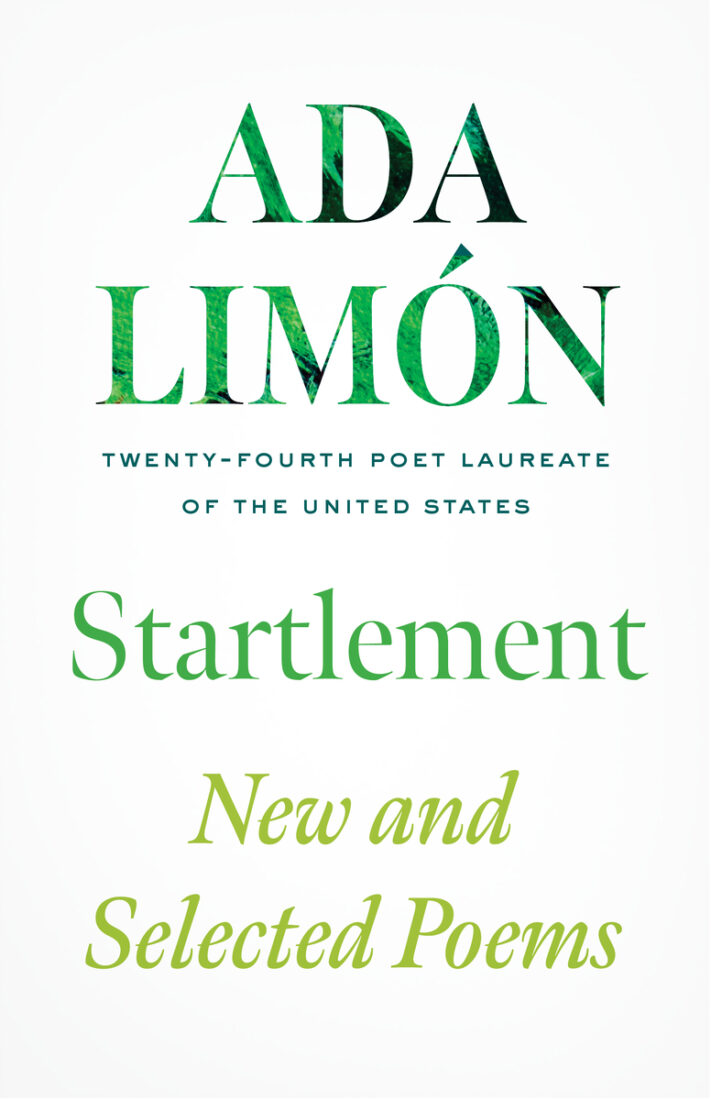
Ada Limón, who recently completed her tenure as U.S. poet laureate, conveys the natural world’s beauty and delights in her gorgeous Startlement: New and Selected Poems (Milkweed Editions). Limón has lived in Kentucky and California, but her perceptions feel more universal than anchored to place. As she writes in the title poem, “So many unknown languages, to think we have / only honored this strange human tongue.” Isn’t it a joy that one of our finest wordsmiths knows talk has its limits, that phrases can’t precisely convey the chatter of birds or how wind hums? As she writes in “Mortality”: “Language, I love it, but it is of the air / and we are of the earth.” —CJ Lotz Diego
Jonathan Miles, a Garden & Gun contributing editor, has been the magazine’s books columnist since 2012. He is the author of three novels, including Anatomy of a Miracle, which was a finalist for the Mississippi Institute of Arts and Letters Award in Fiction. A former resident of Oxford, Mississippi, he is currently Writer-in-Residence at the Solebury School in New Hope, Pennsylvania.
Garden & Gun has an affiliate partnership with Bookshop.org and may receive a portion of sales when a reader clicks to buy a book. All books are independently selected by the G&G editorial team.